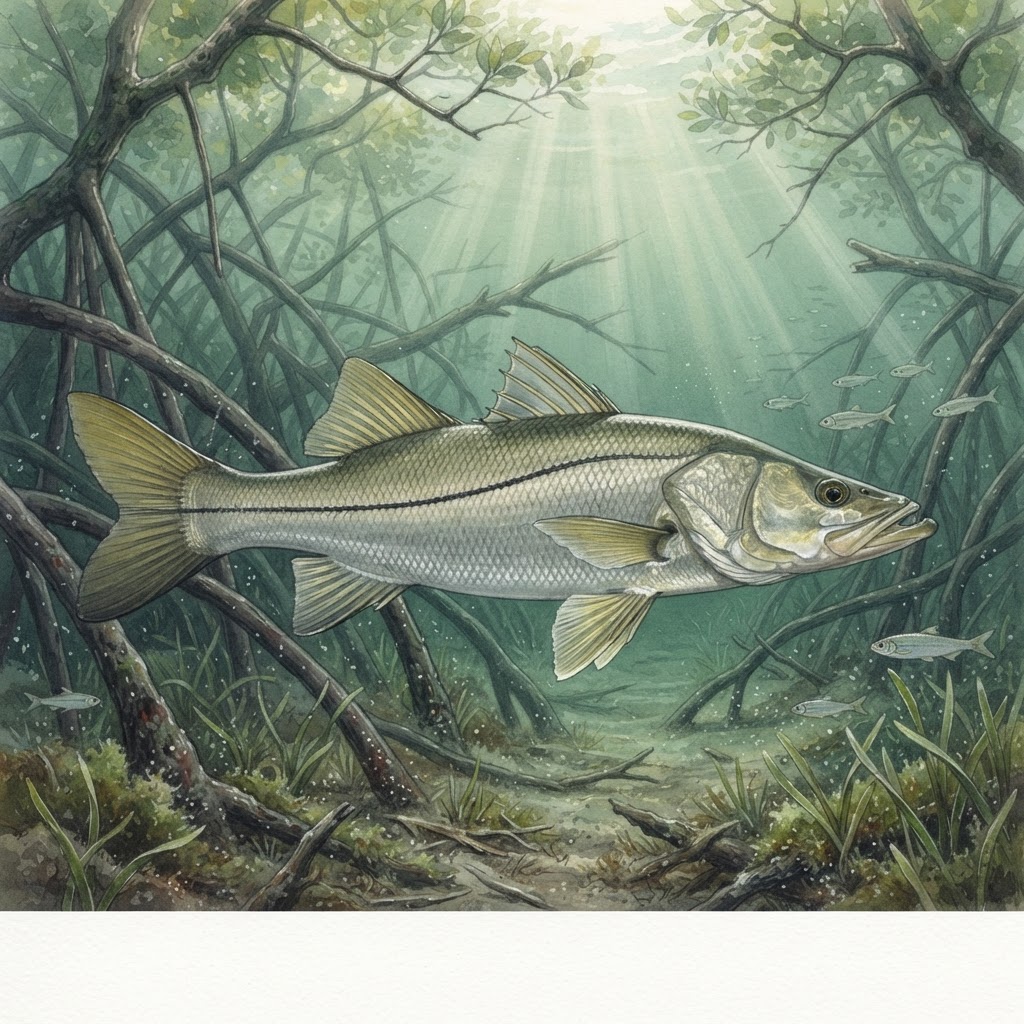
Snook
Centropomus undecimalis
The ultimate ambush predator of the Florida mangroves, prized for its explosive topwater strikes and drag-screaming bulldog runs.
Typical Size
20-40 inches and 5-20 pounds, with trophy-class specimens exceeding 45 inches and 30 pounds.
Prime Seasons
Spring (March-May) and Fall (September-November) provide the best action as fish move through inlets and flats during spawning migrations.
Overview
The Common Snook is a premier gamefish renowned for its lateral line sensitivity and aggressive nature near structure. They are highly sought after by inshore anglers for their ability to challenge tackle and provide spectacular aerial displays when hooked. Because they are temperature-sensitive and tied to tidal movements, catching them requires a blend of stealth and precise casting into tight, snag-filled environments.
Anglers target Snook primarily for the challenge of pulling these powerful fish away from jagged oyster bars and mangrove roots. They are masters of the 'burst' fight, utilizing their oversized gill covers to saw through light leader material, making them both a technical and rewarding adversary in the backcountry.
Identification
- Distinctive black lateral line running from gill plate to tail
- Large, protruding lower jaw with a concave forehead
- Deeply forked tail fin
- Divided dorsal fins
- Light tan to olive coloration with yellow pelvic fins
Habitat
Diet & Forage
Behavior & Feeding
Snook are ambush predators that rely on tidal movement to position themselves near structures like mangrove roots, docks, and bridges. They are most active during low-light periods such as dawn, dusk, and nighttime, though they feed aggressively during moving tides regardless of the clock. During winter months, they migrate toward warmer inland canals and residential basins, while summer months find them moving toward beaches and passes for spawning. Their strike is explosive, often involving a sideways slap with their tail or a powerful vacuum-style inhale.
Spawning
The primary spawn occurs from May through September, peaking around the full and new moons. Snook aggregate in high-salinity areas like inlets and nearshore beaches, often ignoring lures as they focus entirely on reproductive activity. Anglers should note that fish are highly sensitive to noise and pressure during this time, requiring stealthy presentations and long casts. Spawning activity generally renders the fish more transient, making specific pods difficult to pattern for more than a few days.
Water Temperature
Weather Triggers
Falling Barometer
Often signals the approach of a storm system; creates a 'feeding window' where Snook strike aggressively.
Cold Front
Causes fish to seek heat; focus on slow-moving artificials or live shrimp in deep, stagnant water.
Overcast Sky
Reduces light penetration, allowing Snook to leave deep cover and feed in open flats or shallow edges.
Depth by Season
Best Lure Rigs & Setups
Live Bait Free-Line
When: When sight fishing mangroves or docks for lethargic fish.
Setup: 30-50lb fluorocarbon leader, 2/0-4/0 circle hook, live pilchard or shrimp hooked through the nose.
Jig-and-Tail
When: Searching deep structure like bridge pilings or grass flats.
Setup: 1/4oz to 1/2oz jig head, 4-inch paddle-tail swimbait, 30lb fluorocarbon leader.
Topwater Walking Plug
When: Low light conditions or early morning on the flats.
Setup: Medium-heavy spinning rod, 30lb braid, 40lb fluorocarbon leader to prevent bite-offs.
Best Knots
Rigs From The Library For Snook
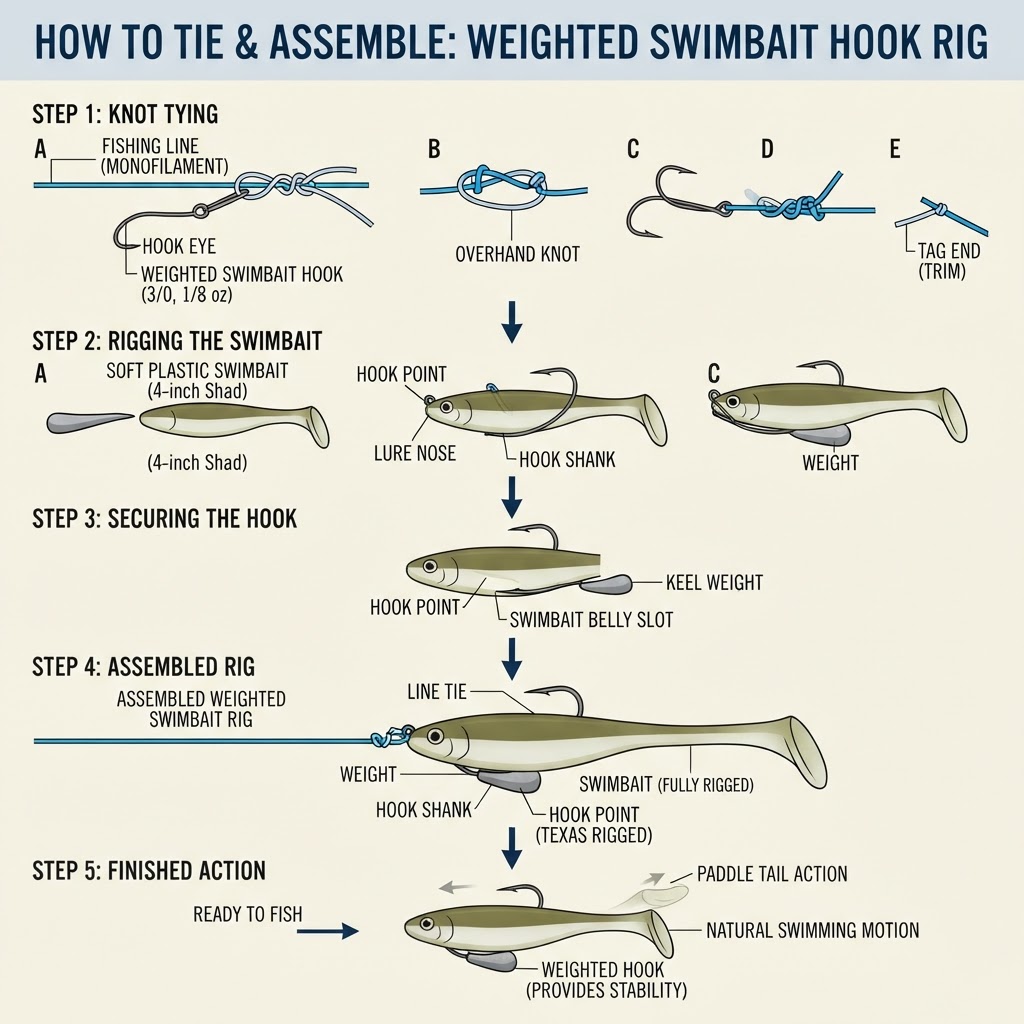 0-15 ft
Swimbait (Weighted Swimbait Hook)
The ultimate weedless search-bait that mimics a fleeing baitfish through the heaviest cover.
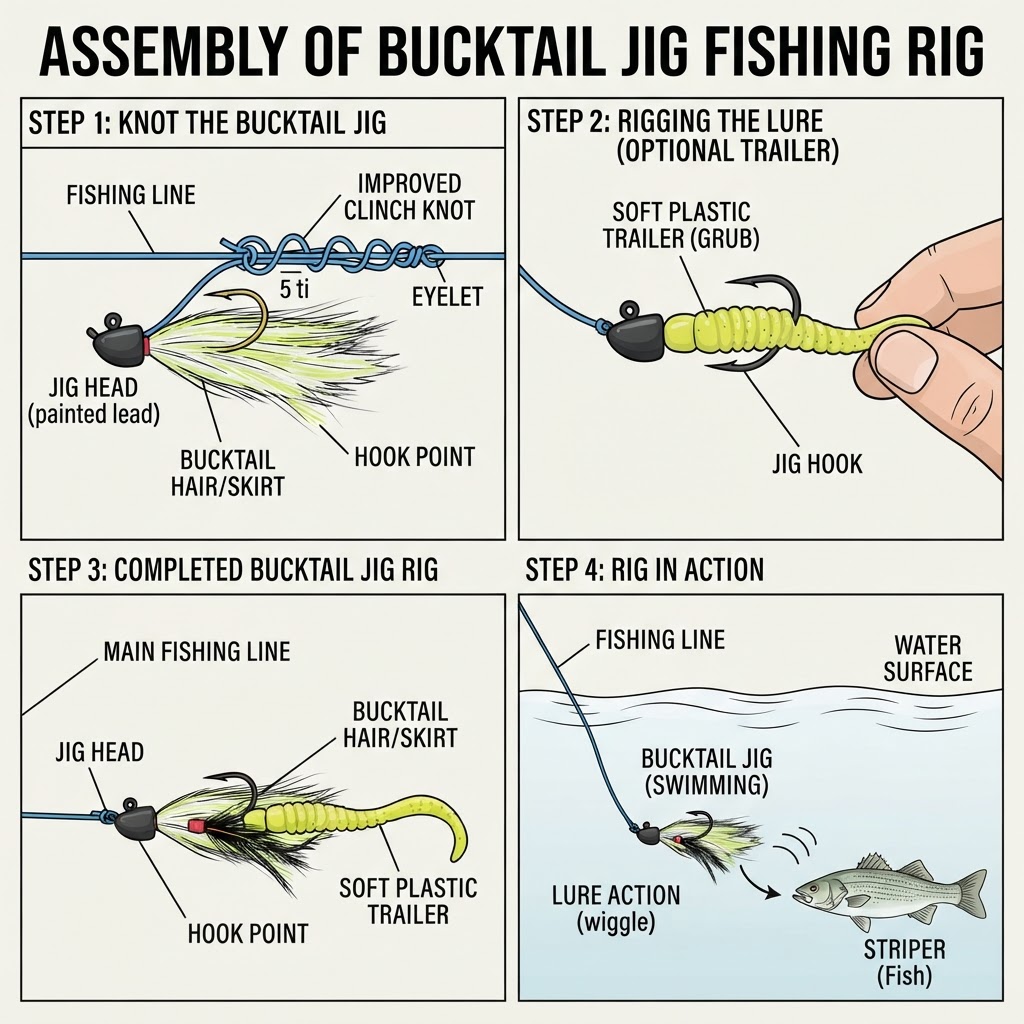 Surface to 50 ft
Bucktail Jig
The ultimate multi-species Swiss Army knife that triggers aggressive strikes through a pulsing, life-like swimming motion.
 1-5 ft
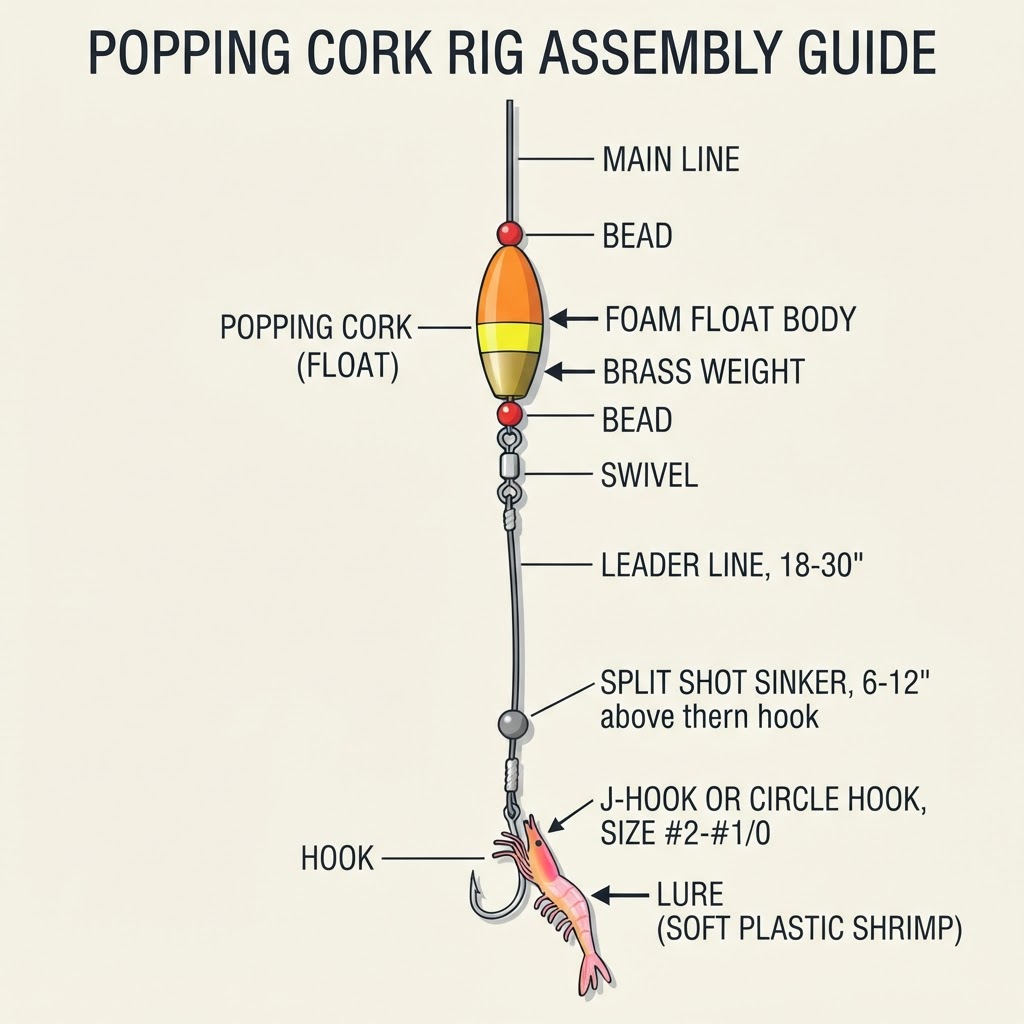
Popping Cork Rig
The ultimate sensory rig that mimics a feeding frenzy to draw strikes from predators hovering over flats and structure.
 0-10 ft
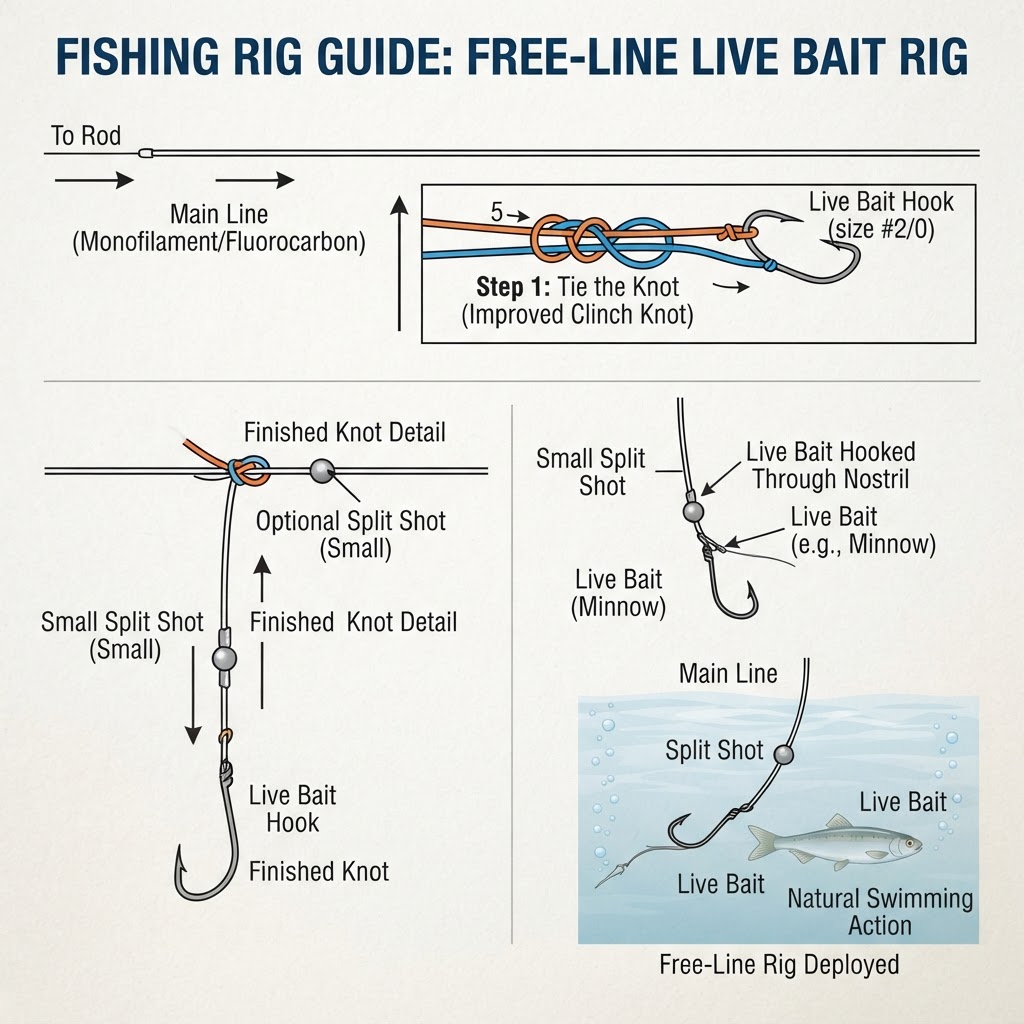
Free-Line Live Bait Rig
The ultimate stealth presentation for wary predators using the natural, unhindered movement of live bait.
 0 ft (Surface)
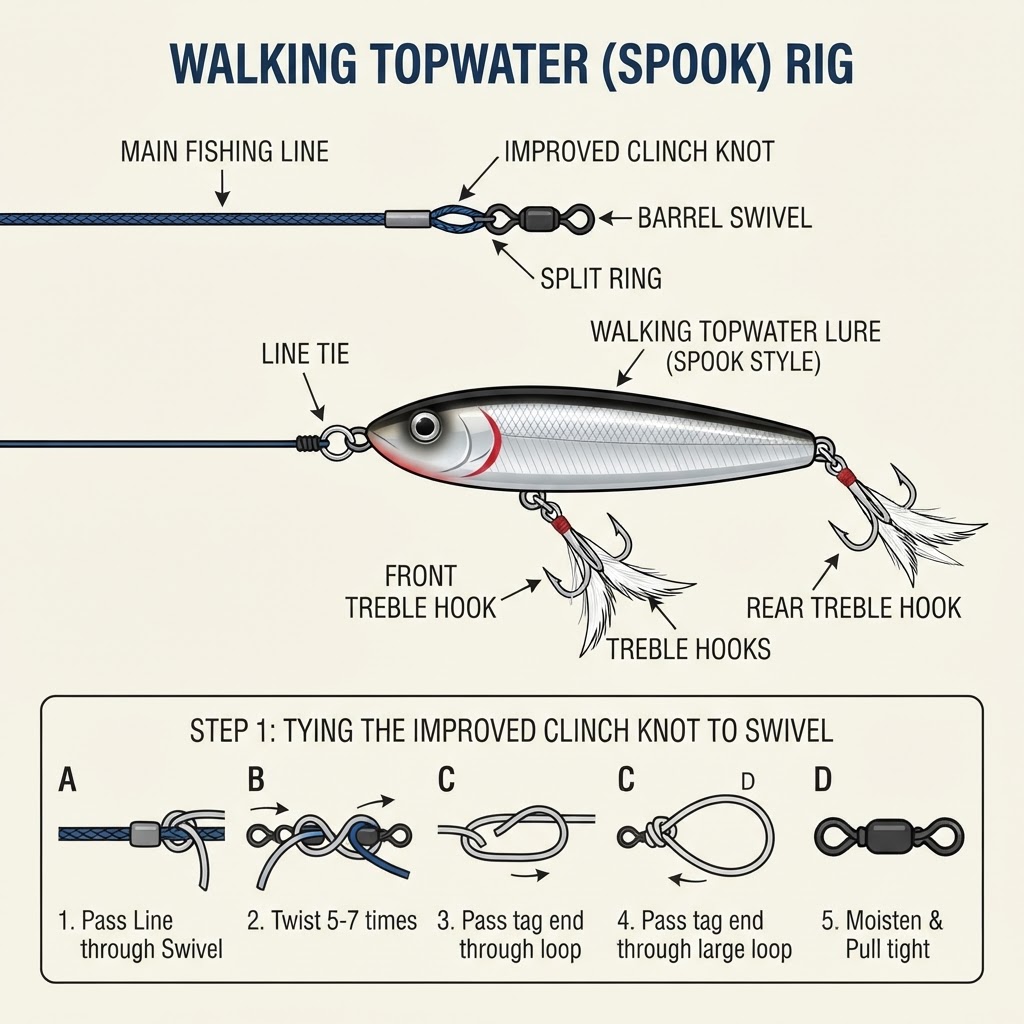
Walking Topwater (Spook)
The ultimate surface-walking presentation that mimics a distressed baitfish struggling on the water's surface to trigger explosive strikes.
Catch more snook — free
Create a free account and unlock the full angling toolkit:
Latest from the Community
The hunt
Posted
The hunt
Jesse O · 3h ago

Trophy
2021 Spring Turkey
Richard Taggart · 6h ago

Trophy
2025 Spring Turkey
Richard Taggart · 11h ago

Trophy
2025 Buck… A Buck named King
fsufootball55 · 11h ago

Posted
Western hunting units map layer
Admin Josh · 11h ago

Posted
Rifle Slings and Leather Goods
Richard Taggart · 15h ago