Inshore Redfish: Reading the Flats on a Falling Tide
Why the Falling Tide Rules Inshore Fishing
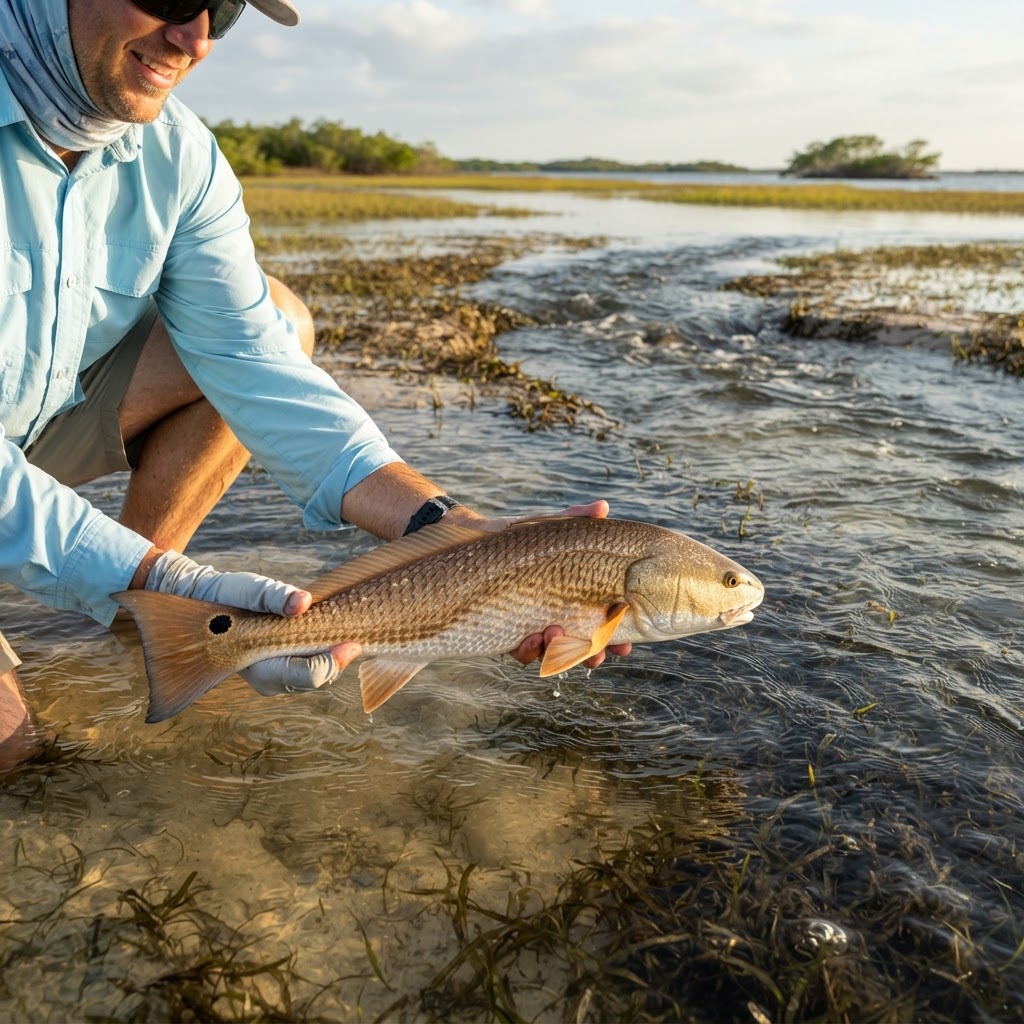
Ask any seasoned flats angler what the single most important factor in catching redfish is, and the answer will almost never be the lure, the rod, or even the weather. It will be the tide. Inshore redfish are creatures of moving water, and no phase of the tide concentrates and activates them like a strong falling tide. Understanding how water movement pulls bait off the flats and stacks predators at ambush points is the difference between a slow day of blind casting and a red-letter day of tailing, feeding fish. If you fish a new estuary, use our to identify the flats, drains, and cuts before you ever launch the boat.
Get in the Community feed
Hunters and anglers nationwide posting bucks, catches, trail cam pics and what's working right now.


Tide Is Everything
Redfish relate to tidal flow the way deer relate to wind. On a rising tide, reds spread out across the grass flats to root for crabs and shrimp in water that may be only inches deep. But as the tide turns and begins to fall, everything changes. The falling water pulls bait — shrimp, crabs, mullet, and glass minnows — off the shallow grass and funnels it through drains, cuts, and troughs on its way to deeper water.
This creates a conveyor belt of food, and redfish know it. They stack up at the mouths of drains and along the edges of troughs, facing into the current, waiting to ambush anything the tide delivers. Your job is simply to figure out where that conveyor belt runs and put your bait on it.
Reading the Flat
Raise a safe, confident young hunter.
Guide your kids ages 5–17 through interactive hunting safety missions, real decision drills, and earned trophies — all from one free parent account.



Learning to read a flat is a skill that develops over hundreds of hours on the water, but there are reliable visual clues that shortcut the learning curve.
- Nervous water and pushing wakes — A subtle disturbance on an otherwise calm surface often means a school of reds is moving beneath it. A hard V-wake pushing toward deeper water is a cruising fish worth a cast.
- Potholes and sandy patches — Bright sand holes in a dark grass flat act as feeding stations. Reds cruise the edges hunting bait silhouetted against the light bottom.
- The mouths of drains — As the water pulls out, the drain mouth becomes the single highest-percentage spot on the flat. Position up-current and let the tide carry your presentation naturally into the zone.
- Mullet activity — Where you find mullet, you often find reds. Predators shadow the schools, using the commotion as cover.
Watch for Tailing Fish
In very shallow water on a low, falling tide, redfish will tip nose-down to root crabs and shrimp out of the grass, exposing their tails above the surface. A tailing red is a feeding red, and a well-placed cast a few feet ahead of a tail is one of the most exciting takes in all of fishing.
Presentation and Baits
Redfish are opportunistic and not overly picky, but presentation still matters — especially in the clear, shallow water of a falling tide where fish are spooky.
Artificial Lures
- Gold weedless spoons — The classic redfish bait. The flash and thump call fish from a distance, and the weedless design lets you fish it right through the grass.
- Soft plastics on light jigheads — A paddle-tail or shrimp imitation on a 1/8 or 1/4 oz jighead is deadly worked slowly along a trough or drain edge.
- Topwater plugs — Early morning on a falling tide can produce explosive topwater strikes as reds hunt bait near the surface.
Live Bait
A live shrimp under a popping cork is arguably the most consistent redfish presentation ever devised. The chugging pop imitates feeding fish and draws reds in, while the shrimp dangling below finishes the job. Live finger mullet fished on the bottom near a drain mouth is another proven producer.
Make long casts and lead cruising fish by several feet — dropping a lure directly on a red in skinny water will spook it every time. For more presentation breakdowns and gear talk, visit .
Timing and Safety
The best falling-tide fishing usually happens in the two to three hours after the high tide peaks, when water movement is strongest. Consult a local tide chart and plan your day around that window. Keep in mind that saltwater regulations, slot limits, and licensing differ significantly from state to state; always verify the current rules through our before you keep a fish.
Inshore flats can also be treacherous — a falling tide can leave you stranded on an oyster bar or mud flat in a hurry. Know your draft, watch the water, and give yourself an escape route to deeper channels. The NOAA Tides and Currents service is an excellent free resource for planning around the tide stage in your area.
Building a Milk Run
The real payoff comes over time. Every productive drain, pothole, and trough you find fishes the same way on the same tide stage, year after year. Drop a waypoint at every spot that produces, note the tide stage that made it fire, and over a season or two you will build a milk run of high-percentage stops you can hit in sequence as the tide falls. When you land a bruiser red, share it with the community on our — there is no better way to celebrate a day of reading the water right.
Catch more these fish — free
Create a free account and unlock the full angling toolkit: