Flounder
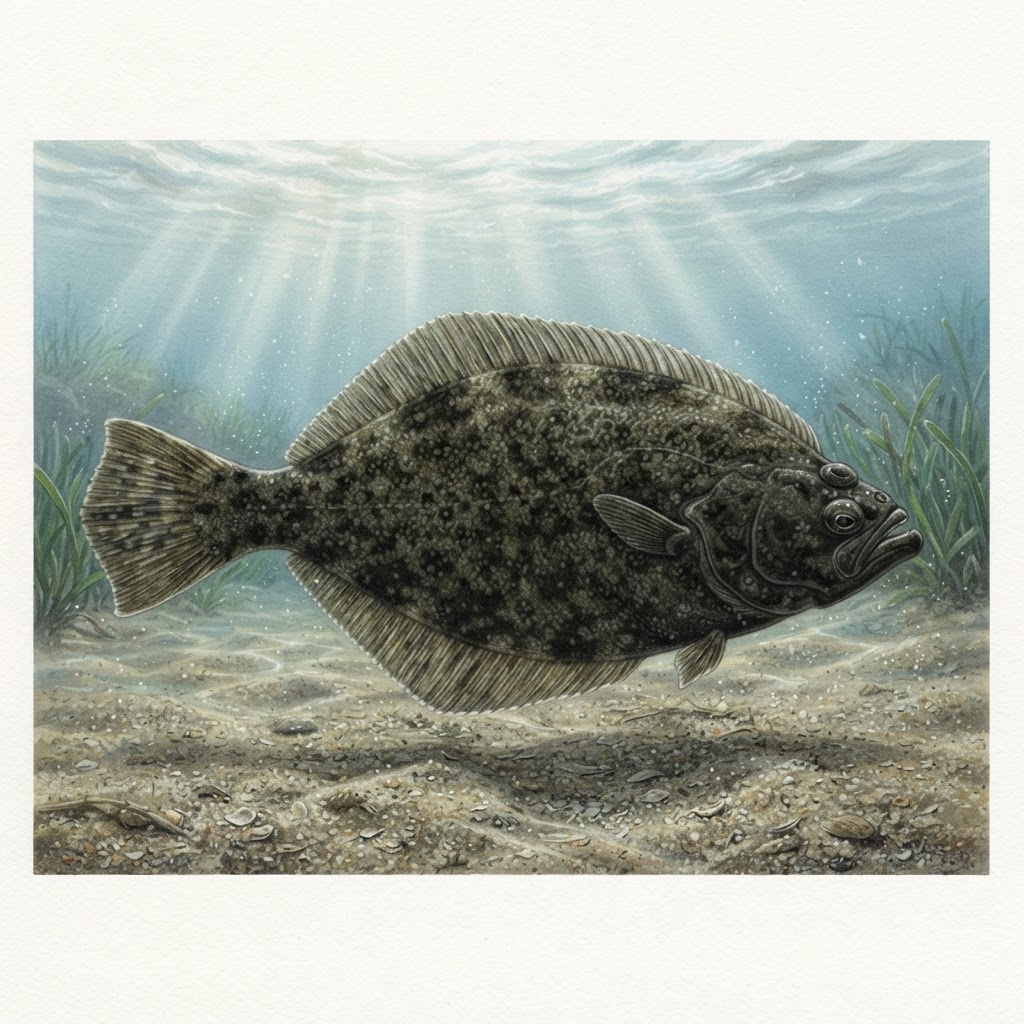
Paralichthys lethostigma (Southern Flounder)
The ultimate ambush predator, the Southern Flounder turns the sandy bay floor into a battlefield for the patient angler.
Typical Size
14-22 inches, 2-5 pounds; trophy specimens can exceed 8 pounds.
Prime Seasons
Fall (peak migration), late Spring (post-spawn return to bays), and Summer.
Overview
Southern Flounder are master practitioners of camouflage, blending perfectly into the muddy or sandy bottoms of estuaries and coastal bays. As flatfish, they possess both eyes on one side of their head, allowing them to remain buried in the silt while scanning the water column for unsuspecting prey. Because they rely on ambush tactics rather than chasing down meals, they are prized by anglers for the 'thump' they give when they strike, requiring a specific technique of allowing the fish time to turn and consume the bait before setting the hook.
Anglers target these fish primarily during their migration phases, particularly the fall 'gigging' and rod-and-reel run when mature flounder head toward the ocean to spawn. They are highly sought after not just for their challenging, deliberate strike, but for their status as one of the finest table-fare fish in North American coastal waters.
Identification
- Asymmetric body with both eyes located on the left side of the head.
- Dark brown to olive coloration with irregular, mottled spots that change to match the substrate.
- Large mouth extending past the eye with sharp, needle-like teeth.
- Ability to bury themselves entirely in sediment, leaving only eyes and mouth visible.
- White or pale underbelly.
Habitat
Diet & Forage
Behavior & Feeding
Southern flounder are ambush predators that rely on their camouflage to bury in sediment, waiting for prey like shrimp and small fish to pass by. They are primarily visual hunters, making them most active during periods of moving water, especially incoming tides. While they can feed throughout the day, low light conditions around dawn and dusk often trigger increased aggression. As water temperatures drop in the autumn, these fish begin a significant migration from shallow backwaters toward offshore Gulf inlets.
Spawning
Spawning occurs primarily during the late fall and winter months as mature flounder migrate out of estuaries into deeper ocean waters. This process is triggered by cooling water temperatures and shortening day length, which drives the mass exodus toward inlets. During this period, fishing becomes highly productive near pass mouths and deep-channel structures where the fish congregate. Once spawning is complete, adult flounder do not immediately return to the shallows, making spring fishing more hit-or-miss compared to the fall run.
Water Temperature
Weather Triggers
Falling barometer
Increases metabolic activity; fish become aggressive and strike lures with more intensity.
Passing cold front
Drives fish off flats into deeper pockets; focus on deep structure with slow, dragging presentations.
Overcast skies
Reduces shadows and extends feeding windows, allowing fish to hunt in shallower water throughout the day.
Depth by Season
Best Lure Rigs & Setups
Jig Head with Gulp! Swimming Mullet
When: Versatile all-rounder for searching flats and channel edges.
Setup: 1/4 oz to 3/8 oz jig head, 10-15lb braided main line, 20lb fluorocarbon leader.
Carolina Rig
When: When fishing slower in deeper holes or around heavy current.
Setup: 1/2 oz egg weight, swivel, 18-24 inch fluorocarbon leader, 2/0 wide-gap hook with live mud minnow.
Texas Rig
When: When targeting grass lines or oyster bars to keep the hook weedless.
Setup: 1/8 oz to 1/4 oz worm weight, 2/0 offset EWG hook, 4-inch paddle-tail soft plastic.
Best Knots
Rigs From The Library For Flounder
 10-100+ ft
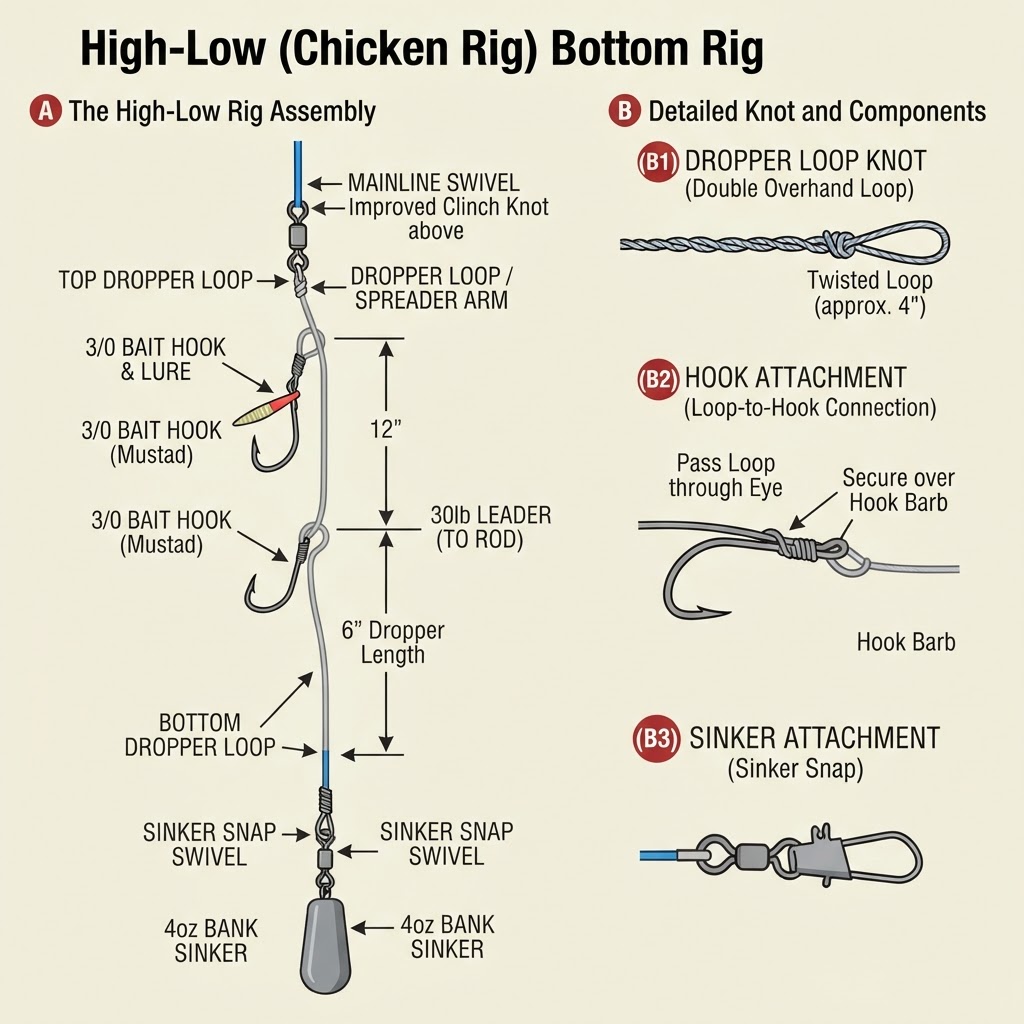
High-Low (Chicken Rig) Bottom Rig
The ultimate multi-species producer that puts two baits in the strike zone simultaneously for maximum efficiency.
 0-30 ft
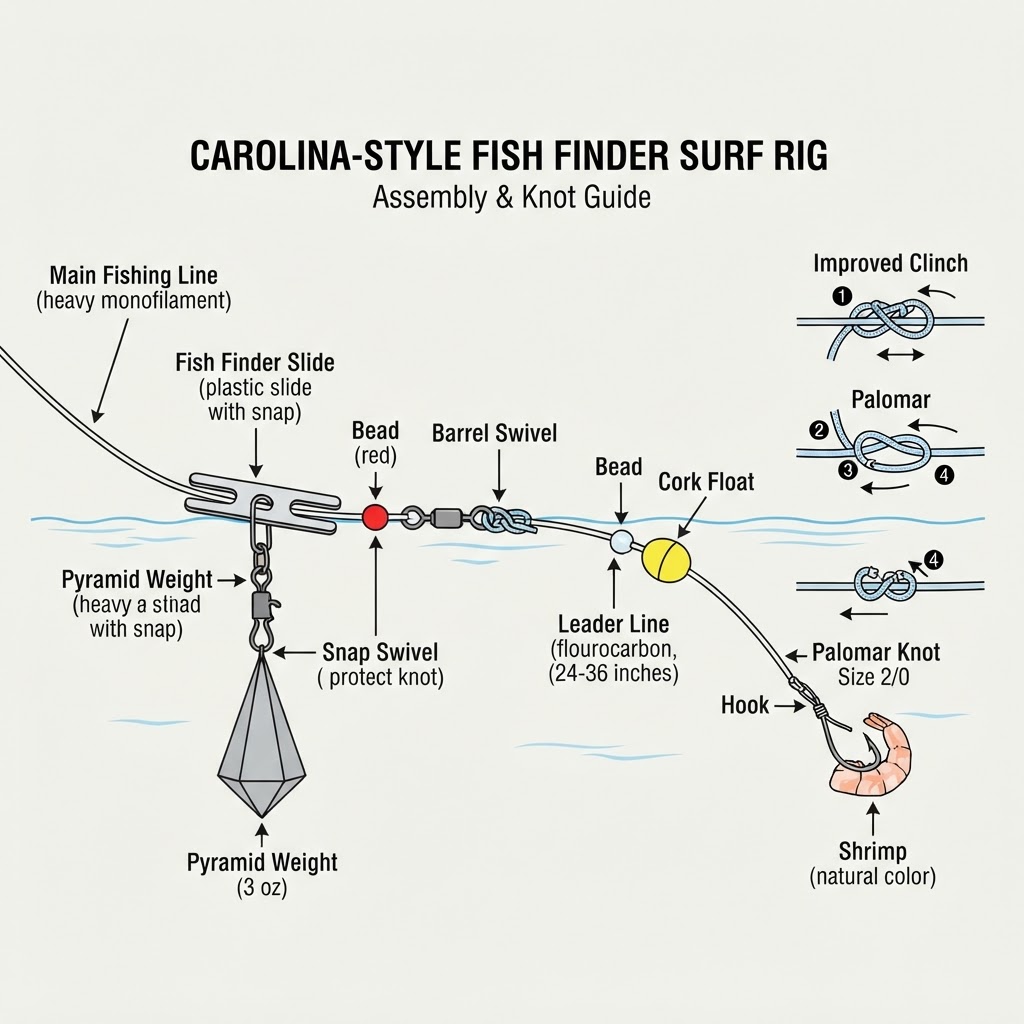
Carolina-Style Fish Finder Surf Rig
The ultimate bottom-grazing surf rig that allows bait to drift naturally while keeping the weight securely anchored in heavy current.
 5-40 ft
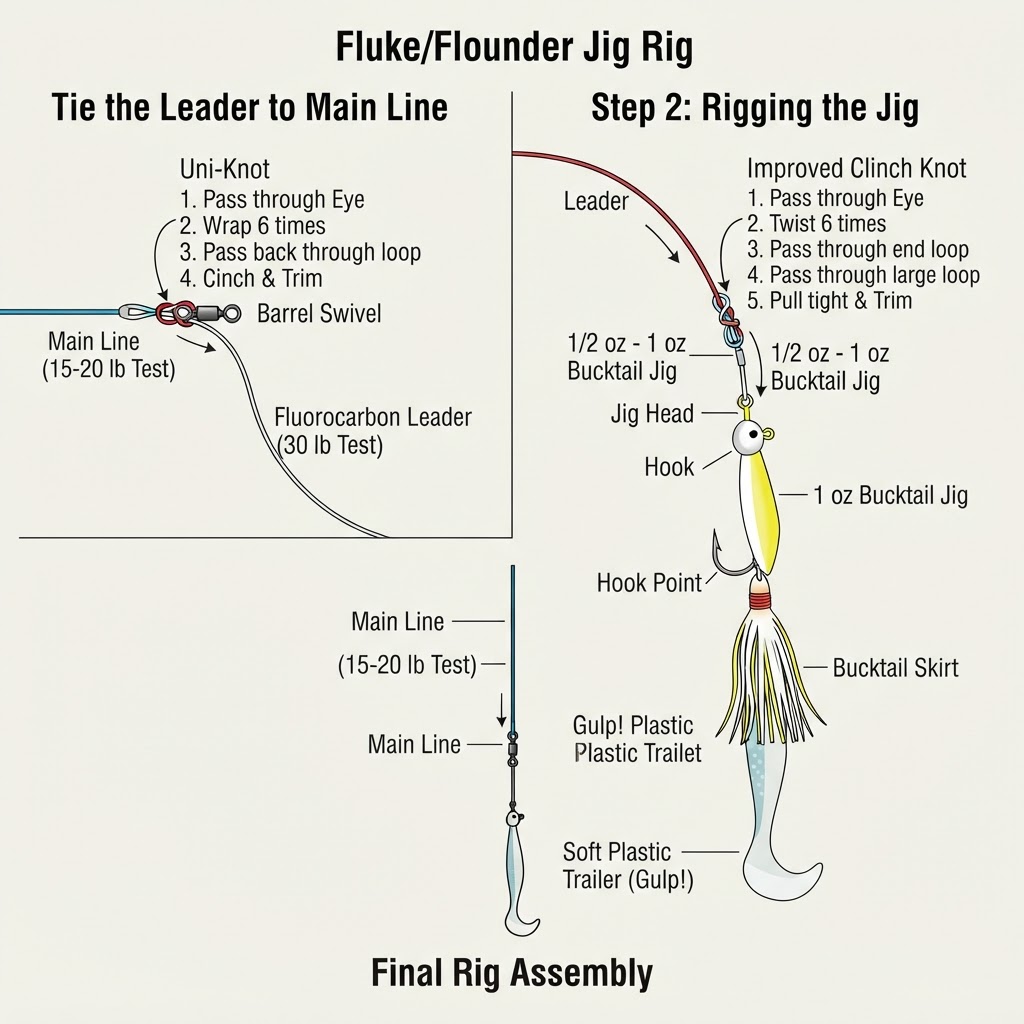
Fluke / Flounder Jig Rig
A high-sensitivity, bottom-hugging presentation designed to entice predatory flatfish into striking with aggressive action.
Catch more flounder — free
Create a free account and unlock the full angling toolkit:


