Foothold Latrine Set
A specialized shoreline set targeting river otters at their communal toilet areas.
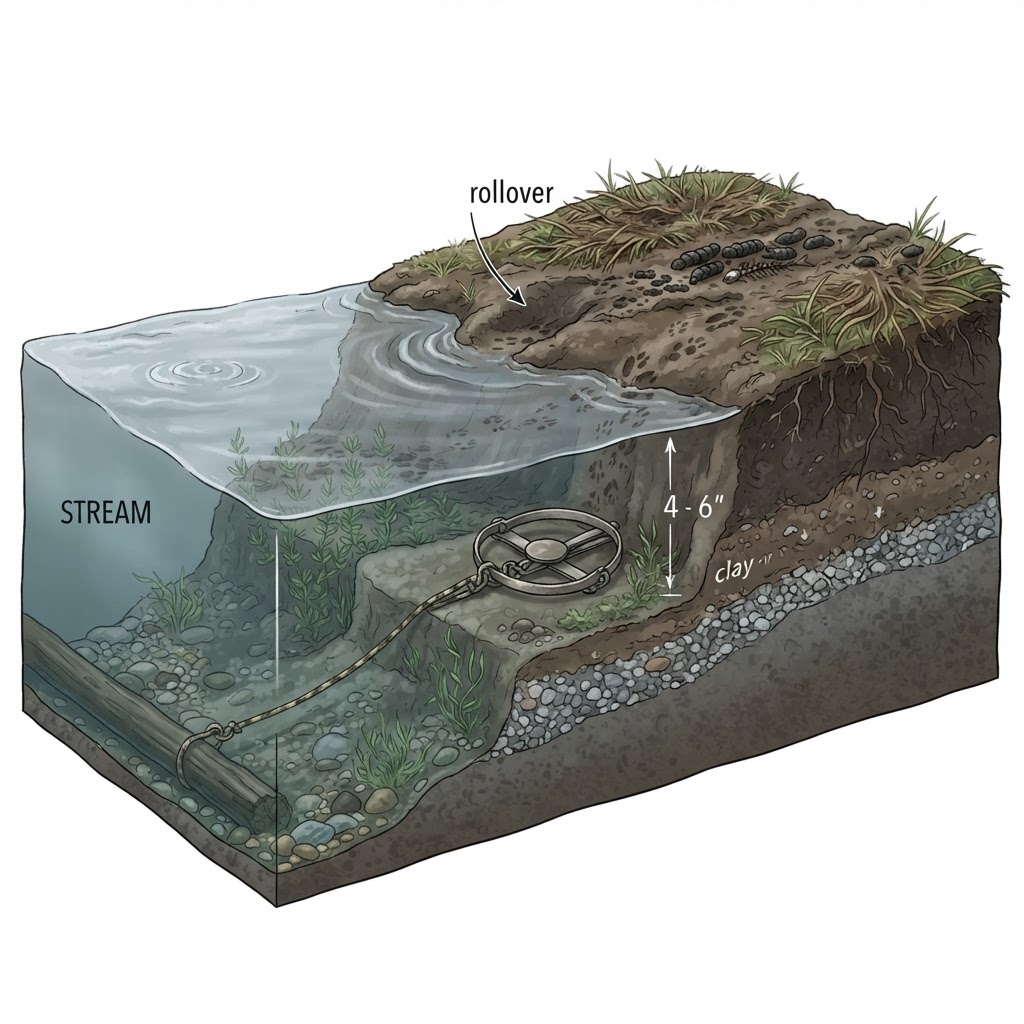
Where to Set
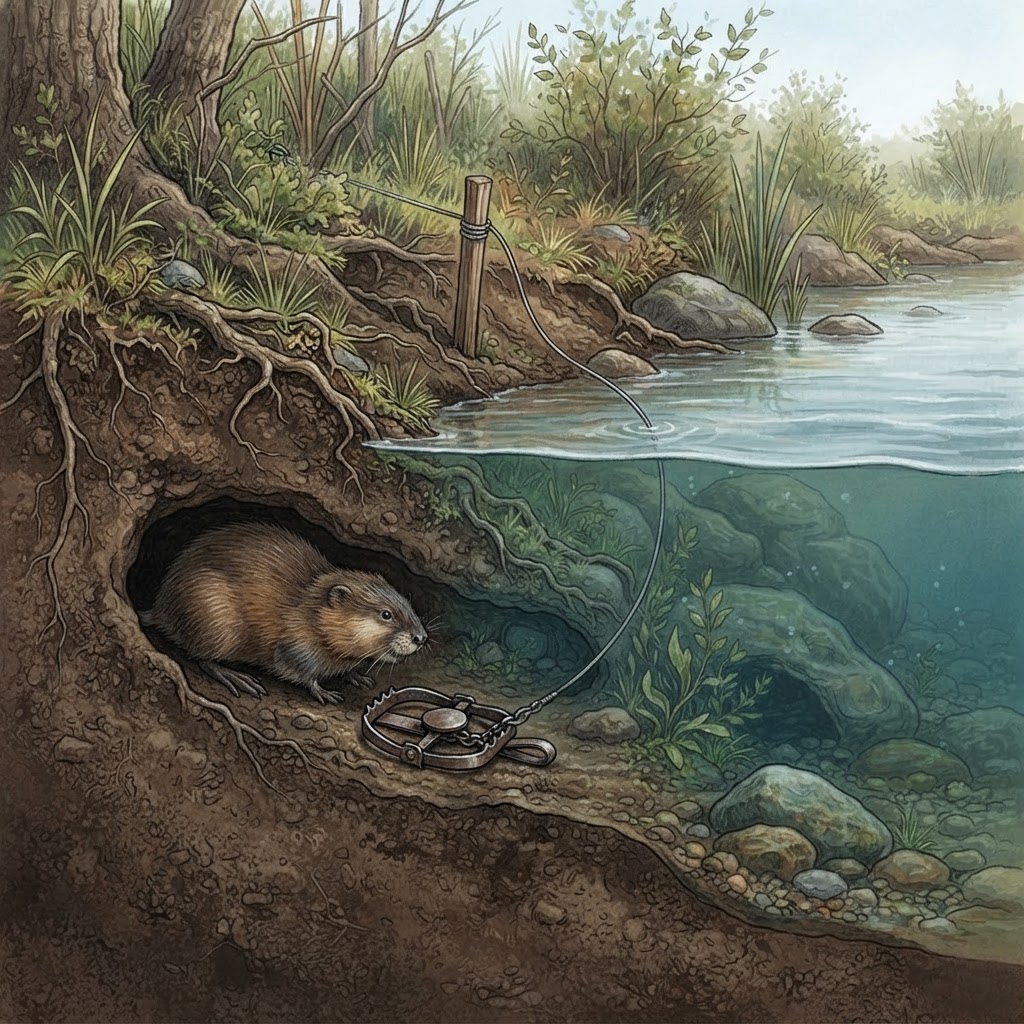
Scout points, peninsulas, or log jams where otters repeatedly leave large deposits of scat to mark territory. Look for matted grass or distinct trails leading from the water directly to the latrine area. The set is typically placed at the water edge where the otter first touches down to exit the water.
How to Build It
- 1Locate the exact trail where the otter exits the water to access the latrine.
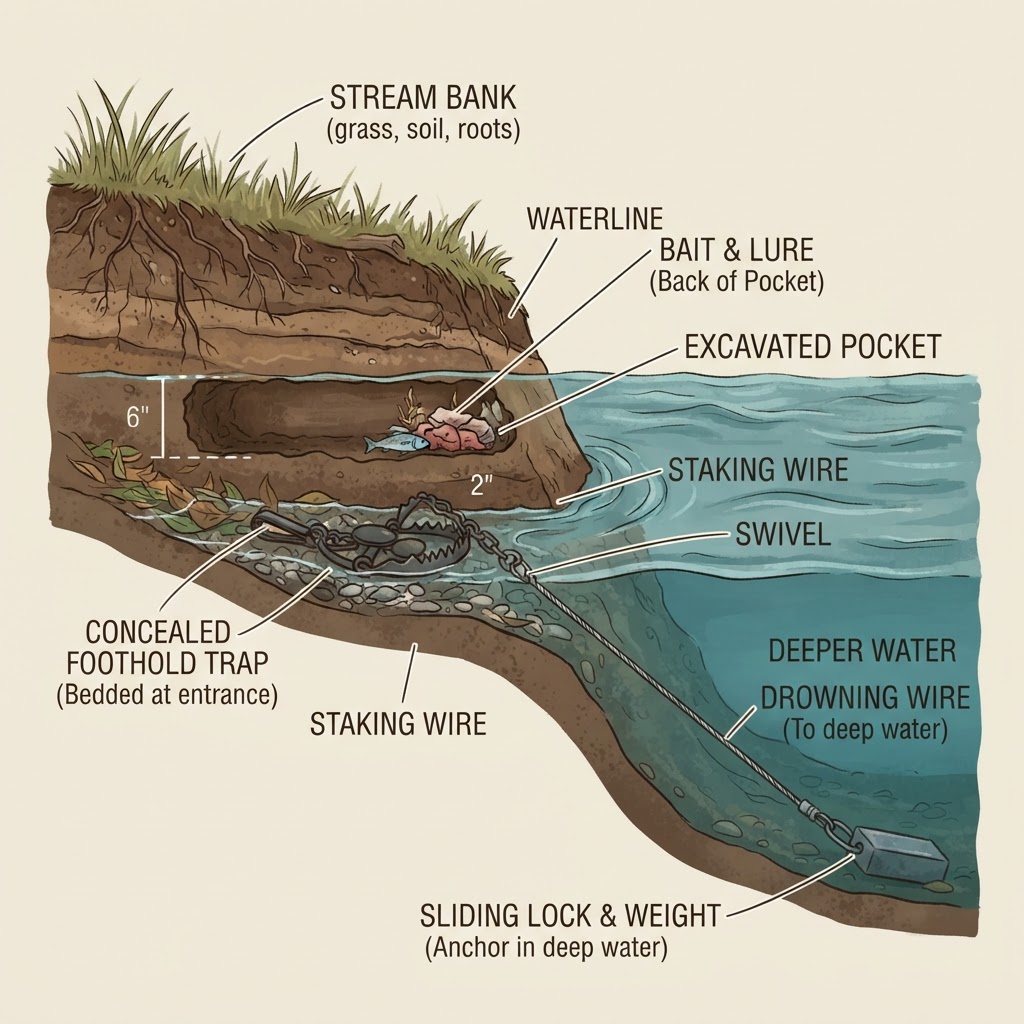
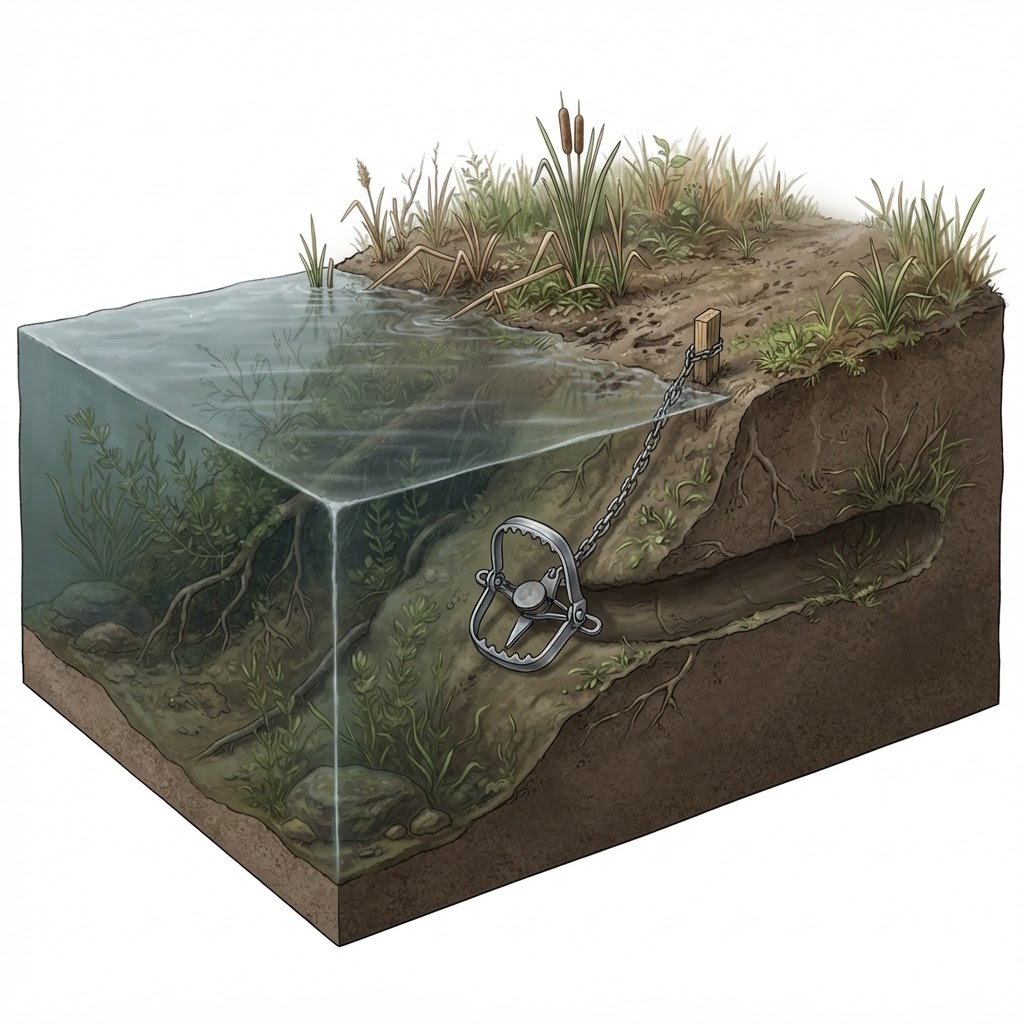
- 2Create a trap bed in the mud just under the water surface at the base of the exit trail.
- 3Set up a drowner wire running from a stake near the trap bed down to a heavy weight in deep water that is at least 3 feet deep.
- 4Bed the foothold trap solidly so it does not rock, ensuring the drowner lock is attached and pointing the correct direction.
- 5Blend the trap lightly with mud or water-soaked leaves, and optionally place a small guiding stick on either side to direct the otters foot onto the pan.
- 6Add a small amount of foreign otter scat or lure near the latrine to trigger a territorial response.
Bait & Lure
Otter scat from another location, commercial otter gland lure, or a few drops of fish oil.
Gear & Traps
#1.5 to #2 coil-spring foothold trap, heavy-duty drowner lock system, steel cable or wire, sandbags or heavy weights, and trap tags.
Best Conditions
Effective year-round where legal, but highly productive during early winter when otters travel widely to establish territory.
Safety & Legal
Because otters are incredibly strong, traps must be firmly anchored using a sliding submersion rig leading to deep water for ethical, immediate dispatch. Monitor check-time regulations, which generally require daily visits. Properly adjust pan tension to avoid catching lighter, non-target species like wading birds.