Bodygrip Run Set
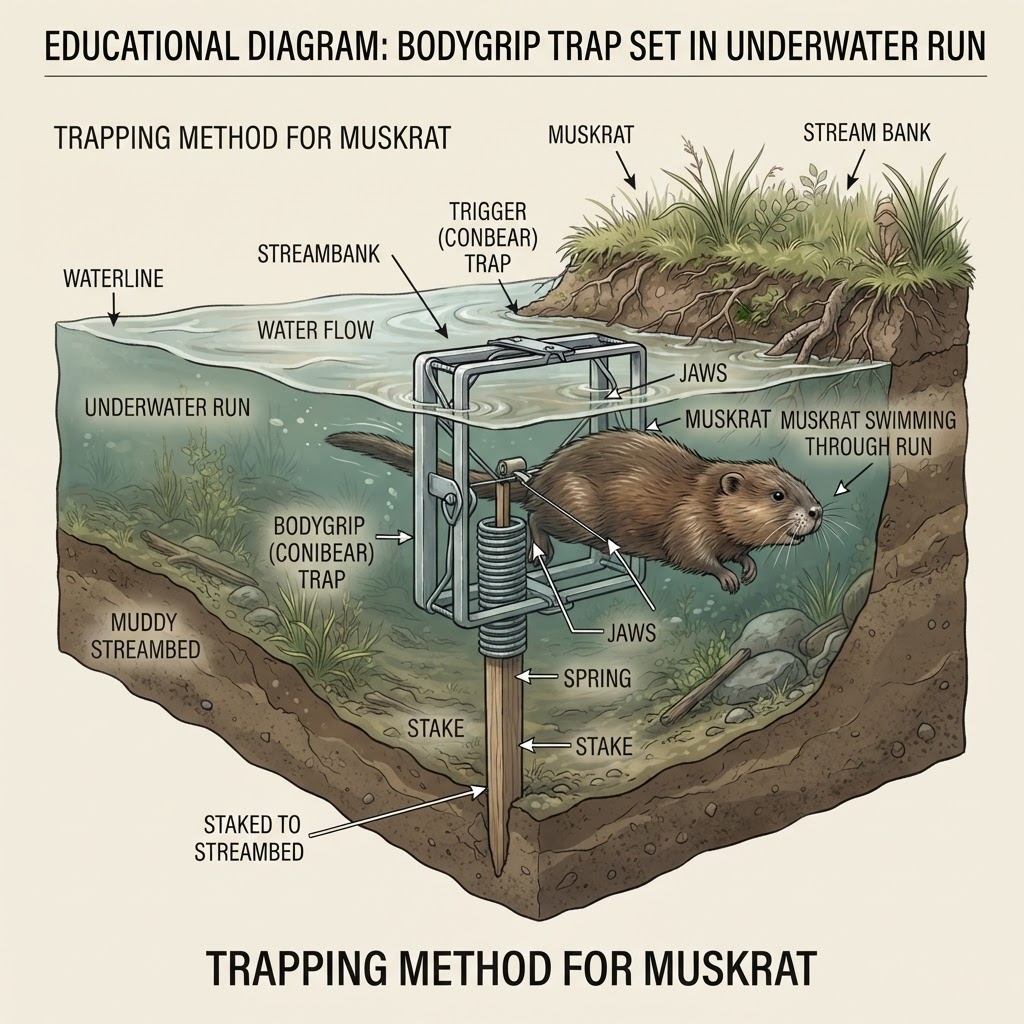
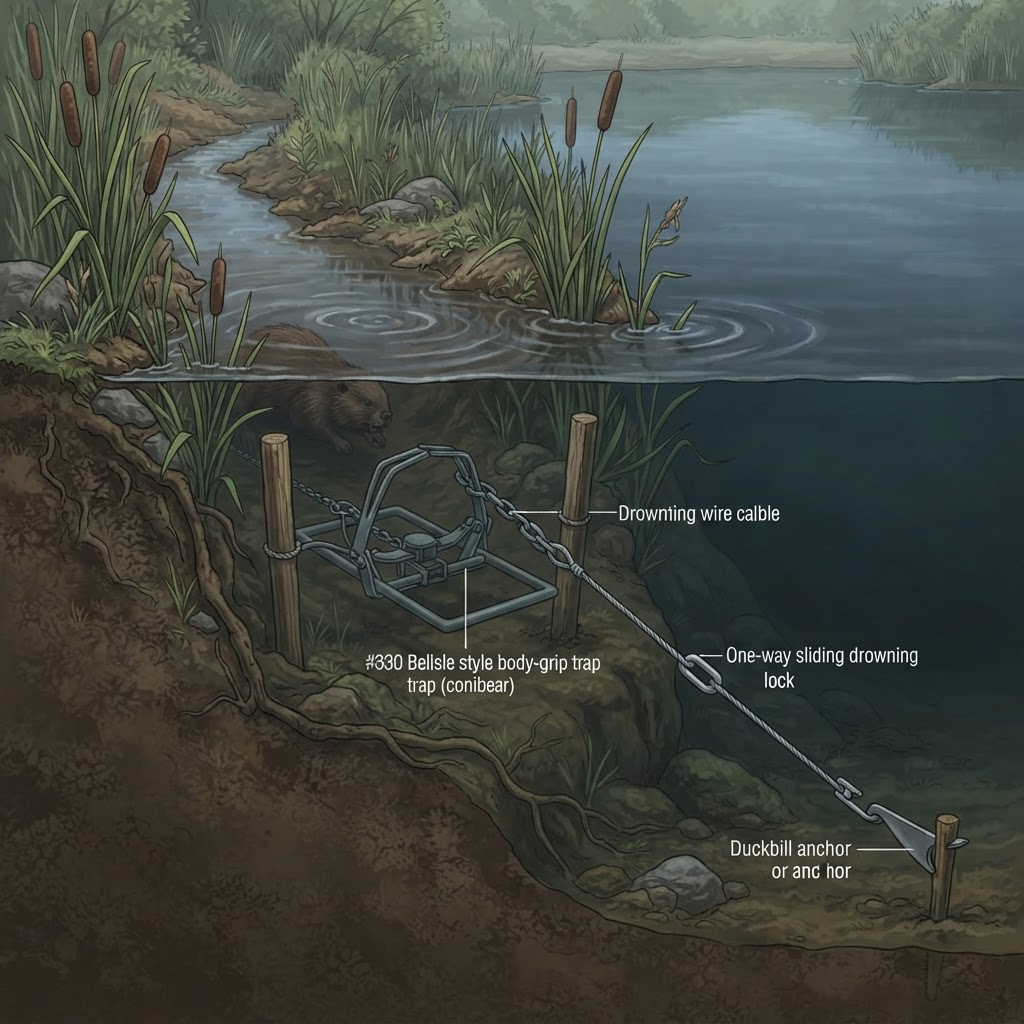
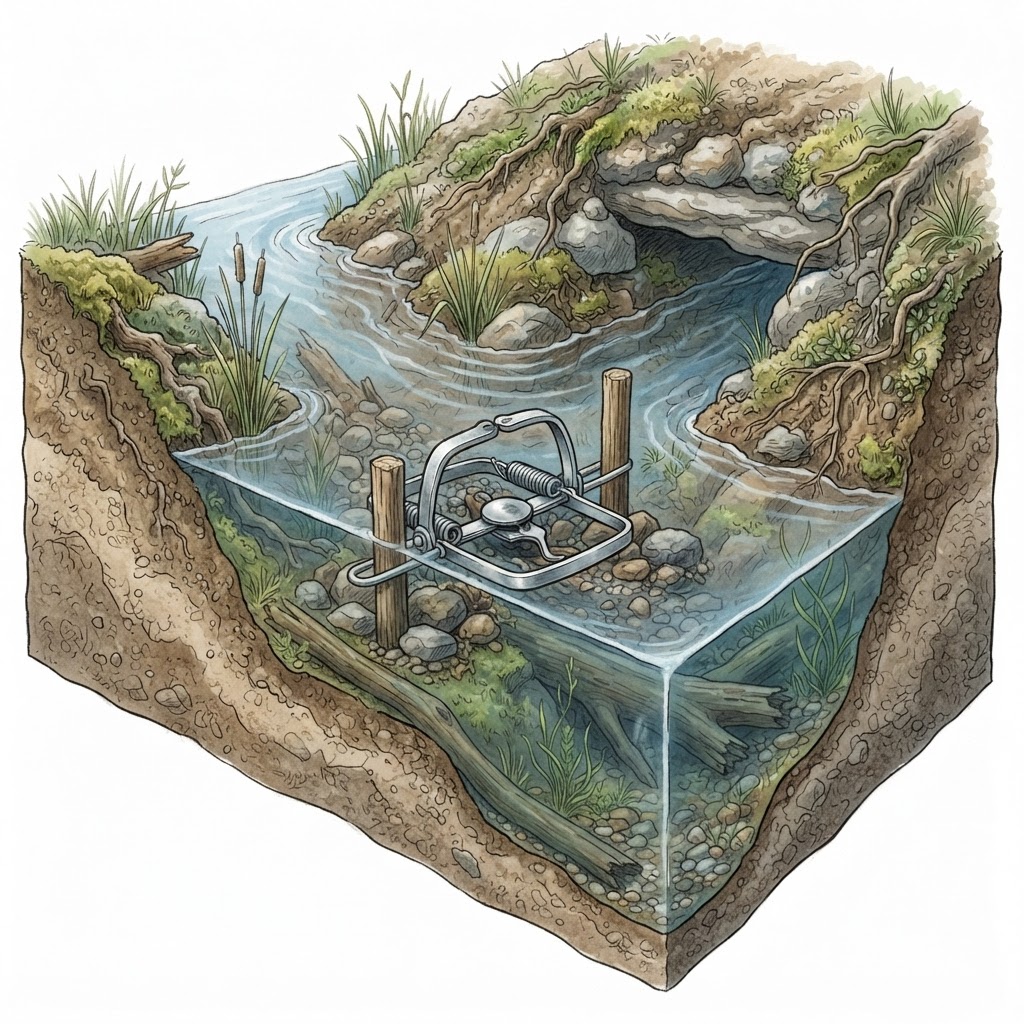
A highly effective submerged blind set placed in underwater travel channels to instantly dispatch aquatic furbearers.
Where to Set
Search for narrow, deep channels in swamps, culvert entrances, or break-through points in beaver dams where water funnels. Target areas where the bottom is scoured clean of debris, indicating heavy, regular traffic by otters, mink, or muskrats. Submerged runs between bank dens and open water are prime locations.
How to Build It
- 1Locate a distinct, heavily used underwater run or bottleneck in the waterway.
- 2Thread two strong trap stakes through the spring eyes of the set bodygrip trap, or mount the trap on a manufactured H-stand.
- 3Push the stakes firmly into the muddy bottom so the trap is perfectly centered in the run and held rigidly upright.
- 4Ensure the trap is fully submerged or meets local depth requirements to ensure safety and legality.
- 5Place vertical dead sticks on either side of the trap to fence off bypass routes, forcing the animal to swim directly through the trap jaws.
Bait & Lure
None required; relies entirely on identifying natural travel habits.
Gear & Traps
Appropriately sized bodygrip trap like #110 for muskrat and mink or #220 to #330 for otter, stabilizing stakes or H-stands, and wire.
Best Conditions
Ideal during late fall and winter when ice forces animals to use predictable underwater runs.
Safety & Legal
Large bodygrip traps usually must be set at least partially or fully submerged under water according to state laws to protect domestic dogs. Always attach your metal trapper ID tag to the trap. Ensure stabilizers are secure so the trap fires cleanly and humanely on the targets neck and thorax area.