Bank Hole / Blind Set
A lethal or live-restraint waterside set designed to intercept mink hunting along shorelines.
Where to Set
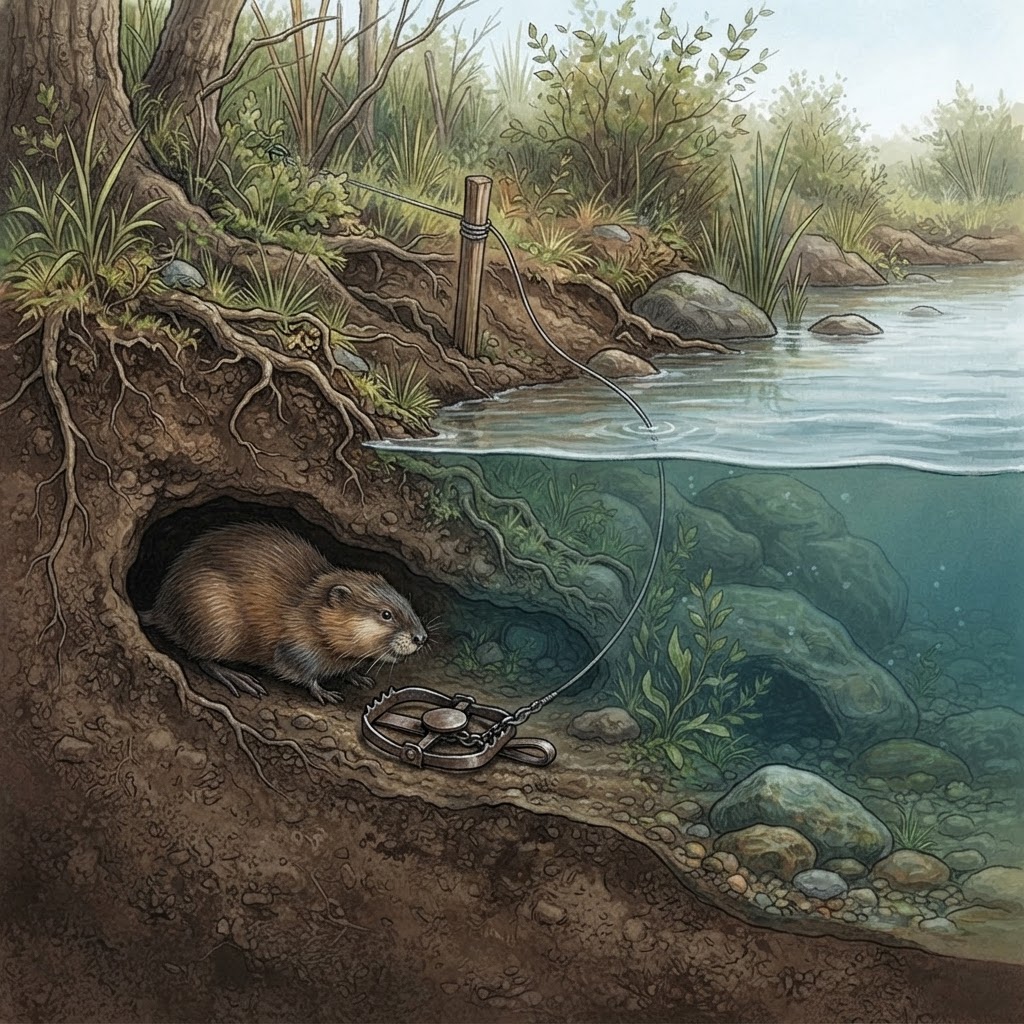
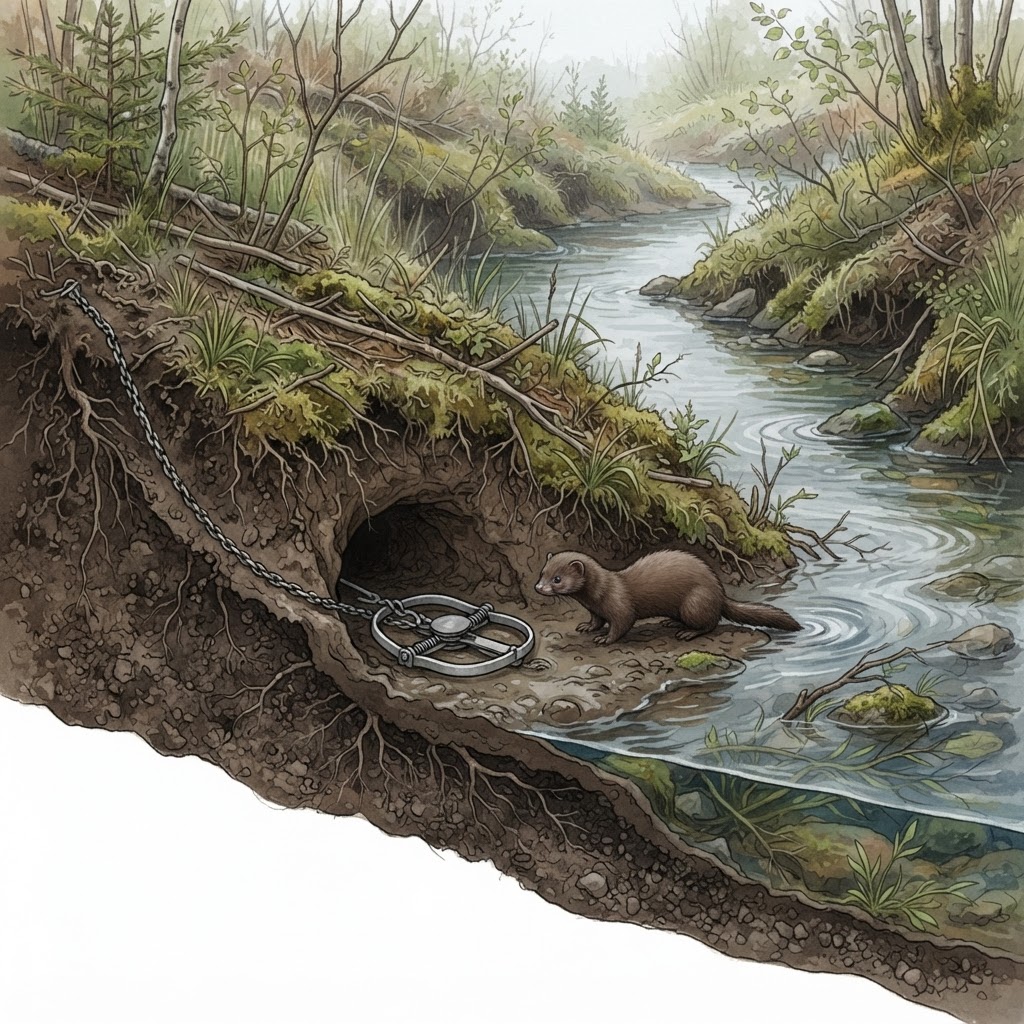
Target steep, undercut stream banks, exposed tree roots, or narrow washouts where mink are forced to travel close to the waters edge. Look for natural pinch points or small pre-existing cavities in the mud. Mink hunt by investigating every nook and cranny, making these natural funnels highly productive.
How to Build It
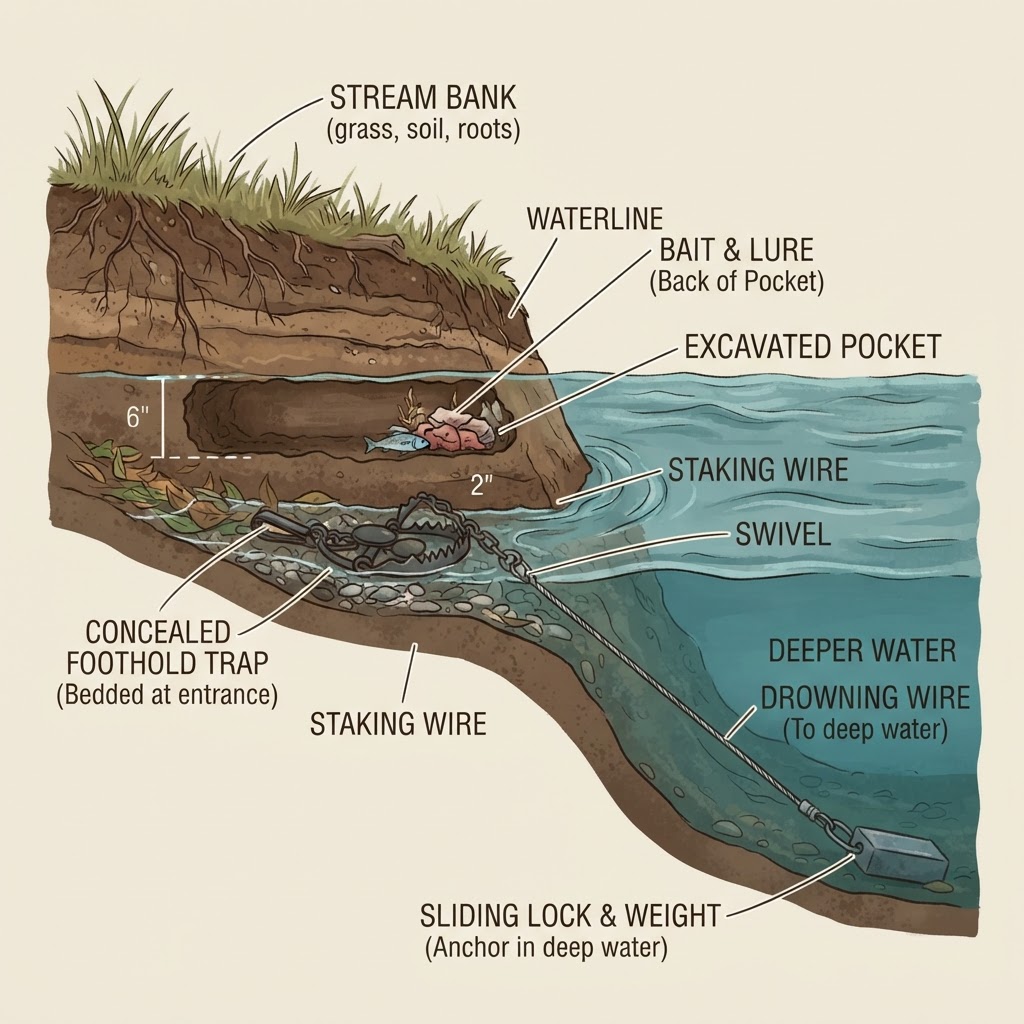
- 1Identify a natural pocket in the bank or dig a horizontal hole about 4 inches in diameter and 10 inches deep near the water line.
- 2If using bait, place a small chunk of fish or a dab of lure at the very back of the hole.
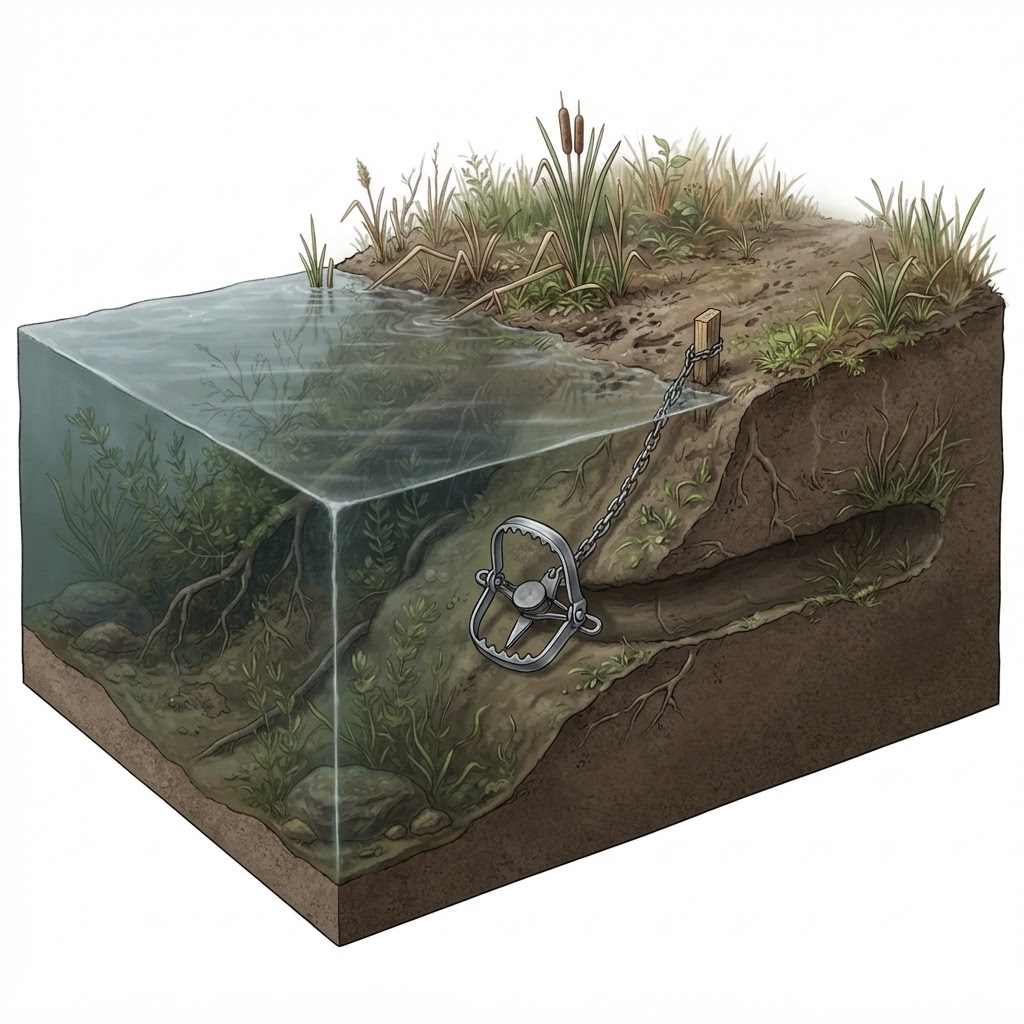
- 3Bed a foothold trap firmly in the mud just outside the entrance, or position a bodygrip trap directly over the hole opening.
- 4Anchor the trap securely, using a drowner lock system if utilizing a foothold trap near deep water.
- 5Use a few small twigs or mud clods on the sides of the trap to gently guide the minks feet onto the pan or through the jaws.
Bait & Lure
Fish chunks like carp or sunfish, or commercial mink gland lure, though blind sets often require no bait.
Gear & Traps
#110 or #120 bodygrip trap or a #1 to #1.5 foothold trap, anchoring stakes or wire, trowel, and optional fish bait.
Best Conditions
Best utilized after a fresh rain when water levels are stable or slightly receding, leaving fresh mud tracks visible.
Safety & Legal
Check local regulations regarding the use of bodygrip traps on dry land versus partially submerged setups. If using footholds, configure them on a sliding drowner wire for immediate humane water dispatch. Always check traps within the legal timeframe and ensure non-target river otters or birds are not frequenting the specific hole.