ON THE WATER
Walleye After Dark: Night Trolling Tactics That Work
Big walleye feed hard after sunset. Dial in your trolling spread and shallow water becomes a giant's playground.
Buckeye Hunter Hub Magazine · Issue No. 4 · October 2026 · 2026-10-01
Why Nights Produce Giants
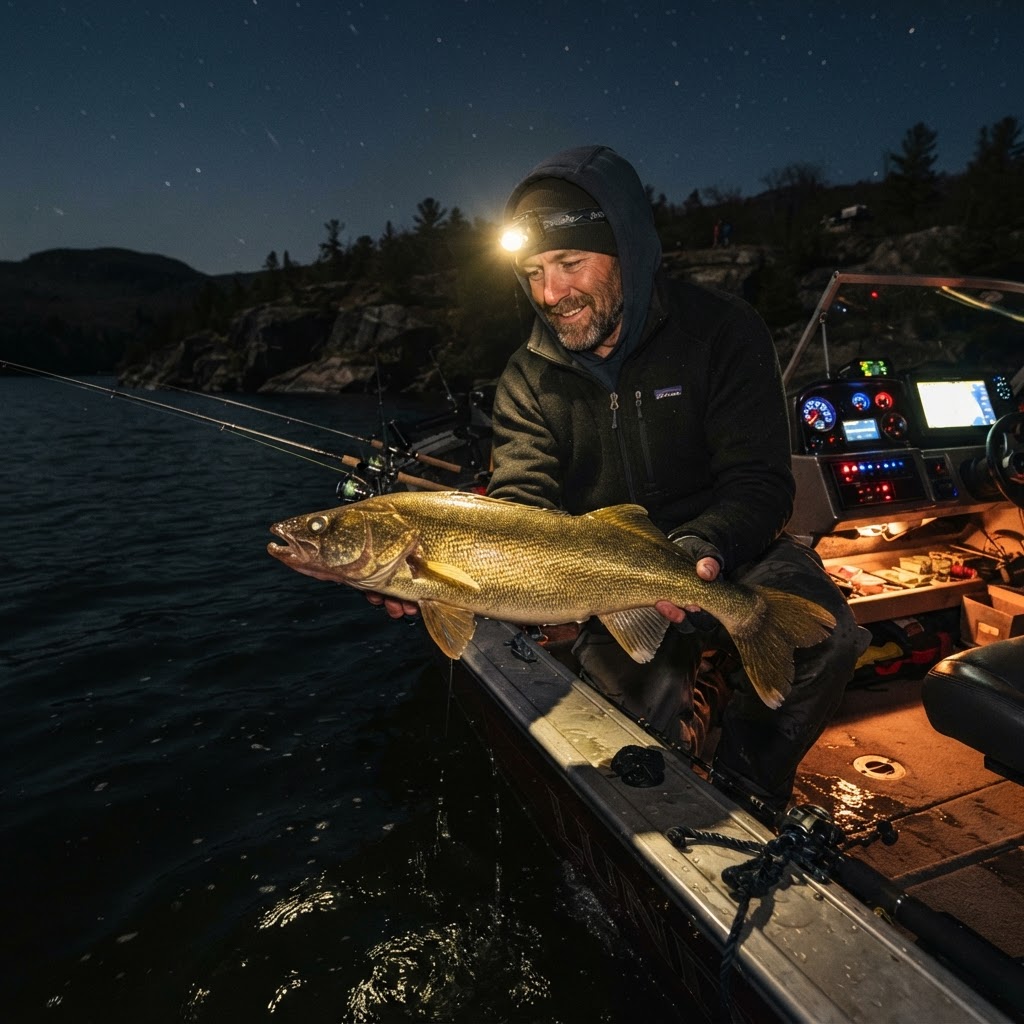
There is an old saying among walleye anglers: the biggest fish of the year is caught after the sun goes down. It is not just folklore. Trophy walleye are among the most light-sensitive gamefish in freshwater, equipped with a specialized eye structure called the tapetum lucidum that lets them see and hunt in near-total darkness. That biological advantage turns the tables at night — the baitfish that could evade them in daylight become easy targets, and the shallow water that big walleye avoid under a bright sun becomes their private hunting ground after dark. Anglers who learn to troll the night shift consistently boat the largest fish of the season. Before you go, scout the rock, gravel, and shoreline structure we cover below using our free interactive fishing map.
The Nighttime Migration
During daylight hours, big walleye typically hold on deeper structure or suspend over open basins, using low-light periods to feed. But as night falls, they undertake a predictable migration into surprisingly shallow water — often 3 to 10 feet deep — to ambush baitfish that gather near shoreline structure. This shallow movement is what makes night trolling so effective and, frankly, so accessible. You do not need a deep-water boat or expensive electronics to reach fish that have moved into 6 feet of water along a riprap causeway.
The key is recognizing that these fish are not scattered. They funnel to specific structural features where bait concentrates, and once you find one productive stretch, it will typically produce night after night under similar conditions.
Dialing In the Spread
A night trolling spread is built around one goal: presenting shallow-running baits quietly and precisely along structure without spooking fish in skinny water.
Baits
- Shallow-diving stickbaits are the backbone of the night bite. Minnow-profile crankbaits that run 2 to 6 feet deep let you work over the tops of shallow structure without constantly fouling on rock.
- Natural and glow finishes both earn their place. Start with natural silver, gold, and clown patterns, and switch to glow or UV finishes on dark, moonless nights or in stained water.
- Give your glow baits a quick charge with a camera flash or UV light before each drop to maximize their effectiveness.
Planer Boards
Planer boards are the single most important tool for night trolling. They spread your baits out to the sides of the boat, moving them away from the disturbance of the hull and motor and into the shallow, undisturbed water where big fish cruise. Boards also let you run multiple lines without tangling and cover a much wider swath of structure on each pass.
Trolling Speed
Slow and steady wins at night. A trolling speed of 1.5 to 2.2 mph covers the range for most conditions. Start at 1.7 mph and let the fish dictate adjustments — colder water usually calls for slower speeds. Use planer boards and a bow-mount trolling motor or a kicker to hold a consistent, quiet pace.
Key Locations
Night walleye relate to hard structure that holds baitfish. Focus your passes on:
- Rocky points that taper from shallow to deep — classic ambush terrain.
- Riprap causeways and breakwalls — the rock holds crayfish and baitfish, and the linear structure is easy to troll.
- Windblown shorelines — wind pushes plankton, then baitfish, then walleye into the shallows on the downwind bank.
- Gravel and sand transitions near spawning areas, especially in early spring and late fall.
Work these areas in long, methodical passes, keeping your baits just above or alongside the structure. When you locate a productive stretch, save it — dropping a waypoint on every after-dark run builds a night-fishing map you will lean on for years. For more trolling and gear breakdowns, check the fishing blog.
Safety After Dark
Night fishing demands extra caution. Before you launch, make sure your navigation lights are functional and bright, and keep a spotlight handy for spotting hazards, buoys, and other boats. Move slowly around structure you would take at speed in daylight, and always wear your life jacket — falling overboard at night is far more dangerous than during the day. It is smart to fish with a partner and to let someone on shore know your plan and return time.
Walleye regulations, including season dates and slot limits, vary widely by state and even by individual body of water, so confirm the current rules through our state fishing resources before you keep any fish. For broader information on walleye management and conservation, the U.S. Fish and Wildlife Service is a reliable reference.
The Payoff
Night trolling asks more of you — later hours, extra gear, and heightened caution — but it pays back in the currency that matters most to trophy hunters: size. The shallow water that seems lifeless at noon comes alive after dark, and the fish cruising it are often the biggest in the system. Put in the nights, learn your structure, and mark every productive pass. When that giant finally thumps the board, share it with the community on our catch wall.