ON THE WATER
The Iridescent Streak: Unlocking the Patterns of American Rainbow Trout
Rainbow trout are among the most sought-after game fish in the U.S. Learn how to track, hook, and land these vibrant fighters using a tactical approach.
Buckeye Hunter Hub Magazine · Issue No. 6 · November 2026 · 2026-11-01
Understanding the Rainbow: Biology and Behavior
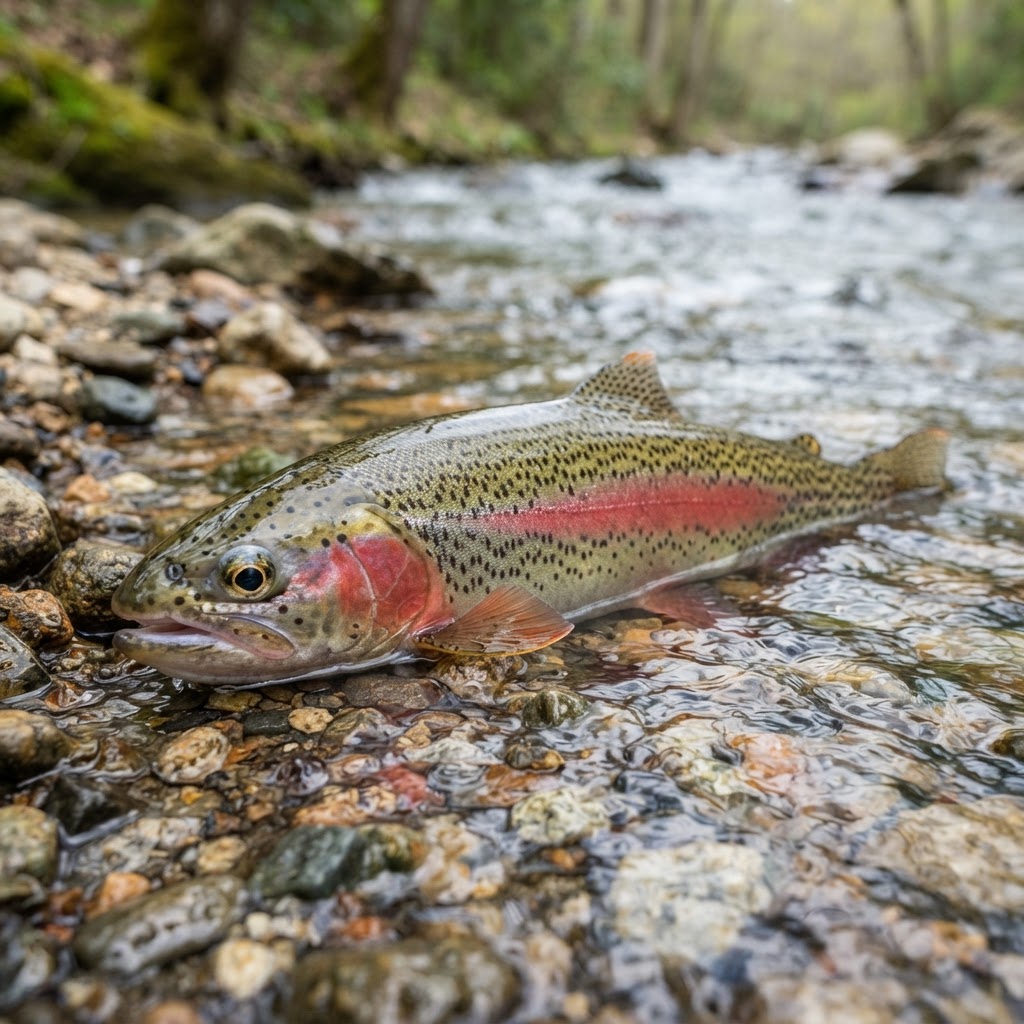
Rainbow trout (Oncorhynchus mykiss) are arguably the most iconic salmonids in North American waters. Known for their striking pink lateral stripe, dark spotting, and explosive aerial acrobatics, they have been introduced far beyond their native Pacific coast range. To consistently land these fish, anglers must first understand their biology. Rainbows are cold-water specialists that thrive in high-oxygen environments. They are visual predators, relying heavily on their sight to hunt insects, crustaceans, and smaller fish.
Habitat and Environmental Preferences
Unlike species that tolerate stagnant marshes, rainbow trout demand high-quality, moving water or deep, spring-fed lakes. They seek out oxygen-rich zones, often holding behind boulders, under cut banks, or in the transition zones of riffles where the current brings food directly to them. When hunting in lakes, they follow the thermocline, retreating into deeper, cooler water during the heat of the summer. You can use our free interactive fishing map to identify deep-water drop-offs and spring-fed inflows that typically hold trout during mid-summer heatwaves.
Effective Techniques and Terminal Tackle
For the trout enthusiast, success often boils down to matching the hatch or mimicking a wounded baitfish. In running water, nymphing is arguably the most consistent producer. By using a strike indicator and weight to bounce a nymph pattern along the bottom, you imitate the insect life that makes up the bulk of a trout’s diet. For spin fishermen, small inline spinners like the Panther Martin or Mepps remain classic tools. These lures create vibrations that trigger the aggressive instincts of even the most lethargic rainbows.
Always ensure your terminal tackle is balanced. Trout have excellent vision, so using light fluorocarbon leader (4lb to 6lb test) is a game-changer. If you are struggling to find local regulations or seasonal closures, I highly recommend checking your state fishing resources before heading out to ensure you are compliant with local laws and stocking schedules.
Seasonal Patterns and Water Conditions
Rainbow trout are active year-round, but their behavior shifts dramatically with the water temperature. In the spring, as snowmelt warms the streams, insects begin to hatch, and the fish feed aggressively to recover from winter. This is prime time for dry fly fishing. As we move into the fall, trout often move into spawning runs or feed heavily in preparation for the upcoming winter. If you find yourself having trouble determining the right lure for the current water clarity, head over to the fishing blog to read our recent breakdown on water-temperature-based lure selection.
Tips for New and Experienced Anglers
For the beginner, the greatest challenge is often presentation. Don't cast and retrieve blindly. Watch the water; if you don't see fish rising, focus your efforts on the seams—the thin lines of water between fast and slow current. This is where trout exert the least amount of energy while catching the most food.
Experienced anglers should focus on stealth and micro-adjustments. When the fishing gets tough, swapping to a smaller fly size or a more natural, subtle color pattern can be the difference between a skunk and a limit. Always try to approach a pool from downstream; trout face into the current to feed, and they will spook instantly if they see movement or shadows looming above them.
For official data on trout stocking and water quality reports, the U.S. Fish and Wildlife Service provides excellent resources that every serious angler should bookmark. Whether you are chasing wild stream-born fish or hungry stockers, the rainbow trout remains the ultimate test of an angler's finesse and patience.