ON THE WATER
Apex Ambush: Targeting Trophy Flathead Catfish in American Waters
Shift your focus from scavenging bottom-feeders to the river's true king. This guide unlocks the secrets to hunting massive Flathead Catfish through specialized gear, bait, and seasonal patterns.
Buckeye Hunter Hub Magazine · Issue No. 6 · November 2026 · 2026-11-01
The River's Silent Assassin
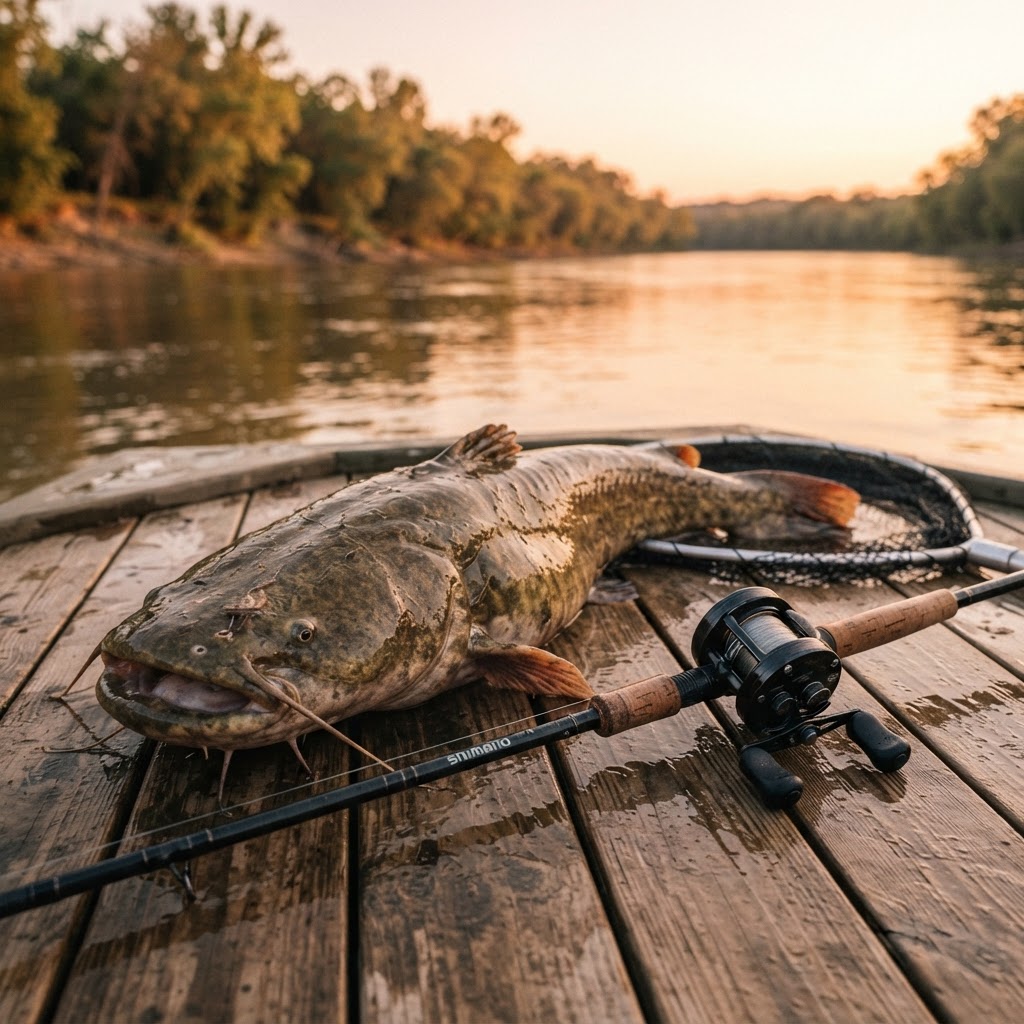
Unlike their scavenging cousins, the Flathead Catfish (Pylodictis olivaris) is a true apex predator. With a muscular build and a predatory drive that rivals any bass or pike, the flathead—or 'yellow cat'—is a prized trophy for anglers across the United States. While many catfish species feed by smell and current, the flathead relies heavily on its lateral line and visual cues to hunt live prey. At Buckeye Hunter Hub, we believe that understanding this predator-prey relationship is the foundation for moving from accidental catches to consistent, trophy-sized results.
Biology and Predatory Behavior
Flatheads are unique among catfish because they are almost exclusively piscivorous. As they grow, their diet shifts from small invertebrates to increasingly large sunfish, shad, and even other catfish. Because they occupy a specific niche as ambush predators, they don't wander aimlessly. They wait. They utilize their mottled coloration to blend perfectly into the shadows of logjams, bridge pilings, and deep, rocky depressions. When a forage fish wanders too close, the flathead strikes with a powerful, suction-heavy gulp.
Mastering the Habitat
Finding flatheads requires a departure from standard 'soak-and-wait' catfishing tactics. You must hunt structure. During the daylight hours, focus your efforts on the 'dark side' of the river. Deep holes beneath cut banks, sunken timber piles, and rock armor along channel bends are prime real estate.
If you are planning your next trip, don't forget to utilize our free interactive fishing map to identify steep depth changes and channel swings that typically hold these giants. Always consult your local state fishing resources for specific size limits and seasonal regulations, as many states have strict management programs for trophy-class flatheads.
The Presentation: Bait and Rigging
When it comes to flathead fishing, live bait is not just an option; it is a necessity. A struggling, healthy sunfish or bullhead creates vibrations that trigger the flathead’s predatory instinct.
The Gear Selection
- Rods: Medium-heavy to heavy action casting rods are required to pull these fish out of heavy cover.
- Hooks: Use high-quality circle hooks ranging from 7/0 to 10/0, depending on the size of your bait.
- The Rig: The 'Santee Cooper' rig or a basic slip-sinker rig is highly effective. The key is ensuring your bait stays near the bottom while moving just enough to remain visible.
For more in-depth discussions on gear selection and maintenance, check out our archives in the fishing blog, where we break down the nuances of terminal tackle for various conditions.
Seasonal Patterns and Conditions
As water temperatures rise in late spring, flatheads move from their wintering holes in deep river channels toward shallower spawning areas. Summer is the prime time for trophy hunting. As the sun sets, these fish leave their daytime sanctuaries to roam the shallower flats to hunt. Night fishing is arguably the most effective strategy during the sweltering heat of July and August.
Conversely, during the fall, focus on the transition zones where deep water meets shallow shelves. As the water cools, their metabolism begins to slow, but they continue to feed aggressively before the winter freeze. It is a great time to be on the water, provided you are tracking the migration of baitfish schools.
Tips for the Aspiring Flathead Angler
If you are new to this pursuit, the biggest mistake is over-committing to one spot. Flatheads are relatively solitary. If you haven't had a bite in 45 minutes, it is time to move. A proactive angler who stays mobile will always outperform someone sitting on a 'dead' hole.
For those targeting truly massive fish, patience is key. A trophy flathead, which can grow to well over 50 pounds, is often a product of a decade or more of growth. Always practice careful handling to ensure these legacy fish remain in our systems for future generations. Check the community catch wall to see the massive fish our users have landed using these techniques and get inspired for your own outing.
Conservation and Responsible Stewardship
As stewards of our waterways, we have a responsibility to manage these predators carefully. Many state agencies, such as the Missouri Department of Conservation, provide excellent data on the health of their catfish populations. By reporting tagged fish and adhering to catch-and-release practices for large breeding females, we ensure that the next generation of anglers can experience the thrill of a flathead battle.
Flathead fishing is a test of patience, hardware, and mapping skills. Whether you are fishing the murky depths of the Mississippi or a quiet tributary in the South, the principles remain the same: find the structure, offer a lively bait, and be ready for the strike of a lifetime.