
FIELD REPORT
Teal Season Hunting Tips for the Early Migration
Early teal season requires speed and precision. Learn the calling and setup tips to improve your success on the marsh.
Buckeye Hunter Hub Magazine · Issue No. 1 · August 2026 · 2026-08-27
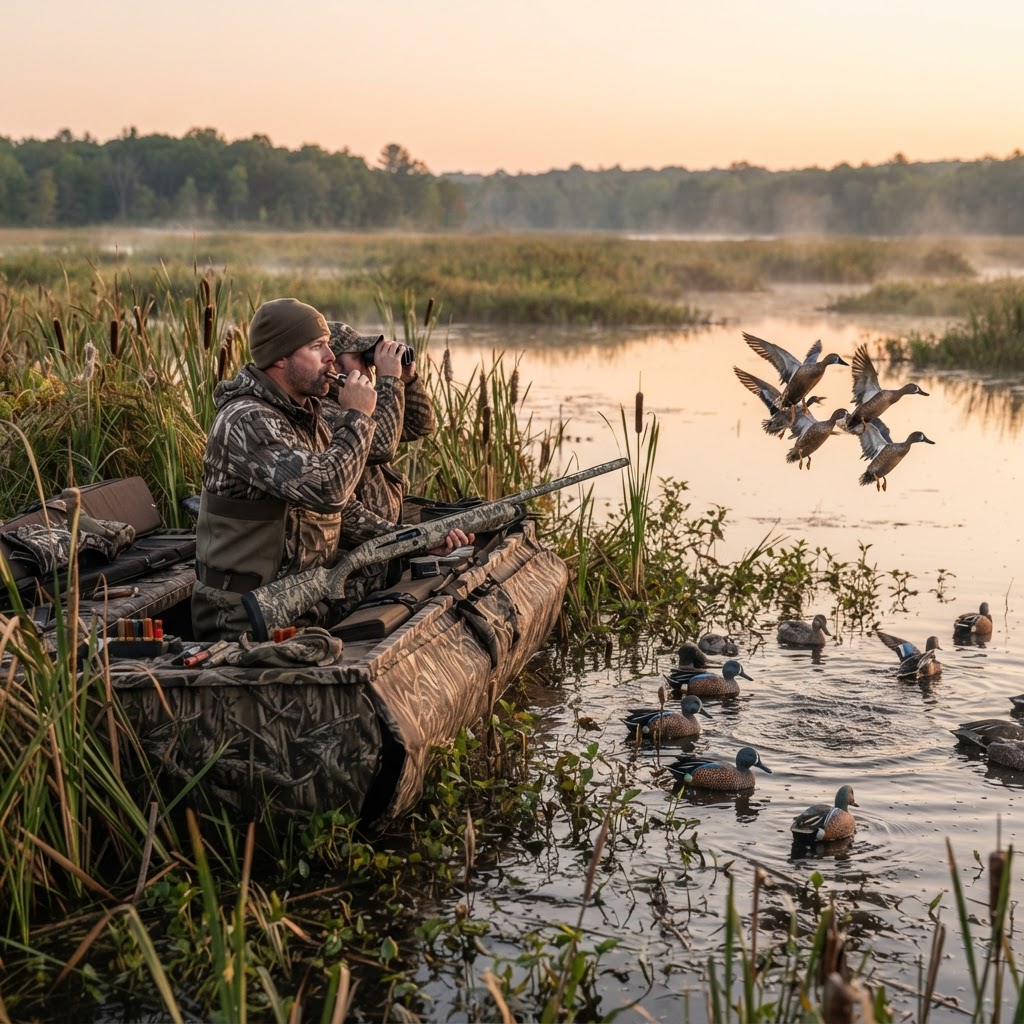
The September sun still feels like summer, but the morning air over the marsh holds a thin, brittle edge that signals the turning tide of the migration. Blue-winged teal are the sprinters of the waterfowl world, arriving with little fanfare and departing before the first frost settles. For the experienced waterfowler, early teal season is a technical exercise in speed, concealment, and reading the water, serving as the ultimate shakedown for both gear and reflexes ahead of the primary migration. To find success this month, you must abandon the slow, heavy-handed tactics used for late-season mallards and adopt a rapid-fire approach designed for erratic, low-altitude flights. Before you head out, verify your state hunting regulations and seasons to ensure you are fully compliant with current bag limits and legal shooting hours for your specific area. ## How do you distinguish blue-winged teal from non-target species? Identification is the primary hurdle in early-season hunting, as the marsh is often crowded with other puddle ducks, shorebirds, and local resident geese. Blue-winged teal are small, compact, and move with a frantic, buzzing flight path that is unmistakable once you have seen it a few times. At dawn, look for the signature blue shoulder patch on the males, though be aware that most birds encountered in September will be in eclipse plumage or juvenile brown, making them look remarkably similar to green-winged teal or even female shovelers. A quick consult of a waterfowl species field guide can help sharpen your visual cues regarding wing shape and silhouette. When a flock zips by, focus on the 'buzz' of their wings; they often fly in tight, organized clusters and will frequently commit to a decoy spread with little hesitation if your motion and concealment are on point. If you aren't 100 percent sure of the species, keep your safety on. This is the time of year when local waterfowl migration tracker data shows movement patterns are highly localized, often pivoting on nothing more than a change in water levels or a subtle drop in overnight temperatures. ## What is the most effective decoy spread for early season teal? Forget the massive, 60-decy spread used for November divers. Teal are visual, social birds, but they are also easily spooked by unnatural stillness. Your best strategy is a tight, 'landing zone' configuration that leaves a clear pocket of open water in front of your blind. Position six to twelve teal decoys in small pods, perhaps mixing in one or two gadwall or mallard decoys to add size, but keep the color profile muted. Motion is critical here. While big ducks might ignore a stagnant spread, teal are drawn to ripples. Use a simple jerk cord or a small, battery-operated pulsating decoy to create surface agitation. Before deciding on your setup, utilize the Buckeye Hunter Hub at /Map to analyze local water levels and identify hidden backwater pockets where teal tend to congregate after a cold front. By integrating your decoy spread planner with recent aerial imagery, you can identify the exact mudflats and shallow cattail edges that will hold birds during the first weeks of the season. ## How do you call effectively for teal? Teal calling is rarely about the complex, multi-note greeting calls used for mallards. It is about high-pitched, rapid-fire peeps and whistles. A teal hen makes a distinct, soft, high-frequency 'peep' sound that you can replicate with a dedicated teal call or a standard whistle. Focus on intensity rather than volume. If you see a flock passing, a sharp, quick string of notes can turn them, but do not over-call. If the birds are already locked and descending, stop calling immediately. The best strategy is to call only until they commit to the look of your setup. If they start to flare, hit them with a few short, insistent peeps to pique their curiosity, but prioritize your positioning and concealment over your calling ability. Remember, the sound of the marsh—the wind through the reeds and the splash of water—is often more effective than an aggressive calling sequence. ## How do you manage your gear for rapid, low-altitude shots? Teal hunting is high-stakes, short-duration work. The birds will often appear out of nowhere, skimming the surface of the cattails before you even hear them. Preparation is key to avoiding missed opportunities: 1. Optimize your load: Switch to high-velocity size 6 or 7 steel shot. You need a dense pattern to account for the speed of the birds and the often-cramped shooting windows. 2. Clear your lanes: Spend your pre-season scouting trips trimming back enough of the marsh grass to ensure you can swing your shotgun 180 degrees without catching the barrel on debris. 3. Quick access: Ensure your shells and extra calls are in your blind bag within arm's reach. There is no time to rummage through gear when a flock of twenty birds is dropping into the decoys. 4. Camouflage maintenance: Teal have excellent eyesight. Ensure your layout blind or natural vegetation hide is brushed in to match the current color of the marsh, not what it will look like in October. If you are mentoring someone new to the sport, the BHH Youth Hunters Academy (/Partners/YouthHuntersAcademy) provides excellent resources on establishing these habits early, which are essential for long-term proficiency in the field. ## What strategic adjustments should be made based on wind and weather? Teal movement is highly sensitive to wind direction. On calm days, they will often congregate in the center of shallow ponds, making them nearly impossible to approach. On windy days, look for them tucked into the leeward side of islands or dense vegetation banks. Use hunt mapping and wind tools to forecast the prevailing wind speeds 48 hours in advance; this allows you to position your back to the wind, ensuring the birds fly into your landing zone with their brakes applied. A tailwind is the enemy of the teal hunter, as it allows the birds to fly at speeds that make ethical, clean shots nearly impossible. When you get into the marsh this week, take fifteen minutes to observe the birds that are already present. Are they working the mudflats or sitting in the deep grass? Are they flighty, or are they feeding heavily? Adaptation is the difference between a successful hunt and a wasted morning. Before your next outing, check the latest reports, prep your gear, and ensure your choke tubes are swapped for a light-modified or skeet spread to handle the close-in, fast-moving targets you will encounter this week.