GEAR
The Essential Dove Hunting Gear Checklist
Be ready for opening day with the right equipment. We review the must-have gear for a successful dove hunt this September.
Buckeye Hunter Hub Magazine · Issue No. 1 · August 2026 · 2026-08-27
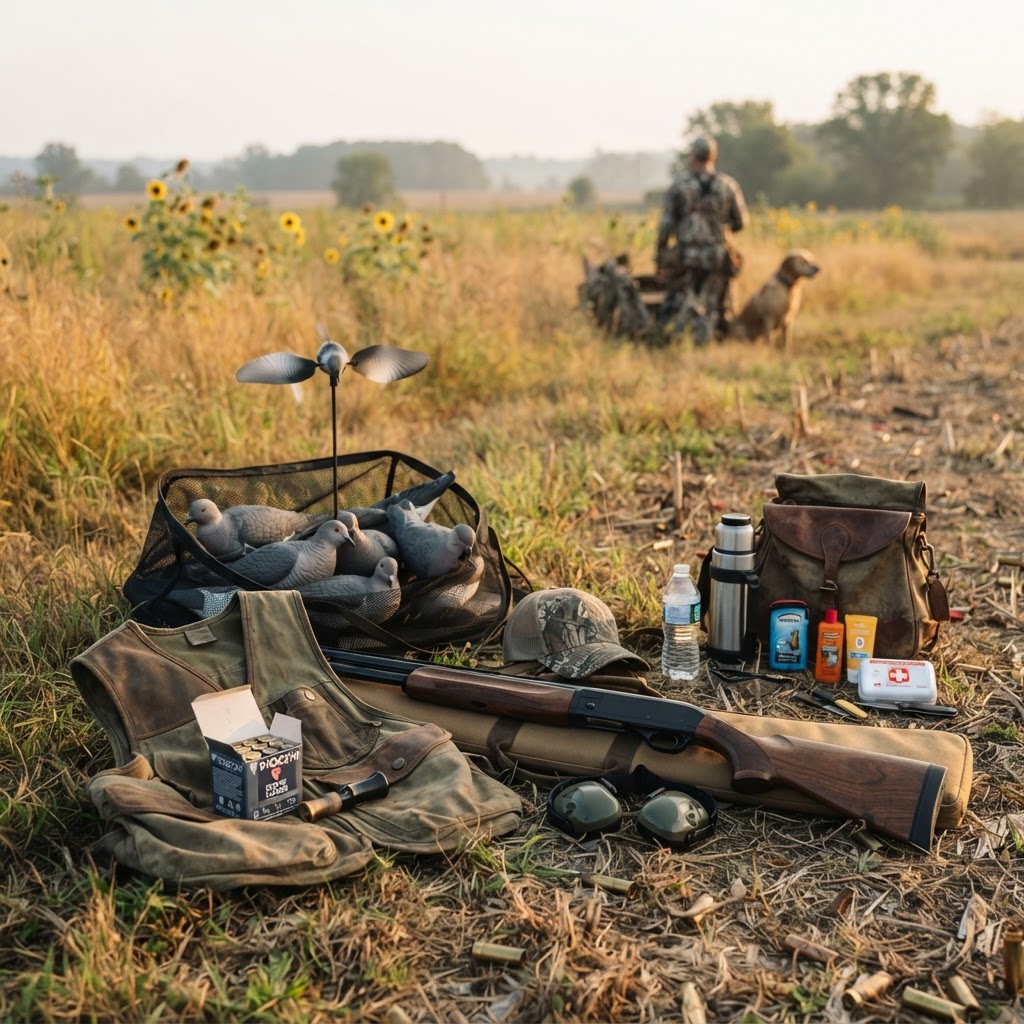
The sweltering heat of August is starting to break, replaced by that distinct, crisp atmospheric pressure shift that signals the migration of mourning doves. As we stand on the precipice of September, the preparation for opening day moves from abstract planning to tactical execution. If you are serious about refining your approach, now is the time to finalize your dove hunting gear list and ensure your equipment is as lean and effective as possible. Precision in your dove field setup often dictates the difference between a high-volume afternoon and an empty game bag. Before you head out, verify your state hunting regulations and seasons to ensure your permit and endorsement status is current. For many, the dove season is the true start of the hunting year, and the following gear considerations are essential for those looking to maximize their opportunities. ## What constitutes the best dove hunting shells for high-volume days? When selecting shotshells for early-season doves, speed is your primary asset. Doves are erratic, fast-moving targets, and the margin for error is razor-thin. For most 12-gauge setups, look for shells in the 1-ounce to 1 1/8-ounce load range with number 7.5 or 8 shot. These provide the dense patterns necessary for mid-range shots, typically between 20 and 35 yards. If you are shooting a 20-gauge, a 7/8-ounce load remains the gold standard. Avoid the temptation to use heavier waterfowl loads; they offer unnecessary recoil that will punish you over the course of an afternoon, fatiguing your shoulder and disrupting your follow-through. Regardless of the gauge, choose shells with higher velocity—ideally 1,250 to 1,300 fps—to minimize the lead required on crossing shots. Always keep a few boxes of steel shot on hand if your specific field site mandates non-toxic shot, as regulations change by property. ## How should I optimize my dove field setup for maximum visibility? A successful dove hunting gear list is incomplete without a plan for concealment. Doves have keen eyesight and will flare instantly if they detect movement or a silhouette that doesn't blend into the surroundings. Whether you are hunting a harvested cornfield, a sunflower patch, or a dry tank, your blind choice is critical. A low-profile layout blind or a simple collapsible chair tucked into a fence row is usually sufficient, but the key is vertical concealment. Use a camo mesh screen or natural vegetation to break up your outline against the horizon. When positioning yourself, prioritize the wind direction; doves prefer to land into the wind, and they often approach from the downwind side to survey the field. Utilizing hunt mapping and wind tools can help you identify the most advantageous corner of a field based on the prevailing thermal shifts during the afternoon flight. Before setting up, evaluate the following: 1. Sun Position: Ensure the sun is at your back or to your side to keep your eyes shaded and prevent glare. 2. Approach Lanes: Identify the flight path between roosting areas and feeding zones. 3. Shooting Lanes: Clear any tall weeds that might obstruct your swing, but avoid clearing so much that you reveal your location. ## Which accessories are essential for comfort and efficiency? In the September heat, field comfort directly impacts your focus. A high-quality, breathable moisture-wicking shirt is a must, paired with a hat that provides shade without obstructing your peripheral vision. Many experienced hunters find that a chest rig or a shell bag with a belt provides better accessibility than pockets. You need to be able to reload rapidly without breaking your rhythm. Keep these items in your kit: - A reliable bird belt or game strap. - A small cooler with ice-cold water and a damp cloth to manage heat stress. - A pair of shooting glasses with interchangeable lenses for shifting light conditions. - A compact, foldable field stool for long wait times between flights. Staying organized prevents the frantic, uncoordinated scramble that often leads to missed shots when a flock unexpectedly breaks over the tree line. If you are introducing a new hunter to the field this year, consider utilizing the BHH Youth Hunters Academy resources to teach them the fundamentals of safe gun handling and field etiquette before the pressure of the live hunt begins. ## How does the science of movement change your shooting strategy? Doves are masters of direction change, utilizing sudden gusts of wind to accelerate or drop. Shooting doves requires a fluid, kinetic motion rather than a static "aim and fire" approach. When a dove commits to your decoy spread, keep your gun barrel moving throughout the shot; if you stop your swing, you will shoot behind the bird every time. This is particularly important on birds coming in high or crossing at an angle. Studying the science of deer movement teaches us that prey animals are hyper-aware of peripheral threats, and doves are no different. They are constantly scanning for predators. By placing your decoys in an open area with visible perch points—like dead snags or fence wire—you signal that the area is safe for them to land. ## How do I prepare for the final days before the opener? With the opener approaching on September 1st for many regions, the next 48 hours are for final testing. Head to the sporting clays range for a final session, focusing specifically on high-crossing targets and fast-dropping teal-style presentations, which mimic the erratic flight of a dove coming into a field. Check your firearm for function, clean the choke tubes, and verify that your plug is installed to satisfy magazine capacity laws. Take the time to confirm your hunting season calendar so there are no surprises regarding dates or bag limits. The best hunters are not the ones with the most expensive gear; they are the ones who arrive with the most disciplined preparation. Spend the next few days monitoring the local fields you intend to hunt, observe the flight paths during the late afternoon, and trust your initial scouting. A successful season is built on the foundation of what you do now.