Yellow Perch
Perca flavescens
The schooling golden prize of the frozen tundra and open water alike, loved for its feisty fight and unmatched culinary excellence.
Typical Size
8 to 12 inches is standard; 'Jumbos' exceed 14 inches and can weigh over 1.5 pounds.
Prime Seasons
Late winter (ice fishing), spring (pre-spawn), and late autumn (feeding frenzy).
Overview
The Yellow Perch is a quintessential panfish, renowned for its gregarious nature and tendency to school in massive numbers near the bottom. Found throughout the northern United States and Canada, they are a primary target for anglers of all skill levels, especially during ice fishing season when their aggressive feeding behavior makes them highly accessible. Their social structure means that if you hook one, there is almost certainly an entire school waiting just a few feet away. Anglers prize the Yellow Perch not just for the fast-paced action of a 'jumbo' bite, but because they are widely considered the finest eating fish in freshwater. Targeting them requires a mix of finesse and attention to detail, particularly when locating the nomadic schools as they traverse breaklines.
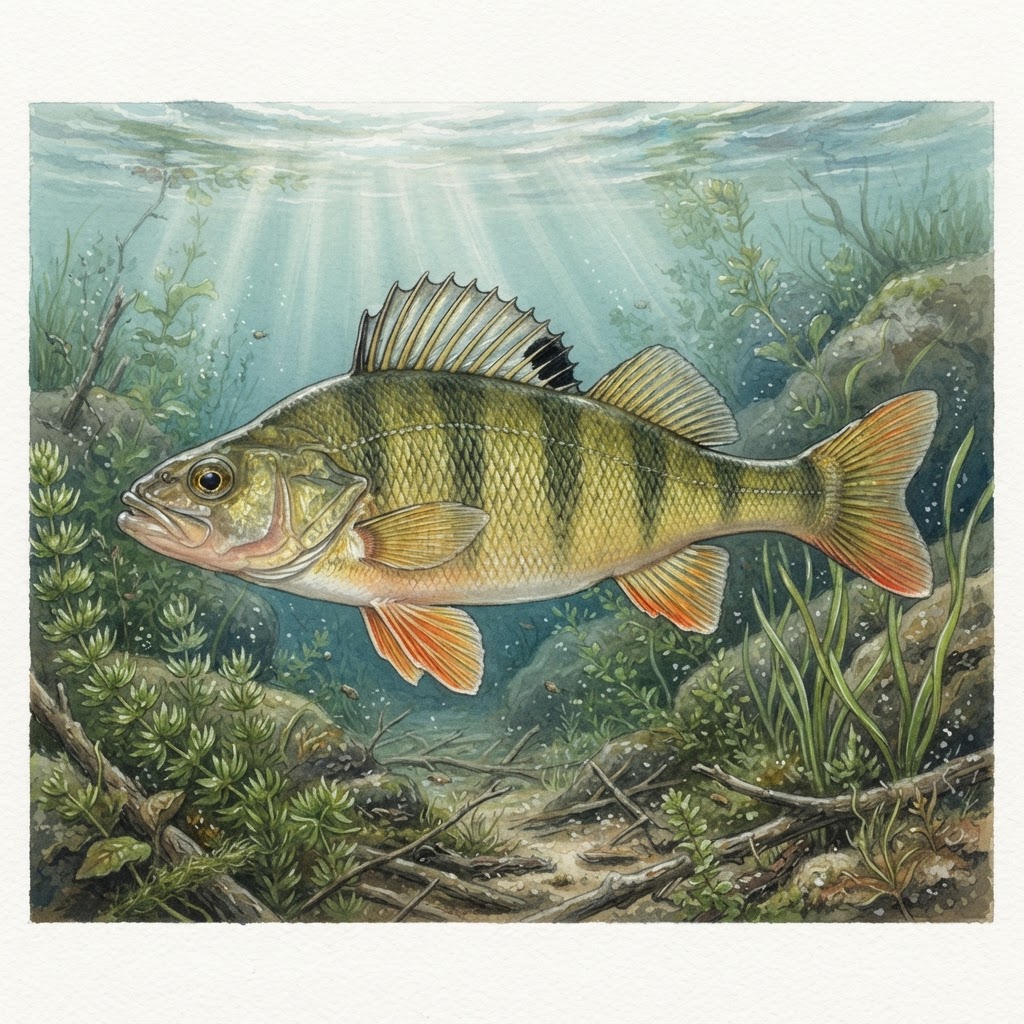
Identification
- Golden-yellow to greenish sides with 6 to 9 distinct vertical dark bars.
- Prominent, spiny dorsal fin separated from a secondary soft dorsal fin.
- Bright orange to reddish pelvic and anal fins.
- Generally lacks the canine teeth found in their larger cousin, the Walleye.
- Small mouth relative to body size compared to other panfish.
Habitat
Diet & Forage
Behavior & Feeding
Yellow perch are highly social schooling fish that exhibit opportunistic feeding habits, primarily targeting small minnows, aquatic insects, and crustaceans. They are most active during low-light periods at dawn and dusk, often patrolling weed edges and drop-offs to ambush prey. While they can be aggressive when feeding in schools, they often become lethargic in mid-summer when temperatures soar or during rapid barometric changes. Seasonal movements involve transitioning from deep basin wintering grounds to shallower spring spawning flats before retreating to mid-depth structures for the remainder of the year.
Spawning
Spawning typically occurs in early spring as water temperatures reach the mid-40s to low-50s Fahrenheit, often coinciding with ice-out. They utilize submerged vegetation, brush, or fallen timber to lay long, gelatinous ribbons of eggs. During this period, the larger females become heavily preoccupied with egg deposition and become less responsive to lures, while smaller males remain actively aggressive in the shallows. Anglers find the best success by targeting the transition zones between deep water and spawning flats just before the peak spawn.
Water Temperature
Weather Triggers
Overcast Skies
Extends the feeding window throughout the day and encourages shallower water movement.
Falling Barometer
Signals an impending storm that often triggers a pre-front feeding frenzy; utilize slightly larger, more aggressive baits.
Post-Cold Front
Fish become inactive and retreat to the bottom; switch to finesse tactics like small jigs tipped with live bait with minimal movement.
Depth by Season
Best Lure Rigs & Setups
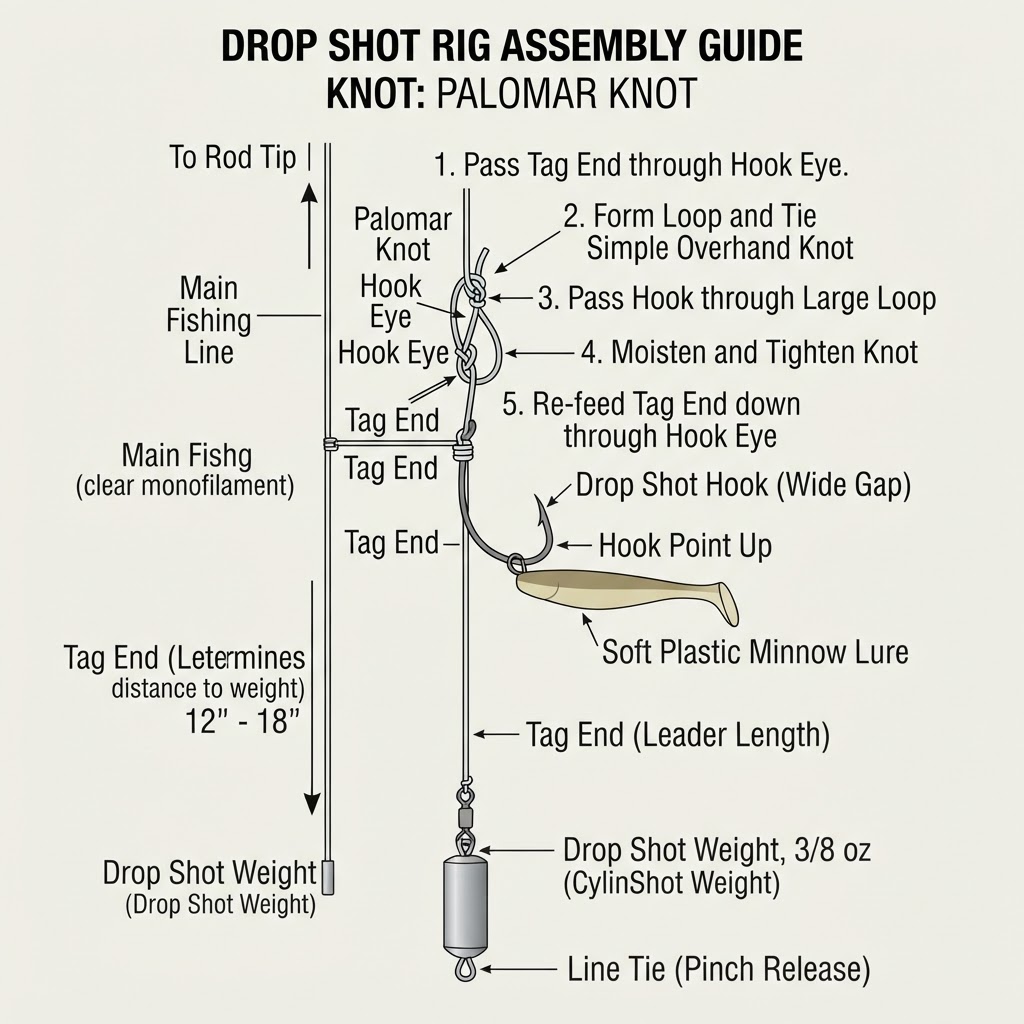
Drop Shot Rig
When: Perfect for suspended fish or when fishing directly over a school on the bottom.
Setup: 4-6lb fluorocarbon line, size 6-8 drop shot hook, 1/8 to 1/4 oz cylinder weight, 2-inch minnow-style soft plastic.
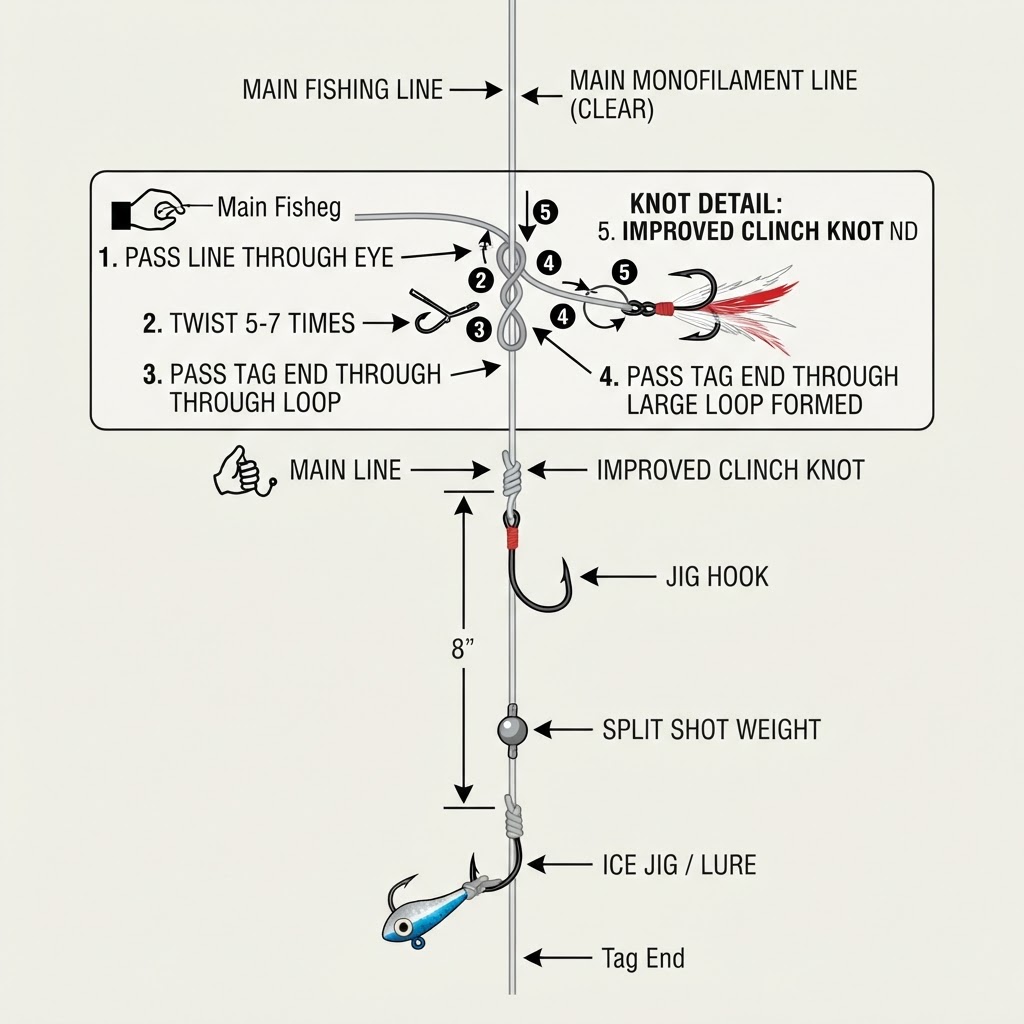
Jig and Minnow
When: The classic approach for active perch, especially when drifting.
Setup: 4-6lb monofilament line, 1/16 to 1/8 oz lead head jig, live fathead minnow hooked through the lips.
High-Low Rig (Paternoster)
When: Efficient for locating schools while stationary, allowing two baits at different depths.
Setup: 6lb monofilament main line, two size 8 octopus hooks on short droppers, 1/4 oz bank sinker at the bottom.
Best Knots
Rigs From The Library For Yellow Perch
Catch more yellow perch — free
Create a free account and unlock the full angling toolkit:


