Striped Bass
Morone saxatilis
The apex predator of the Atlantic coast and major inland reservoirs, known for punishing strikes and blistering drag-testing runs.
Typical Size
10 to 40 pounds, though trophy specimens can exceed 60 pounds.
Prime Seasons
Spring and Fall are peak periods when water temperatures are moderate and baitfish are most active.
Overview
The Striped Bass is a powerful, migratory anadromous fish prized by anglers for its size, endurance, and predatory aggression. Whether chasing baitfish in the surf of the Atlantic or patrolling the deep basins of massive reservoirs like Lake Mead or Lake Texoma, these fish command respect as one of the most exciting sportfish to target.
Identification
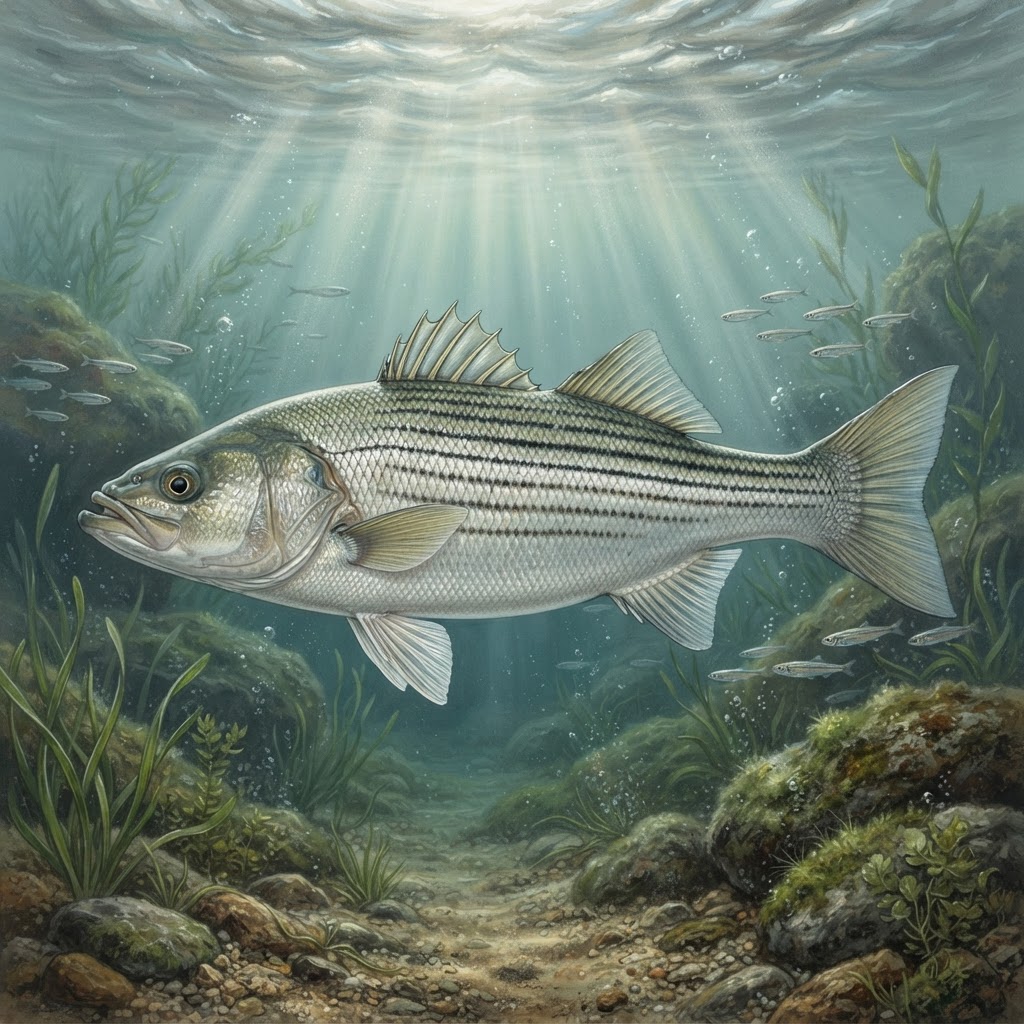
- Silver to olive-green body with 7 to 9 dark horizontal stripes
- Streamlined, torpedo-shaped body designed for high-speed swimming
- Two distinct dorsal fins with the first having sharp, spiny rays
- Large, powerful tail fin for immense thrust
- Lower jaw extends back to the middle of the eye
Habitat
Diet & Forage
Behavior & Feeding
Striped bass are highly migratory predators that often hunt in schools, frequently pushing baitfish to the surface or pinning them against structure. They are most active during low-light conditions like dawn and dusk, though they will feed aggressively throughout the night. During the summer, they seek out cooler, oxygenated water, often retreating to deeper channels or moving offshore, while autumn brings a frantic feeding binge as they gorge on baitfish before winter migrations. Anglers should prioritize current breaks, points, and rips where these powerful fish wait to ambush prey.
Spawning
Striped bass are anadromous, typically moving from coastal waters into freshwater rivers during the spring to spawn. Peak spawning generally occurs when water temperatures reach 55°F to 65°F, involving chaotic surface activity where females release eggs and males fertilize them externally. This process can make fish lethargic or preoccupied, often leading to a temporary decline in aggressive feeding behavior immediately post-spawn. Once the spawn concludes, these fish quickly regain their appetite and begin their migration back toward cooler coastal environments.
Water Temperature
Weather Triggers
Overcast Skies
Reduced light penetration extends feeding windows, allowing for topwater action throughout the day.
Approaching Cold Front
Causes a final, frantic feeding frenzy as barometric pressure drops; fish the hours leading up to the front.
Strong Onshore Winds
Pushes bait into shallow structure; target the windward side of points where predators pin schools against the bank.
Depth by Season
Best Lure Rigs & Setups
Live Bait Rig
When: When targeting suspended trophy fish using live shad or eels.
Setup: 30-50lb fluorocarbon leader, 4/0-8/0 circle hook, and a sliding egg sinker sized to match current.
Umbrella Rig
When: Trolling across open water to mimic a school of baitfish.
Setup: Heavy trolling rod, 50lb braided line, 4-6 small swimbaits rigged on jig heads connected to a multi-arm wire frame.
Jig and Plastic
When: Casting to surface breaks or working vertical structure.
Setup: 1oz to 2oz lead head jig paired with a 5-7 inch paddle-tail swimbait on 20-30lb braid.
Topwater Popper
When: Early morning or late evening when fish are surface feeding.
Setup: Medium-heavy baitcasting setup with 20lb monofilament for stretch and surface lure buoyancy.
Best Knots
Rigs From The Library For Striped Bass
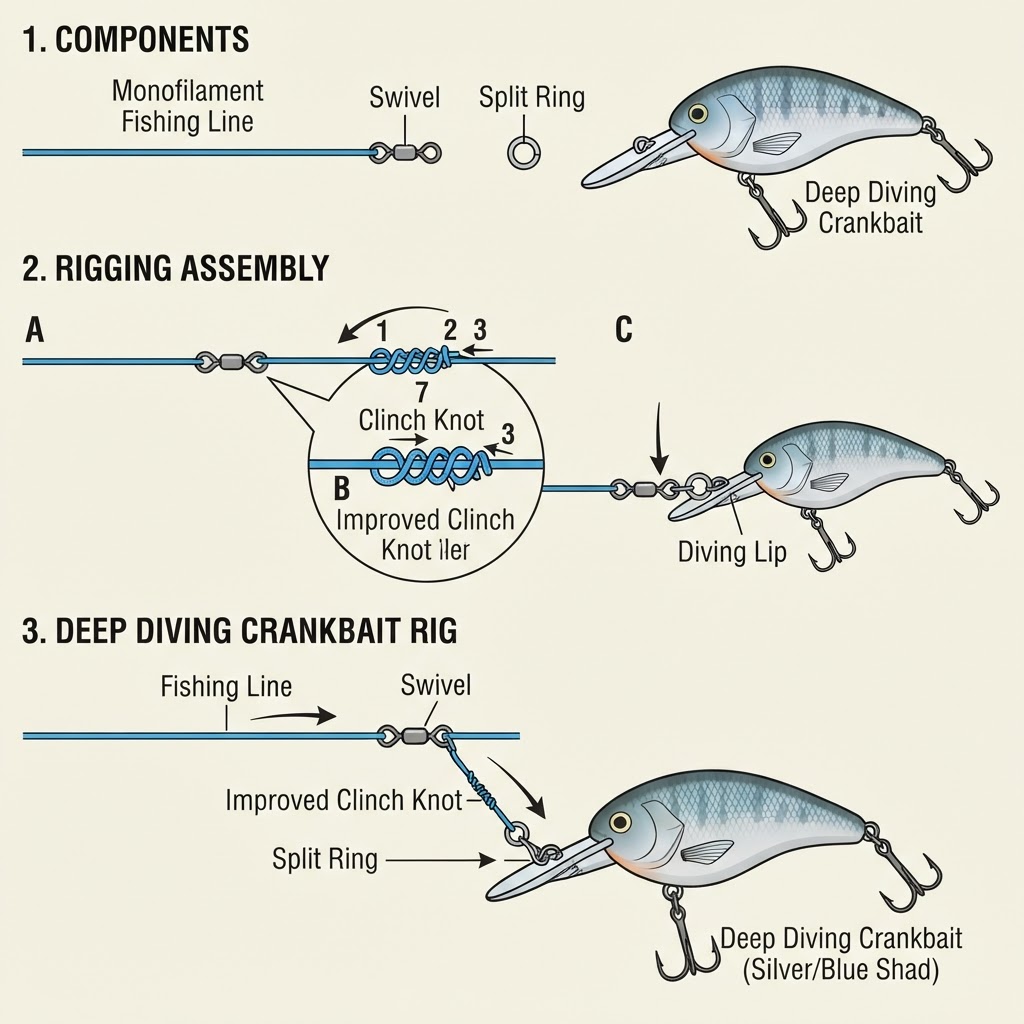 8-20 ft
Deep Diving Crankbait
The ultimate triggering tool for dredging deep structure and smashing reactive strikes from lethargic giants.
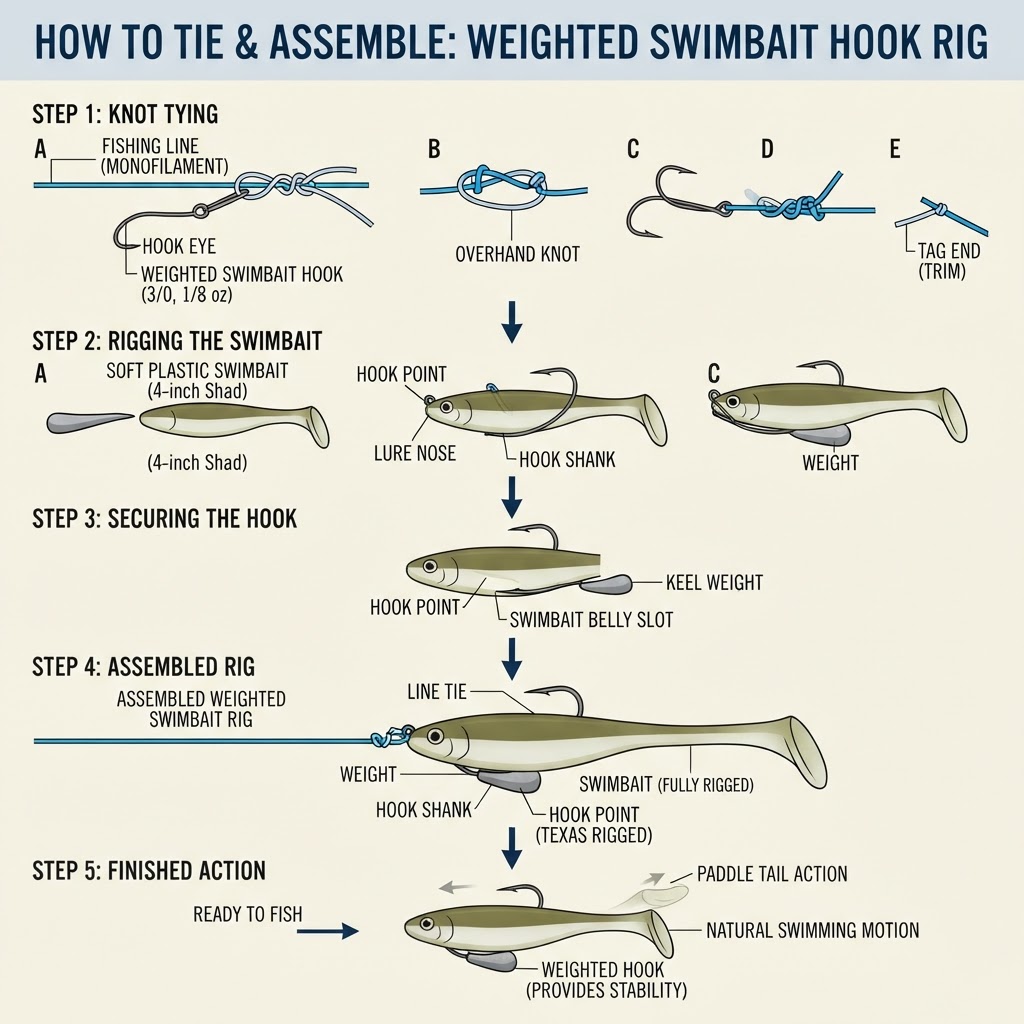 0-15 ft
Swimbait (Weighted Swimbait Hook)
The ultimate weedless search-bait that mimics a fleeing baitfish through the heaviest cover.
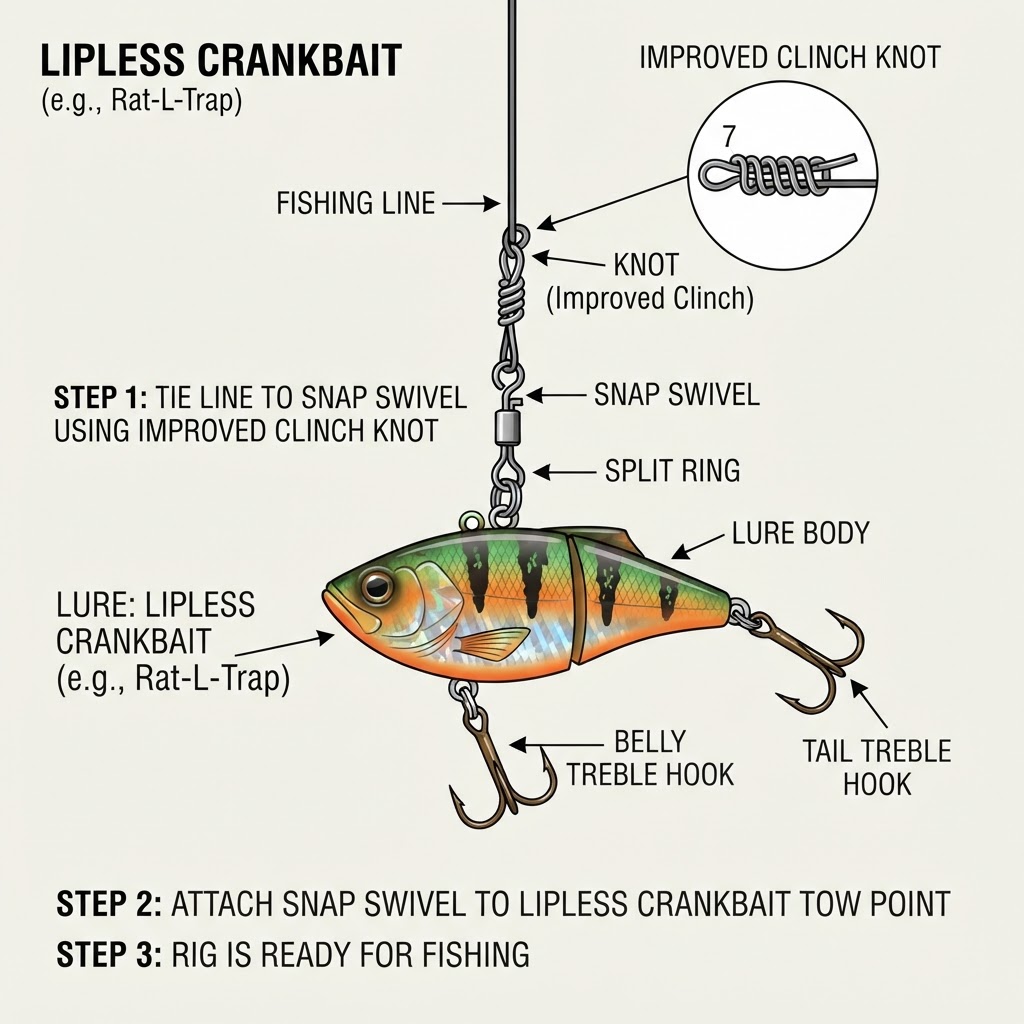 0-20 ft
Lipless Crankbait
The ultimate search bait that triggers reactionary strikes with its tight wobble and loud internal rattle.
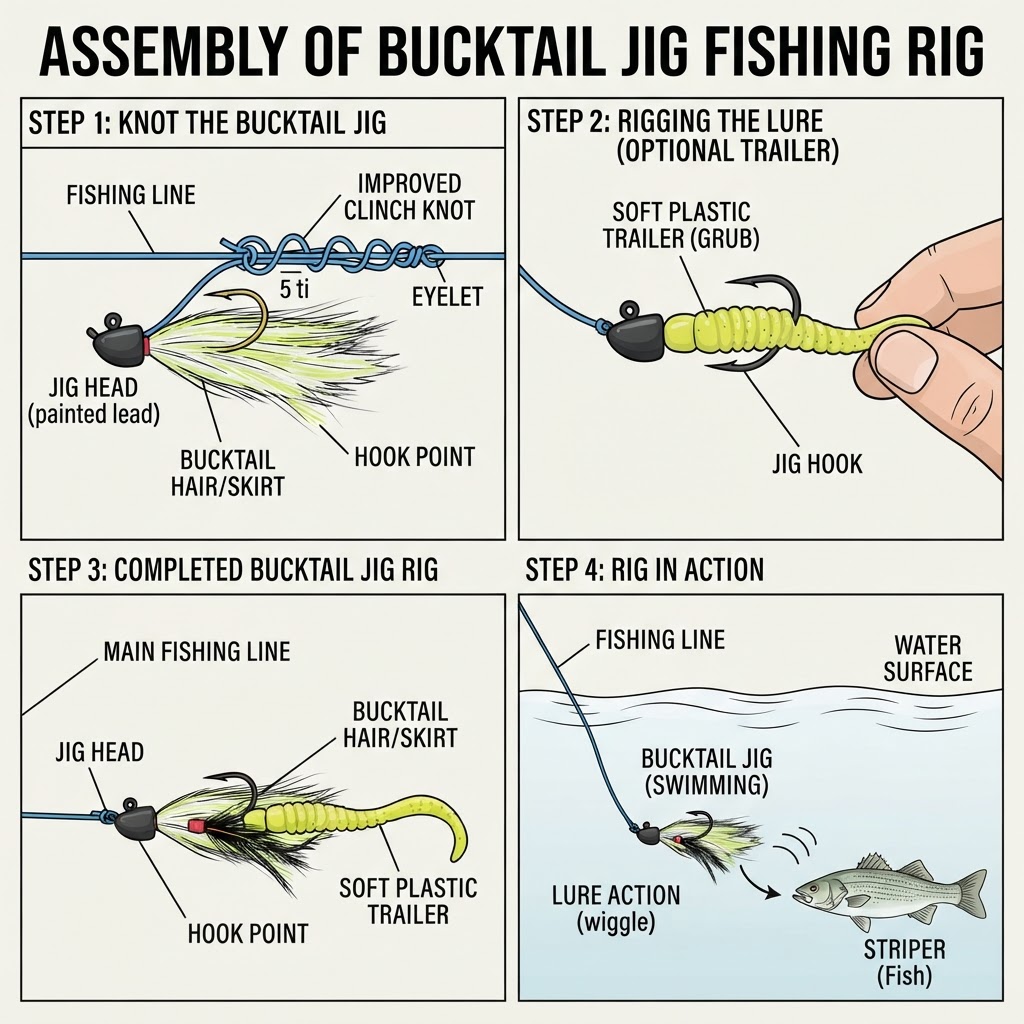 Surface to 50 ft
Bucktail Jig
The ultimate multi-species Swiss Army knife that triggers aggressive strikes through a pulsing, life-like swimming motion.
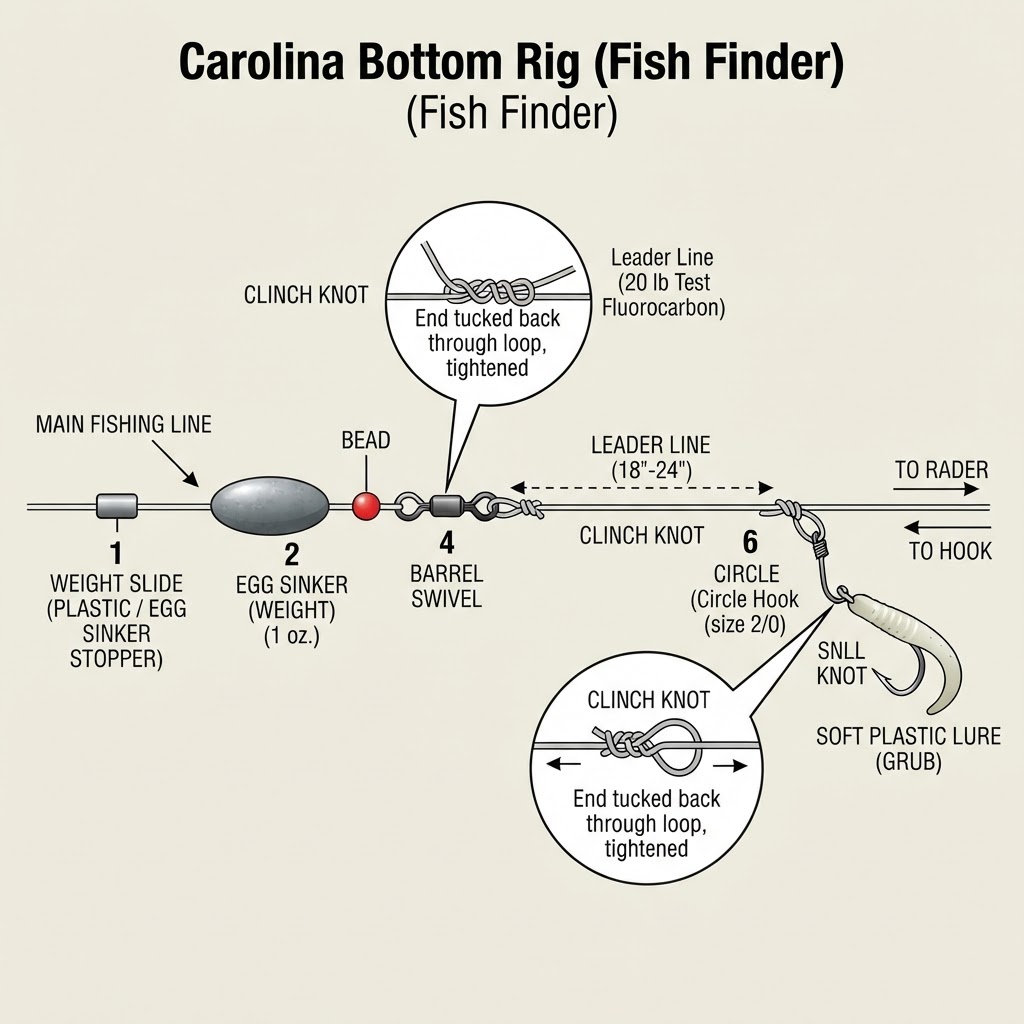 5-60 ft
Carolina Bottom Rig (Fish Finder)
The ultimate bottom-hugging presentation that allows fish to pick up your bait without feeling the resistance of your heavy sinker.
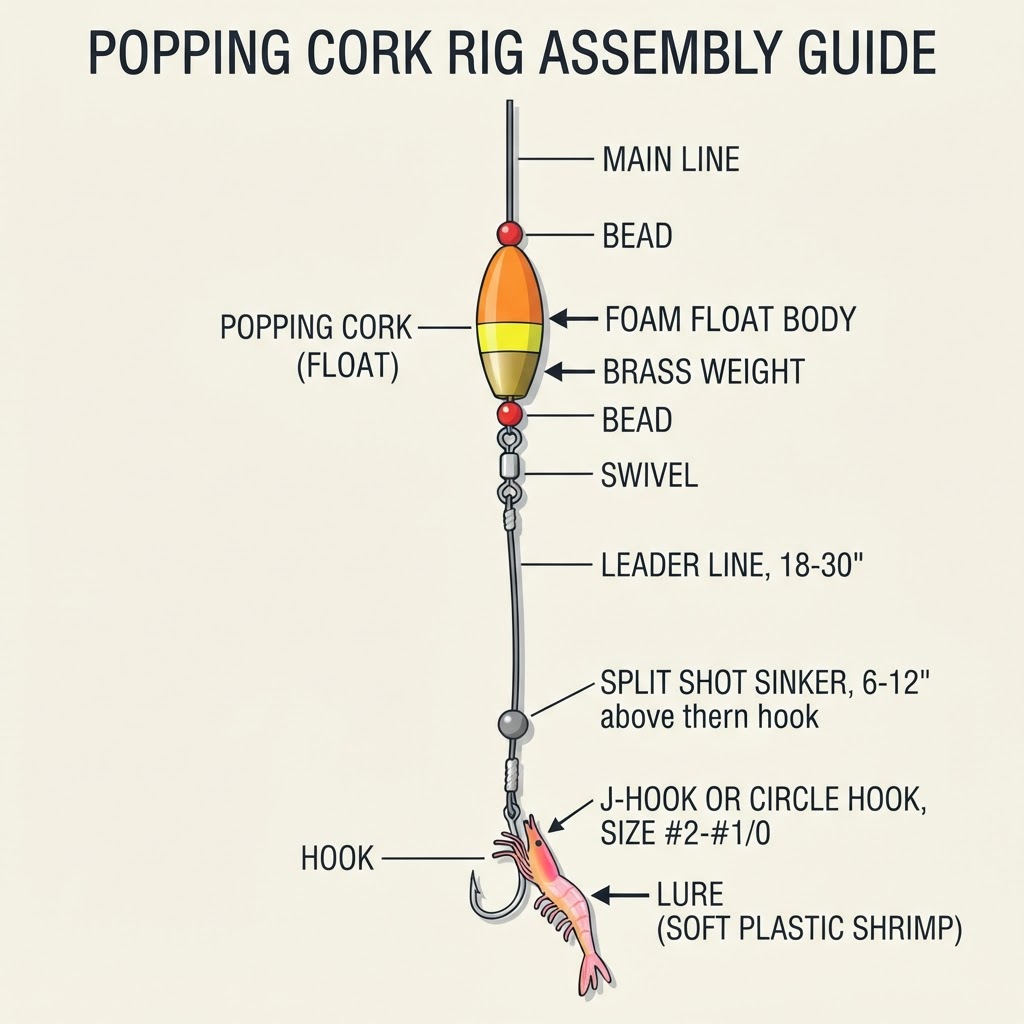 1-5 ft
Popping Cork Rig
The ultimate sensory rig that mimics a feeding frenzy to draw strikes from predators hovering over flats and structure.
Catch more striped bass — free
Create a free account and unlock the full angling toolkit:


