
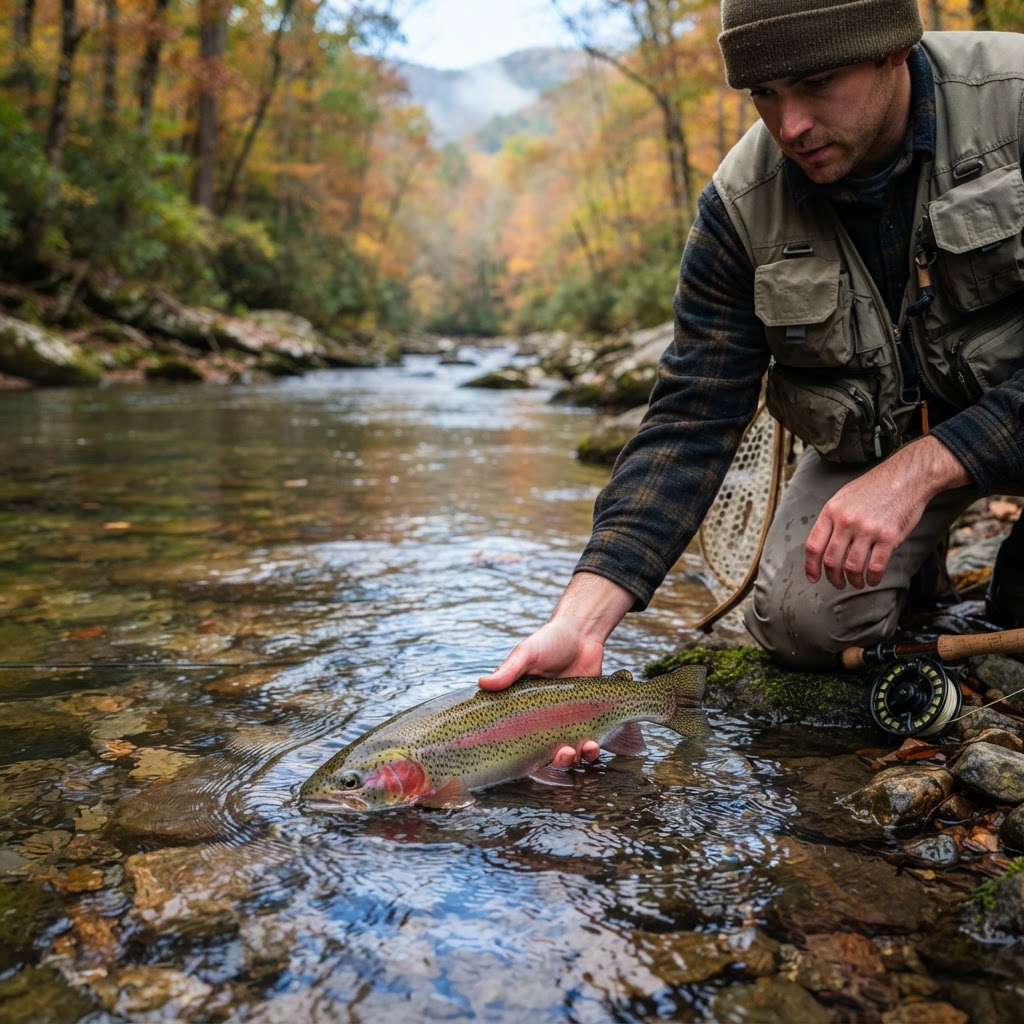
Georgia Delayed Harvest Trout Fishing: A Seasonal Guide
Georgia Delayed Harvest Trout Fishing Rules
Georgia's Delayed Harvest (DH) trout season is in full swing, providing anglers with consistent action from November 1 through May 14. During this window, five specific streams are managed under strict catch-and-release regulations to ensure high catch rates throughout the colder months. You must release all trout immediately upon landing them, and the possession of trout within these designated areas is a violation of state law.
Get in the Community feed
Hunters and anglers nationwide posting bucks, catches, trail cam pics and what's working right now.


To fish these waters, you are restricted to using only artificial lures equipped with a single hook. While you cannot use bait or scented lures, you are permitted to use a dropper fly on your line, provided each lure on the rig features only one single hook. These regulations are designed to protect the fish population while providing a high-quality angling experience. For a broader look at state-specific rules, you can review to ensure you remain compliant across different jurisdictions.
Beyond the basic gear restrictions, you must ensure your setup complies with the single-hook requirement for every lure attached to your line. If you choose to run a tandem rig, both the lead fly and the dropper must be tied with single hooks. Using a treble hook, even if you pinch the barbs down, is not permitted under state law. Always carry a pair of needle-nose pliers or a dedicated hook removal tool to minimize handling time when releasing fish in cold water.
When you are on the water, remember that the possession of any live bait is strictly prohibited in these designated streams. This includes minnows, worms, or any other natural bait that could be considered live. If you are found with live bait in your possession while standing in or near a Delayed Harvest stream, you risk a citation from a game warden. Stick to artificial flies, spinners, or spoons that feature only a single hook to remain fully compliant with Georgia regulations.
Designated Delayed Harvest Streams

Youth Hunter Academy
Raise a safe, confident young hunter.
Safety missions for ages 5–17. Free parent account.
The Georgia Department of Natural Resources (DNR) manages five primary streams under the Delayed Harvest program. These waters receive monthly stockings throughout the season, often supported by the U.S. Fish and Wildlife Service and other partners. The designated streams are:
- Chattahoochee River: The section from Sope Creek to US Highway 41 (Cobb Parkway).
- Toccoa River: Located on U.S. Forest Service land in Fannin County, from 0.4 miles above Shallowford Bridge to 450 feet above the Sandy Bottom Canoe Access.
- Amicalola Creek: Situated on the Dawson Forest Wildlife Management Area (WMA), running from Steele Bridge Road downstream to Georgia Highway 53.
- Smith Creek: The reach downstream of the Unicoi Lake dam within Unicoi State Park.
- Chattooga River: From the Georgia Highway 28 bridge upstream to the mouth of Reed Creek, bordering South Carolina.
When navigating the Toccoa River section, be aware that water levels can fluctuate significantly due to releases from the Blue Ridge Dam. These pulses of water are often timed to assist with fish distribution, but they can catch an unsuspecting angler off guard. Always check the current generation schedule before you step into the riverbed. If you notice the water level rising or the current speed increasing, move to the bank immediately to avoid being stranded or swept downstream by the surge.
For the Smith Creek reach located within Unicoi State Park, note that the boundaries are strictly defined by the park property line. Fishing outside of these designated zones may subject you to different regulations or private property restrictions. Always look for posted signage that marks the start and end of the Delayed Harvest section. If you are unsure about your location, consult the official maps provided on the Georgia Wildlife website to ensure you are fishing within the legal, catch-and-release boundaries.
Tactics for Success in Cold Water
Freshly stocked trout are often less wary than holdover fish, making them more responsive to a variety of presentations. Because these fish are concentrated in specific reaches, covering water effectively is key. If you are new to these waters, consulting a can help you understand the behavior of rainbow, brown, and brook trout in cold-water environments.
When fishing the DH sections, focus on deep pools and slower runs where trout seek refuge from the current. In the early season, water temperatures are cooling, which increases trout activity. Spin fishermen often find success with small spinners like Rooster Tails or Panther Martins, provided the treble hooks are replaced with a single hook to meet legal requirements. Fly anglers typically rely on nymph rigs, such as a squirrel zonker with a copper dropper, to mimic the aquatic insects trout feed on during the winter months.
In the winter months, trout metabolism slows down, meaning they will not chase fast-moving lures as aggressively as they do in the spring. Focus your efforts on the deeper, slower pockets of water where the fish can conserve energy. A slow, deliberate retrieve is often more effective than a rapid one. If you are using spinners, try to keep them just off the bottom, as this is where the trout will be holding to avoid the main force of the current.
Fly selection during the colder months should prioritize small, subtle patterns that mimic the limited insect activity. Midges and small nymphs are staples for experienced anglers during this season. If the water is particularly clear, use a lighter tippet to ensure your presentation looks natural. Do not be afraid to change your fly frequently if you are not getting bites. Sometimes a slight adjustment in size or color is all it takes to trigger a strike from a lethargic, cold-water trout.
Access and Safety Considerations
Access points vary by stream, and it is important to check local conditions before heading out. For example, Amicalola Creek is known for its rugged terrain, featuring slick rocks and deep holes. A wading belt is considered a minimum safety requirement, and a life jacket is strongly recommended for those navigating more challenging sections. Always verify current water flows using USGS gauges, as high water can make these streams dangerous to wade.
If you are planning a trip, remember that some areas, such as those on WMA land, may require a valid hunting or fishing license or a specific Lands Pass for entry. Always respect private property boundaries, as many trout streams in North Georgia flow through or adjacent to private land. If you are looking for specific gear setups to handle these conditions, the provides detailed configurations for various trout fishing scenarios.
Wading in winter requires more than just a standard pair of boots. The rocks in Georgia trout streams are notoriously slick, especially when covered in a thin layer of algae or ice. Felt-soled boots or those with integrated metal studs provide much better traction than standard rubber soles. Additionally, wearing layers of synthetic or wool clothing under your waders will keep you warm even if you accidentally take a spill. Avoid cotton at all costs, as it loses all insulating properties when wet.
Always inform someone of your planned location and expected return time before heading out to remote sections of the Amicalola or Chattooga rivers. Cell phone service is often non-existent in these deep mountain valleys, making it difficult to call for help in an emergency. Carry a basic first-aid kit and a whistle in your vest. If you are fishing alone, take extra precautions when crossing the stream, as a fall in cold water can lead to rapid hypothermia even on sunny days.
Staying Informed on Stocking
Georgia DNR does not publish a day-by-day calendar for stocking, but they do provide weekly reports that detail which waters received fish. You can monitor the official Georgia Wildlife website for these updates. Because these streams are stocked monthly, the fishing often peaks in the days immediately following a stocking event.
For those interested in tracking their own success or scouting new areas, using a can help you identify public access points and parking areas near the DH reaches. By staying mobile and checking the latest reports, you can maximize your time on the water throughout the winter season. Remember that these special regulations expire on May 14, after which the streams revert to general trout fishing rules, including the use of bait and harvest limits.
While the DNR does not provide a specific calendar, you can often gauge the timing of stockings by observing the activity of other anglers. The days immediately following a stocking event see the highest pressure, as fish are concentrated near the release points. If you prefer solitude, wait a few days until the trout have had time to disperse throughout the stream. You will have to work harder to find them, but the experience is often more rewarding than fishing in a crowd.
Remember that the Delayed Harvest regulations are strictly enforced until the end of the day on May 14. On May 15, the rules change significantly, allowing for the use of bait and the harvest of trout according to general state limits. If you plan to fish these waters after the season ends, be sure to review the general trout regulations on the Georgia Wildlife website. The transition from catch-and-release to harvest can change the behavior of the fish and the overall atmosphere of the stream.
Licensing and Legal Requirements
Before you cast a line, ensure you have the correct documentation. All anglers aged 16 and older must possess both a valid Georgia fishing license and a trout license. These can be purchased online through the GoOutdoorsGeorgia portal or at authorized retailers. If you are a nonresident, you must also obtain the appropriate nonresident licenses. Keep a digital or physical copy of your licenses with you at all times while on the water, as game wardens frequently patrol these popular Delayed Harvest areas.
Common questions
What are the rules for Georgia Delayed Harvest trout fishing?
From November 1 to May 14, you must release all trout immediately and use only artificial lures with a single hook. Possession of trout in these areas is prohibited during this time.
Can I use a dropper fly in Georgia Delayed Harvest streams?
Yes, you are permitted to use a dropper lure on your line as long as each lure on the rig is equipped with only one single hook.
Where can I find the latest trout stocking reports for Georgia?
You can find the most recent stocking information and weekly reports on the official Georgia Department of Natural Resources website at georgiawildlife.com.
Do I need a special license to fish Delayed Harvest streams?
You need a valid Georgia fishing license and a trout license to fish in designated trout waters. Some areas, such as Wildlife Management Areas, may also require a Lands Pass.
What happens to the Delayed Harvest rules after May 14?
After May 14, the special catch-and-release and single-hook regulations end. The streams revert to general trout fishing regulations, which allow for harvest and the use of other types of bait.
Fishing this season? to save your spots on the fishing map and keep a log of every catch.
Free every morning
Your Daily Briefing
One morning forecast for the spots you actually hunt and fish: deer movement, waterfowl flights, bite times, wind and shooting light.
See what's in itSet up your briefing
Join free, save a spot on the map, then pick what you hunt and fish and when you want your email.
Catch more these fish — free
Create a free account and unlock the full angling toolkit: