
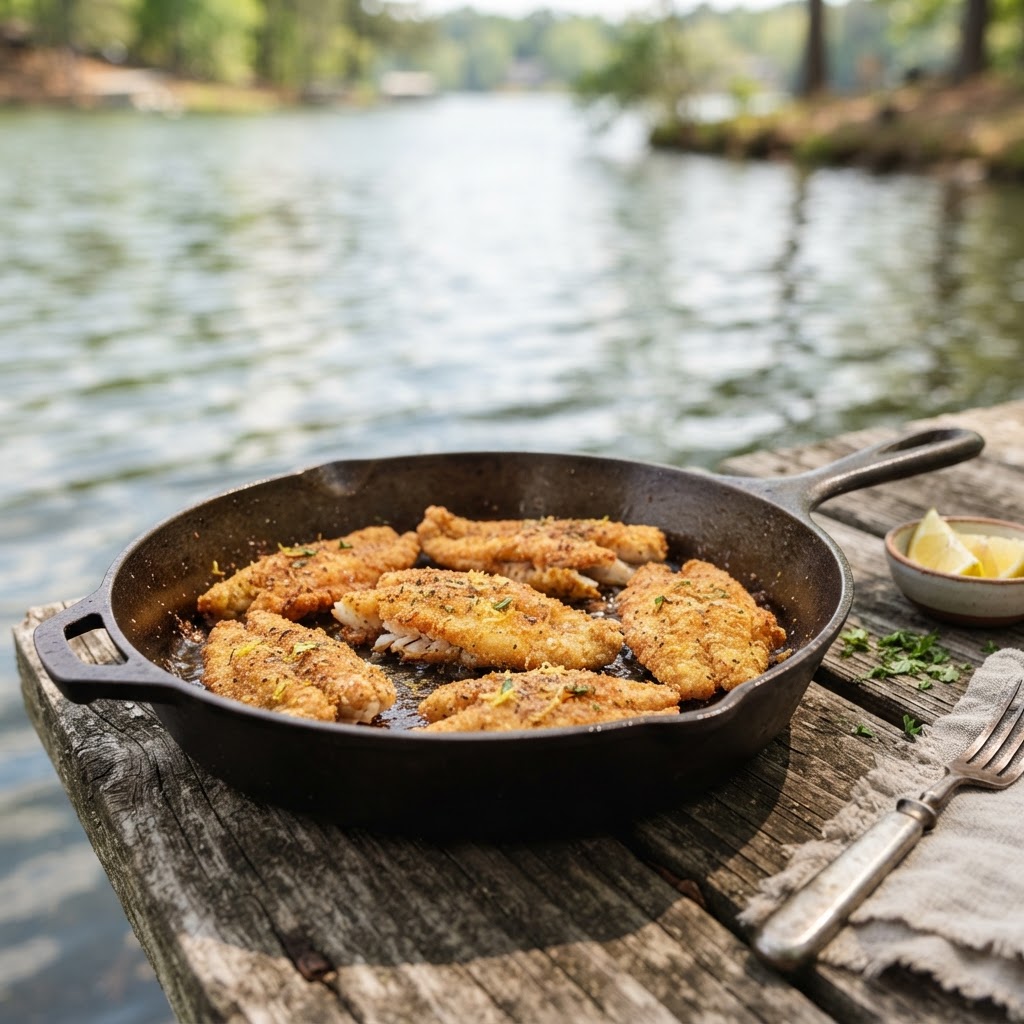
Crispy Bayou-Style Catfish: The Angler’s Table Standard
From River Bank to Frying Pan
There is a specific kind of satisfaction that comes from cleaning a mess of catfish you caught yourself and turning them into a golden-brown centerpiece for the dinner table. For many anglers, channel and blue catfish aren’t just trophy targets; they are the ultimate table fare. When prepared correctly, the meat is mild, sweet, and firm enough to hold up to the high-heat frying process that is a staple of Southern cooking. At Buckeye Hunter Hub, we believe that the best meal you will ever eat is the one you caught with your own gear.
Get in the Community feed
Hunters and anglers nationwide posting bucks, catches, trail cam pics and what's working right now.


Preparing Your Catch: Cleaning and Filleting
The secret to delicious catfish starts long before the flour hits the oil. If you are harvesting your catch, proper handling is essential. Always bleed your catfish immediately after landing them and keep them on ice. This prevents the strong, muddy flavor that some people incorrectly associate with the species. When filleting, use a sharp, flexible knife to follow the spine, ensuring you remove the strip of dark red 'mud vein' that runs along the lateral line. Removing this strip is the most important step for ensuring a clean taste. If you need help finding the best spots to target these whiskered fighters, check out our to scout local waterways where these species thrive.
Ingredients for the Perfect Dredge
To achieve that signature airy, crispy crust, you need a balance of cornmeal and seasoning.

Youth Hunter Academy
Raise a safe, confident young hunter.
Safety missions for ages 5–17. Free parent account.
- 2 pounds fresh catfish fillets
- 1 cup yellow cornmeal (fine or medium grind)
- 1/2 cup all-purpose flour
- 1 tablespoon Cajun spice blend (ensure low salt)
- 1 teaspoon garlic powder
- 1/2 teaspoon cayenne pepper
- 1 cup buttermilk (for the soak)
- Peanut oil or lard for frying
- Salt and pepper to taste
The Frying Process
- Soak: Submerge your cleaned, patted-dry fillets in buttermilk for at least 30 minutes. This tenderizes the meat and helps the breading adhere. You can find more tips on seasonal species handling in our .
- Season: Combine the dry ingredients in a shallow pan. Whisk together the cornmeal, flour, and spices until fully integrated.
- Heat: Use a heavy-duty cast-iron skillet. Fill it with about an inch of oil. Bring the oil to 350°F. If you don't have a thermometer, drop a pinch of cornmeal into the oil; if it sizzles instantly and rises to the surface, you are ready.
- Coat: Take a fillet from the buttermilk, letting the excess drip off, then press it firmly into the dry mixture until coated on both sides.
- Fry: Gently lay the fillets in the hot oil. Avoid overcrowding the pan, as this drops the oil temperature and leads to soggy fish. Fry for 3-4 minutes per side until deep golden brown.
How to Avoid Overcooking
Catfish is a forgiving fish, but it can turn rubbery if cooked too long. The fillets are done when the flesh is opaque and flakes easily with a fork. Aim for an internal temperature of 145°F, as recommended by the USDA. Once they hit that temperature, pull them immediately and set them on a wire rack—not paper towels—to prevent the bottom from steaming and losing its crunch. If you are planning a trip to a new state to target these fish, remember to check the for current harvest regulations.
Elevating the Experience
Serving your fried catfish with a side of spicy remoulade, hushpuppies, and a slice of lemon is the classic way to go, but don't be afraid to experiment with your crust. Some anglers swear by adding a tablespoon of crushed crackers or even a touch of cornstarch for extra crispiness. No matter how you serve it, the pride of eating your own catch remains the best seasoning. Whether you are a weekend warrior or a seasoned pro, mastering this dish is a rite of passage for any angler who spends their time on the water. Enjoy the feast, and keep those lines tight.
Free every morning
Your Daily Briefing
One morning forecast for the spots you actually hunt and fish: deer movement, waterfowl flights, bite times, wind and shooting light.
See what's in itSet up your briefing
Join free, save a spot on the map, then pick what you hunt and fish and when you want your email.
Catch more these fish — free
Create a free account and unlock the full angling toolkit: