Woodsman Wisdom: Decoding Sign to Predict Whitetail Behavior
Mastering the Language of the Forest
Every time a whitetail moves through its home range, it leaves behind a breadcrumb trail. For the casual observer, these are just twigs snapped or soil disturbed, but for the seasoned hunter, this is a roadmap. At Buckeye Hunter Hub, we believe that understanding the 'why' behind deer behavior is more important than simply finding the 'where.' By learning to read rubs, scrapes, and beds, you move from wandering the woods to hunting with surgical precision.
Free hunting map, zones & 50-state resources
Save your spots, share zones with your group, and get deer & waterfowl movement forecasts — free.
The Anatomy of a Rub: Marking Territory
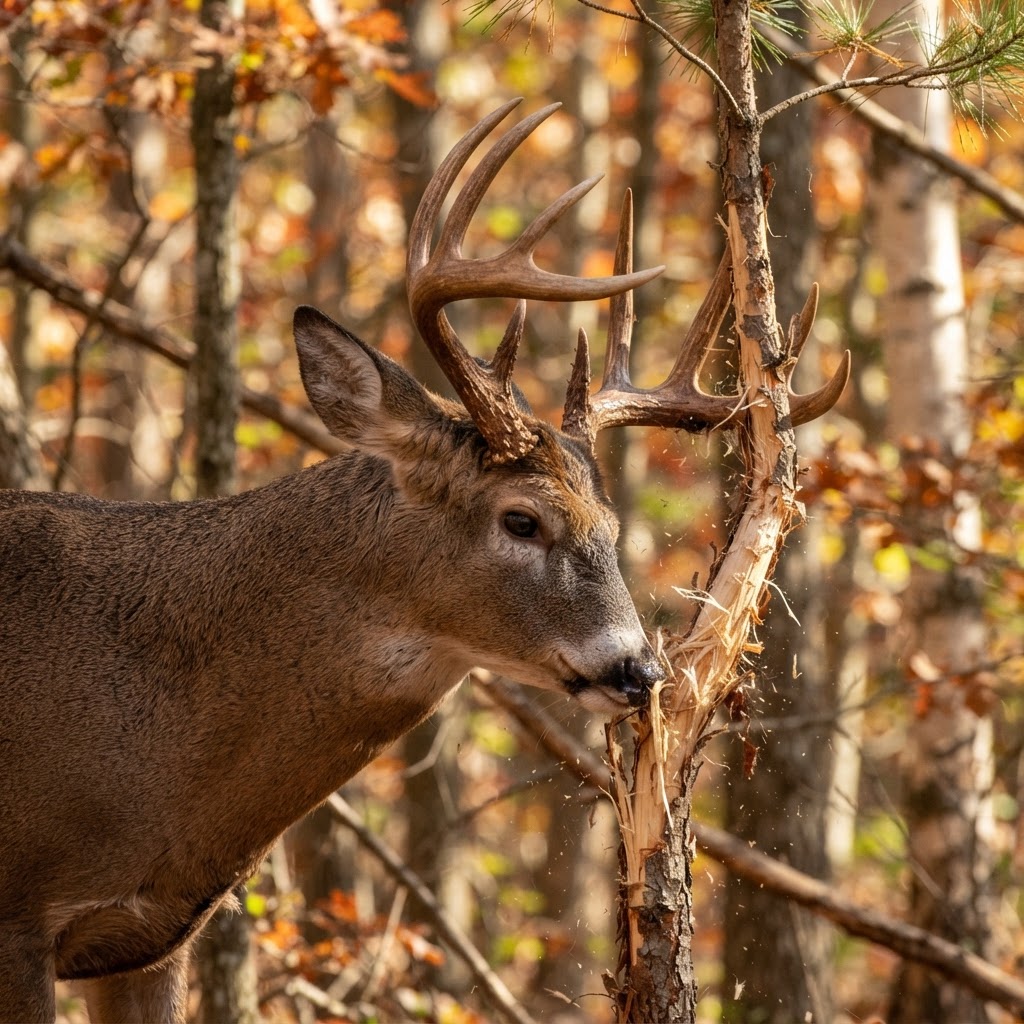
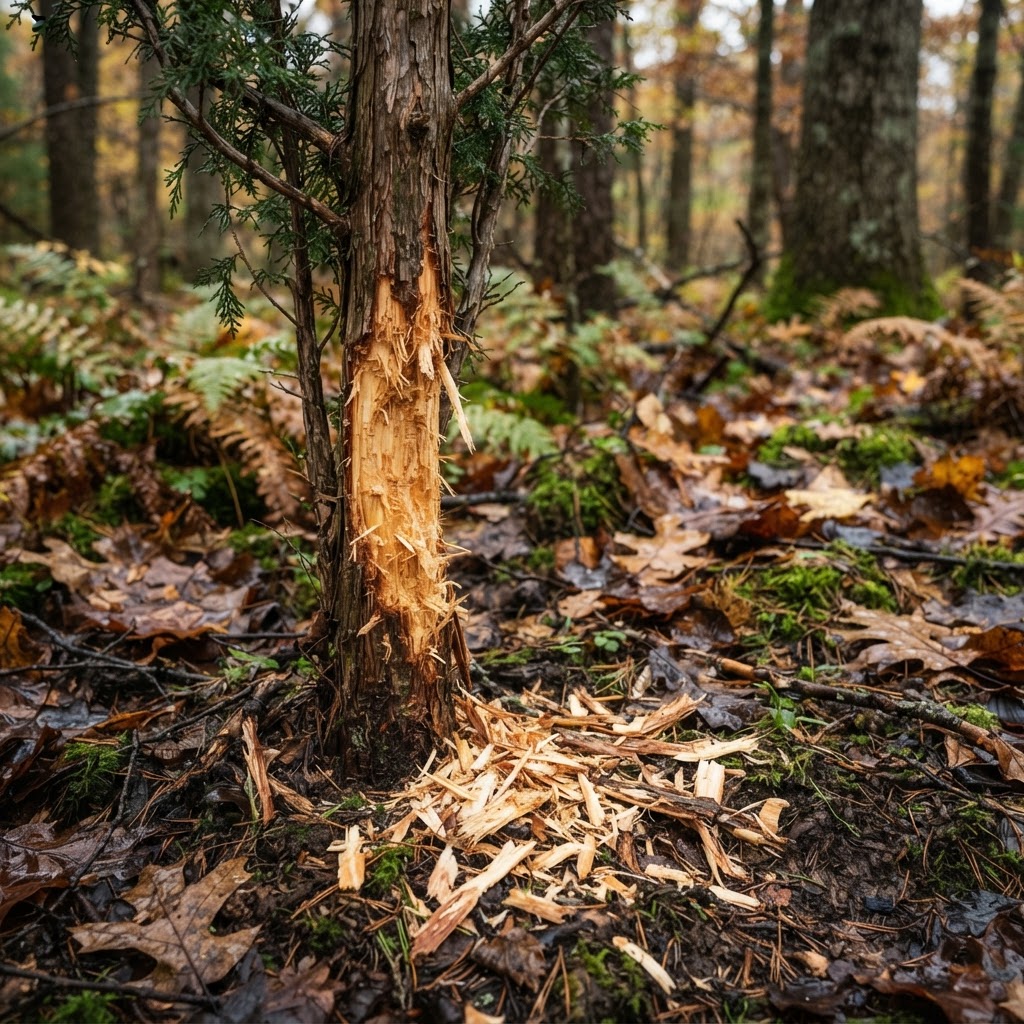
Many hunters overlook rubs, thinking they are random occurrences. In reality, a rub is a statement. When a buck strips the bark from a sapling, he is doing more than just cleaning his velvet; he is marking his dominance and social status. Look at the height of the rub to gauge the size of the buck, but more importantly, look at the orientation. Does the rub face a trail, or is it isolated deep in a thicket?
If you find a series of rubs in a straight line, you have likely discovered a buck’s primary travel corridor. These 'rub lines' are often used during the pre-rut as bucks move between bedding areas and food sources. When analyzing these, keep in mind to understand if these marks indicate a nocturnal bachelor party or a daytime travel route. If a rub is fresh—indicated by light-colored exposed wood and a lack of dried sap—you are potentially close to a target buck.
Scrapes: The Social Hubs
Scrapes are the social media of the whitetail world. By pawing the earth and rubbing their pre-orbital glands on overhanging branches, bucks are communicating their presence to every deer in the area. The critical mistake many hunters make is hunting the scrape itself, rather than the approach to it.
Instead of sitting directly over the bare dirt, identify the downwind side where the buck is most likely to check the scrape without alerting the rest of the forest. If you are struggling to identify when a scrape is actually being visited, utilizing can help you determine the time of day the scrape sees the most traffic. Remember, a scrape is a tool for the deer, not a trap for you. Use it as a waypoint to intercept movement rather than a static destination.
Locating the Core: Identifying Bedding Areas
E-Tag States

Harvest Tags
E-check means you supply the tag. Printed with the exact fields your state requires.
3-pack $22.95
Bedding areas are the holy grail of deer hunting. A mature buck will not bed just anywhere; he looks for security, vantage points, and thermal regulation. When you are scouting, look for 'oops' spots—the thickest, nastiest cover you would normally avoid. Mature deer love bedding on secondary ridges that offer a view of the terrain below and an escape route behind them.
If you find a depression in the leaves with a distinct oval shape, inspect the surrounding vegetation. Are there droppings nearby? If the deer is using this bed during the day, the droppings will be fresh and soft. When approaching these areas, you must account for the wind perfectly; otherwise, you are just pushing the deer to the next county. If you are ever unsure about whether a location is a high-traffic zone or a low-pressure sanctuary, consulting can give you a better birds-eye view of how the topography funnels these deer into their beds.
Connecting the Dots
Raise a safe, confident young hunter.
Guide your kids ages 5–17 through interactive hunting safety missions, real decision drills, and earned trophies — all from one free parent account.
Bonus: every $10 you spend in the BHH shop earns a free seat (up to 5). Use them or share them.



Understanding rubs, scrapes, and beds is a lesson in patterns. A rub tells you where he traveled, a scrape tells you who is in the area, and a bed tells you where he feels safe. When you synthesize these pieces of evidence, you stop guessing. You start predicting.
Always remember that these signs are dynamic. A scrape active in October might be abandoned by mid-November. A rub line might shift as the mast crop changes or as the rut intensifies. Keep your scouting continuous throughout the season, and keep your handy to stay updated on regulation changes that might affect when and where you can hunt these signs.
Finally, treat the woods with respect. Leave no trace, minimize your scent, and keep your presence subtle. The best hunter is the one the deer never knows is there. For more tips on managing your own hunting ground or improving your season-long strategy, check out the rest of for deeper dives into tactics.
Join 720 hunters and anglers on Buckeye Hunter Hub — free.
Latest from the Community


Everything you need to hunt smarter — free
Buckeye Hunter Hub is a free, nationwide platform. Create an account and unlock the full toolkit:
Free Interactive Hunting Map
Mark stands, cameras, and sign. Draw hunting zones with public land & county overlays across all 50 states.
Zones with Group Sharing
Share zones with your hunting group, split property into sections, assign stands, and check in — all in one place.
50 States of Hunting Resources
Season dates, license links, and DNR regulations for every state, kept current so you never miss an opener.
Deer Movement Forecast
Data-driven daily movement predictions using wind, moon, and pressure — know when to sit before you go.
Waterfowl Movement & Tools
Flight-potential forecasts, migration numbers, decoy spread planner, and a full species field guide.
From the Maker Bench

SE Ohio Outdoors
Euro Mount Hook
Hand-built in the USA · $8.00
Shop the MakerBHH Partner

Firearms, ammo and gear from a local Ohio shop in Grafton. Stop in before the season.
dnaarmory.comShop This

StopBox Pro Ward | Wall-Mounted
$179.00$199.99

StopBox Pro Compact
$159.00$179.99

Get Well Card — Pole Down Week
$6.99

Christmas Card — Christmas Morning Perch
$6.99
E-Tag States
Harvest Tags
E-check means you supply the tag. Printed with the exact fields your state requires.
3-pack $22.95
More Articles
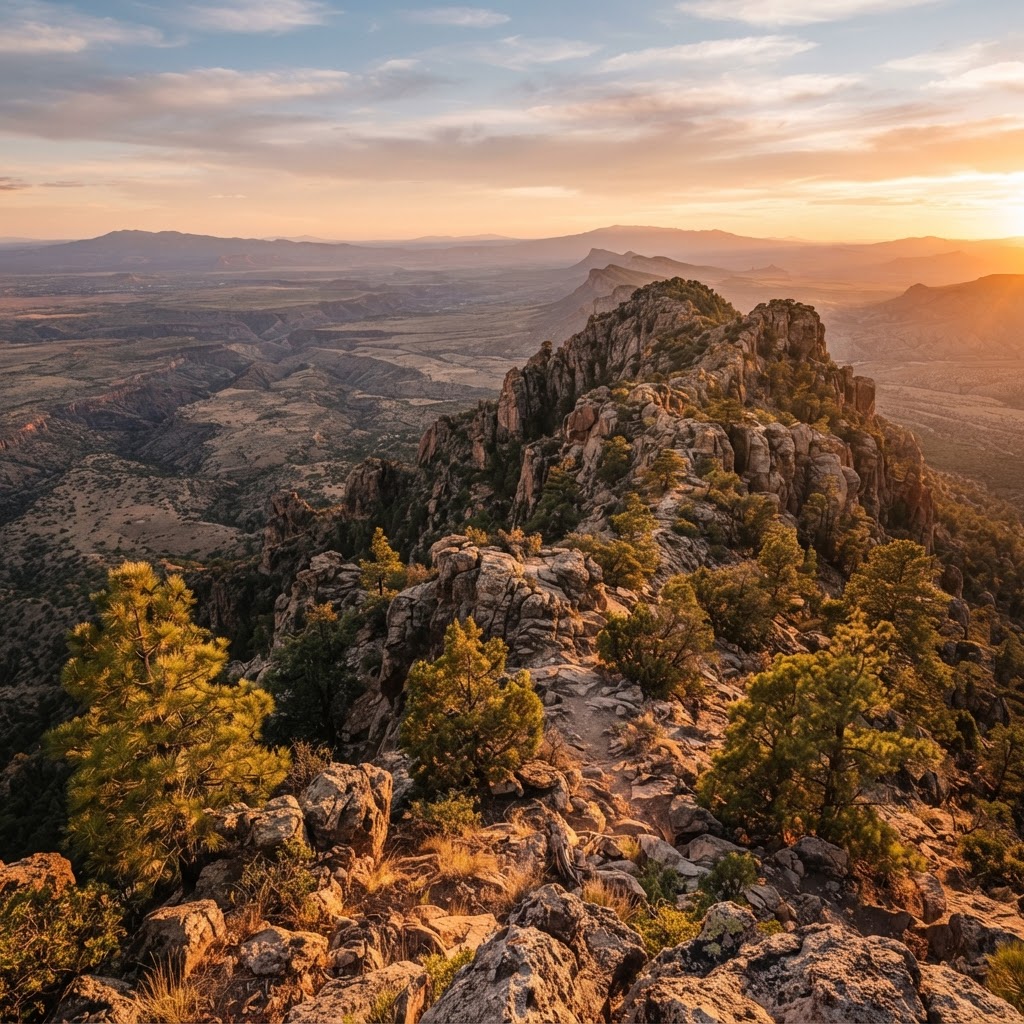
Desert Frontiers: A Comprehensive Guide to Navigating Arizona’s Public Hunting Lands
Arizona offers some of the most diverse and challenging public land hunting in the American Southwest, from high-altitude elk country to arid desert basins. Master the terrain with this breakdown of key regions and scouting essentials.
Architects of the Woods: Interpreting Whitetail Architecture for Strategic Positioning
Master the art of reading rubs, scrapes, and beds to transform your hunting strategy from guesswork into a calculated pursuit.

StopBox Security Cable Review: Is It Worth the Upgrade?
Looking to anchor your StopBox? We evaluate the heavy-duty Security Cable for hunters and homeowners to see if it provides the necessary peace of mind.
Mapping Your Success: A Practical Guide to Finding Public Land
Stop wandering aimlessly and start hunting with intent. Learn how to leverage the Buckeye Hunter Hub interactive map to pinpoint productive public hunting grounds.