
FROM THE FIELD
How to Master Natural Scent Control for Deer Hunting
Stop relying on expensive commercial scent killers. Learn a proven 3-step strategy to use natural environment materials to stay undetected by deer.
Buckeye Hunter Hub Magazine · Issue No. 4 · October 2026 · 2026-10-01
By Josh Bernard
Why I Ditched Commercial Scent Killers
For the longest time, I was just like everyone else—I spent a fortune on sprays, high-tech carbon-lined clothing, and every scent-elimination gadget hitting the shelves. I wanted an edge, but no matter what I bought, I kept getting busted by deer. Some days the wind held, others it didn't, and I could never tell if the product was working or if I was just getting lucky. Eventually, I started questioning why I was relying on chemicals instead of the environment where deer live every single day.
After experimenting over the last four years, I have stopped relying on store-bought scent controls entirely. I found that using natural materials found directly in the woods where I hunt is significantly more effective. My system is simple, cheap, and it keeps my presence concealed far better than any commercial bottle I used to carry. Today, September 28, the season is in full swing, and my focus remains on playing the wind correctly while using this specific three-step protocol.
Step 1: The Homemade Eliminator
Before I even step foot in the woods, I use a homemade wash to neutralize what I can. This mixture is straightforward and uses common household items. You will need 2 cups of water, 16 ounces of hydrogen peroxide, 1/4 cup of baking soda, and 1 ounce of unscented liquid soap. Stir this until the soda is dissolved. Important note: Pour it into your container but leave the lid loose for 2-3 days. This allows the gases to escape so the container does not pressurize or burst. This base layer helps clear my gear of artificial odors before I head to the hunt zone.
Step 2: Mimicking the Local Environment
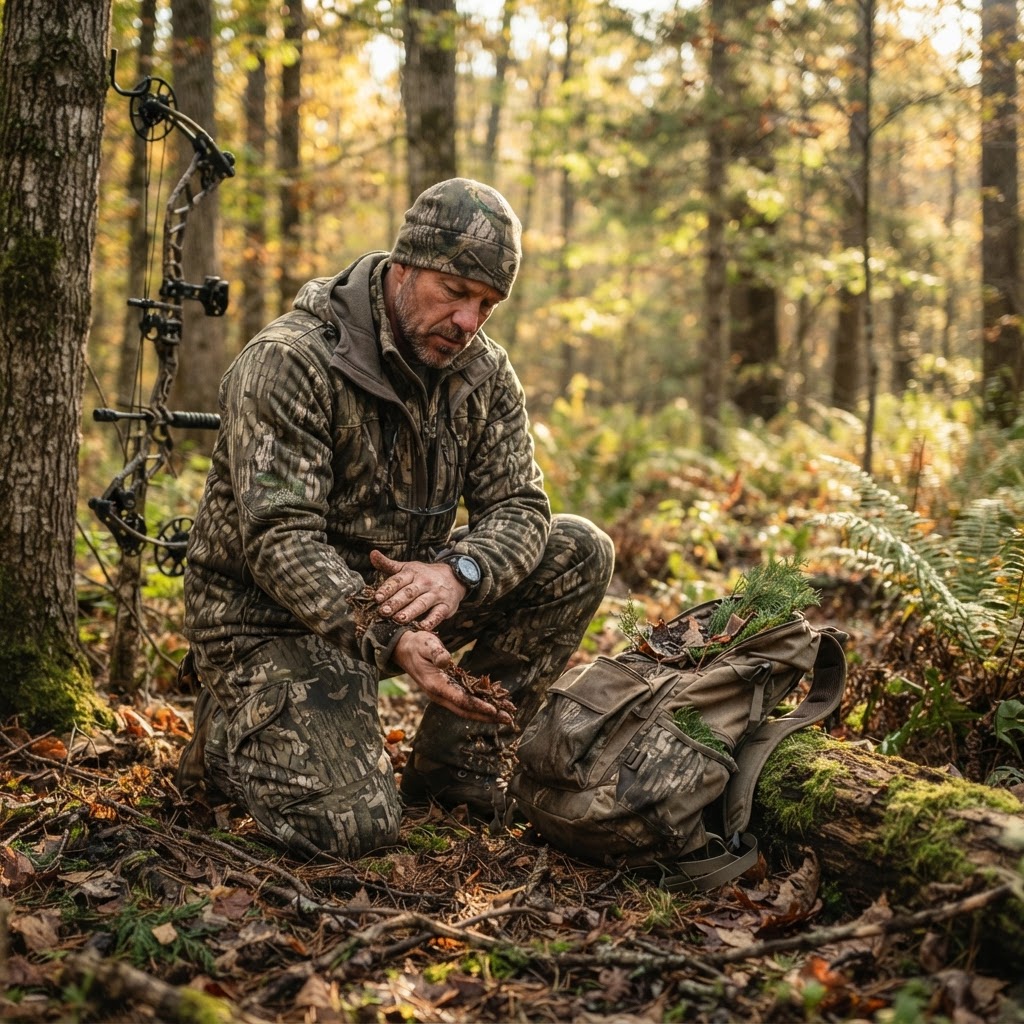
This is the part that changed everything for me. Instead of masking my scent with "earth" sprays that smell like someone else's idea of a forest, I use actual materials from the area I am hunting. If I am hunting a pine ridge, I gather pine needles. If I am in a hardwood bottom, I grab leaves, moss, and twigs from the forest floor.
I take these materials, bring them to a slow boil in water, and simmer them for about 10 minutes. Once the mixture is completely cool, I strain it and put it in a spray bottle. Because it is made from the exact vegetation surrounding my stand, it doesn't stand out to the deer; it blends into the background. Combined with Buckeye Hunter Hub wind and scent mapping tools, this step ensures that I am not just covering my scent, but integrating it into the environment.
Step 3: Natural Attractants
Finally, I use doe or dominant buck urine to finalize the illusion. I don't just dump it around the base of the tree; I apply it to the bottom of my boots as I walk in. This leaves a natural trail that deer are accustomed to seeing. Once I am at the stand, I put a few drops on the limbs surrounding me. It pulls their attention away from the elevated position where I am sitting.
Putting It All Together
This process has made me at least 80% more effective in the field compared to the "big name" products I used to buy. I always cross-reference my stand locations with the Buckeye Hunter Hub deer movement forecast to ensure I am sitting when they are actually on their feet. When you combine that intel with this natural scent management system, your odds of staying undetected go way up. Hunting is about adapting to the woods, not trying to out-engineer nature with a spray bottle.