
SKILLS
How to Hang a Treestand Safely Before the Season
Don't take risks when you reach the timber. Master the proper techniques for hanging and securing your treestand for maximum safety.
Buckeye Hunter Hub Magazine · Issue No. 1 · August 2026 · 2026-08-27
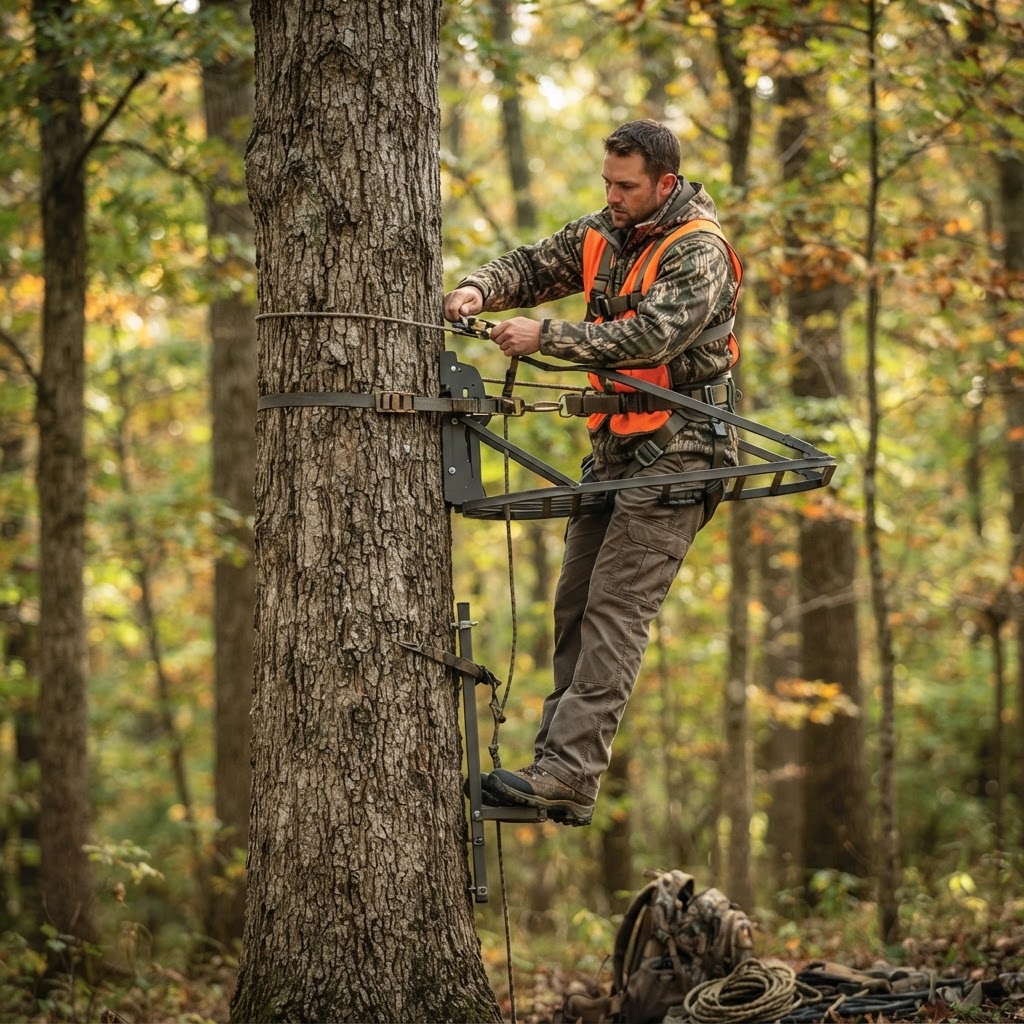
The sun hangs low and thick over the timberline, bleeding heat into the leaf litter, yet the morning air hints at the coming shift. For the serious hunter, August 27 marks the start of the most critical work period in the calendar. It is time to step away from hunt mapping and wind tools and put steel to bark. If you wait until opening morning to hang your gear, you are not hunting; you are gambling. Installing a treestand safely is not merely about avoiding a fall; it is about establishing a platform that allows you to execute a lethal shot while remaining invisible to the keenest senses in the woods. Before you venture out, ensure you have reviewed the state hunting regulations and seasons to verify that your chosen methods comply with local statutes regarding tree damage and hardware. ## How to Hang a Treestand Safely to Minimize Detection Success in the early season requires a departure from traditional setups. Deer have not yet been pressured, but they are hyper-aware of structural changes in their home range. When selecting a tree, prioritize back-cover over proximity to a trail. A hang-on stand installation should be conducted with the sun at your back during the time you intend to hunt. If you are setting up for a morning sit, ensure your platform is nestled into a tree that breaks your silhouette against the rising light. Use the deer movement forecast to identify the intersection of feeding corridors and bedding areas, but never place your stand directly on top of the transition point. Position yourself 15 to 20 yards downwind of the anticipated movement, utilizing the natural terrain to mask your entry. Always maintain a three-point contact rule while climbing. Before you even leave the ground, test your lineman’s belt under tension. If it slips, the belt is improperly adjusted. ## What Are the Essential Treestand Safety Tips for Experienced Hunters? Gravity is unforgiving, and the most common errors occur during the transition from climbing sticks to the platform. Never attempt to hang a stand alone without a tethered lifeline. A hunter should be connected to the tree from the moment their boots leave the ground until they are safely back on terra firma. If you are using a climbing treestand, ensure the teeth of the platform and the climber are digging into healthy, non-rotting hardwood. Avoid trees with excessive pitch, as sap can compromise the grip of aluminum or steel components. Check your cable tension every time you lock into a new height. If there is even a millimeter of play, adjust the pin or buckle before transferring your weight. A significant part of preparation is teaching the next generation to respect these heights; we strongly recommend enrolling junior hunters in the BHH Youth Hunters Academy to instill these life-saving habits early. ## How to Execute a Proper Hang-On Stand Installation A proper installation begins with clear vision. Before hoisting your stand, clear the shooting lanes. Use a small folding saw to remove branches that might impede a draw—not just the ones blocking your view. If you leave a clear lane, you are less likely to fidget when a buck enters the zone. When mounting the base, ensure it is perfectly level. An unlevel platform is the primary cause of fatigue and poor follow-through during a shot. Follow this sequence when ascending: 1. Secure your safety line at the highest reachable point on the trunk. 2. Attach your harness tether to the line using a prusik knot or mechanical ascender. 3. Hang your bottom climbing stick or step at a comfortable starting height, ensuring it is braced against the tree. 4. Ascend and install the stand, keeping your harness tether taut at all times. 5. Once the stand is secured, test the platform by shifting your weight slowly from the center toward the outer edges before committing your full body mass. ## Is Your Climbing Treestand Advice Still Relevant in 2026? Climbing treestands remain the gold standard for mobile hunters, but they require a specific tree profile to be safe. You are looking for a straight, branch-free trunk with a diameter between 10 and 18 inches. Anything smaller may flex under your weight, potentially causing the climber to lose purchase, while larger trees can cause the cables to bind. When operating a climber, always use a haul line to bring up your gear after you have reached your hunting height. Carrying a bow or rifle on your back while ascending is a hazard that compromises your balance. If you are scouting using the science of deer movement to locate high-traffic rub lines, verify that the trees you select have enough bark thickness to withstand the bite of the stand's frame. If the bark is thin or slick, the climber will slip. ## Best Practices for Final Inspection Before the Season The work you do this week is the difference between a successful season and a trip to the emergency room. Before you lock your final stand, perform these checks: * Replace all nylon straps older than two years, regardless of appearance. UV radiation degrades synthetic materials faster than many hunters realize. * Tighten every bolt on your platform with a torque wrench. Vibration during transit can loosen hardware over time. * Remove any metal screw-in steps if you are hunting public land; prioritize strap-on sticks or climbing aids that do not leave permanent damage. * Carry a small kit with extra washers, pins, and a length of paracord to secure loose accessories. The edge of autumn is upon us. The days are beginning to pull back, and the thermals will soon be in your favor. Spend the next 48 hours auditing your gear, checking your safety lines for fraying, and verifying your platform's stability. By the time the calendar flips, your setups should be indistinguishable from the timber, waiting patiently for the first frost. Get into the woods this weekend, inspect your perimeter, and ensure that when the moment of truth arrives, your focus remains entirely on the target.