
DEEP DIVE
Mastering Elk Bugling Tactics in September
Understanding elk vocalizations is key to filling your tag. We break down the science and art of calling elk during the September rut.
Buckeye Hunter Hub Magazine · Issue No. 2 · September 2026 · 2026-09-01
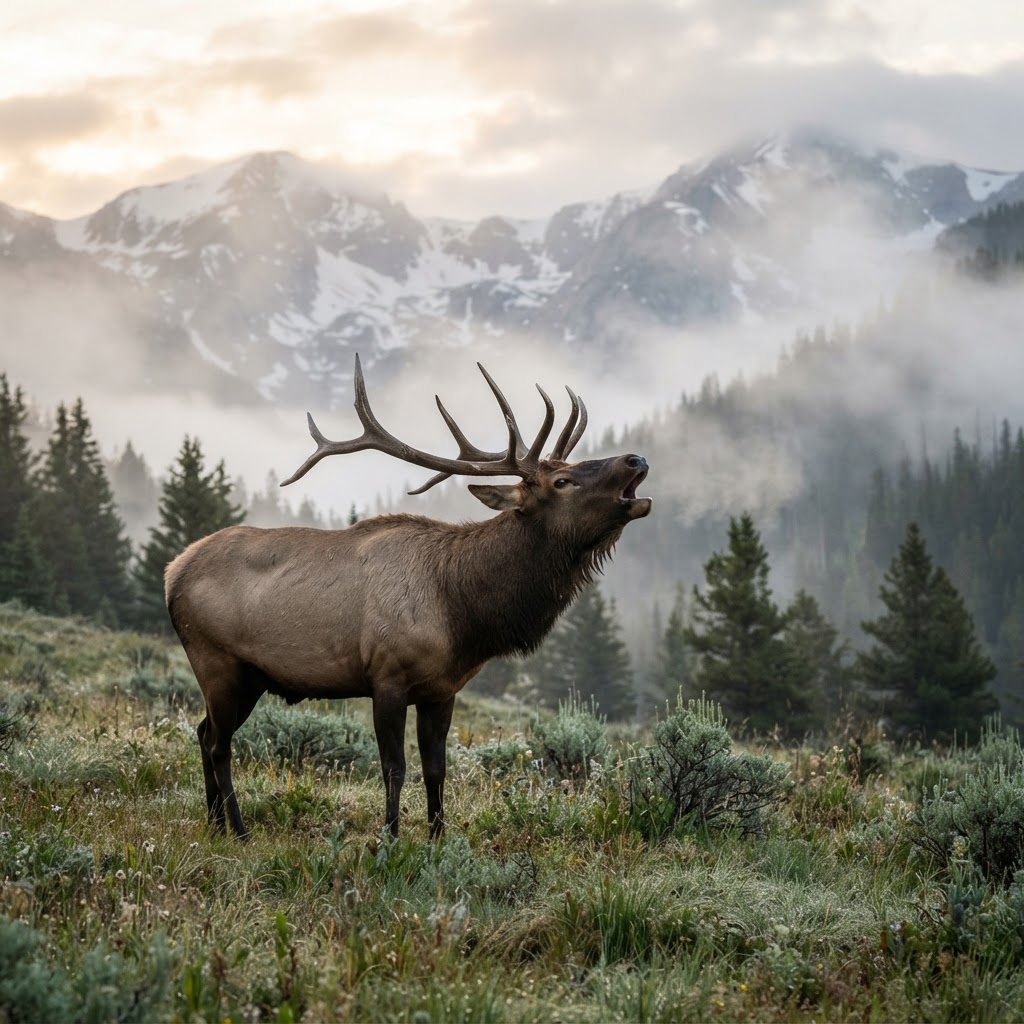
The high-country silence is a fragile thing, brittle and easily shattered by the wrong note at the wrong time. As the morning chill bites at 9,000 feet this September 1st, a bull elk’s bugle isn't just a sound; it is a declaration of dominance and a biological imperative. If you are serious about elk hunting rut success, you must realize that you aren't just blowing into a piece of latex—you are engaging in a high-stakes conversation where the margin for error is measured in centimeters and seconds. Mastering elk bugling tactics requires an understanding that sound is only half the battle; the rest is wind, terrain, and the psychological warfare of the woods. Before you head out, verify your state hunting regulations and seasons to ensure you are compliant with the latest unit-specific rules, as the rut transition happens quickly across the West. ## What are the different types of elk vocalizations? To call effectively, you must categorize every bugle as either a locator or a challenge. A locator bugle is a high-pitched, non-aggressive sound designed to get a response without causing a bull to retreat. It sounds like an inquiry—a question asked of the mountains. A challenge bugle, conversely, is lower in tone, often featuring a distinct, aggressive 'grunt' at the end. This is a territorial statement. If you are in a drainage where you know a herd bull is sequestered with cows, throwing a loud, aggressive challenge call too early is the fastest way to drive that herd into the next county. Instead, start with a subtle, thin-sounding locator. You want the bull to wonder who is intruding on his periphery rather than feel the need to defend his harem from an immediate threat. Understanding the science of deer movement can often provide a secondary context for how animals move through thermal shifts, which applies just as much to elk as it does to whitetails. ## How do I close the distance on a herd bull? Closing the distance is where 90 percent of hunters fail. They fixate on the vocalization and forget the environment. You must use hunt mapping and wind tools to identify your approach route, ensuring your scent is never drifting toward the elk. Even the most perfect, authentic bugle will result in an immediate flight response if a bull catches a drift of human odor. When approaching, keep your calling to a minimum. If you have located the bull, stop calling once you are within 150 yards. At this distance, the bull knows where you are. If you continue to call, you give him a fixed point to avoid. Silence is a predator’s best tool. If he stops responding, it doesn't mean he has moved on; it means he is listening. Let the silence do the work. If you need updated intel on local conditions, check BHH Youth Hunters Academy for the latest field reports that can help you gauge the level of animal activity in your target unit. ## When is the best time to challenge a bull? The timing of your call should be dictated by the bull's behavior, not your excitement. If you encounter a satellite bull—one that is younger and hanging on the perimeter of a herd—he is often more responsive to a challenge. He wants to prove himself. However, a mature, dominant herd bull is much more calculated. Use this tactical sequence to shift from locator to challenge: 1. Locate the herd from a ridge-top vantage point using a soft, thin locator bugle. 2. Close the distance aggressively while the wind remains in your favor. 3. Stop at 100 yards and wait for the bull to bugle naturally; if he does not, use a single, short 'glunk' or a light cow call to see if you can pull him toward your position. 4. Only once he commits to moving toward you, prepare for a shot; avoid calling again once he starts closing the gap, as the sound of his own movement will mask his approach, and you need to keep your focus on your sight picture. ## How can I make my reed call sound more authentic? An 'off' sounding bugle is often worse than no bugle at all. The key to authenticity is in the diaphragm tension and the way you initiate the note. Most hunters blow too hard, creating a harsh, screeching sound that lacks the natural depth of a mature bull. Focus on using your diaphragm to push air from your gut rather than your throat. This provides the 'hollow' or 'chest' sound that makes a bugle resonate. A few tips for reed performance: - Always store your reeds in a clean, airtight container to keep the latex from drying out or trapping debris. - Practice making short, abrupt grunts; real bulls aren't just loud; they are guttural. - If you are hunting pressured elk, lean into cow sounds more than bull sounds; a bull bugling in a heavily pressured area is an easy target for hunters, and the herd elk have learned to ignore them or flee. For those wanting to teach the next generation these skills, keep an eye on the BHH Youth Hunters Academy for upcoming clinics that focus on field craft and ethical harvest techniques. As you prepare for your hunt this week, head to your local range and focus on shots from awkward, kneeling, or standing positions. The rut is unpredictable, and if a bull breaks cover and trots into a clearing, you will not have time to set up a benchrest. Know your effective range under physical stress and stick to it. The woods are waking up, and the bulls are finding their voices; your job is to listen, react, and remain invisible until the moment you choose to reveal yourself.