
SKILLS
Early Season Waterfowl Hunting Strategies for Success
Early duck and goose seasons offer unique opportunities. Discover the best gear and decoy setups for early season waterfowl hunting.
Buckeye Hunter Hub Magazine · Issue No. 2 · September 2026 · 2026-09-01
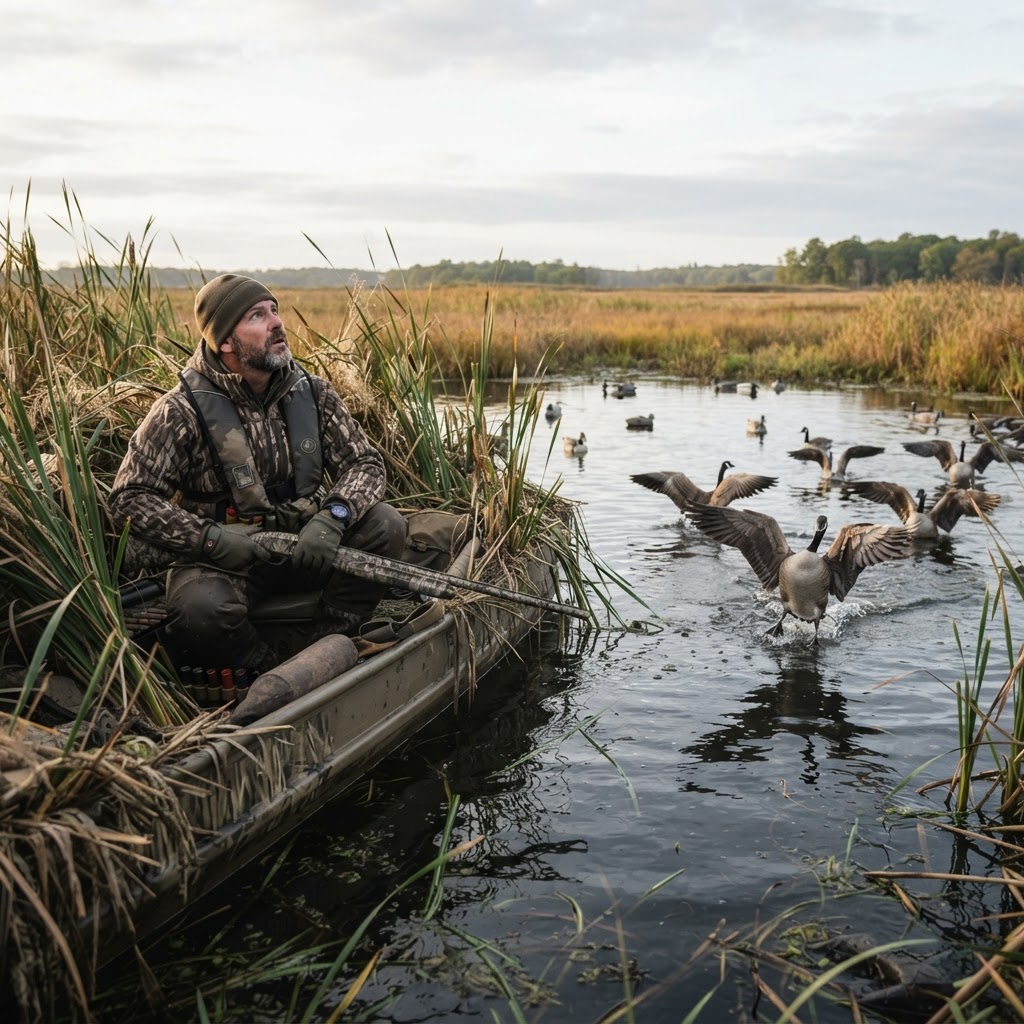
The air in early September holds a lingering heat that belies the biological imperative screaming at the local waterfowl population. While your focus might currently be split by a deer movement forecast, the resident Canada geese and local mallards have already begun shifting their daily routines in response to the diminishing daylight and changing food availability. Early season waterfowl hunting is not about endurance against the elements; it is a game of precision, patience, and recognizing that birds which were easily fooled in late summer are now becoming increasingly wary. Before you head out, check your state hunting regulations and seasons to ensure compliance with the specific bag limits and zone boundaries currently in effect across the country. ## Why does early season waterfowl behavior differ from late season? Unlike the birds that will arrive on the wings of a northern cold front in November, your early targets are home-grown. Resident geese have spent the entire summer in relative peace, establishing predictable transit routes between loafing water and high-protein agricultural fields. Local mallards and teal are similarly habituated. They are not flighty yet, but they are incredibly observant. If your blind concealment is sloppy or your calling is overly aggressive, you will educate these birds before the migration even begins. By September, these ducks and geese have seen plenty of human activity near the water. They associate movement and unnatural silhouettes with danger. Your strategy must shift from a 'more is better' decoy philosophy to a 'less is more' approach that relies on realism rather than volume. Utilize a waterfowl species field guide to ensure you are accurately identifying the mixed-bag flocks of teal, wood ducks, and resident mallards that often share the same small ponds this time of year. ## How should I optimize my waterfowl decoy spread for early season? The biggest mistake hunters make in September is over-crowding the water. Resident birds are often found in small family groups or loose bachelor pods. A massive spread of five dozen decoys screams 'danger' to a wary Canada goose that has spent the last month congregating in groups of ten or twelve. Focus your decoy spread planner on creating landing zones that mimic natural behavior. For resident geese on a small pond, six to ten well-placed floaters—spaced with enough room for a bird to land comfortably—are far more effective than a massive block spread. If you are hunting agricultural fields, place your decoys in 'feeding family' clusters rather than a single large blob. Leave wide gaps between clusters; birds tend to land in the empty space between groups of decoys, not directly into the middle of the spread. Always use hunt mapping and wind tools to align your setup. A crosswind is ideal, allowing the birds to approach your spread while banking slightly toward your landing zone, which keeps their eyes off your blind until it is too late. ## What gear adjustments are necessary for warm weather hunts? September heat is the primary variable that dictates your equipment choices. Heavy insulation is a liability that leads to sweat, which eventually leads to the chills as the sun dips. Prioritize high-visibility, lightweight camo that wicks moisture. You want gear that breaks up your outline against the reeds or standing corn but breathes like athletic wear. This is also the time to scrutinize your gun maintenance. Warm, dusty fields and humid, muddy marshes are breeding grounds for carbon buildup and grit. Keep your firearm clean, and if you are concerned about security while traveling or at a base camp, consider investing in quick-access firearm storage to keep your gear organized and safe. Additionally, bring a good thermos for hydration; while it feels like summer, early mornings on the water can be deceptively taxing on your physical performance. Keep a sharp eye on the waterfowl migration tracker to understand if a localized push of birds is beginning to shift your regional density. ## How do I select the best blind placement for small water and fields? If you are hunting small water, your blind must be tighter than a drum. Natural vegetation is your best friend. Do not rely on synthetic mats if there is high-quality native brush, cattails, or tall grass available. Build your hide into the cover, not in front of it. In agricultural fields, the layout blind remains the gold standard, but it requires thorough brushing. If you are hunting a harvested corn field, use the cut stalks to stubble your blind until it disappears from a bird's-eye view. Remember that birds approaching a field or water source early in the season are looking for 'safe' signals. If they see a patch of grass that looks like a bump on the landscape rather than a continuation of the field edge, they will flare. Take these three steps to improve your field success: 1. Scout the evening before; locate the exact 'X' where the birds are landing, not just where they are feeding. 2. Set your decoys 20 yards upwind of your blind position to encourage birds to finish in front of your barrel. 3. Reduce your calling volume by 50% compared to late-season tactics; focus on subtle content calls and chuckles. ## How can I involve the next generation of waterfowlers? The early season is arguably the most forgiving time to bring new hunters into the field. The weather is manageable, the birds are often more vocal and responsive, and the pressure is generally lower than the mid-season peak. Organizations like the BHH Youth Hunters Academy provide excellent frameworks for teaching young hunters about the ethics of the sport and the importance of conservation, which are foundational to becoming a lifelong waterfowler. Teaching a youth to identify teal versus wood ducks in low light, or explaining why we watch the wind direction before setting the decoys, is more rewarding than a full bag limit. For more general news and updates on the season, keep an eye on BHH Youth Hunters Academy as you track the progression of the fall. This week, perform a full audit of your waterfowl gear. Replace any frayed decoy cords, clean the rust from your choke tubes, and spend two evenings scouting your local water and field edges. If you find birds, monitor them for two days to confirm they are using the same spots consistently before you commit your time to a hunt. Success in September is won by the hunter who does the homework, respects the habits of the local birds, and keeps their setup simple, effective, and perfectly hidden.