White Bass
Morone chrysops
The schooling warrior of the reservoir that turns quiet mornings into frantic, rod-bending blitzes.
Typical Size
10 to 14 inches; 1 to 3 pounds.
Prime Seasons
Spring for the spawning run and late summer/early autumn for open-water surface blitzes.
Overview
White Bass, often called 'sand bass' or 'stripers' in miniature, are highly social, pelagic predators that roam open water in large schools. Anglers target them for their aggressive nature and the sheer intensity of the 'surface blitz,' where schools push baitfish to the top, creating a feeding frenzy that can last for hours. They are highly prized not just for the thrill of the fight on light tackle, but for their mild, flaky fillets that are considered excellent table fare.
Because of their schooling behavior, the challenge is rarely catching just one; it is finding the school. Once located, an angler can often catch fish on every cast until the school disperses or moves on. Their unpredictable movement patterns and seasonal spawning runs up river tributaries make them a favorite target for anglers ranging from weekend warriors to seasoned tournament pros looking for fast, high-volume action.
Identification
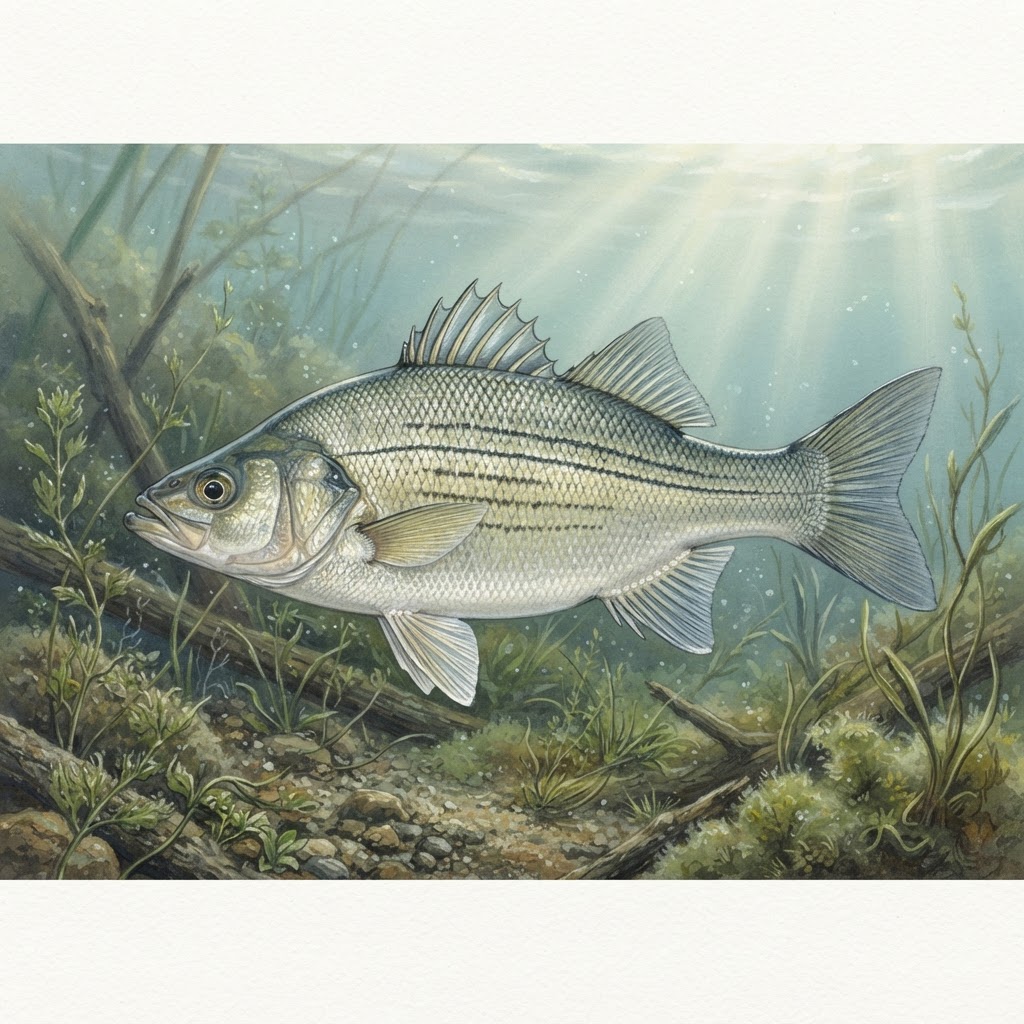
- Silvery-white body with distinct horizontal dark lines along the sides
- Single, slightly interrupted dorsal fin
- Lower jaw projects slightly beyond the upper jaw
- Back is generally a pale grey or olive color
- Eyes are typically large and yellowish
Habitat
Diet & Forage
Behavior & Feeding
White bass are highly gregarious schooling fish that hunt primarily by sight, often pinning baitfish against the surface in frenzied feeding events commonly known as topwater boils. They are most active during low-light periods at dawn and dusk, though they remain aggressive throughout the day in open water when foraging for shad. During late summer and fall, they follow schools of baitfish into open water, frequently patrolling river channels or deep-water humps in reservoirs. They exhibit high levels of aggression, often striking moving lures with reckless abandon when a school is keyed in on forage.
Spawning
The annual white bass spawning run occurs in spring, typically when water temperatures rise into the mid-50s to low-60s. Large schools migrate from lakes into tributary rivers and streams, seeking out rocky or gravel shoals with moderate current to broadcast their eggs. This migration provides some of the best fishing of the year, as dense concentrations of fish become highly accessible to anglers. Success during this period relies on locating the leading edge of the migration, as these fish move rapidly upstream and are quick to strike jigs or small crankbaits.
Water Temperature
Weather Triggers
Overcast Skies
Extends the morning and evening feed duration, allowing schools to stay active near the surface for longer periods.
Stable High Pressure
Promotes consistent feeding in open water; search for suspended schools using vertical jigging spoons.
Incoming Cold Front
Triggers a frantic, short-term feeding spree immediately before the pressure drop as fish gorge on baitfish.
Depth by Season
Best Lure Rigs & Setups
Jig and Twister Tail
When: The go-to search bait for both spring runs and summer schooling.
Setup: 1/8 to 1/4 oz lead jig head paired with a 2-3 inch white or chartreuse curly tail grub on 6-8 lb fluorocarbon.
Tail-Spin Lure
When: Perfect for searching open water when schools are deep or suspended.
Setup: 1/4 to 1/2 oz blade bait or tail-spinner casted and retrieved with a jigging motion on 10 lb braid to fluorocarbon leader.
Live Minnow under a Slip Float
When: When fish are holding on specific structure or gravel beds and refuse artificials.
Setup: Size 4 or 6 octopus hook, small split shot, and a slip bobber set to the depth of the school.
Best Knots
Rigs From The Library For White Bass
 0-20 ft
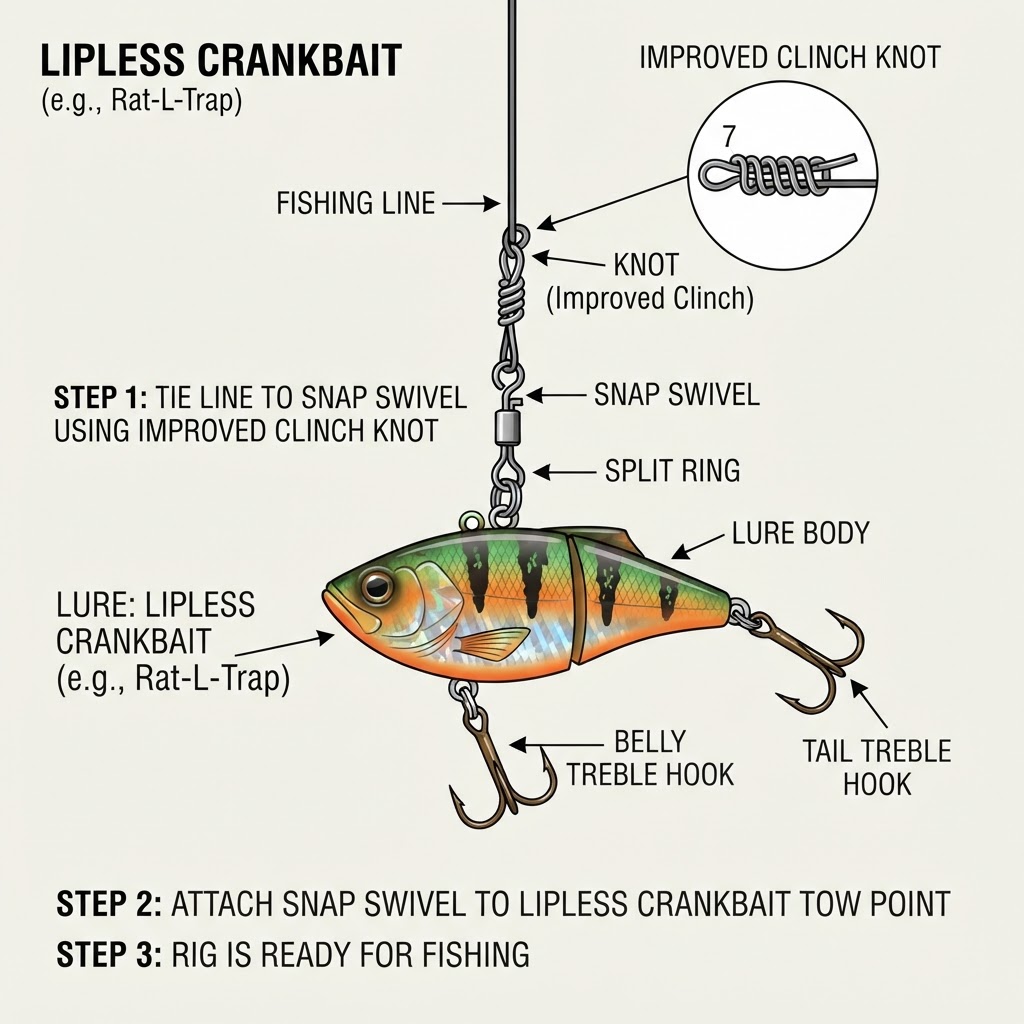
Lipless Crankbait
The ultimate search bait that triggers reactionary strikes with its tight wobble and loud internal rattle.
 1-8 ft
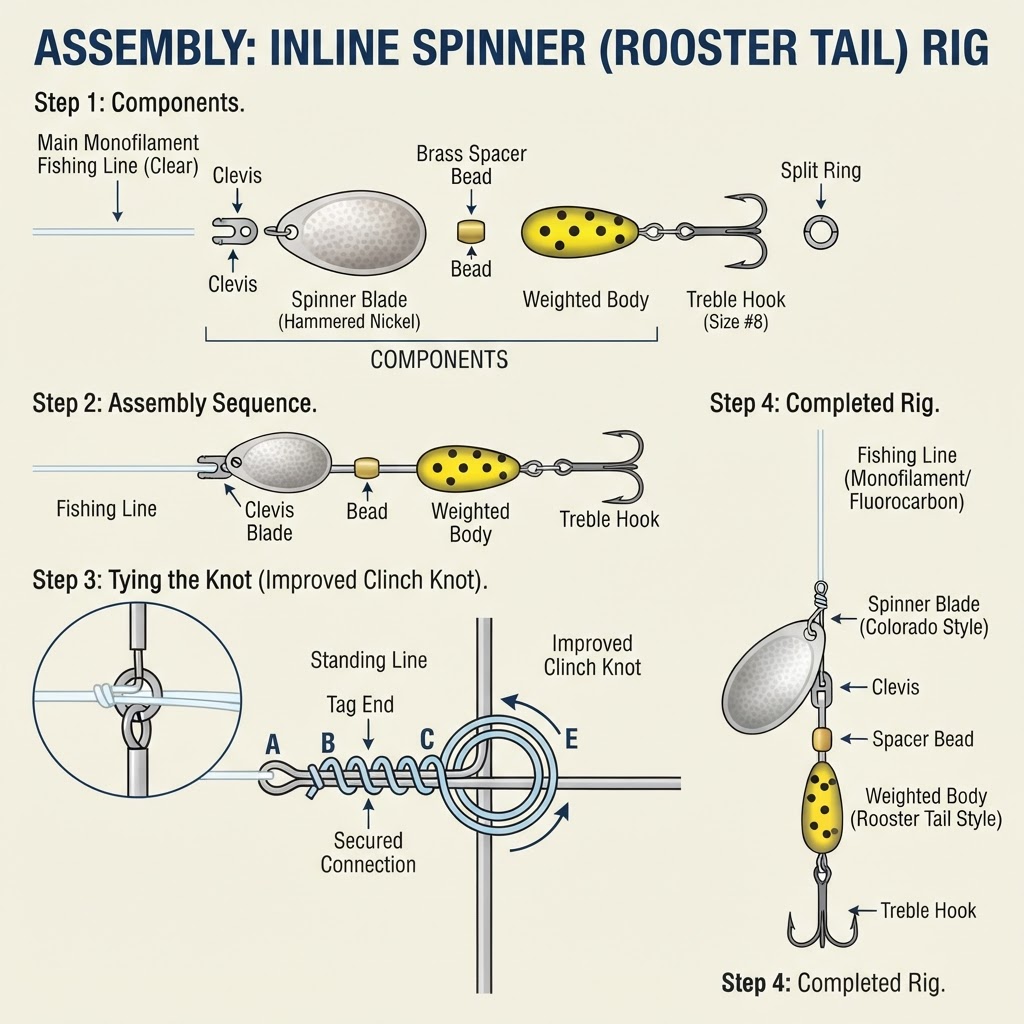
Inline Spinner (Rooster Tail)
The ultimate multi-species flash-and-vibration machine that triggers predatory strikes with its constant blade rotation.
Catch more white bass — free
Create a free account and unlock the full angling toolkit:


