
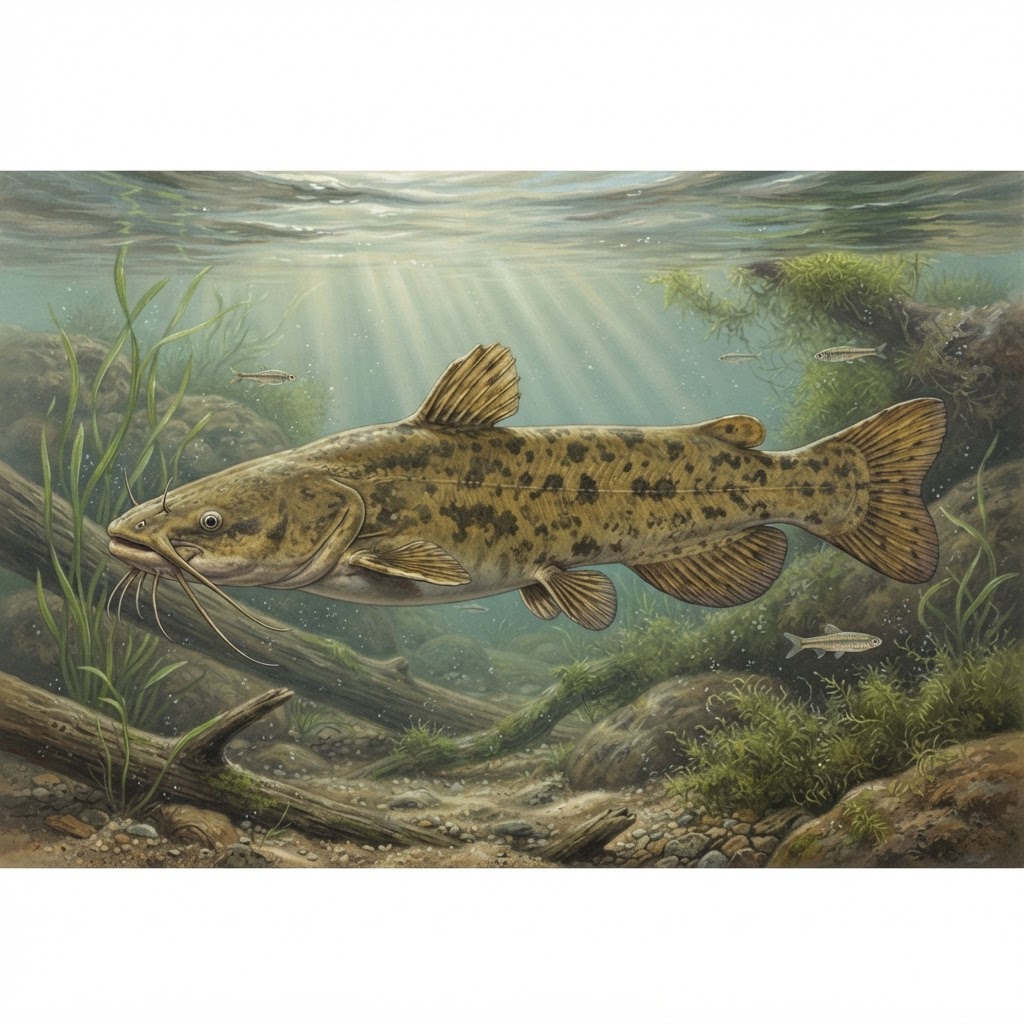
Flathead Catfish
Pylodictis olivaris
The apex predator of the river bottom, capable of reaching massive sizes and punishing even the heaviest tackle.
Typical Size
10-40 lbs is common, with trophy specimens reaching 60-100+ lbs.
Prime Seasons
Late spring through early autumn; nocturnal fishing is peak performance.
Overview
The Flathead Catfish is a solitary, nocturnal ambush predator that reigns supreme in major river systems across the United States. Unlike other catfish species that scavenge, the Flathead is primarily a piscivore, preferring to strike live, healthy prey. Their ability to reach weights exceeding 100 pounds makes them a trophy species that demands specialized, heavy-duty gear and immense patience.
Anglers target Flatheads for their explosive, bulldog-like fighting ability and the sheer challenge of coaxing a prehistoric giant from dense log jams or deep river holes. While they are a formidable game fish, they are also highly regarded for their firm, white meat, making them a dual-purpose target for both sport and the dinner table.
Identification
- Broad, flat head with a protruding lower jaw
- Tail is square or slightly notched, not deeply forked
- Yellowish-brown to olive-brown mottled body coloration
- Small, distinct eyes located on the top of the head
- Adipose fin is large and fleshy
Habitat
Diet & Forage
Behavior & Feeding
Flathead catfish are solitary, apex predators that favor heavy cover like logjams, bridge pilings, and deep undercut banks during daylight hours. They are primarily nocturnal hunters, becoming highly active and aggressive as they emerge from their lairs to ambush live bait in shallower, moving water at night. During seasonal transitions, they move from deep winter pools to mid-depth structures, following shad and sunfish migrations to feed heavily before and after the spawn.
Spawning
Spawning occurs when water temperatures consistently reach 70 to 80 degrees, typically spanning from late spring to early summer. Males aggressively clear out nesting cavities under hollow logs or in rocky crevices and fiercely guard the eggs and fry once deposited. During this period, fishing success often declines as the males stop feeding to focus exclusively on nest protection. Anglers looking for success during this time should target areas just outside of traditional nesting structure where larger, non-nesting individuals may roam.
Water Temperature
Weather Triggers
Falling barometer
Often triggers a 'feeding frenzy' in the hours preceding a storm front as fish sense pressure changes.
Stable high pressure
Can lead to lethargic behavior; requires precise bait placement directly in front of known hiding spots.
Overcast days
Reduces light penetration, causing flatheads to remain active and hunt outside of their structures for longer periods.
Depth by Season
Best Lure Rigs & Setups
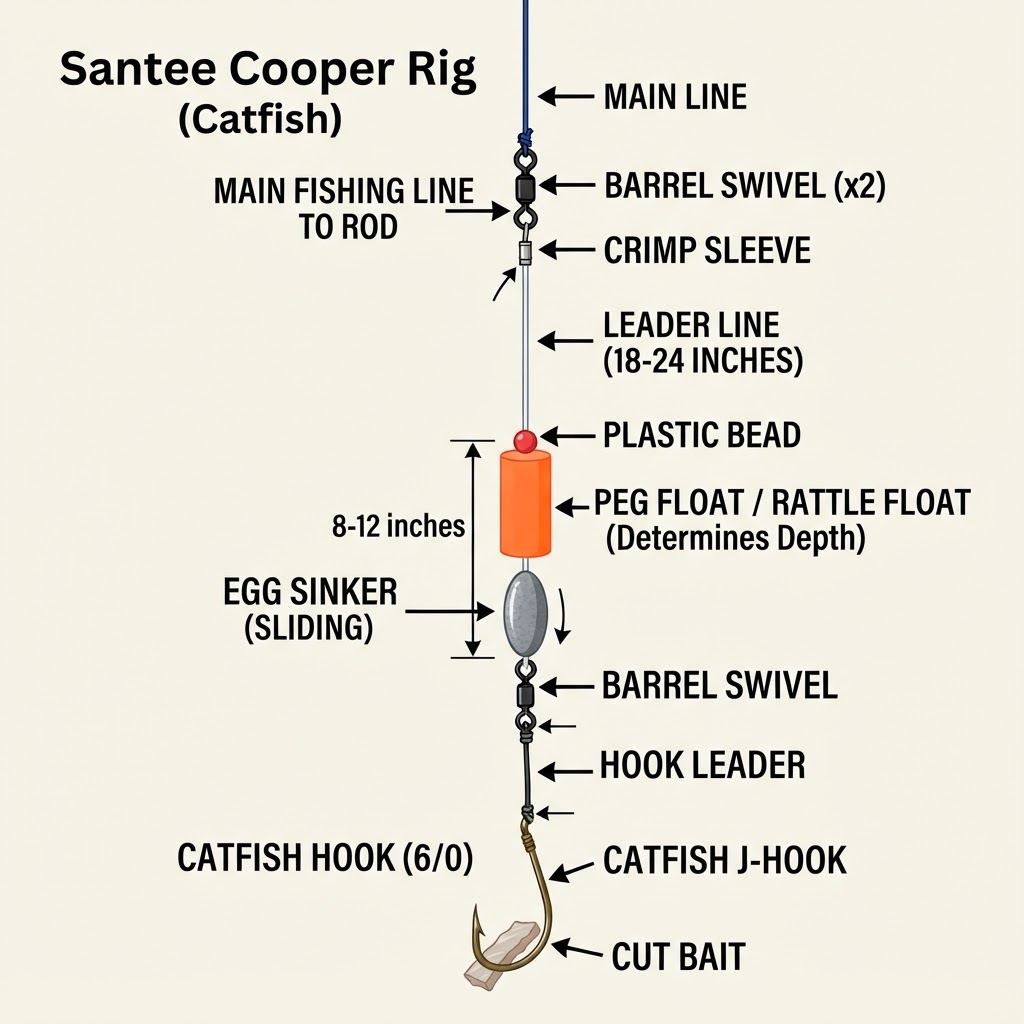
Santee Cooper Rig
When: Ideal for drifting or anchoring in current to keep bait off the bottom.
Setup: 50-80lb braid main line, 1-3 oz egg sinker, swivel, 2-3 ft fluorocarbon leader, 8/0-10/0 circle hook, and a small foam float to keep the bait suspended.
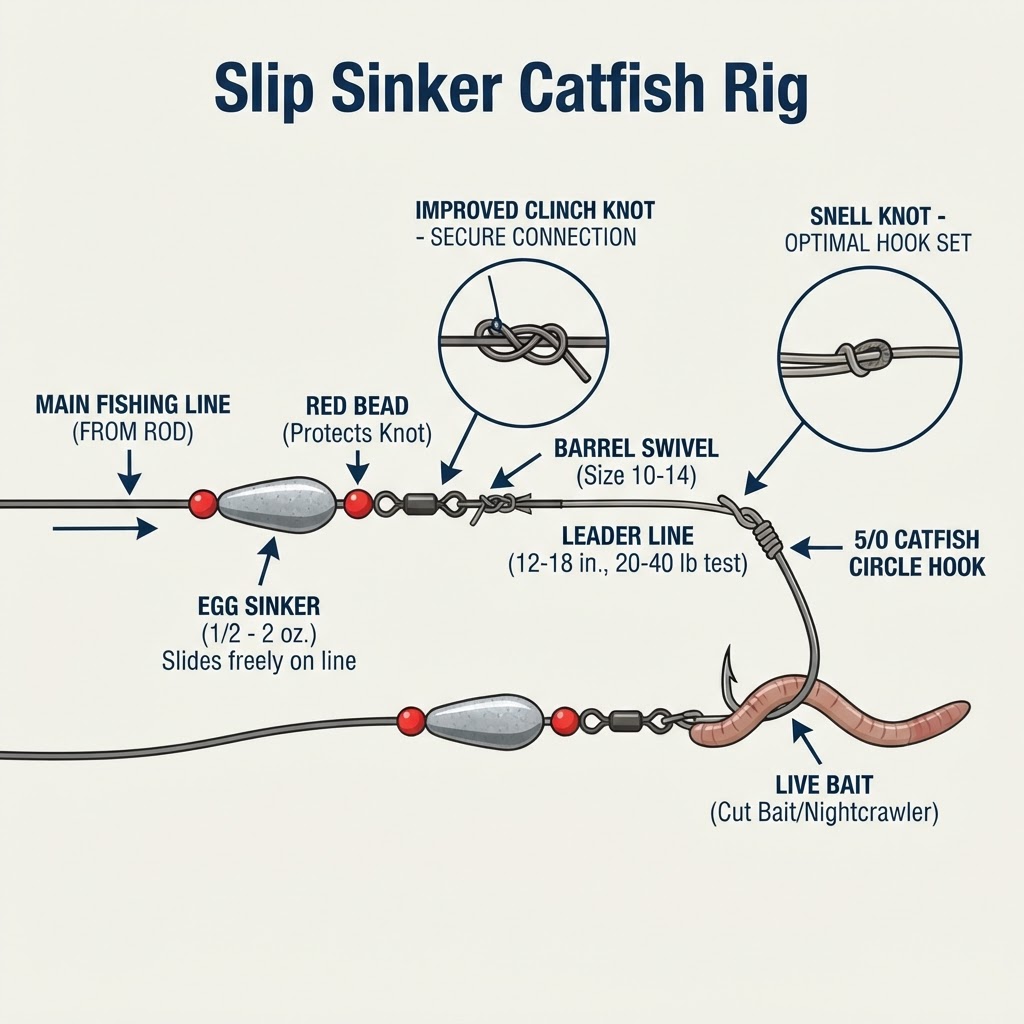
Slip Sinker Rig
When: Best for anchoring near log jams or cover where snag resistance is critical.
Setup: 65lb braid main line, 2-4 oz bank sinker, heavy-duty swivel, 18-inch 80lb mono leader, 9/0 octopus circle hook.
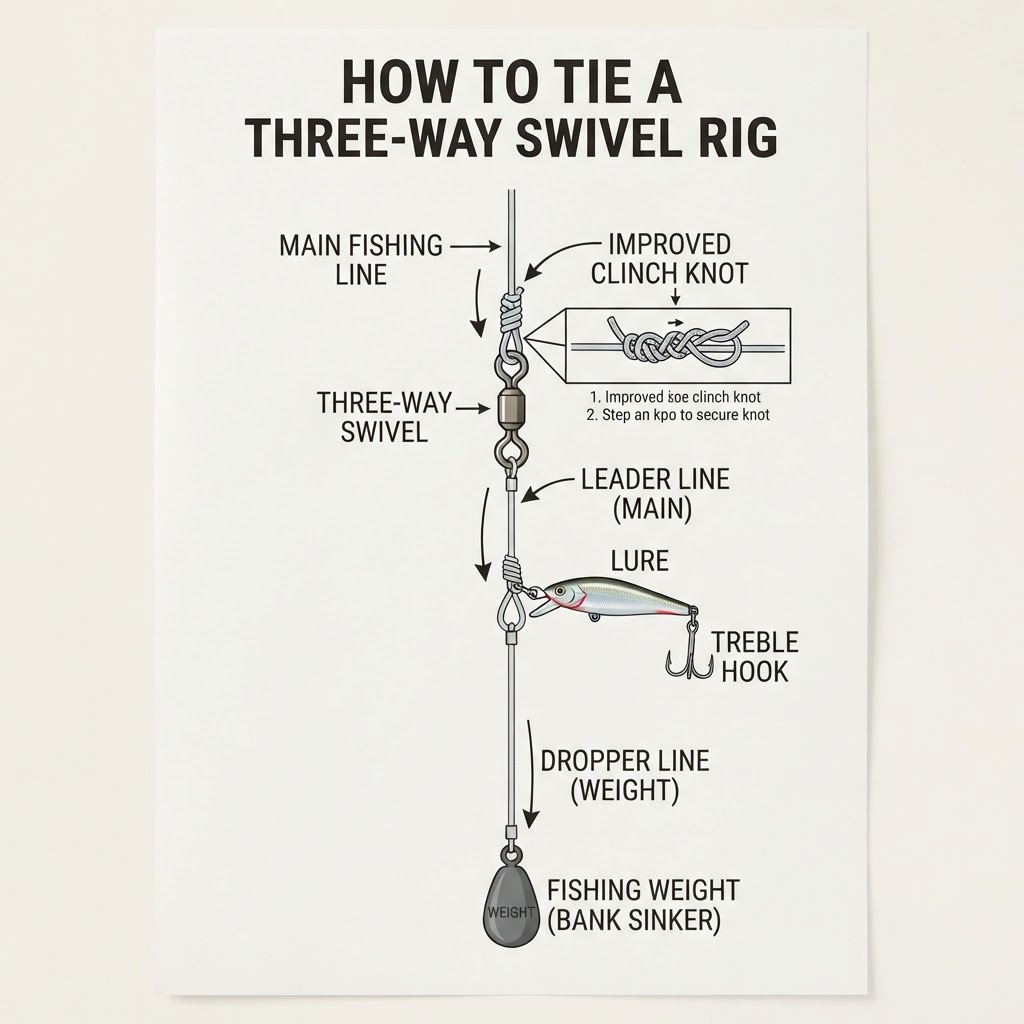
Three-Way Swivel Rig
When: Perfect for vertical jigging or drifting in deep water with heavy current.
Setup: Heavy duty 3-way swivel, 1-4 oz pencil lead weight on a short dropper, 3 ft leader, 8/0 live bait hook.
Best Knots
Lures That Catch Flathead Catfish
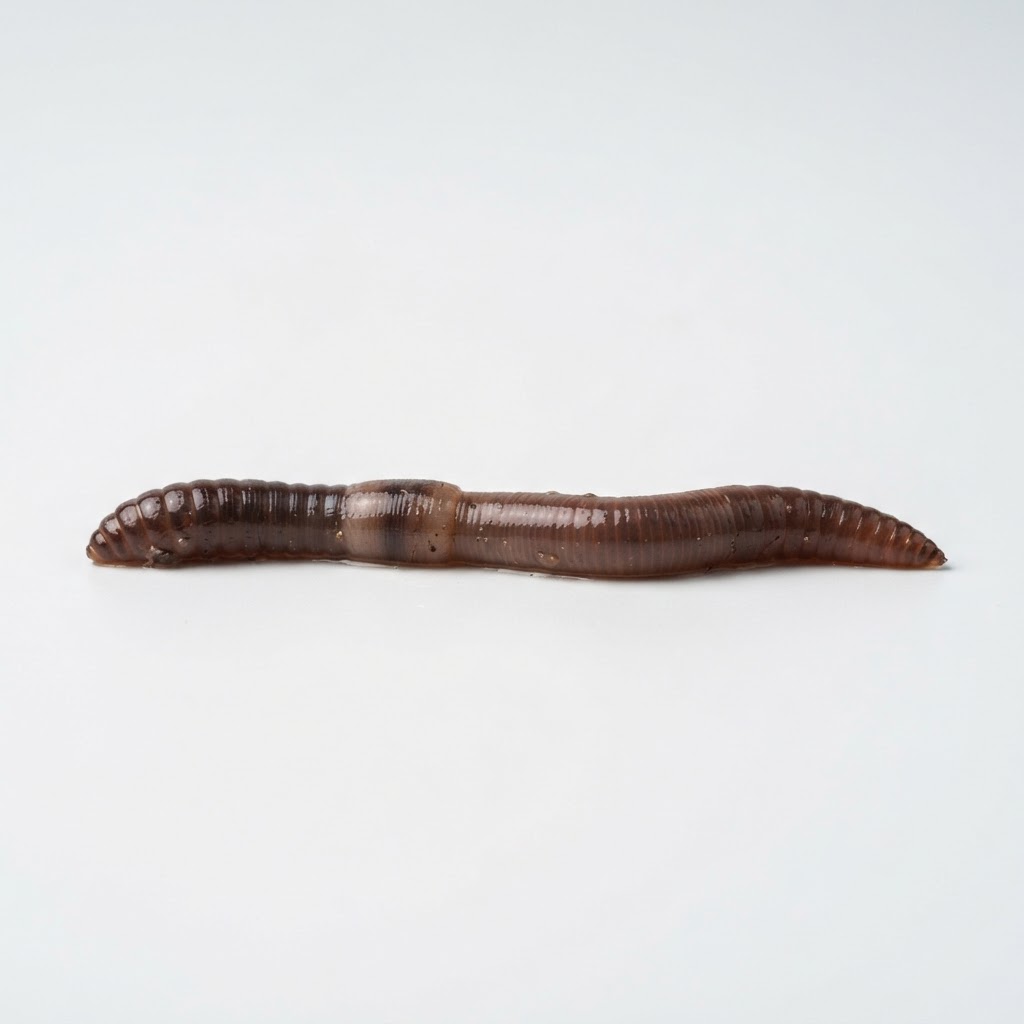
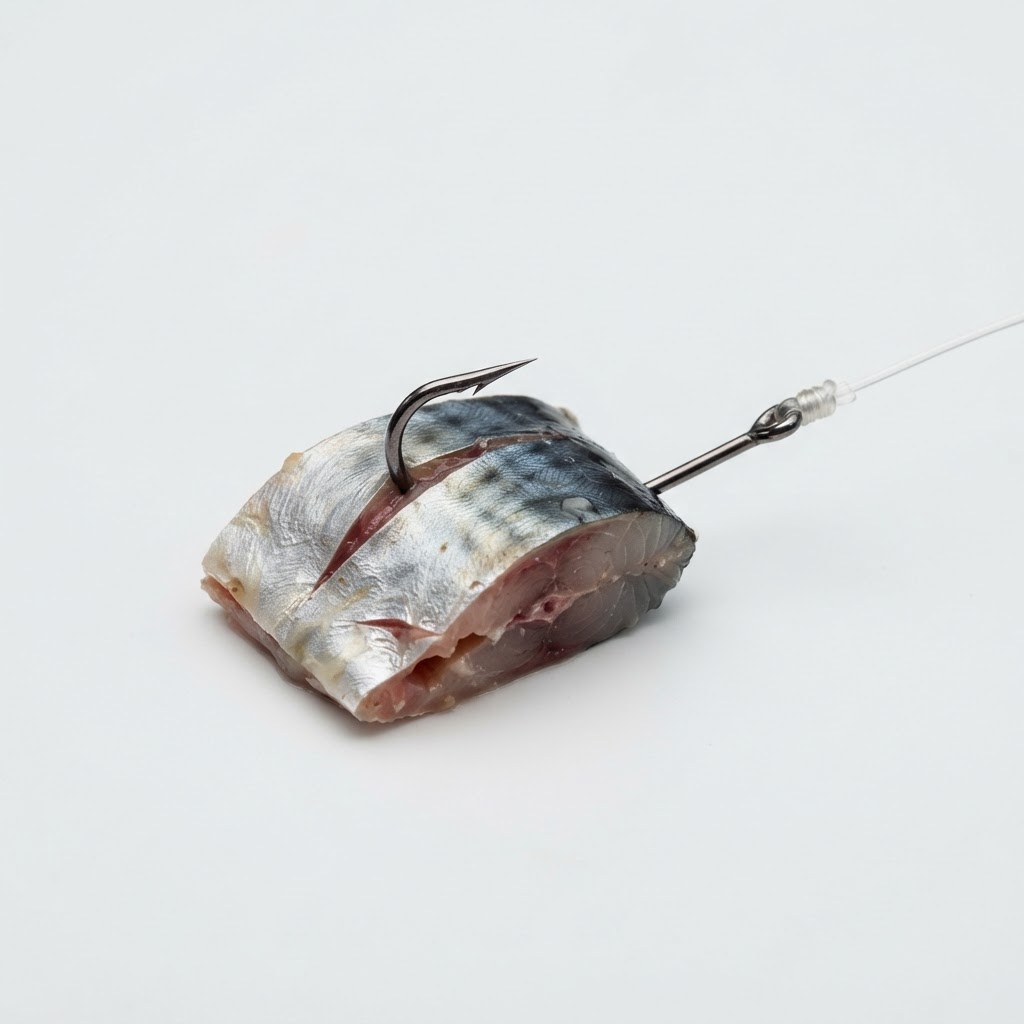
Rigs From The Library For Flathead Catfish
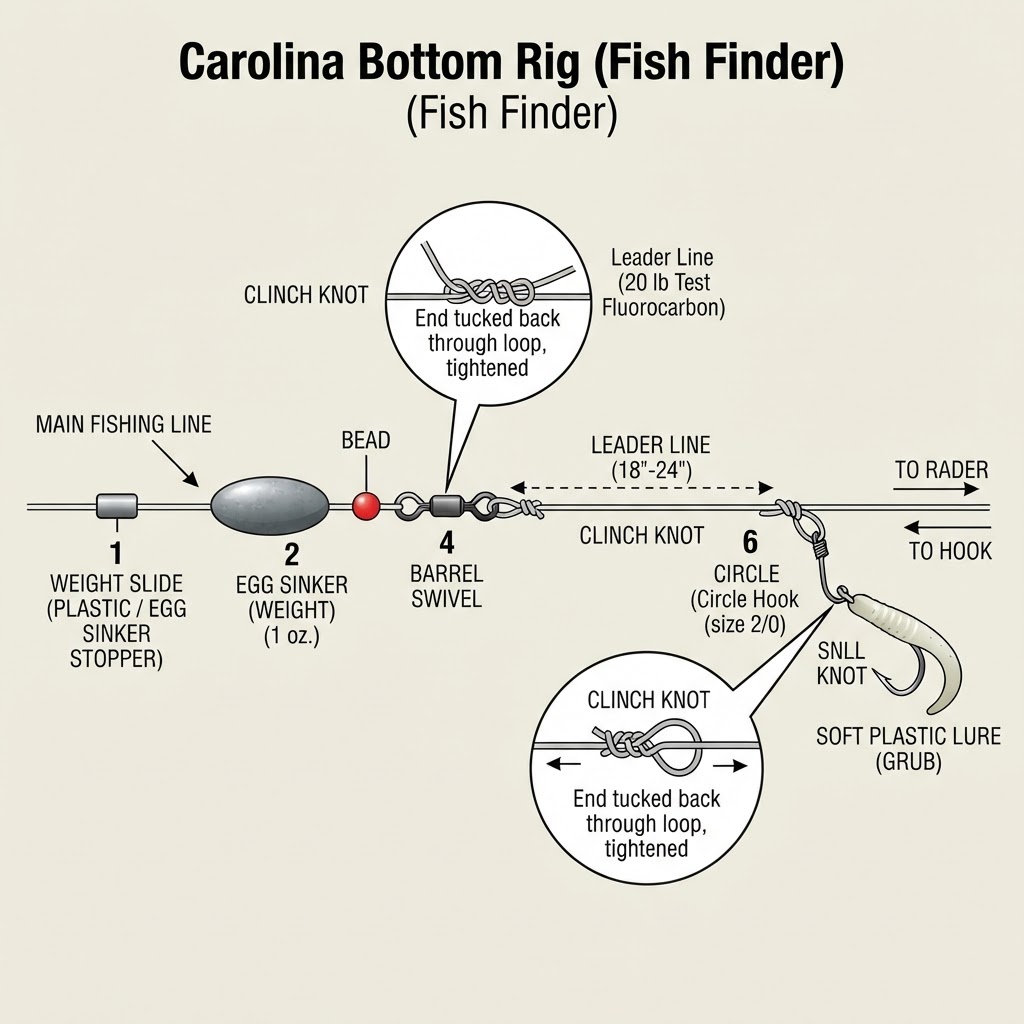 5-60 ft
Carolina Bottom Rig (Fish Finder)
The ultimate bottom-hugging presentation that allows fish to pick up your bait without feeling the resistance of your heavy sinker.
 5-40 ft
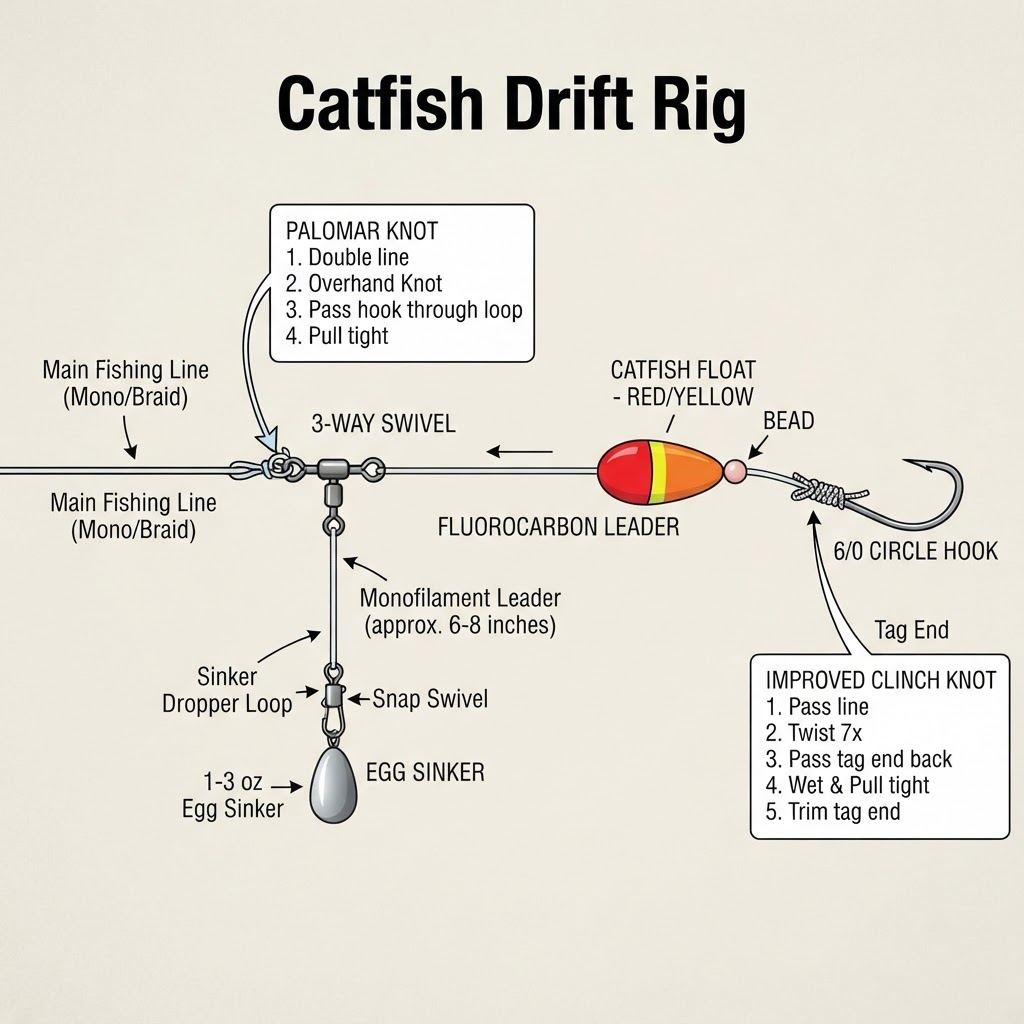
Catfish Drift Rig
The ultimate bottom-hugging presentation designed to keep your bait hovering just above the riverbed where monster catfish feed.
 5-50 ft
Slip Sinker Catfish Rig
The ultimate bottom-fishing setup that lets bait move naturally while keeping fish from feeling any resistance upon the pick-up.
 10-60 ft
Three-Way Swivel Rig
The ultimate bottom-tracking rig that keeps your bait suspended perfectly in the strike zone regardless of current or depth.
 10-40 ft
Santee Cooper Rig (Catfish)
The ultimate bottom-bouncing setup for trophy catfish, combining a controlled drift with a buoyant lure presentation that keeps your bait suspended right in the strike zone.
 1-10 ft
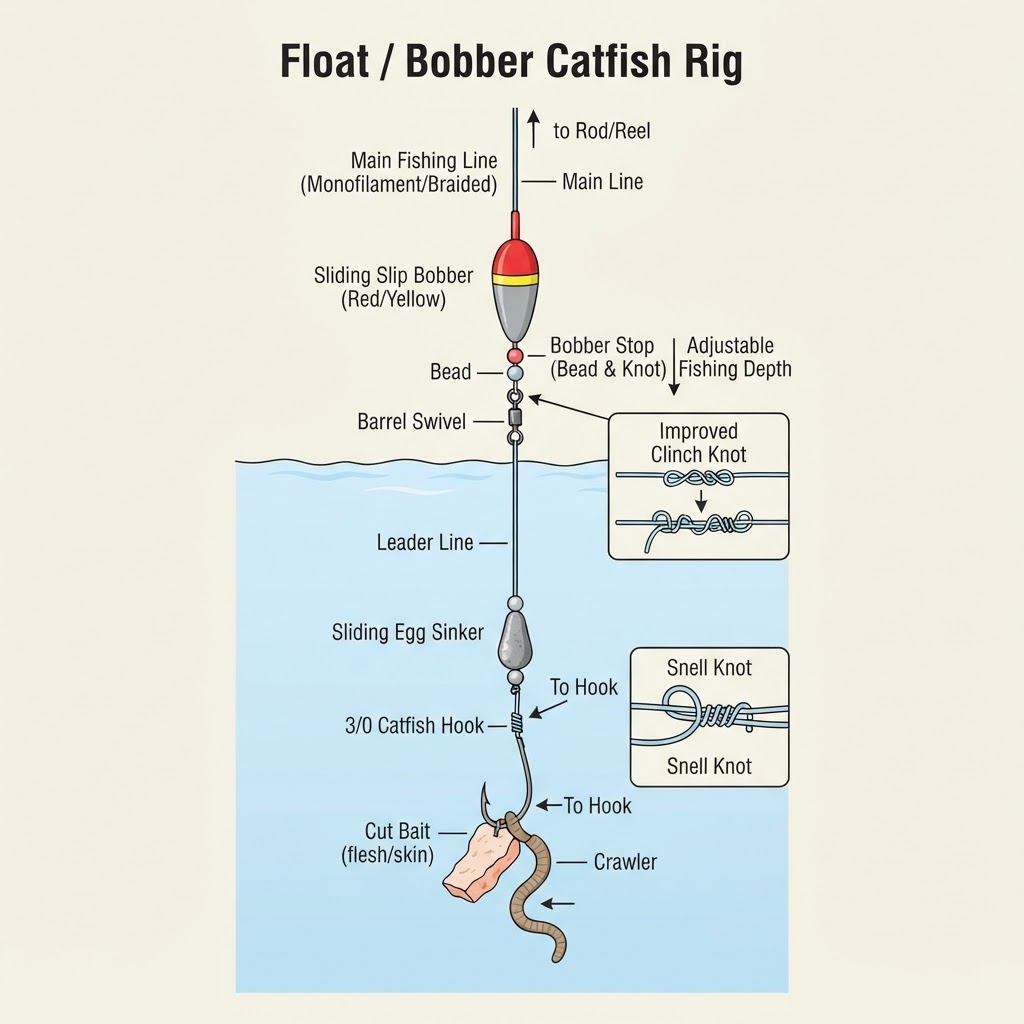
Float / Bobber Catfish Rig
Suspends your bait in the strike zone, keeping it perfectly positioned above debris and bottom structure where catfish hunt.
Catch more flathead catfish — free
Create a free account and unlock the full angling toolkit:


