
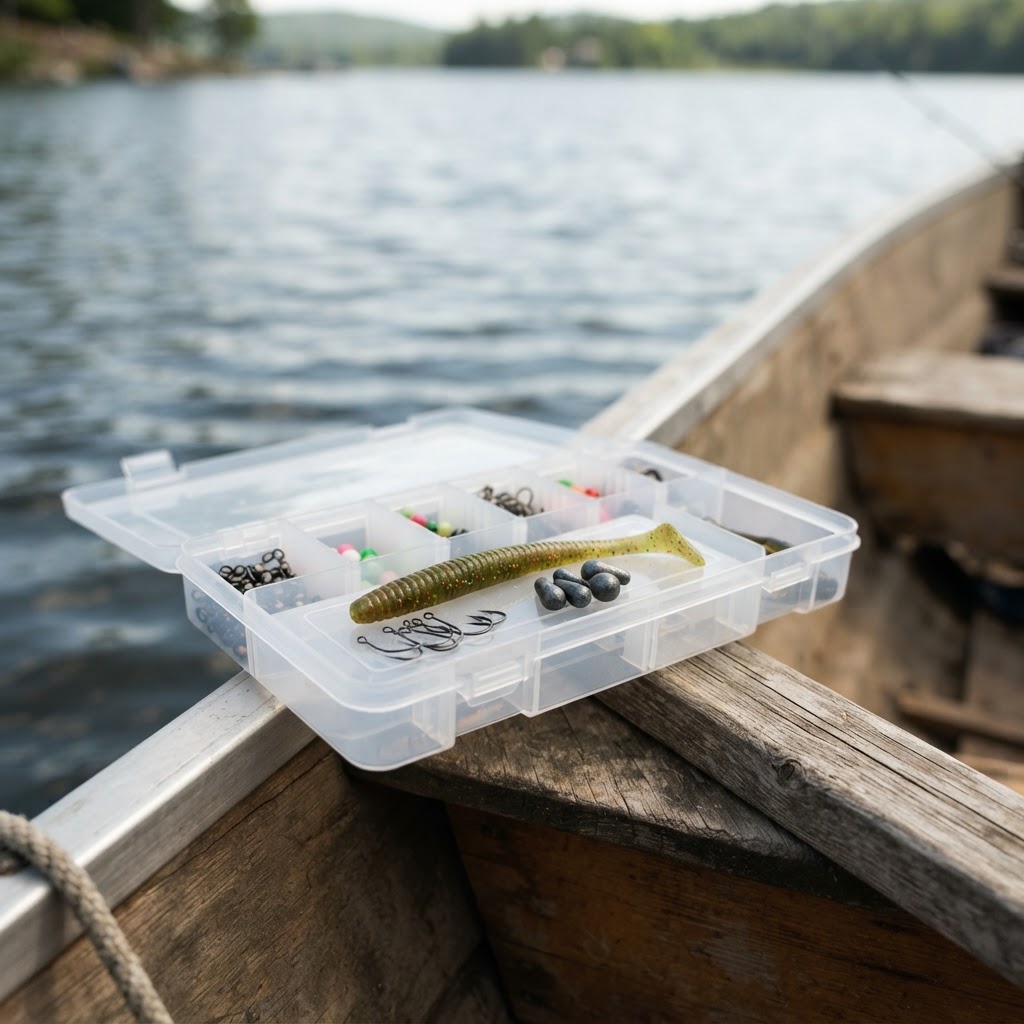
Terminal Tackle Essentials: A Beginner’s Roadmap to Rigging Right
Building Your Foundation Without the Clutter
Walk into any major outdoor retailer, and you will be met with aisles of plastic bags filled with hooks, swivels, and weights that look like alien technology. For a beginner, this is overwhelming. At Buckeye Hunter Hub, we believe that success on the water isn't about owning one of everything; it is about mastering the versatility of a few high-quality, foundational pieces. Your terminal tackle—the business end of your line—is where the interface between your strategy and the fish actually happens. If you lose a fish, it is rarely because your rod wasn't expensive enough; it is almost always because your hook set failed or your line connection snapped.
Get in the Community feed
Hunters and anglers nationwide posting bucks, catches, trail cam pics and what's working right now.


The Hook: Why Quality Trumps Quantity
The most critical component in your kit is the hook. Many beginners start by buying bulk bags of cheap, mystery-metal hooks. Avoid this trap. Cheap hooks dull quickly, bend under pressure, and often feature poor temper, leading to heartbreak when a trophy bites. Invest in reputable brands like Gamakatsu, Owner, or Mustad. For general-purpose fishing, a box of offset worm hooks (size 2/0 or 3/0) and a pack of standard octopus hooks (size 4 or 6) will cover everything from bluegill to bass.
Before you head to the water, use our to check the depths and bottom structure of your target lake. Knowing if you are fishing heavy vegetation or rocky rip-rap will determine whether you need a weedless setup or a standard live-bait configuration. If you are uncertain about specific regulations regarding bait usage, always consult your local state fishing resources to ensure you stay within legal bounds.
Weights and Sinkers: The Art of Sensitivity

Youth Hunter Academy
Raise a safe, confident young hunter.
Safety missions for ages 5–17. Free parent account.
Weight is about more than just getting to the bottom; it is about feel. Beginners often choose weights that are far too heavy, which kills the natural action of the bait. Split shots are your best friend for micro-adjustments. They are removable, cheap, and perfect for testing how deep the fish are holding. If you are moving into deeper water, bullet weights are essential for Texas-rigging soft plastics.
Always carry a variety of sizes, but prioritize tungsten over lead whenever your budget allows. Tungsten is denser, meaning the weight is smaller, which creates less drag in the water and allows you to feel subtle 'ticks' on the bottom that lead simply muffles. It is a slight tradeoff in cost, but the gain in sensitivity is massive for someone learning to read the bottom.
Swivels and Snaps: The Efficiency Tradeoff
There is a debate that rages in every tackle shop: to swivel or not to swivel? The advantage of using a high-quality ball-bearing swivel is that it prevents line twist, which is a major headache for beginners using spinning gear. However, the downside is that it adds bulk to your presentation.
For most beginners, a small black-finish barrel swivel is a necessary evil. It allows you to change leaders quickly, which is vital when you are still learning what depth or bait color the fish prefer. As you grow, you might find more tips on the blog, so check out for deeper dives into rig customization. Just ensure you aren't using bulky, shiny snaps that spook wary predators in clear water.
Line Management and Knot Strength
Your terminal tackle is only as good as the knot connecting it to your line. No matter how much you spend on the finest fluorocarbon leader, a poorly tied knot will fail. Practice your Palomar knot and your Improved Clinch knot until you can tie them in the dark. These two knots will serve 90% of your needs. If you find yourself consistently landing solid catches, don't forget to share your success on our to help inspire other new anglers.
Balancing the Budget
It is tempting to buy the "starter kit" that comes with 200 pieces of junk. Don't do it. You will find that 150 of those pieces are useless for the water you fish. Instead, start with:
- A spool of 8-10 lb test monofilament or fluorocarbon line.
- Three sizes of offset worm hooks.
- A variety pack of split shots (sizes BB to 3/0).
- A handful of barrel swivels.
- A selection of soft plastic worms.
This minimalist approach keeps your gear manageable and your mind focused on the water. When you simplify your terminal tackle, you stop worrying about what gear to use and start focusing on where the fish are hiding. Remember, the best angler on the lake isn't the one with the most gear—it’s the one who understands how to use the gear they have to trigger a bite. Keep your knots tight, your hooks sharp, and keep practicing your cast.
Free every morning
Your Daily Briefing
One morning forecast for the spots you actually hunt and fish: deer movement, waterfowl flights, bite times, wind and shooting light.
See what's in itSet up your briefing
Join free, save a spot on the map, then pick what you hunt and fish and when you want your email.
Catch more these fish — free
Create a free account and unlock the full angling toolkit: