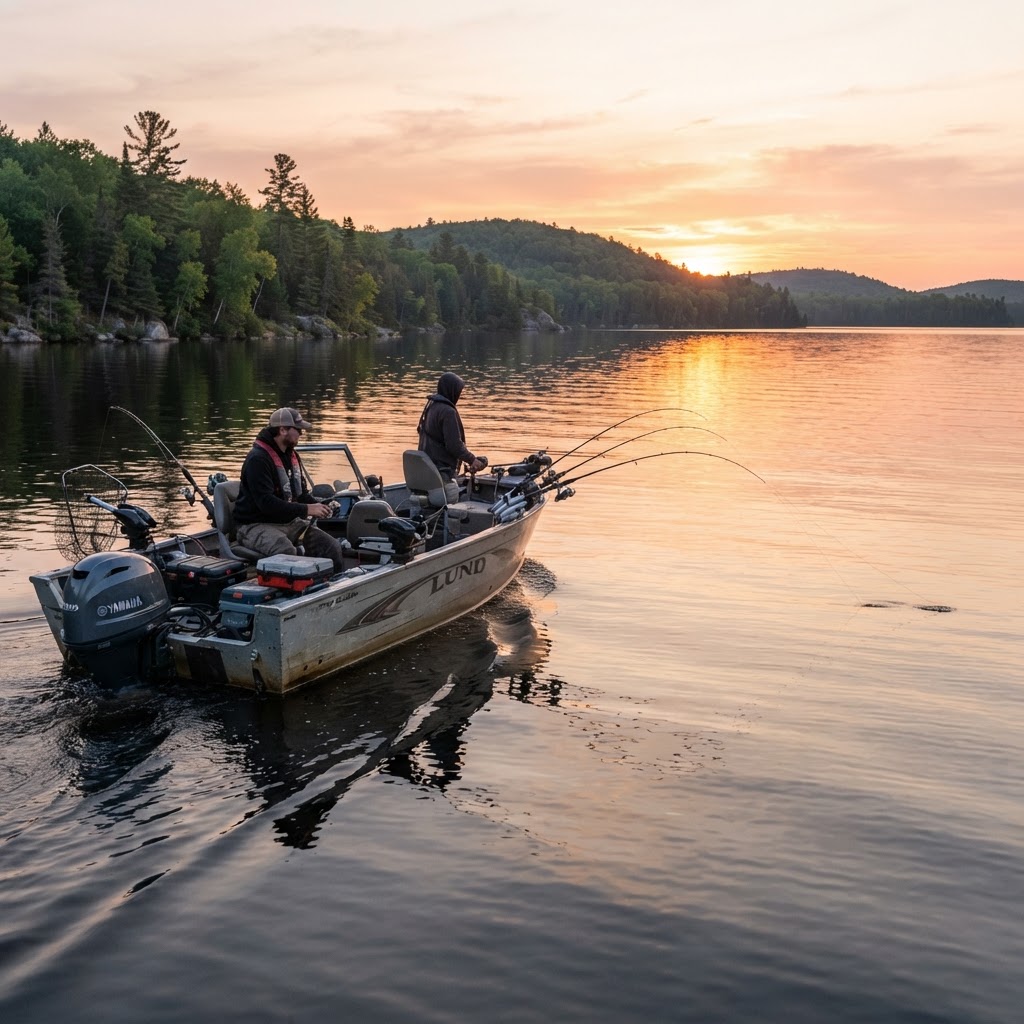
Mastering the Depth: A Guide to Trolling Crankbaits for Suspended Walleye
Why Suspended Walleye Are the Ultimate Challenge
For many anglers, the classic image of a walleye is one hugging the bottom of a lake or river. However, as the summer sun heats the water, schools of walleye often abandon the structure and suspend in the open basin, chasing baitfish like shad or alewives. If you aren't willing to follow them into the 'no-man's land' of the water column, you are missing out on some of the most consistent fishing of the year. Trolling crankbaits is, without a doubt, the most effective way to intercept these nomadic predators.
Get in the Community feed
Hunters and anglers nationwide posting bucks, catches, trail cam pics and what's working right now.


Dialing in Your Presentation
The key to successful trolling for suspended walleye lies in precision. Unlike fishing near the bottom where a bouncing sinker tells you exactly where you are, suspended trolling requires a deep understanding of lure dive curves. You need to know exactly how deep your bait is running to keep it right in the face of the fish. Most crankbaits come with a manufacturer-provided depth chart, but it is wise to consult for specific regional data or to use tools like the Precision Trolling Data app to get exact metrics.
Gear Essentials
To be effective, you need the right tools. Your rod should be a medium-light or medium power, 7-to-9-foot glass or composite rod with a soft tip. This allows the crankbait to wobble freely while acting as a shock absorber when a walleye strikes, preventing you from ripping the hooks out of its mouth. Pair this with a line-counter reel. When you are targeting fish at 25 feet, guessing your lead length simply won't work.
Raise a safe, confident young hunter.
Guide your kids ages 5–17 through interactive hunting safety missions, real decision drills, and earned trophies — all from one free parent account.


For line choice, many pros swear by lead-core or weighted trolling line to get baits down, but monofilament is often sufficient if you are using diving crankbaits. For a more comprehensive look at how these setups vary by species, check out for our deep-dive into seasonal tackle adjustments.
Finding the Fish
Before you drop a single line, you must locate the schools. Suspended walleye often hold at the same depth as the primary forage base. Use your sonar to identify bait balls—they will appear as hazy clouds on your screen. If you aren't seeing fish, consider checking our to identify high-potential open-water basins in your area.
Once you find the bait, it is a game of speed and persistence. Generally, a trolling speed between 1.5 and 2.5 mph is the sweet spot. If the water is cold, slow down. If the water is warm, speed up. Always keep a log of what speeds and colors produced bites. Walleye can be incredibly picky about color patterns; on a bright sunny day, metallic finishes often reign supreme, while dull, matte colors often shine in stained water or under overcast skies.
Advanced Tactics: Diving Devices and Planer Boards
If the fish are scattered, you need a wider footprint. Inline planer boards are non-negotiable for trolling across the Great Lakes or large reservoirs. They allow you to pull your baits away from the boat's path, effectively 'herding' fish toward your lures and preventing your lines from tangling.
When fish are deeper than your crankbait can dive on its own, you should incorporate snap weights or diving disks like Dipsey Divers. By adding a one-ounce weight four feet ahead of your lure, you can increase your depth penetration by several feet without needing a larger, bulkier bait. It is a subtle change that often makes the difference between a blank day and a limit catch. For those looking to sharpen their specific rigging skills, we recommend checking the guidelines provided by the U.S. Fish and Wildlife Service regarding responsible angling practices in large public waters.
Conclusion: Persistence Pays Off
Suspended walleye fishing is a game of variables. You are managing depth, speed, color, and location simultaneously. It takes practice to become proficient, but the reward is a freezer full of fillets and the satisfaction of outsmarting one of the most elusive game fish in North America. Don't get discouraged if the first hour is slow; in the world of open-water trolling, the bite can turn on in an instant. When you finally land that trophy, don't forget to upload your photo to our to share your success with other anglers. With the right gear and a data-driven approach, the open water becomes your personal honey hole.
Catch more these fish — free
Create a free account and unlock the full angling toolkit: