
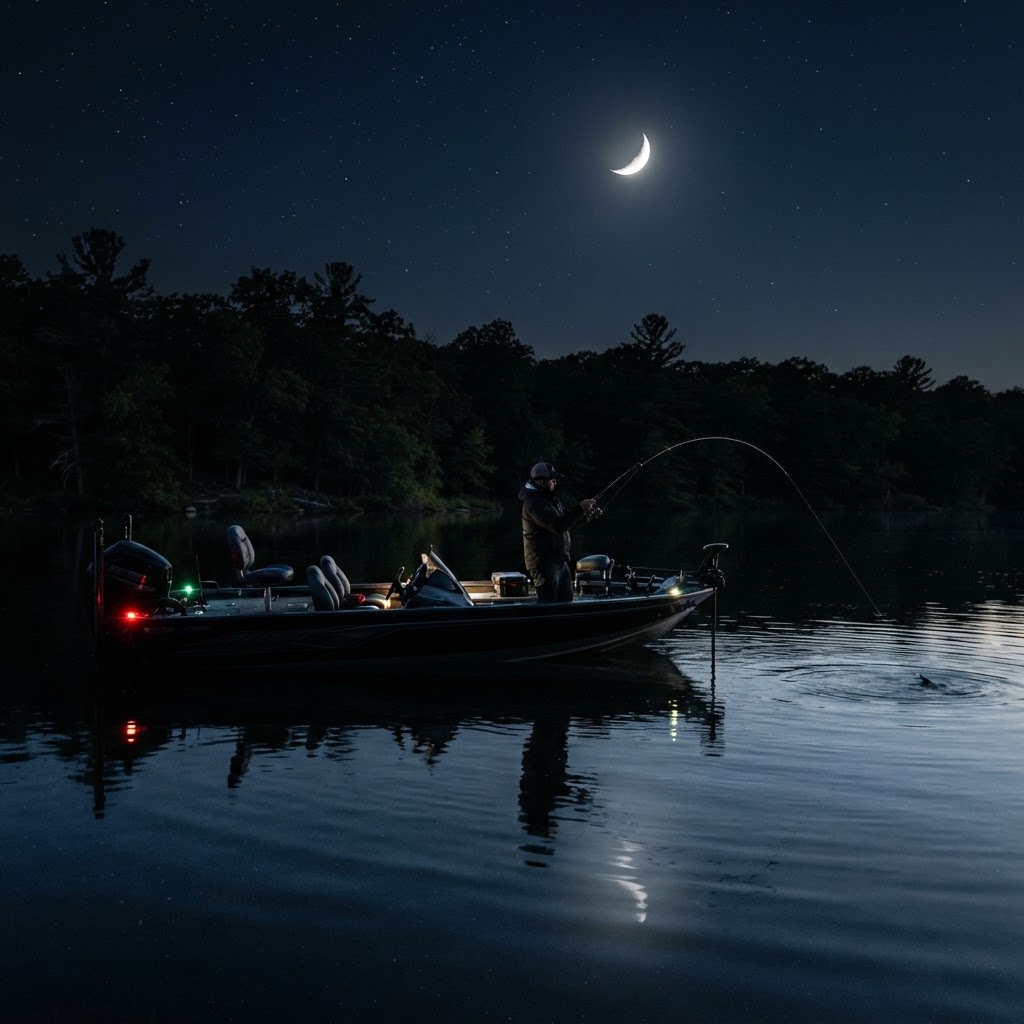
Lunar Predators: Unlocking Summer Night Walleye Patterns
The Nocturnal Shift
As the dog days of summer settle in, many anglers pack away their rods when the sun hits the horizon. They view high water temperatures as the enemy, assuming the fish have pushed into the deepest, most unreachable parts of the lake. However, for those who embrace the darkness, mid-summer provides some of the most aggressive and predictable fishing of the year. Walleyes are classic low-light predators, and in the heat of July and August, the night hours offer a metabolic respite that triggers a frantic feeding window.
Get in the Community feed
Hunters and anglers nationwide posting bucks, catches, trail cam pics and what's working right now.


Understanding the Metabolic Driver
Walleye are notoriously sensitive to light and temperature. When surface temperatures climb into the mid-70s or 80s, the shallow baitfish schools migrate. Instead of fighting the heat, walleye often hold in structural voids during the day, waiting for the ambient light to drop. Once the sun sets, the water temperature in the shallows often stabilizes, and baitfish like alewives or young-of-the-year perch move toward the rocky shorelines and shallow flats. The walleye follow. This isn't just a random migration; it is a calculated energy expenditure. By feeding at night, these fish avoid the heat of the day and capitalize on the nocturnal movement of their primary forage.
Scouting the Night Shift
Before you head out, you must treat your daytime preparation as a reconnaissance mission. Use your to identify structural features that connect deep water to shallow flats. Look for transitions—points with scattered rock, long expansive reefs, or the edges of submerged vegetation. Walleye are cruisers at night; they don't sit still. They utilize these 'highways' to move from their daytime sanctuary into the shallows to hunt.

Youth Hunter Academy
Raise a safe, confident young hunter.
Safety missions for ages 5–17. Free parent account.
If you are unfamiliar with a new body of water, always consult the local state fishing resources to understand local regulations regarding night navigation and light requirements. Safety is non-negotiable when the sun goes down, and being well-versed in the for your region ensures you are operating legally and safely while you hunt for trophies.
The Presentation: Keep It Simple, Keep It Loud
At night, walleye rely more on their lateral line than their vision. They are 'feeling' for the vibration of your lure rather than scrutinizing the color pattern. This is the time to prioritize rattle-heavy baits and slow, rhythmic retrieves.
- Long-Lining Crankbaits: This is the gold standard for summer night fishing. Pulling slender-profile minnow baits behind the boat allows you to cover vast stretches of water. Keep your speed slow—between 1.5 and 2.0 mph. The goal is to tick the tops of the rocks without hanging up.
- Weightless Plastics: If you prefer to cast, a large, paddletail grub on a 1/8 oz jig head, worked just above the weeds, is lethal. The vibration of the tail is easily detectable by cruising fish in pitch-black conditions.
If you find yourself struggling to locate the active schools, head over to to read our recent deep-dives on seasonal lure selection. Sometimes, a subtle change in your presentation speed is all it takes to trigger a reaction from a lethargic fish.
Weather Impacts on Night Success
Just because it is night doesn't mean the barometric pressure or wind speed don't matter. A steady, warm breeze blowing onto a shoreline—often called a 'walleye chop'—is your best friend. This wave action stirs up the substrate, disorients baitfish, and creates a layer of surface ripple that hides the silhouette of your boat. Calm, glass-flat nights are significantly harder because the fish are much more skittish and prone to spooking from the sound of your outboard or trolling motor. On those quiet nights, opt for long-line trolling to put as much distance as possible between the boat and your lures.
The Takeaway: Persistence and Precision
Success after dark requires a shift in mindset. You are not looking for 'hidden' fish; you are looking for active hunters. If you catch one fish in a particular zone, mark it immediately. Walleye at night often travel in packs of similar-sized individuals. If you pull a nice keeper off a shallow point, keep the boat in that same depth range. There are almost certainly others nearby.
Once you’ve successfully boated a few, don't forget to document the results. Sharing your success on the helps other anglers in the Buckeye Hunter Hub network understand what’s working on their local waters. Remember, the dark is not a barrier—it’s an opportunity. Equip yourself with the right gear, focus on structural transitions, and respect the stealth required for night navigation. With these tactics in your arsenal, you'll turn the summer doldrums into the most productive fishing of your season.
Free every morning
Your Daily Briefing
One morning forecast for the spots you actually hunt and fish: deer movement, waterfowl flights, bite times, wind and shooting light.
See what's in itSet up your briefing
Join free, save a spot on the map, then pick what you hunt and fish and when you want your email.
Catch more these fish — free
Create a free account and unlock the full angling toolkit: