Into the Thick: A Tactical Guide to Flipping and Pitching Heavy Cover
Why Heavy Cover is Your Best Friend
Every seasoned angler knows the frustration of watching a promising lure swim past a matted bank or a thick cluster of laydowns without a strike. Often, the largest fish in the ecosystem aren't cruising open water; they are hunkered down in the dark, oxygen-rich sanctuary of heavy cover. To consistently land double-digit bass or aggressive predators holding deep in vegetation, you need to abandon the long-cast mentality. You need to get up close and personal with flipping and pitching.
Get in the Community feed
Hunters and anglers nationwide posting bucks, catches, trail cam pics and what's working right now.


At Buckeye Hunter Hub, we believe that confidence starts with knowing exactly where your target lives. Before you head out, make sure to consult your to identify potential structural features like rock piles or flooded brush that often hold the densest cover. When you learn to penetrate these sanctuaries, you shift from being a spectator to an aggressor.
Understanding the Difference: Flipping vs. Pitching
While often grouped together, these two techniques serve distinct tactical purposes. Flipping is a short-range, pendulum-style presentation. You pull a set amount of line from your reel, hold the tag end, and swing the bait forward into the strike zone. It is silent, precise, and perfect for working your way down a high-percentage bank quickly.
Pitching, by contrast, allows for a bit more distance—typically 15 to 30 feet. By using the weight of the lure to load the rod tip, you 'pitch' the bait underhand into tight pockets of lily pads or underneath overhanging boat docks. Mastering both gives you a versatile arsenal to dismantle any type of cover you encounter.
Raise a safe, confident young hunter.
Guide your kids ages 5–17 through interactive hunting safety missions, real decision drills, and earned trophies — all from one free parent account.


The Right Gear for the Job
There is no room for finesse gear when you are dragging a five-pounder out of a submerged cedar tree. You need power, and you need it now.
The Rod and Reel
Look for a heavy-action rod, at least 7'6" in length, with a fast or extra-fast tip. You need that backbone to drive the hook home, but you also need sensitivity to feel the subtle 'thump' of a bite in the middle of a thick weed mat. Pair this with a high-speed baitcasting reel—at least a 7.5:1 gear ratio—to quickly pick up slack and pull the fish away from the cover before it can wrap your line around a branch.
The Line and Terminal Tackle
Braided line is non-negotiable here. A 50lb to 65lb test braid provides zero stretch and unmatched abrasion resistance. If you are fishing clear water, you might consider a short, heavy fluorocarbon leader, but in the thick stuff, braid is king. For your weight, start with a 3/8 oz tungsten flipping weight. Tungsten is smaller and denser than lead, allowing it to punch through holes in vegetation that would stop a traditional weight dead in its tracks. Always check before your trip to ensure you are compliant with local regulations regarding tackle and catch limits.
Tactical Execution: Making the Presentation
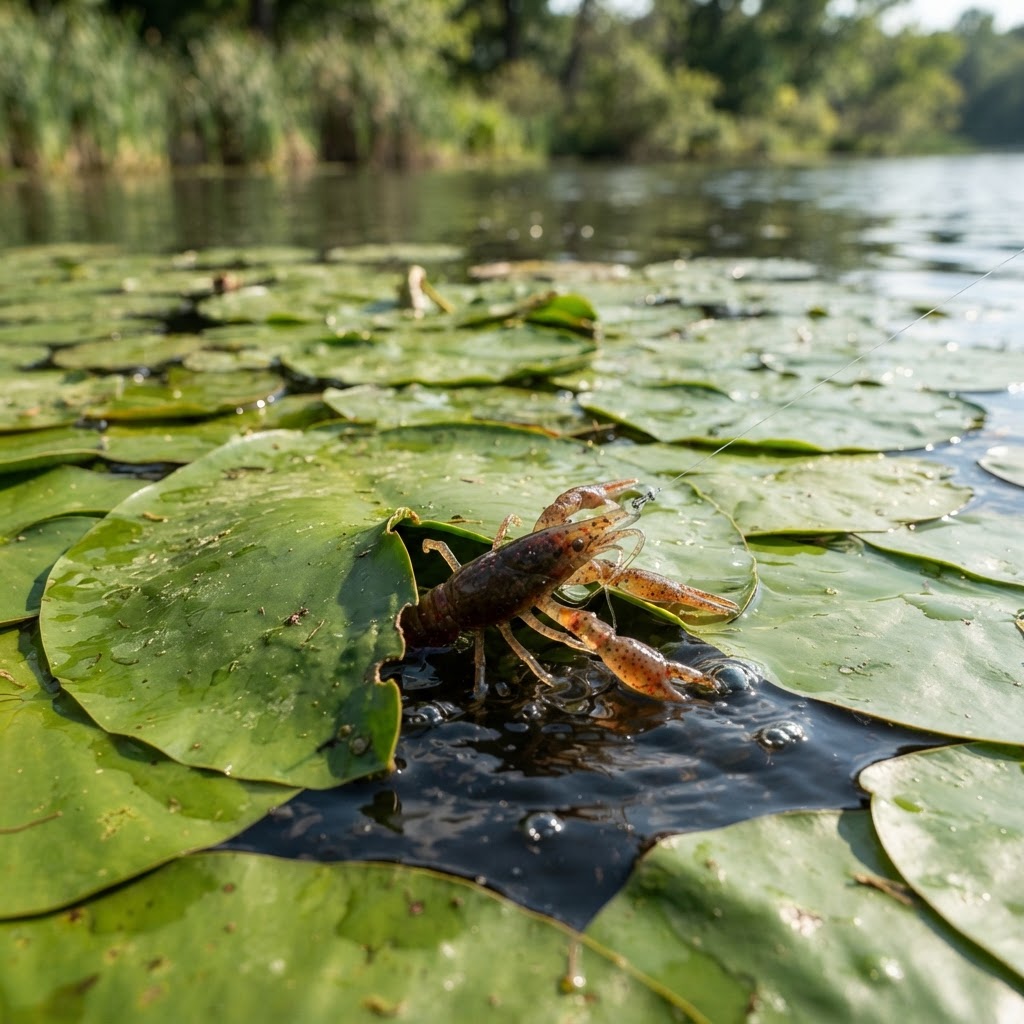
When pitching into cover, the goal is stealth. Your bait should enter the water with a 'plop'—not a 'splash.' The most common mistake beginners make is pulling the rod back too early. Let the lure fall on a semi-slack line; many of the best bites occur during the initial descent as the bait mimics a fleeing crawfish or a disoriented bluegill.
If you don't get a bite within the first five seconds, twitch the bait once or twice, then reel it in and move to the next target. Remember, you aren't fishing for reaction bites in open water; you are putting the bait directly into a fish's living room. If they are there, they will hit it. If they aren't, move to the next pocket.
Reading the Water and Safety First
Not all cover is created equal. Look for 'high-percentage' targets: the isolated stump in a sea of grass, the shady side of a dock, or a subtle point where two types of vegetation meet. These are the areas where predators set up ambush points. For more detailed tips on locating these spots, check out the archives on .
Finally, always prioritize safety when navigating dense cover. Wearing a life vest is non-negotiable, and if you are unfamiliar with the waterway, consult the official guidance from the U.S. Fish & Wildlife Service to ensure you are operating within local boating safety guidelines. Once you master the mechanics of the pitch, the water opens up in ways you never thought possible. Get out there, be precise, and don't be afraid to get a little dirty.
Catch more these fish — free
Create a free account and unlock the full angling toolkit: