
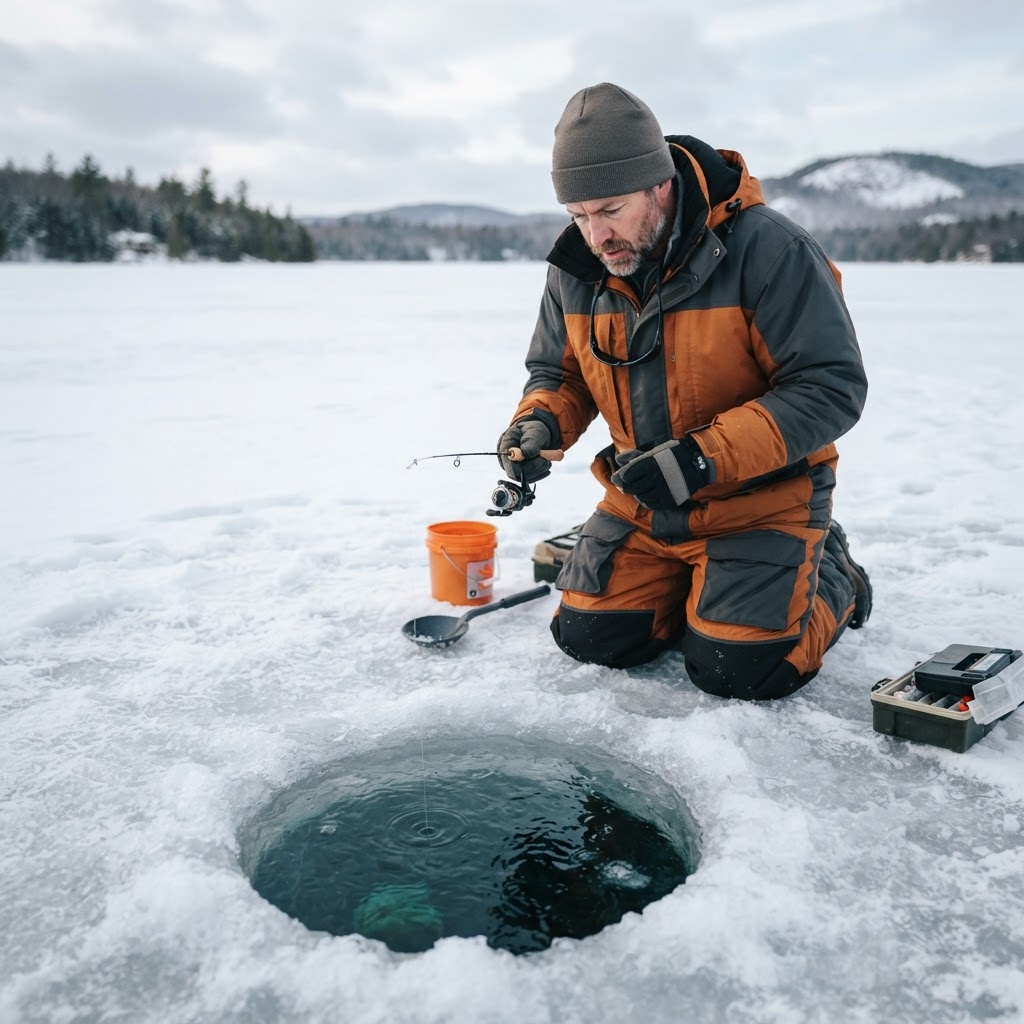
Hard-Water Mastery: Essential Ice Tactics for Consistent Panfish Success
Understanding the Frozen Ecosystem
When the lakes across the United States lock up for the season, many anglers head to the warmth of the indoors. However, for those who embrace the chill, the winter months offer some of the most consistent panfish action of the year. Successful ice fishing isn't about endurance; it's about efficiency and understanding the metabolic shifts of the fish beneath the ice. As cold temperatures dominate, panfish like bluegill and perch move into predictable, lethargic states, often holding near structure or bottom transitions where they can conserve energy.
Get in the Community feed
Hunters and anglers nationwide posting bucks, catches, trail cam pics and what's working right now.


To start your journey, begin by scouting your local water body using our . Identifying deep basins, drop-offs, and submerged timber is the first step in narrowing down your search area, especially when the ice is thin or the weather is particularly harsh.
The Gear That Makes the Difference
Ice fishing requires a departure from traditional rod-and-reel setups. You need sensitivity above all else. A light-action or ultra-light carbon blank ice rod paired with a smooth spinning reel is the industry standard for feeling the 'light bite'—that subtle upward tick on your line that signals a fish has inhaled your bait.
Your terminal tackle should be minimalist. Tungsten jigs have revolutionized the industry, offering a smaller profile that sinks faster and provides better feedback to the angler. Pair these with high-quality, low-diameter fluorocarbon line, which is nearly invisible in the clear, oxygen-rich winter water column. If you find yourself struggling to identify the regulations or season dates for specific species in your area, be sure to check the provided by your local department of natural resources, such as those found through the US Fish and Wildlife Service.

Youth Hunter Academy
Raise a safe, confident young hunter.
Safety missions for ages 5–17. Free parent account.
Mobility: The Key to Winter Success
One of the biggest mistakes novice ice anglers make is 'hole-hopping' too infrequently. If you don't find fish within 15 minutes of drilling a hole, it is time to pack up and move. Use a flasher or a modern digital sonar unit to mark your targets. You are looking for the 'suspended' fish—crappie often hold in the upper half of the water column, while bluegill and yellow perch tend to graze near the bottom.
Constant movement is the secret weapon of the seasoned pro. Once you locate a school, keep your jig hovering just above their heads. If the school moves, don't wait for them to come back—follow the signal. You can share your successes on our to see how others across the nation are adjusting their strategies for different ice conditions.
Finesse Techniques for Lethargic Fish
When the barometric pressure drops or the sun goes down, panfish can become incredibly picky. This is where your cadence becomes the deciding factor between a full bucket and a dry line. Start with a slow, rhythmic vertical jigging motion—a small 'pop' followed by a five-second hold is often enough to trigger a strike. If the fish are active, try a more aggressive tremor technique, which involves vibrating the rod tip rapidly to mimic the fluttering motion of an injured insect.
Bait selection is equally critical. While live waxworms or spikes are a classic, soft plastic tails are increasingly popular due to their durability and scent-impregnation technology. Using a plastics-only approach allows you to spend more time fishing and less time re-baiting, which keeps your jig in the 'strike zone' longer. Always keep an eye on the water temperature; even a slight increase in warmth during mid-day can push panfish to become slightly more aggressive, allowing you to switch to a larger profile jig.
Staying Safe and Legal
Ice safety is paramount. Never assume the ice is safe, especially near current areas or structure that may cause irregular ice thickness. Always carry ice picks, a rope, and a partner. Furthermore, remember that ice fishing is a privilege regulated by individual states. Always consult for information on creel limits and slot sizes, as managing panfish populations is vital for the health of our fisheries.
For more advanced tips and tricks on seasonal transitions, feel free to browse through to refine your approach. Remember, the winter season is a marathon, not a sprint. By focusing on mobile exploration, sensitive equipment, and precise jigging cadences, you will turn the coldest months of the year into your most rewarding angling season. Whether you are chasing bull bluegills or schools of jumbo perch, the frozen lake has a lot to offer if you have the patience to listen to what the sonar is telling you.
Free every morning
Your Daily Briefing
One morning forecast for the spots you actually hunt and fish: deer movement, waterfowl flights, bite times, wind and shooting light.
See what's in itSet up your briefing
Join free, save a spot on the map, then pick what you hunt and fish and when you want your email.
Catch more these fish — free
Create a free account and unlock the full angling toolkit: