
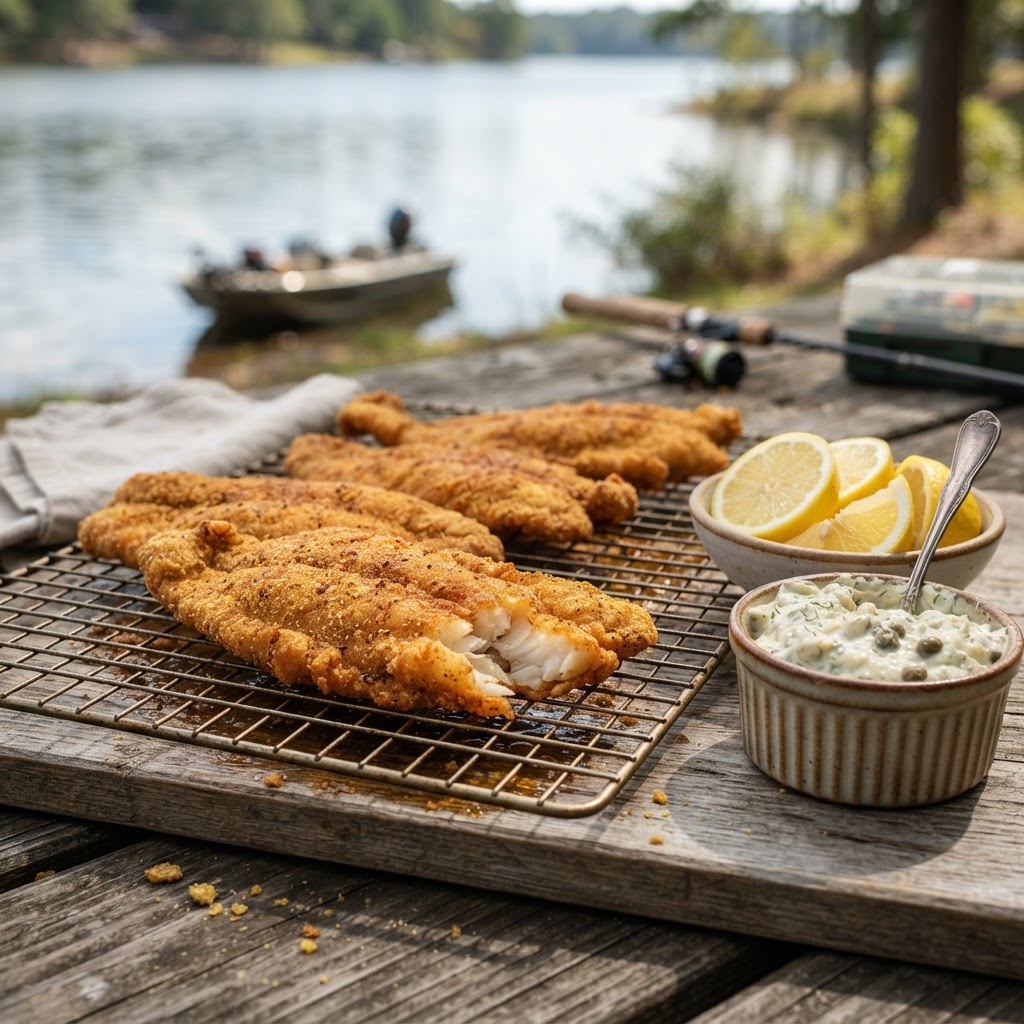
Down-Home Perfection: The Art of Southern-Style Fried Catfish
From River to Fryer: Honoring the Catch
There is something uniquely satisfying about bringing a stringer of fresh channel catfish to the cleaning table. For many of us at Buckeye Hunter Hub, catfish aren't just a tough, hard-fighting species; they are a staple protein that bridges the gap between the thrill of the hunt and the comfort of the dinner table. While other fish might demand delicate poaching or light grilling, catfish—with its firm, mild, and forgiving flesh—was practically born for the deep fryer.
Get in the Community feed
Hunters and anglers nationwide posting bucks, catches, trail cam pics and what's working right now.


Achieving that elusive 'restaurant-quality' crunch requires more than just a box of cornmeal and a hot pot of oil. It is a process of preparation, technique, and temperature control. Whether you are targeting these whiskered giants using our to locate deep holes or catching them in the backwaters of your local river, the following guide will ensure your final product is legendary.
Preparation: The Key to Texture
Before you even think about the breading, your fish needs to be handled correctly. If you are new to cleaning, start by removing the skin and meticulously trimming away the 'mud vein'—that thin, dark strip of fat running down the center of each fillet. This fat can sometimes carry an earthy flavor if the fish came from stagnant water.
Once filleted, soak your pieces in a bath of buttermilk or salted ice water for at least an hour. This step is non-negotiable for tender, white, and clean-tasting fillets. While your fish soaks, take a moment to review to ensure you are up to date on current harvest regulations and size limits for your local waterways.
Raise a safe, confident young hunter.
Guide your kids ages 5–17 through interactive hunting safety missions, real decision drills, and earned trophies — all from one free parent account.
Bonus: every $10 you spend in the BHH shop earns a free seat (up to 5). Use them or share them.




The Southern Fried Catfish Blueprint
Ingredients
- 2 lbs fresh catfish fillets
- 1 cup yellow cornmeal (coarse-ground is best for crunch)
- 1/2 cup all-purpose flour
- 1 tbsp smoked paprika
- 1 tbsp garlic powder
- 1 tsp cayenne pepper (adjust to your heat preference)
- 1 tsp kosher salt and 1/2 tsp black pepper
- 2 cups buttermilk
- High-smoke-point oil (peanut or canola are ideal for frying)
Step-by-Step Instructions
- The Dry Down: Remove fillets from the soak and pat them completely dry with paper towels. Moisture is the enemy of crispiness; if the fish is wet, the coating will steam rather than fry, resulting in a soggy crust.
- The Dredge: Combine cornmeal, flour, and dry spices in a wide, shallow dish. Whisk thoroughly until the spices are evenly distributed.
- The Dip: Dip each fillet into the buttermilk to ensure a light coating, allowing the excess to drip off, then press the fillet firmly into the cornmeal mixture. Ensure every nook and cranny is covered, then shake off the excess.
- Resting: Place the breaded fillets on a wire rack for 10 minutes. This allows the breading to adhere properly to the fish, preventing it from sliding off in the oil.
- The Fry: Fill a deep heavy-bottomed cast iron skillet or Dutch oven with about 2 inches of oil. Heat to 365°F. Using a thermometer is vital; if the oil is too cold, the fish will soak it up, and if it is too hot, the outside will burn before the inside is cooked through.
- Finishing: Fry the fish in batches to avoid crowding the pan, which drops the oil temperature. Cook for 3-4 minutes per side until the crust is a deep, golden brown. Drain on a fresh wire rack rather than a paper towel to keep the bottom side crispy.
Avoiding the 'Rubber' Trap: Timing Matters
One of the most common mistakes when frying catfish is overcooking. Because catfish fillets are relatively thin, they move from raw to dry very quickly. You are looking for an internal temperature of 145°F, or simply look for the point where the flesh becomes opaque and flakes easily with a fork. If you are unsure, pull a piece early—you can always toss it back in for thirty seconds, but you cannot fix a dried-out fillet.
Elevate Your Experience
Once you have mastered the basics, consider experimenting with your seasoning blends. Some anglers prefer a bit of lemon pepper, while others swear by a hint of Old Bay. Regardless of how you season it, serve it alongside classic sides like creamy coleslaw, hushpuppies, or a side of spicy remoulade sauce to cut through the richness of the fried crust.
If you find yourself having a particularly successful season, check out the to share your success and see what others are pulling out of the water. For more tips on fish handling and habitat preservation, the U.S. Fish and Wildlife Service provides excellent data on native species conservation.
Learning to cook your catch is the final step in the angling cycle, providing a full-circle experience that connects you to the water in a way that just 'catch and release' never can. Take your time, monitor your oil, and enjoy the fruits of your labor.
Catch more these fish — free
Create a free account and unlock the full angling toolkit: