
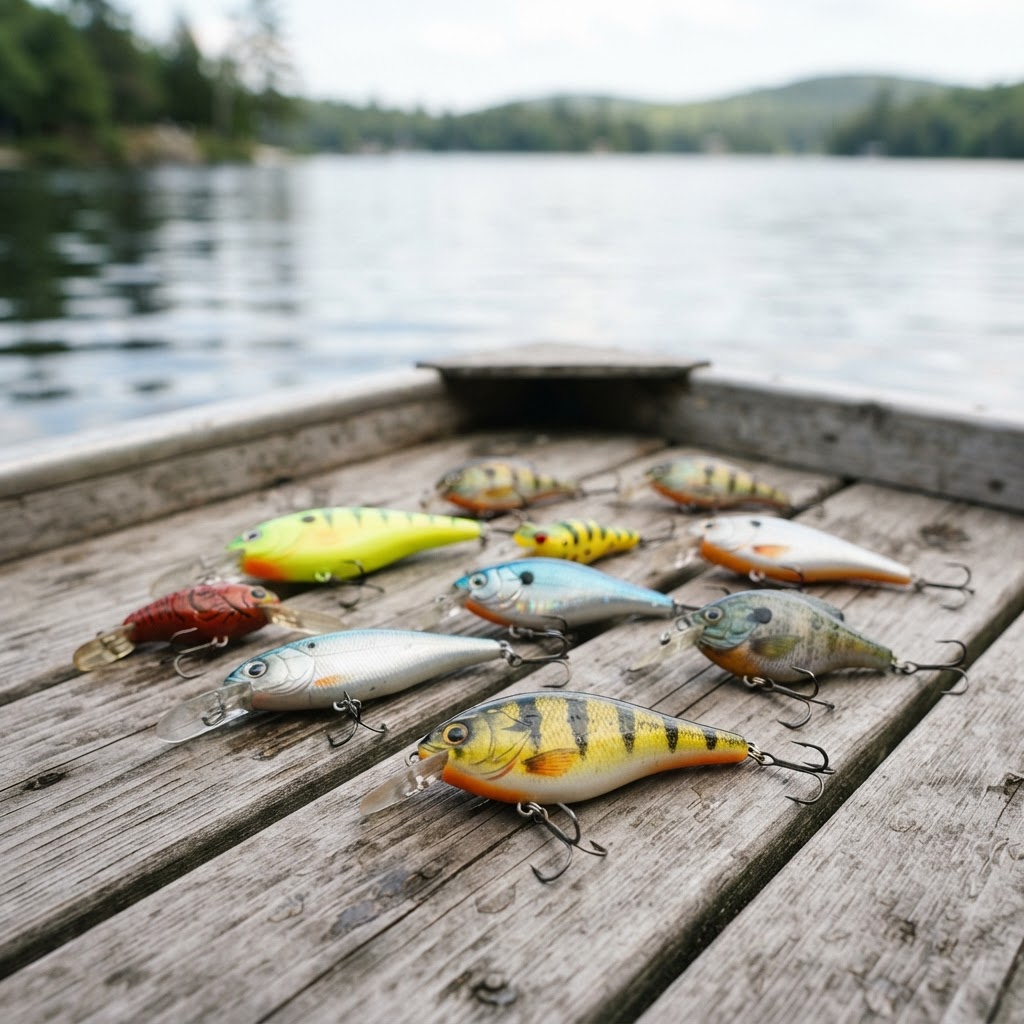
Depth-Controlled Lure Selection: A Seasonal Crankbait Masterclass
Decoding the Crankbait Hierarchy
Walk into any major outdoor retailer and the sheer wall of plastic lures can be overwhelming. From shallow-diving square-bills that bounce off timber to massive deep-divers that scrape the bottom of reservoirs, the variety is staggering. At Buckeye Hunter Hub, we believe that success starts with understanding that a crankbait is not just a lure; it is a precision instrument designed to mimic forage at specific depths. If you are fishing a five-foot diver in twenty feet of water, you are simply taking a walk, not fishing.
Get in the Community feed
Hunters and anglers nationwide posting bucks, catches, trail cam pics and what's working right now.


The Anatomy of the Dive
Before you head out, look at the packaging. Most manufacturers provide a 'diving range' for their baits. This rating is based on specific line diameter—usually 10-pound test monofilament. If you use heavy fluorocarbon, your bait will dive deeper; if you use thin braid, it will dive even deeper due to reduced water resistance. Always cross-reference your chosen depths with our to ensure you are targeting the appropriate contour lines where fish are holding.
Spring: The Shallow Game
When water temperatures begin to climb in the spring, fish move shallow to spawn and feed on awakening crawfish. This is the time for the square-bill. These baits are designed for deflection—the circuit board or plastic lip is engineered to crash into rocks, stumps, and docks, causing the lure to hunt erratically. This chaotic action triggers reaction strikes from lethargic, post-winter bass.

Youth Hunter Academy
Raise a safe, confident young hunter.
Safety missions for ages 5–17. Free parent account.
Focus your efforts on transition banks—areas where deep water meets shallow flats. Avoid the temptation to reach for deep-diving plugs here; instead, keep your lure in the top three to five feet of the water column. As temperatures stabilize, check your for local stocking schedules, as baitfish activity often dictates the color profile you should choose.
Summer: The Deep Dig
As the sun intensifies and the thermocline sets in, fish abandon the shoreline for deep-water sanctuary. Here, the 'Deep Diver' reigns supreme. You need baits capable of reaching the 12-to-20-foot range. When cranking these depths, efficiency is key. You want the lure to make consistent contact with the bottom.
Fishing deep crankbaits requires patience and a specific gear setup. Using a moderate-action fiberglass or composite rod is essential; the 'soft' tip allows the fish to inhale the lure before you set the hook, preventing you from ripping the treble hooks out of their mouths. It is an honest tradeoff—you might sacrifice a little casting distance with a softer rod, but you will land a significantly higher percentage of hooked fish.
Autumn: The Feeding Frenzy
Fall is perhaps the most exciting time to experiment with crankbaits. As the water cools and baitfish move toward the backs of creeks, predators become aggressive. During this period, the size of your lure matters more than the depth. Match the hatch by selecting crankbaits that mimic the local shad or bluegill population. If you are finding success, share your results on the to help fellow anglers refine their seasonal patterns.
Budgeting for Your Tackle Box
It is easy to spend a fortune on high-end Japanese imports, but the reality for the average angler is that a well-stocked box should be a mix of reliable workhorses and one or two 'specialty' baits.
- The Workhorses: Buy medium-depth crankbaits in generic colors like 'Sexy Shad' or 'Chartreuse Back.' These will catch fish in 80% of situations across the country.
- The Specialized Gear: Invest your budget into high-quality trebles. Many entry-level crankbaits come with dull or weak hooks. Swapping these out for premium-grade, chemically sharpened hooks is the most cost-effective upgrade you can make to your existing collection.
- The Knowledge Gap: Don’t buy gear you don't understand. If you don't have a reliable depth finder, spending $30 on a deep-diving competition plug is wasted money. Rely on your mapping tools first.
Staying Legal and Informed
Always ensure you are operating within the law. Regulations regarding lure size, hook quantity, and closed seasons vary wildly by state. Consult your state wildlife agency before you venture into new waters. Different regions often have unique prohibitions on specific types of tackle or equipment that could result in unexpected fines.
Final Thoughts
Mastering the crankbait is a journey of seasons. You move from the shallow, erratic deflections of spring to the calculated, bottom-bumping grind of summer, and finally the match-the-hatch aggressiveness of autumn. Keep your tackle organized, prioritize the right rod action, and keep learning through for more tactical breakdowns. By aligning your lure choice with the depth of the fish and the rhythm of the season, you stop guessing and start catching.
Free every morning
Your Daily Briefing
One morning forecast for the spots you actually hunt and fish: deer movement, waterfowl flights, bite times, wind and shooting light.
See what's in itSet up your briefing
Join free, save a spot on the map, then pick what you hunt and fish and when you want your email.
Catch more these fish — free
Create a free account and unlock the full angling toolkit: