
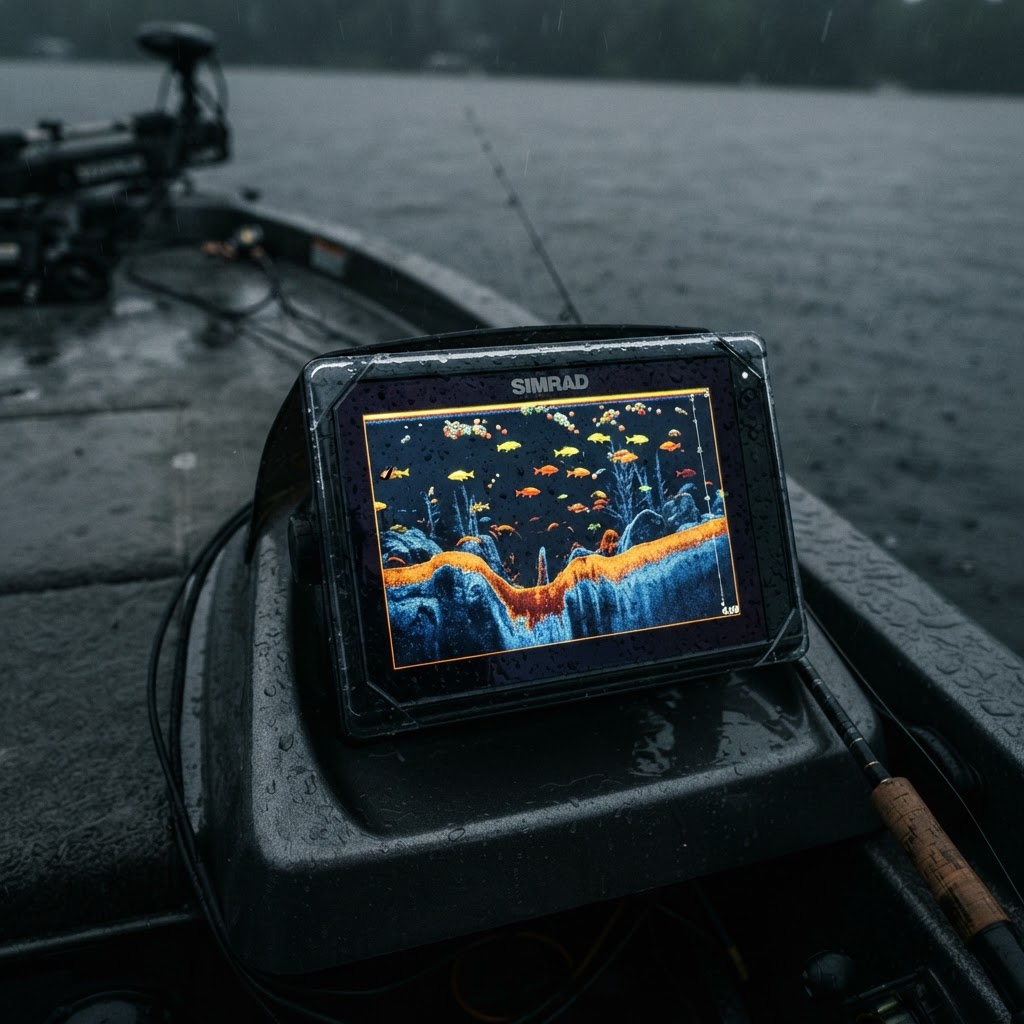
Decoding the Screen: Mastering Sonar Interpretation for Consistent Results
Seeing Through the Surface: The Art of Sonar Interpretation
For the modern angler, the fishfinder is the most vital tool in the boat. However, owning a top-tier unit is only half the battle; knowing how to translate those digital pixels into real-world behavior is where the true competitive advantage lies. Whether you are hunting walleye in deep, structural reservoirs or scouting bass in shallow lily pads, understanding what your sonar is showing you is the difference between a fishless day and a personal best.
Get in the Community feed
Hunters and anglers nationwide posting bucks, catches, trail cam pics and what's working right now.


The Anatomy of a Return
Many beginners make the mistake of looking only for the 'perfect arch.' While a classic, clean arch is a strong indicator of a fish suspended in the water column, it is not the only sign. Modern wide-angle and high-frequency transducers provide a detailed landscape of the underwater world. A solid, bright-colored line directly on the bottom often indicates baitfish or predators hugging the structure tight. If you see a small, vertical protrusion on a otherwise flat bottom, that is likely a fish relating to a rock or a log.
Before you head out, check your to see what species are currently active in your local waters. Understanding the biological habits of your target species—like how channel catfish hug the bottom versus how crappie suspend near submerged timber—will change how you interpret the screen.
Frequency and Sensitivity: The Professional Setup

Youth Hunter Academy
Raise a safe, confident young hunter.
Safety missions for ages 5–17. Free parent account.
One of the most common pitfalls is over-tuning your unit. High sensitivity can lead to a cluttered screen full of 'noise,' which is often just suspended plankton, air bubbles, or debris. Start by setting your sensitivity in auto-mode, then manually adjust it until the screen is clear of artifacts but still picks up your lure. If you struggle to find the right baseline, consider checking out the for tips on unit calibration.
Frequency selection is equally important. High-frequency (200kHz or CHIRP) offers unmatched detail for shallow-water targets, while lower frequencies are superior for deep-water searching. If you are struggling to mark fish in 40 feet of water, switch to a lower frequency to gain more power and penetration.
Reading Structure and Composition
Your sonar does more than mark fish; it acts as a surveyor. The thickness of the bottom line tells you about the composition of the lake bed. A thin, faint line typically represents soft mud or silt, which is often unproductive. A thick, bright return indicates a hard bottom—sand, gravel, or rock—which is where you want to be. Predators love hard-bottom transition zones, especially when they intersect with depth changes. You can plot these productive areas by marking them on your to ensure you can return to them during different times of the season.
The Importance of Speed and Positioning
Sonar is a historical record. When you see a fish on your screen, it has already passed underneath the transducer. Your speed matters immensely; moving too fast will 'smear' the fish returns, making them look like straight lines rather than arcs. When scanning for spots, keep your boat moving at a steady 3-5 mph. If you mark a significant school, turn the boat and hover over the area to confirm if they are active or holding tight to the bottom.
According to guidelines from the U.S. Fish and Wildlife Service, ethical angling practices include minimizing the impact on sensitive spawning habitats, so use your sonar to find deep-water staging areas rather than dragging lures through critical nesting sites.
Putting It All Together
Mastering your electronics is an ongoing process of trial and error. The next time you are out, turn off the auto-depth and auto-zoom features. Take control of the manual settings and force yourself to identify structure before you make a cast. Are those baitfish or bass? Is that brush pile loaded with crappie? By slowing down and studying the screen, you begin to develop an 'underwater eye.'
Document your findings, look for patterns in the way fish relate to specific bottom hardness, and track your success rates. When you start connecting the dots between what you see on the display and what you feel at the end of your rod, you aren't just fishing anymore—you are hunting with precision. Remember to share your success on the to help your fellow anglers identify what the winning patterns look like across the country. Through consistent observation and deliberate practice, your fishfinder will evolve from a mystery box into your most trusted fishing partner.
Free every morning
Your Daily Briefing
One morning forecast for the spots you actually hunt and fish: deer movement, waterfowl flights, bite times, wind and shooting light.
See what's in itSet up your briefing
Join free, save a spot on the map, then pick what you hunt and fish and when you want your email.
Catch more these fish — free
Create a free account and unlock the full angling toolkit: