Chasing the Great Lakes Ghost: Advanced Tactics for Trophy Musky
Understanding the Mythic Musky
The Muskellunge (Esox masquinongy), affectionately known as the 'fish of ten thousand casts,' is arguably the most elusive predator in North American waters. As a member of the pike family, the Musky is defined by its explosive speed, sheer size, and temperamental nature. For anglers, landing a trophy Musky is less about luck and more about understanding the intricate biology of this apex predator. Before heading out, always consult to ensure you are compliant with local regulations regarding harvest and catch-and-release practices, as many regions enforce strict rules for these prized fish.
Get in the Community feed
Hunters and anglers nationwide posting bucks, catches, trail cam pics and what's working right now.


Habitat and Behavior Patterns
Muskies are ambush predators that rely heavily on their environment to succeed. They prefer cool, clear to stained water with ample structure. In the spring, they gravitate toward shallow, warming bays with emergent vegetation. As summer temperatures rise, they move toward deep-water transitions, ledges, and thick weed beds where oxygen levels remain stable. You can use our to identify these critical underwater structure points, such as drop-offs and submerged points, which often serve as primary ambush lanes for hunting Muskies.
During the fall, the "feeding window" shifts significantly. As water temperatures drop into the 50s and 40s, Muskies move into a hyper-aggressive state, stocking up on calories before the winter freeze. This is the prime time to target trophy-sized fish in shallower water than you might expect for the late season.
The Arsenal: Lures and Techniques
Raise a safe, confident young hunter.
Guide your kids ages 5–17 through interactive hunting safety missions, real decision drills, and earned trophies — all from one free parent account.
Bonus: every $10 you spend in the BHH shop earns a free seat (up to 5). Use them or share them.



Because of their size and jaw strength, gear selection is paramount. You need a setup that can handle heavy-duty line and massive lures without breaking under pressure.
Big Bait Logic
Large inline spinners like the Mepps Musky Killer or high-profile rubber baits (like Medusas) are staples. During the summer, fast-moving, vibration-heavy baits trigger territorial strikes. As the water cools in autumn, switch to larger, slower-moving jerkbaits or live-sucker rigs. The goal is to present a profile that looks like a high-calorie meal without requiring the fish to expend too much energy to catch it.
The Figure-Eight Maneuver
Perhaps the most important technique in Musky fishing is the 'figure-eight' at the boat side. A large percentage of Musky strikes occur just as your lure is leaving the water. By sweeping your rod tip in a wide, rhythmic figure-eight motion, you keep the lure in the strike zone and often trigger an aggressive reaction from a trailing fish. If you successfully land a beauty, be sure to share your success on our so your peers can celebrate the achievement.
Seasonal Strategies for Success
Musky behavior follows a predictable, albeit challenging, rhythm throughout the year:
- Spring: Focus on the warming shallows. Muskies are lethargic following the spawn and prefer smaller, slower presentations.
- Summer: Speed is the name of the game. Use high-speed retrieval lures that burn through the water column to trigger reaction strikes.
- Autumn: Think big and move deep. According to the Wisconsin Department of Natural Resources, fall cooling triggers the most significant feeding behavior of the year, as fish prepare for the winter months ahead.
Tips for New and Seasoned Anglers
If you are just starting your Musky journey, the biggest mistake is giving up too early. The name 'fish of ten thousand casts' is not just a clever nickname; it is a reality. Consistency, however, beats luck. Spend time learning to read your sonar and focus on identifying 'bait balls'—where the baitfish are, the predators are never far behind.
For the veterans, the edge comes from electronics and specialized gear. Keeping a detailed log of water temperatures, barometric pressure, and bait depth can help you find patterns that work on your specific body of water. Check out for more deep-dive articles on interpreting sonar signals and mastering advanced bait manipulation techniques.
Conservation Mindset
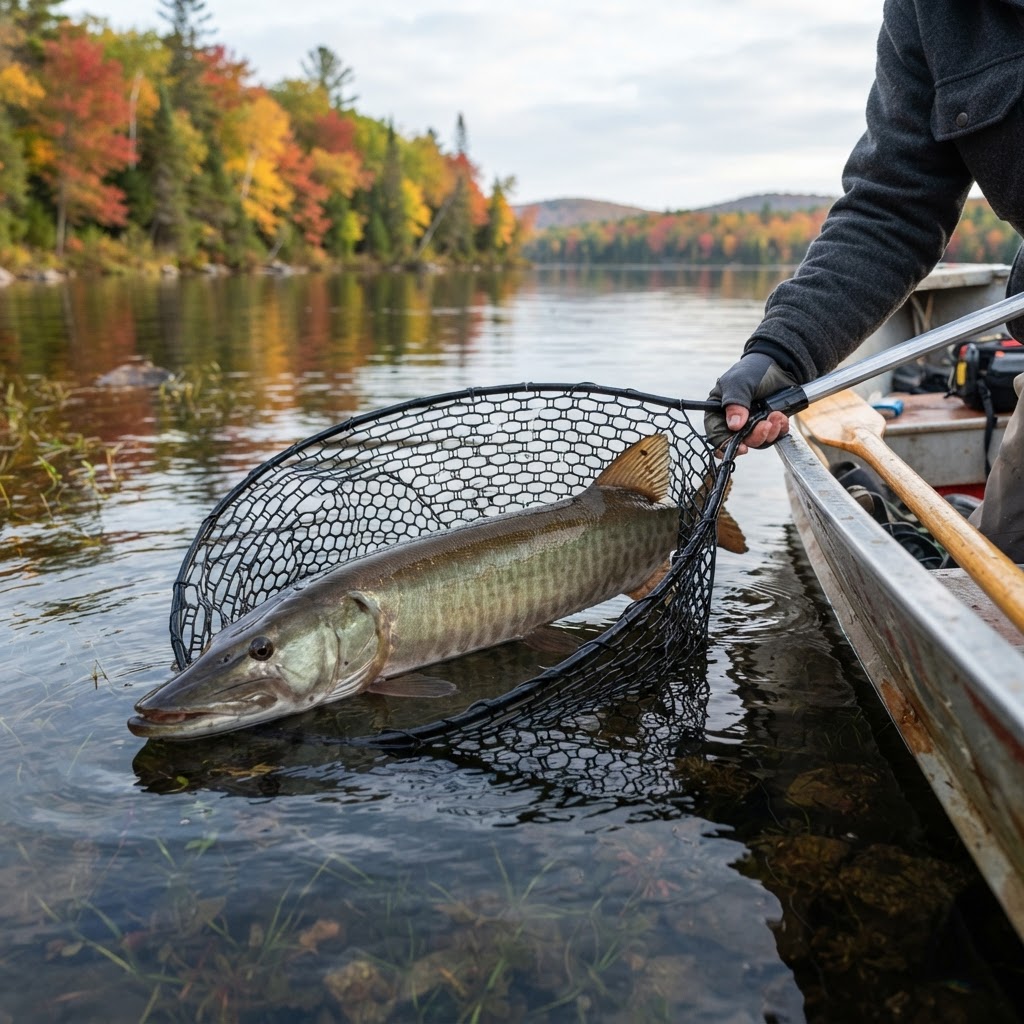
Because Muskies are long-lived and slow-growing fish, proper handling is essential for the future of the fishery. Always use a large, knotless landing net to prevent scale damage, and keep the fish in the water as much as possible if you plan to release it. Using heavy-duty long-nose pliers and side-cutters for hook removal can save both the fish's mouth and your hands. By practicing responsible catch-and-release, we ensure that these incredible apex predators continue to thrive for future generations of anglers to enjoy.
Catch more these fish — free
Create a free account and unlock the full angling toolkit: