
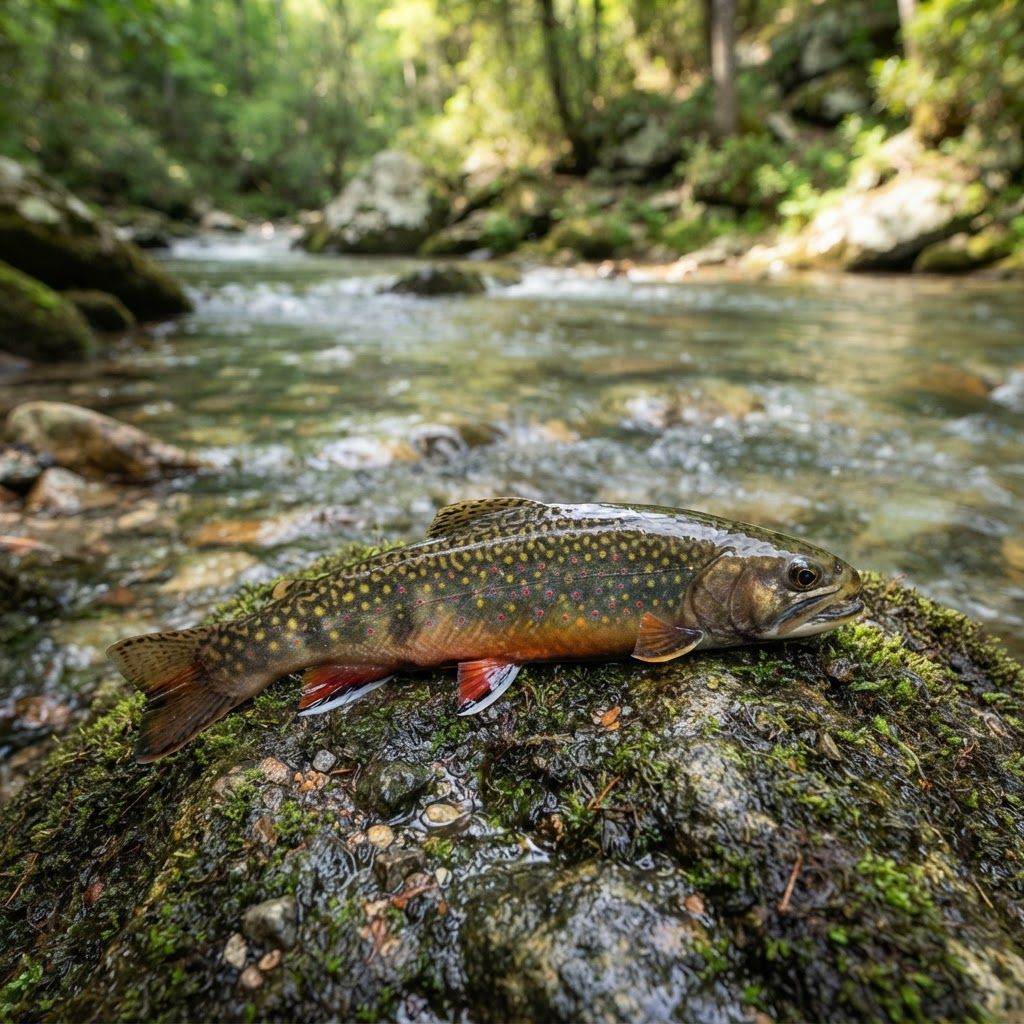
Chasing Painted Gems: The Brook Trout Pursuit
The Allure of the Brook Trout
Often called the 'painted trout' for their stunning vermiculated backs, fiery orange bellies, and white-tipped fins, the Brook Trout (Salvelinus fontinalis) is technically a member of the char family. For many anglers, these fish represent the gold standard of fly fishing and light-tackle pursuits. Unlike invasive species, the Brook Trout is a true native to the Eastern United States, though they have been introduced to high-altitude western lakes. They are highly sensitive to water quality and temperature, serving as an indicator species for a healthy ecosystem.
Get in the Community feed
Hunters and anglers nationwide posting bucks, catches, trail cam pics and what's working right now.


Biology and Habitat Preferences
Brook Trout possess an incredible metabolism adapted for frigid water. They thrive in temperatures between 50 and 60 degrees Fahrenheit. When water temperatures exceed 65 degrees, their stress levels skyrocket, making them less likely to feed and more susceptible to handling injury. Because of this, locating them requires understanding the geography of your . You should prioritize high-gradient mountain streams, spring-fed creeks, and deep, cold alpine lakes where oxygen levels remain consistent year-round.
Seasonal Dynamics and Behavior
Timing is everything when pursuing 'brookies.' Spring, following the snowmelt, offers an aggressive window where fish are feeding heavily after a long winter. As summer heat settles in, you must focus your efforts on the early morning or late evening hours, specifically in shaded pools or near thermal refuges like spring seeps.

Youth Hunter Academy
Raise a safe, confident young hunter.
Safety missions for ages 5–17. Free parent account.
Fall is perhaps the most magical time to target these fish. As they prepare for their spawn, their colors reach a peak intensity. They move into shallower gravel beds to lay eggs, becoming more territorial and easier to spot in crystal-clear water. Always consult your to ensure you are aware of seasonal regulations, as many states enforce closures during the spawning period to protect future year classes.
Effective Techniques and Lures
The Fly Fishing Approach
Dry fly fishing is the quintessential way to catch Brook Trout. They are opportunistic feeders, often looking toward the surface for terrestrial insects. Caddisflies, midges, and small foam beetles are often the ticket. If the surface is quiet, a weighted nymph trailed a few feet below a dry fly can entice fish holding in deeper pockets.
Spin Fishing Essentials
For those who prefer spinning gear, light line is non-negotiable. Use 2-to-4-pound fluorocarbon to remain invisible to these notoriously shy fish. Small inline spinners, like a classic 1/16 oz gold or copper blade, mimic the flash of minnows and draw reaction strikes. Small plastic jigs or marabou lures fished with a twitch-and-pause retrieve are also highly effective in slower water.
Tactical Tips for All Levels
Whether you are a newcomer or a seasoned pro, the secret to consistent success lies in stealth. Brook Trout are wary. If they can see you, they will not bite. Approach pools from downstream, casting into the current and allowing your lure or fly to drift naturally. If you have been following our advice in , you know that 'reading the water' is a skill developed over time. Look for the seams—the areas where fast water meets slow water—as these are the buffet lines where trout wait for passing food.
According to the U.S. Fish and Wildlife Service, protecting these delicate populations is a collective responsibility. Practice catch-and-release with barbless hooks to minimize damage to the fish's soft jaw tissue. When you land a trophy that deserves to be shared, upload your photo to our to show off your hard work.
Gear Selection: Keep it Light
For Brook Trout, less is more. A 3-weight fly rod or a light-action spinning rod allows you to feel the subtle taps of the trout and provides a much more sporting fight. Avoid heavy swivels or thick leaders; the more natural your offering looks, the more likely you are to fool a wild brook trout. If you are fishing in remote, high-altitude terrain, consider investing in a collapsible rod that fits securely in your pack to keep your hands free for scrambling over rocks and logs.
Ultimately, pursuing Brook Trout is about more than just the catch. It is about the environment—the sound of a rushing mountain stream, the crisp air of an autumn morning, and the satisfaction of finding a gem hidden in the wild. By respecting the water and the fish, you ensure that these beautiful creatures remain a staple of the American wilderness for generations to come.
Free every morning
Your Daily Briefing
One morning forecast for the spots you actually hunt and fish: deer movement, waterfowl flights, bite times, wind and shooting light.
See what's in itSet up your briefing
Join free, save a spot on the map, then pick what you hunt and fish and when you want your email.
Catch more these fish — free
Create a free account and unlock the full angling toolkit: