
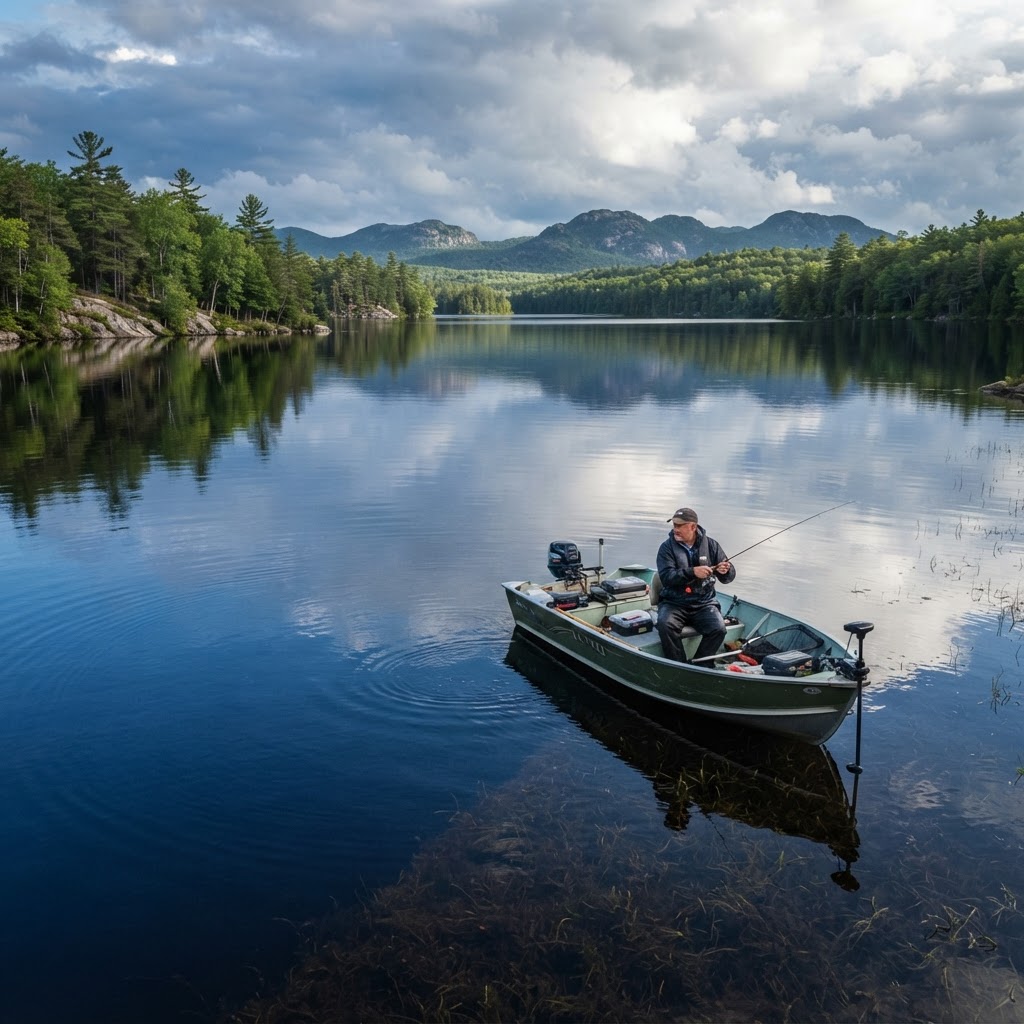
Barometric Shifts: Adjusting Your Strategy After a Cold Front
The Post-Frontal Challenge
Every angler knows the feeling: you have been dialed into a fantastic bite for three days, then a cold front rolls through. The sky turns a brilliant, piercing blue, the wind shifts to the northwest, and the barometer spikes. By the time you get back on the water, the fish have seemingly vanished or developed a severe case of lockjaw. This is the post-frontal slump, and it is perhaps the most humbling scenario an angler can face. At Buckeye Hunter Hub, we believe that understanding the biology behind these shifts is the key to turning a slow day into a success.
Get in the Community feed
Hunters and anglers nationwide posting bucks, catches, trail cam pics and what's working right now.


Why Pressure Matters
Fish are biologically tied to the barometric pressure in ways we are only beginning to fully appreciate. When a low-pressure system approaches, the atmospheric weight drops, often stimulating fish to feed aggressively before a storm. Conversely, the high-pressure system that follows a cold front acts like a physical weight on the water. This pressure affects the gas bladder of the fish, causing them to move toward the bottom, settle into tight cover, and drastically reduce their metabolic rate. They aren't necessarily gone; they are simply hunkered down to stabilize their internal equilibrium.
Finding the Comfort Zone
When the post-front blues hit, your first priority is locating the 'micro-climate' where the fish are hiding. In most freshwater systems, this means moving away from shallow, exposed flats and focusing on depth changes. Fish will often slide down to the first major contour line or seek out the thickest vegetation they can find. If you are struggling to identify these transitions, checking an can help you visualize the depth changes and structural elements that provide sanctuary when surface temperatures dip.

Youth Hunter Academy
Raise a safe, confident young hunter.
Safety missions for ages 5–17. Free parent account.
Refined Tactics for Lethargic Fish
Once you have located the likely hiding spots, you must change your presentation. Forget the high-speed reaction baits that were working during the pre-front window. Post-frontal fish require a 'finesse-first' approach.
- Slow Down to a Crawl: If you were throwing a vibrating jig or a spinnerbait, switch to a finesse worm or a small tube bait on a shaky head. The goal is to keep the bait in the strike zone as long as possible.
- Downsize Your Profile: Fish are less willing to expend energy on a large meal when their metabolism is sluggish. A smaller bait profile is often perceived as an 'easy win' rather than a chore.
- Tighten Your Windows: During a high-pressure cycle, fish may only feed during specific windows—often when the sun is highest or during the brief periods of moon overhead or underfoot. Consult your to learn about specific local regulations and seasonal timing that might influence fish behavior in your region.
The Role of Water Clarity and Temperature
It is important to remember that post-front conditions hit different bodies of water in different ways. In muddy water, the fish are less affected by the bluebird skies because light penetration is limited. In gin-clear water, however, the visibility makes the fish extremely skittish and hyper-aware of your boat's presence. If you are fishing clear, cold, post-frontal water, make long casts and minimize boat noise. For more advanced tips on reading these complex conditions, be sure to visit where our contributors break down specific seasonal nuances.
Environmental Stewardship and Long-Term Success
Adapting to weather is part of being a well-rounded angler, but it is equally important to respect the fish. When fish are stressed by rapid environmental changes, they are less resilient to prolonged handling. If you manage to find a school of deep-holding bass or panfish after a front, keep your hook-sets crisp, minimize your time spent unhooking, and ensure a healthy release. For further guidance on local fish population health, the U.S. Fish and Wildlife Service provides excellent data on conservation and habitat management that can inform where and how you target fish throughout the changing seasons.
Final Takeaways
Don't let a barometer reading keep you off the water. Instead, treat it as a puzzle to be solved. If you find yourself holding a trophy after a cold snap, share your success on our to help others see that even the toughest conditions can yield rewards. Focus on structure, drop your bait size, and most importantly, slow your retrieve to a crawl. The fish are there—you just have to give them a reason to bite.
Catch more these fish — free
Create a free account and unlock the full angling toolkit: