
Exploring the Habitat of the Green-Winged Teal
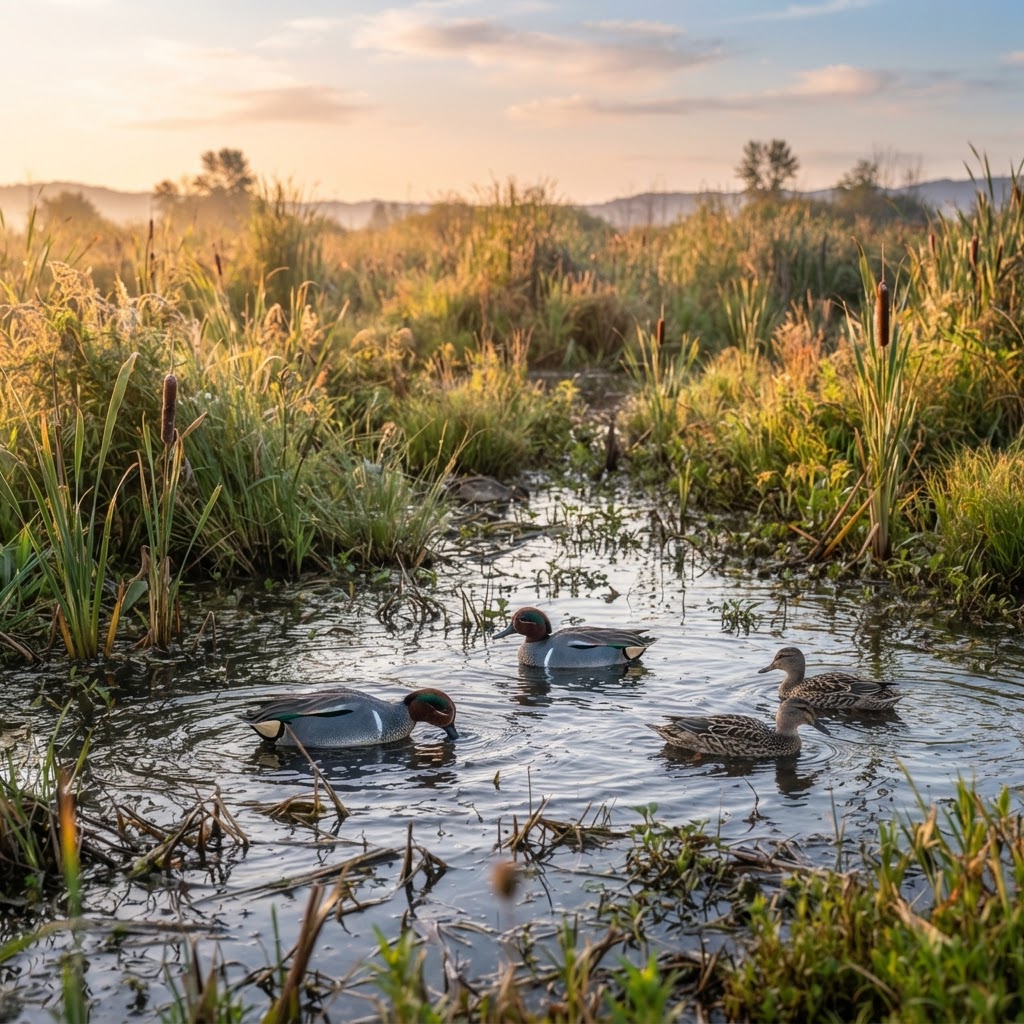
Introduction to the Green-Winged Teal
The green-winged teal (Anas crecca carolinensis) is a captivating small duck cherished by hunters, birdwatchers, and nature enthusiasts alike. With their striking plumage and agile flight patterns, these dabbling ducks are more than just another waterfowl species; they represent a rich tapestry of habitats across North America. In this article, we will delve into their unique habitat, behaviors, identification tips, and the best locations to observe and hunt green-winged teals.
Free hunting map, zones & 50-state resources
Save your spots, share zones with your group, and get deer & waterfowl movement forecasts — free.
The Unique Characteristics of the Green-Winged Teal
Measuring approximately 14–15 inches in length and sporting a wingspan of about 23–24 inches, the green-winged teal is North America's smallest dabbling duck. Despite their diminutive size, they display impressive agility with erratic flight trajectories that challenge even the most skilled hunters. Their namesake comes from the vibrant green patch on their wings, particularly noticeable in flight.
Diet and Foraging Behavior
These ducks are adaptable feeders, shifting their diets seasonally. During migration and winter months, they primarily consume seeds from plants such as wild millet and smartweed, along with aquatic vegetation. In contrast, their breeding habits involve a protein-rich diet, incorporating invertebrates like insects and crustaceans, making them an omnivorous species that thrives in diverse wetland ecosystems.
Green-winged teals utilize a dabbling technique for foraging, tipping headfirst in shallow waters rather than diving, making them a common sight in calm, shallow wetlands.
Understanding Green-Winged Teal Habitat
Green-winged teals favor shallow freshwater wetlands, typically preferring water depths of 4 to 12 inches. They thrive in marshes, flooded agricultural fields, prairie potholes, and along the edges of lakes and rivers. Key habitat features include abundant aquatic vegetation—such as cattails, reeds, and wild rice—coupled with open water for resting and foraging.
Breeding and Migration Patterns
Breeding Season (Summer)
During the summer, green-winged teals nest in northern regions, including the prairie pothole region of Canada—covering parts of Alberta and Saskatchewan—and extends to Alaska and northern U.S. states like North Dakota and Minnesota. Nesting typically occurs in grassy areas near shallow wetlands, where the female conceals her clutch instinctively.
Migration (Spring and Fall)
As they migrate, these ducks utilize key stopover sites across the U.S. and Canada, favoring wetland complexes integral to the Mississippi Flyway and Great Lakes regions.
Wintering Habitat
In winter, most green-winged teals retreat to the southern U.S. states—such as the Gulf Coast and California’s Central Valley—Mexico, Central America, and parts of the Caribbean. Their preferred winter habitats consist of ice-free wetlands that guarantee an ample food supply. For avid hunters and birdwatchers, tracking waterfowl migration patterns ensures optimal viewing opportunities.
Maintaining Green-Winged Teal Habitats
E-Tag States

Harvest Tags
E-check means you supply the tag. Printed with the exact fields your state requires.
3-pack $22.95
If you're interested in attracting green-winged teals to your area or enhancing local ecosystems, consider the following habitat management strategies:
- Preserve shallow wetlands featuring water depths between 4–12 inches.
- Encourage native vegetation like wild millet and smartweed to foster an ideal food source.
- Maintain natural cover such as cattails and reeds to provide safety for these waterfowl.
Responsible property management and habitat enhancement not only benefit green-winged teals but also support a broader range of wildlife.
Where to Spot Green-Winged Teals
Raise a safe, confident young hunter.
Guide your kids ages 5–17 through interactive hunting safety missions, real decision drills, and earned trophies — all from one free parent account.




Green-winged teals boast a vast range across North America, from Canada’s boreal forests to the coastal marshes of Texas. Here are key regions to observe them:
- United States: Mississippi River Delta, Chesapeake Bay, California's Sacramento-San Joaquin Delta, Texas Gulf Coast, and Florida Everglades.
- Canada: The prairie pothole region and British Columbia’s Fraser River Delta.
- Mexico: Laguna Madre and the Lerma marshes.
These ducks often form large flocks during migration, particularly in major wetland systems. The best times to observe them are during the early hours of the morning or late afternoons, particularly at designated wildlife refuges and preserved wetlands. Websites like eBird can offer real-time sightings and help you discover optimal viewing sites.
Identifying Green-Winged Teals in the Wild
Identifying these ducks can be quite straightforward with the right observations:
- Adult Males: Look for their striking chestnut-colored heads adorned with a bold green stripe extending from the eye back towards the head. Their gray bodies feature a distinct white vertical stripe on the side, and their vibrant green wing patch is visible in flight.
- Females: More cryptic in coloration, females present mottled brown feathers for effective camouflage but share the characteristic green wing patch. Both sexes are significantly smaller than other dabbling ducks like mallards.
Key identification tips include:
- Observing the iridescent green patch in flight.
- Looking for the distinctive male coloration.
- Noting their small size.
- Listening for the male's high-pitched ‘preep-preep’ call—a familiar sound during mating season.
Hunting and Observing Tips
Whether you're a passionate hunter or an enthusiastic birdwatcher, understanding the behavior of green-winged teals can greatly enhance your experience in the field.
For Hunters
- Scout Locations: Visit designated wetlands ahead of the hunting season to familiarize yourself with common flight paths and feeding areas. Utilize toolkits like a waterfowl decoy spread planner to optimize your setup.
- Choose the Right Gear: Equip yourself with quality gear, which you can find through property & lease listings or our shop.
For Birdwatchers
- Bring Binoculars: Enlist binoculars or spotting scopes to observe their activity from a distance, especially in busy wetland environments where they gather.
- Join Community Groups: Engage with local hunting community groups to share your insights and learn from fellow enthusiasts.
Conclusion
The green-winged teal is not only a striking species but also an essential part of North America's rich ecosystem. By understanding their habitats and behaviors, you can appreciate these dynamic ducks in the wild. Whether you’re hunting or birdwatching, enhancing your knowledge helps promote conservation efforts and sustainable practices, learning more about their role within wetland ecosystems.
For further exploration on tracking deer or waterfowl, be sure to visit our resources on seasonal information to enhance your hunting strategies.
Additional Resources
Explore More on Buckeye Hunter Hub
Join 323 hunters and anglers on Buckeye Hunter Hub — free.
Latest from the Community

Posted
Rifle Slings and Leather Goods
Richard Taggart · 3h ago
Fort Sill Oklahoma On post hunting Rules and bag limits
Posted
Fort Sill Oklahoma On post hunting Rules and bag limits
Keith Bennett · 11h ago
scouting
Posted
scouting
Josh · 13h ago

Posted
Trail Cam Talk!
Jeff Cote · 24h ago

Trail Cam
Whitetail Deer
Jeff Cote · 24h ago
Pressure Check!
Posted
Pressure Check!
Jeff Cote · 1d ago
New drop
Fresh Buckeye Hunter Hub tees & hoodies


Everything you need to hunt smarter — free
Buckeye Hunter Hub is a free, nationwide platform. Create an account and unlock the full toolkit:
Free Interactive Hunting Map
Mark stands, cameras, and sign. Draw hunting zones with public land & county overlays across all 50 states.
Zones with Group Sharing
Share zones with your hunting group, split property into sections, assign stands, and check in — all in one place.
50 States of Hunting Resources
Season dates, license links, and DNR regulations for every state, kept current so you never miss an opener.
Deer Movement Forecast
Data-driven daily movement predictions using wind, moon, and pressure — know when to sit before you go.
Waterfowl Movement & Tools
Flight-potential forecasts, migration numbers, decoy spread planner, and a full species field guide.
From the Maker Bench

Taggart Outdoors
Padded Rifle Sling
Hand-built in the USA · $134.99
Shop the MakerNew drop
Fresh Buckeye Hunter Hub tees & hoodies
Shop This

StopBox Pro Ward | Wall-Mounted
$179.00$199.99

StopBox Pro Compact
$159.00$179.99

Buckeye Hunter Hub Tee — Riding Shotgun
$20.55

Buckeye Hunter Hub Hoodie — Riding Shotgun
$32.87
E-Tag States
Harvest Tags
E-check means you supply the tag. Printed with the exact fields your state requires.
3-pack $22.95
More Articles
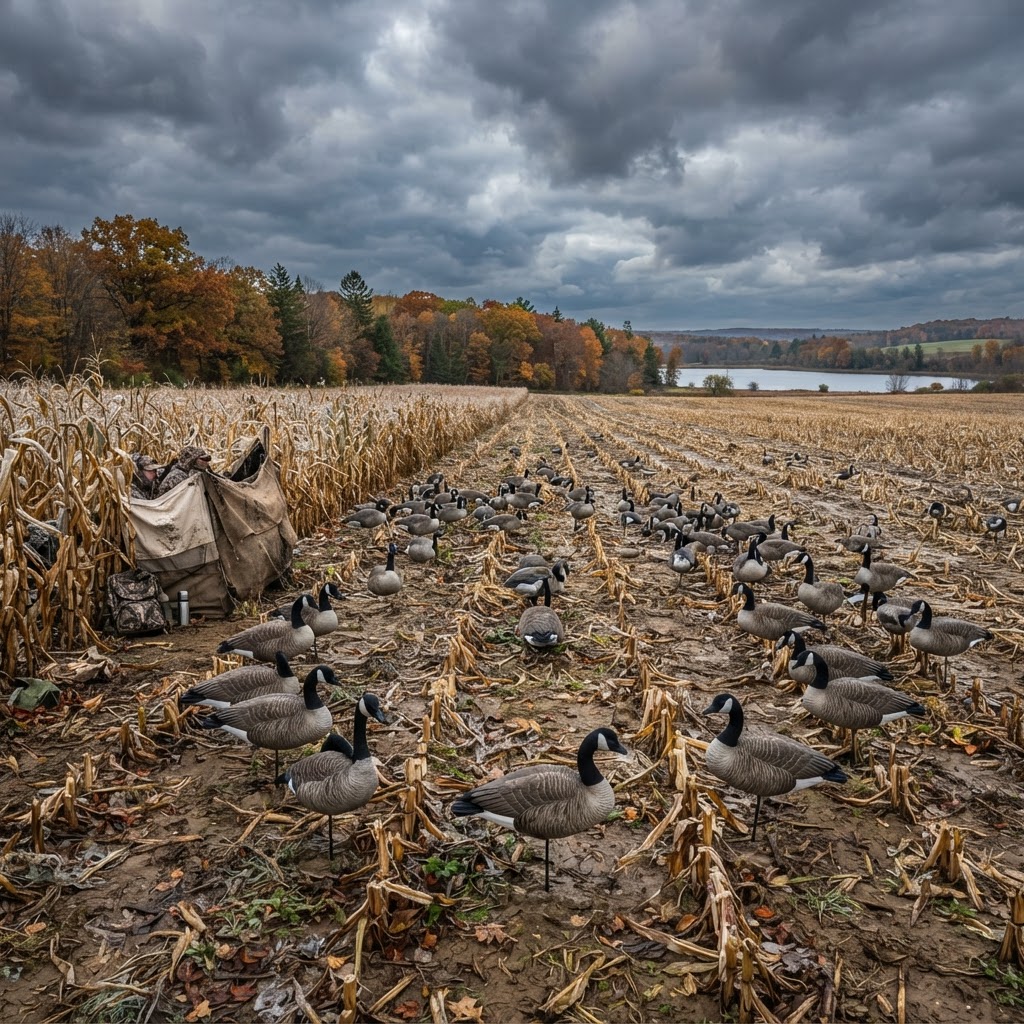
Chasing Honkers: Atmospheric Triggers and Tactical Field Setups
When the mercury drops and the north wind howls, it is time to get serious about Canada geese. Learn how to leverage migration triggers and precision field tactics for a successful hunt.
How to Master Evening Thermals for Deer Hunting
Learn how evening thermals flow like water to better position your stand. Use these expert tips to stop getting winded by deer.
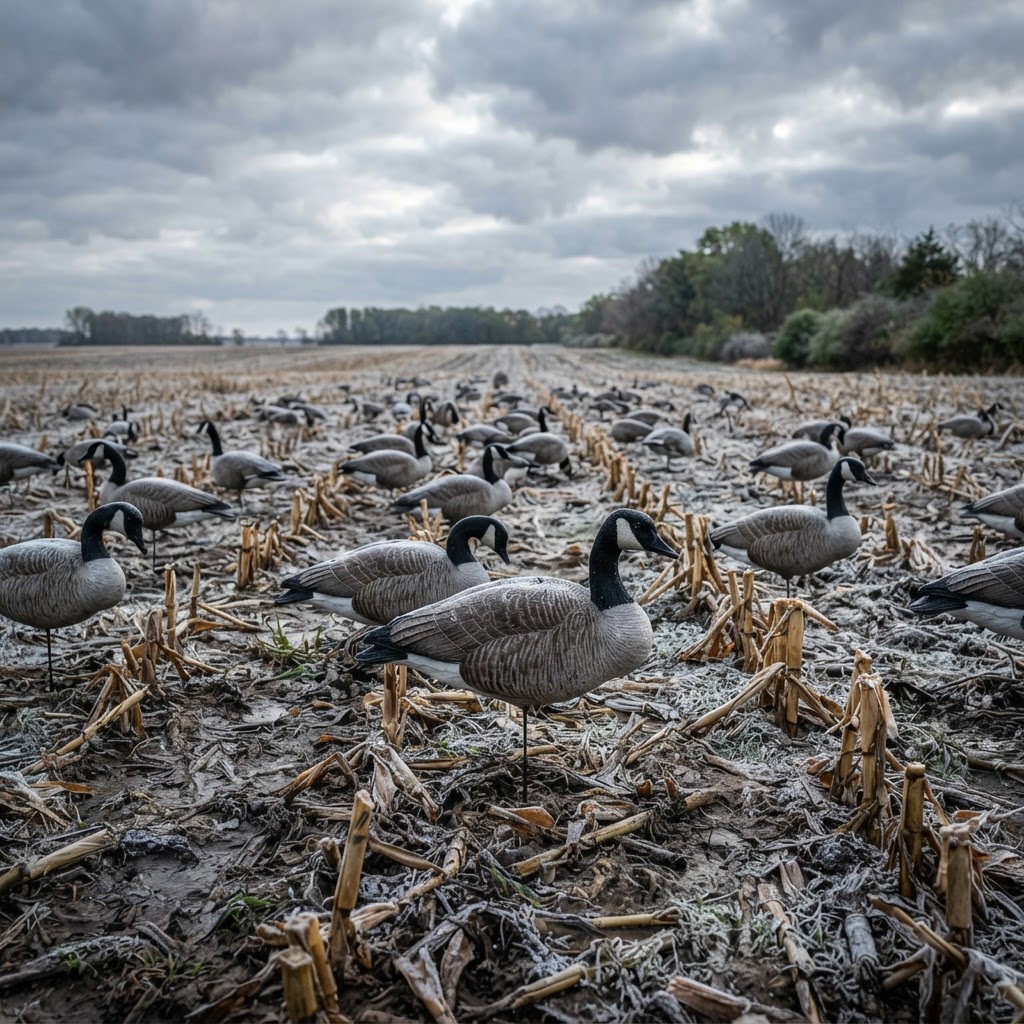
Field Hunting Canada Geese: Spreads, Motion, and Concealment
Master the art of the dry field hunt by leveraging barometric pressure and wind dynamics to put massive flocks of Canada geese at your fingertips.

Unveiling the Buckeye Hunter Hub Tee: A New Look for the Field and Beyond
Meet the Buckeye Hunter Hub Tee — Two Kinds of Camo Shield, the ultimate outdoor apparel designed for those who live life between the woods and the water.