Reading Cold Fronts for Duck Hunting: The Best Weather to Move Birds
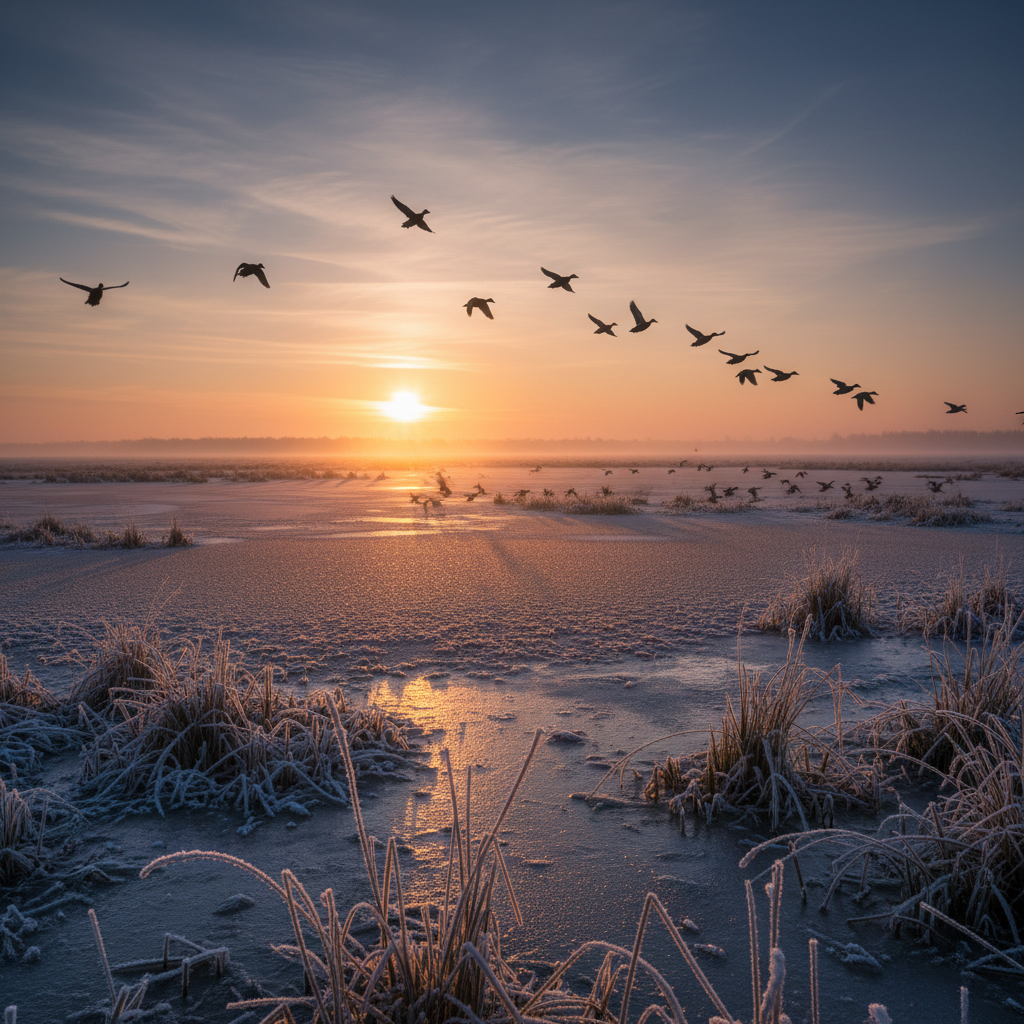
Understanding Cold Fronts and Waterfowl Movement
Waterfowl hunting isn’t just about setting decoys and waiting; it's about understanding the environment and the behavior of the birds. One of the most influential weather phenomena impacting duck movement is the cold front. As a passionate hunter, knowing how to read these weather patterns can significantly improve your chances of a successful outing.
Raise a safe, confident young hunter.
Guide your kids ages 5–17 through interactive hunting safety missions, real decision drills, and earned trophies — all from one free parent account.


The Power of Cold Fronts
A cold front occurs when a mass of cold air pushes into a region occupied by warm air. This transition often brings changes in temperature, humidity, and wind, all of which directly impact duck behavior. Cold fronts can trigger significant migration and movement of waterfowl, usually resulting in higher activity levels and a better chance for hunters.
Key Indicators of Cold Fronts
- Falling Barometric Pressure: Waterfowl are sensitive to changes in barometric pressure. A drop in pressure usually signals incoming precipitation, which prepares ducks for feeding as they sense an impending weather change.
- Temperature Drops: Sudden declines in temperature often cause birds to move southward from their nesting areas. Ducks actively seek food sources before a significant cold snap.
- Wind Conditions: Birds prefer winds between 10-20 mph. Ideal wind can help them navigate more easily, prompting them to move around to forage.
Scouting: Timing is Everything
Understanding the movement patterns of waterfowl during cold fronts requires effective scouting. Rarely will birds be concentrated in one area for long, especially when the weather changes.
Practical Scouting Tips
- Track Migration Patterns: Use the waterfowl movement forecast to determine when and where birds are migrating. This practice helps forecast movements in your local area.
- Monitor Feeding Habits: Pay attention to where ducks are feeding regularly before a front. Locate their preferred spots and scout for the best hunting locations prior to the anticipated weather change.
Free hunting map, zones & 50-state resources
Save your spots, share zones with your group, and get deer & waterfowl movement forecasts — free.
Decoy Spreads: Mimicking Natural Behavior
Once you’ve scouted and identified active areas, incorporating the right decoy spread is crucial. Effective decoy spreads can make all the difference in luring ducks into shooting range.
Suggested Decoy Configurations
- V-Shape Spread: Mimicking a natural flight formation, a V-shape can attract passing birds by suggesting a friendly gathering.
- Cluster with a Few Outliers: Position a tight cluster of decoys to simulate feeding ducks, with a few isolated on the periphery to create intrigue.
- Refer to the waterfowl decoy spread planner for specific configurations based on pond size, wind direction, and bird behavior.
Calling Techniques For Better Success
Using calls effectively can greatly enhance your chances of attracting waterfowl. In conditions created by cold fronts, ducks often respond more favorably to realistic sounds, potentially leading to greater success.
Calling Strategies
- Basic Quacks to Mimic Feeding Ducks: Light, repetitive quacks can mimic the sound of a duck feeding, a pitch that birds frequently respond to during colder weather.
- Aggressive Calls for Flocking: When you notice a group of birds in the area, switch to more aggressive call methods to entice them to land with your spread.
Blind Placement and Concealment
Proper blind placement and concealment are essential for successful hunting. Birds can be skittish during active migration; you need to blend in with the environment effectively.
Effective Concealment Tips
- Location relative to Wind: Position your blind where the wind is in your face. Ducks are less likely to feel confident landing if they face a strong wind.
- Natural Cover Utilization: Use natural vegetation to blend your blind into the landscape. Many hunters underestimate the power of concealment.
The Role of Cold Weather and Freeze-Ups
Another crucial element to consider is the effect of snow and freeze-ups on waterfowl behaviors. Freeze-ups lead to reduced food availability, forcing birds to relocate to other areas in search of open water and feeding opportunities. Being ahead of these changes will allow you to capture peak movement.
Be Prepared
- Prepare for Freeze-ups: Continuously monitor temperature drops that can cause water bodies to freeze, prompting movement patterns that can be leveraged for successful hunts.
- Utilize interactive hunting maps for real-time updates on your local waterfowl activity and feeding areas.
Conclusion
In conclusion, learning to read cold fronts will significantly improve your waterfowl hunting success. Pay attention to weather patterns, understand the behaviors they evoke in ducks, scout effectively, and deploy your decoys and calls with precision. Stay informed using advanced weather intel and planning tools. Together, these strategies will set you up for success in the field.
Remember, as with all hunting pursuits, patience and practice are key. Build your skills, adapt to changing conditions, and embrace the educational journey of waterfowl hunting. Don't forget to check out our community groups for shared experiences and tips from fellow enthusiasts!
Explore More on Buckeye Hunter Hub
Everything you need to hunt smarter — free
Buckeye Hunter Hub is a free, nationwide platform. Create an account and unlock the full toolkit:
Free Interactive Hunting Map
Mark stands, cameras, and sign. Draw hunting zones with public land & county overlays across all 50 states.
Zones with Group Sharing
Share zones with your hunting group, split property into sections, assign stands, and check in — all in one place.
50 States of Hunting Resources
Season dates, license links, and DNR regulations for every state, kept current so you never miss an opener.
Deer Movement Forecast
Data-driven daily movement predictions using wind, moon, and pressure — know when to sit before you go.
Waterfowl Movement & Tools
Flight-potential forecasts, migration numbers, decoy spread planner, and a full species field guide.

American Express® Gold Card
Earn big on the things you love—dining, groceries, and travel. Apply through my referral link below.
- Up to 100,000 Membership Rewards® Points after you use your new Card to make $8,000 in purchases in the first 6 months—upon approval.
- 4X Membership Rewards® Points at restaurants worldwide, plus takeout and delivery in the U.S.
- 4X Points at U.S. supermarkets (on up to $25,000 per year, then 1X).
- 3X Points on flights booked directly with airlines or on amextravel.com.
- Up to $120 in annual dining credits at select partners (enrollment required).
Terms apply. Offer subject to approval by American Express. This is a referral link—I may receive Membership Rewards® Points if you are approved.
More Articles
The Buckeye Hunter’s Guide to Nebraska Public Land Hunting
Discover the vast, untapped potential of Nebraska’s public hunting grounds, offering world-class opportunities for deer, upland birds, and waterfowl across the Great Plains.
The Magnolia State Hunter: A Guide to Mississippi Hunting Success
From the fertile Delta bottomlands to the piney woods of the south, Mississippi offers a unique hunting experience. Learn how to master the Magnolia State’s terrain and seasons with this comprehensive guide.

StopBox Pro/Compact BOGO Review: The Ultimate Defense Bundle
Is the StopBox Pro/Compact BOGO deal worth your money? We break down the build, value, and practicality of this two-in-one defensive storage solution.

The Ultimate Backcountry Hunting Checklist: A Framework for Success
Planning a backcountry hunt requires more than just a rifle and a pack; it demands a tactical approach to logistics and gear. Here is your roadmap to wilderness readiness.