Mastering the X: Strategic Field Tactics for Canada Geese
Decoding the Migration and Weather
Canada goose hunting is a game of logistics, timing, and environmental awareness. To consistently pull big honkers into your spread, you must move beyond simply finding birds and start understanding the 'why' behind their behavior. Migration timing is heavily dictated by the that track birds down the flyways, but local weather serves as the immediate trigger for feeding activity.
Free hunting map, zones & 50-state resources
Save your spots, share zones with your group, and get deer & waterfowl movement forecasts — free.
Geese are masters of energy conservation. When a cold front pushes through, dropping temperatures and barometric pressure, geese prioritize high-calorie intake. They want 10–20 mph winds to help with lift and to dictate their landing trajectory. If you are hunting during a bluebird day with high pressure and no wind, expect the geese to be skittish and prone to sitting in the middle of large, safe water bodies. Conversely, a falling barometer followed by a stiff wind is your green light; it drives birds to move between roosts and feeding fields with reckless abandonment.
Scouting and Finding the X
There is no substitute for scouting. While digital tools like are essential for identifying potential fields, nothing beats physical observation. You are looking for the 'X'—the exact field where the birds fed the previous evening or that morning. Use binoculars from a distance to avoid bumping the flock. If you find a field that held 500 birds, your odds are infinitely higher than setting up in a 'travel corridor' where birds might just happen to fly over.

When scouting, pay attention to the wind direction they utilize to land. Geese are like airplanes; they require a headwind to land safely and controlled. If the wind is out of the northwest, the geese will enter the field from the southeast. Your blind placement must account for this landing zone, keeping the wind at your back so the birds finish directly in front of your barrel.
Designing an Effective Spread
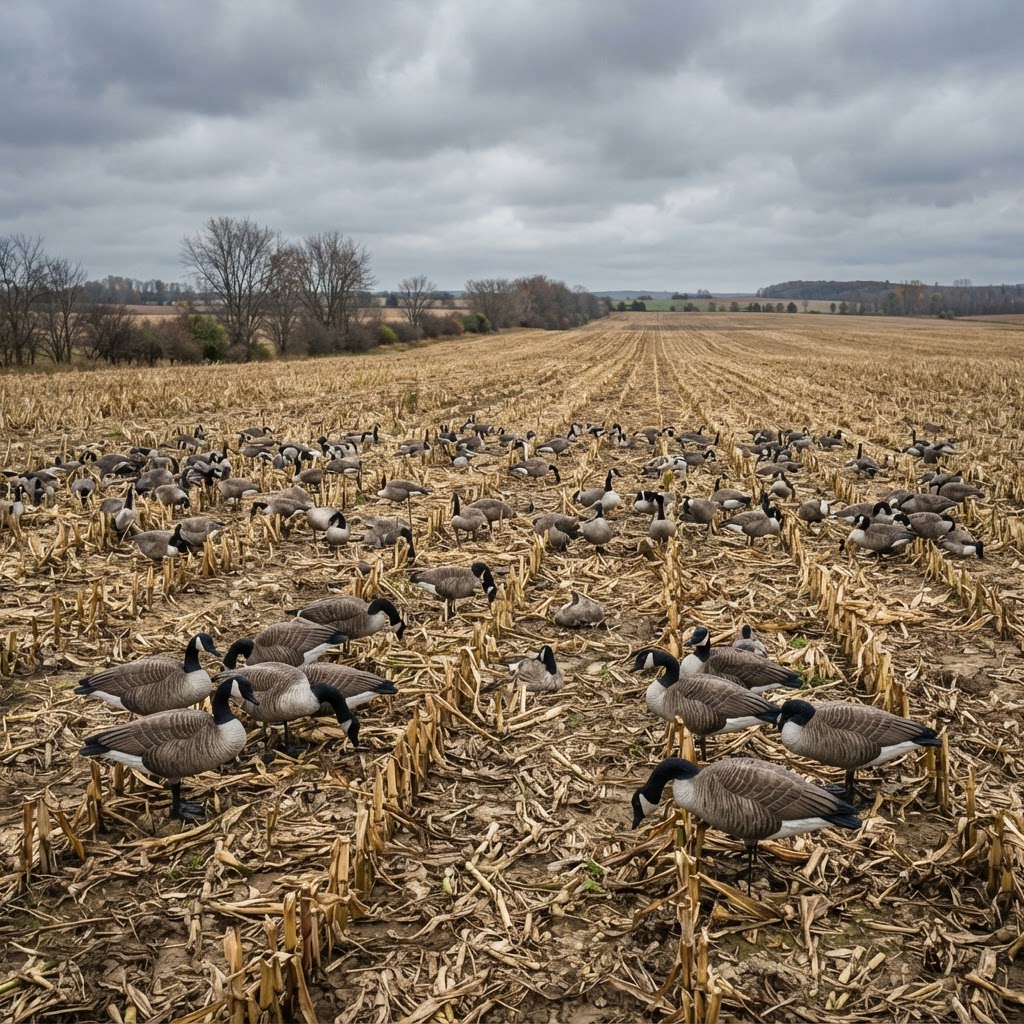
Modern field spreads should focus on realism and 'flow.' Gone are the days when a massive, unorganized pile of decoys was the gold standard. Today, we prioritize traffic patterns. Using a can help visualize these setups before you hit the field.
Create a landing hole—an open area in your spread—that is at least 30 yards wide. Place your decoys in 'family groups' rather than uniform lines. Geese naturally cluster together, and breaking your spread into groups of 3 to 6 mimics natural behavior. Always incorporate motion; flagging is non-negotiable. Even on breezy days, a well-timed flag can catch the eye of a high-flying flock a mile away. If you are using silhouettes or full-bodies, ensure the heads are facing into the wind to simulate feeding activity.
Concealment: The Final Barrier
Even the most perfect spread will fail if the birds spot you before they commit. Concealment is the most overlooked aspect of field hunting. If you are hunting a harvested cornfield, your layout blinds must be covered in the exact stubble found in that specific field. Use the local vegetation—corn stalks, wheat straw, or whatever is naturally present—to break up the hard edges of the blind.
Washington · E-Tag State

Washington Harvest Tags
E-check means you supply the tag. Printed with the exact fields Washington requires.
3-pack $22.95
Raise a safe, confident young hunter.
Guide your kids ages 5–17 through interactive hunting safety missions, real decision drills, and earned trophies — all from one free parent account.
Bonus: every $10 you spend in the BHH shop earns a free seat (up to 5). Use them or share them.


Mudding your blinds or using grass mats is a solid start, but the best hunters go further by 'brushing in' their setup. If you are struggling with concealment, check your local for regulations regarding permanent versus portable blinds, and ensure you are not creating a 'blob' of unnatural material. If you can see the blind from 50 yards away, the geese can see it from 200.
Calling and Execution
Calling should be used as a communication tool, not a noise-making contest. When birds are at a distance, aggressive hail calls can grab their attention. Once they acknowledge the spread, switch to soft clucks and moans to build confidence. If they are already banking toward you, go silent. Over-calling to a flock that is already committed is the fastest way to flare them.
Stay low, keep your face covered, and wait for the 'take 'em' command. The goal is to let them work into the heart of the decoy spread, hovering just feet above the ground. It is the pinnacle of the hunt, and when the weather and your strategy align, it is the most rewarding experience in the waterfowl world.
Join 929 hunters and anglers on Buckeye Hunter Hub — free.
Latest from the Community


Preorder · 11 days left
Buckeye Hunter Hub Camo Trucker Hat — Treeline Logo
Includes 50% off Lifetime Pro
Everything you need to hunt smarter — free
Buckeye Hunter Hub is a free, nationwide platform. Create an account and unlock the full toolkit:
Free Interactive Hunting Map
Mark stands, cameras, and sign. Draw hunting zones with public land & county overlays across all 50 states.
Zones with Group Sharing
Share zones with your hunting group, split property into sections, assign stands, and check in — all in one place.
50 States of Hunting Resources
Season dates, license links, and DNR regulations for every state, kept current so you never miss an opener.
Deer Movement Forecast
Data-driven daily movement predictions using wind, moon, and pressure — know when to sit before you go.
Waterfowl Movement & Tools
Flight-potential forecasts, migration numbers, decoy spread planner, and a full species field guide.
From the Maker Bench

SE Ohio Outdoors
Euro Mount Hook
Hand-built in the USA · $8.00
Shop the Maker
BHH Partner
Firearms, ammo and gear from a local Ohio shop in Grafton.
dnaarmory.comWashington · E-Tag State
Washington Harvest Tags
E-check means you supply the tag. Printed with the exact fields Washington requires.
3-pack $22.95
More Articles
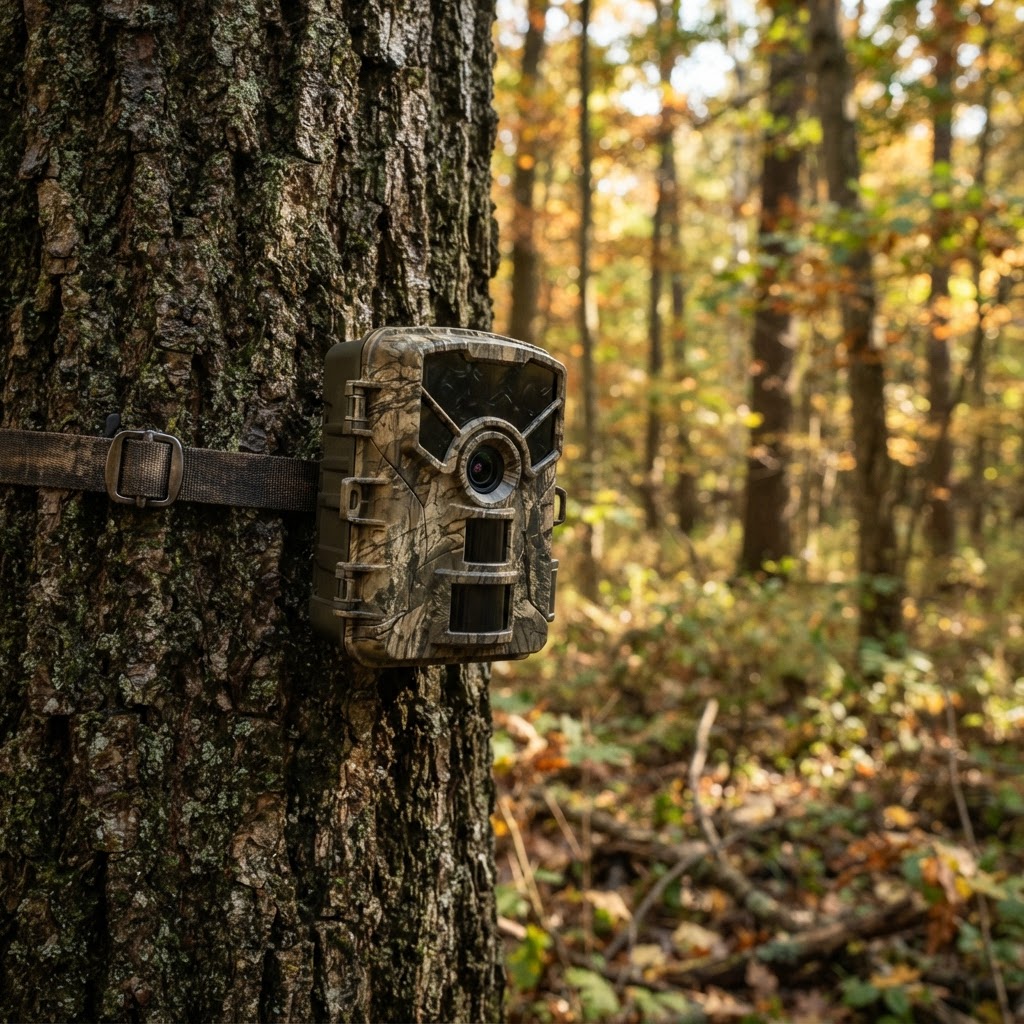
Mastering Herd Intel: A Practical Approach to Digital Trail Cam Organization
Drowning in thousands of trail camera photos? Discover how to move past the clutter and pinpoint exact movement trends using automated image processing.
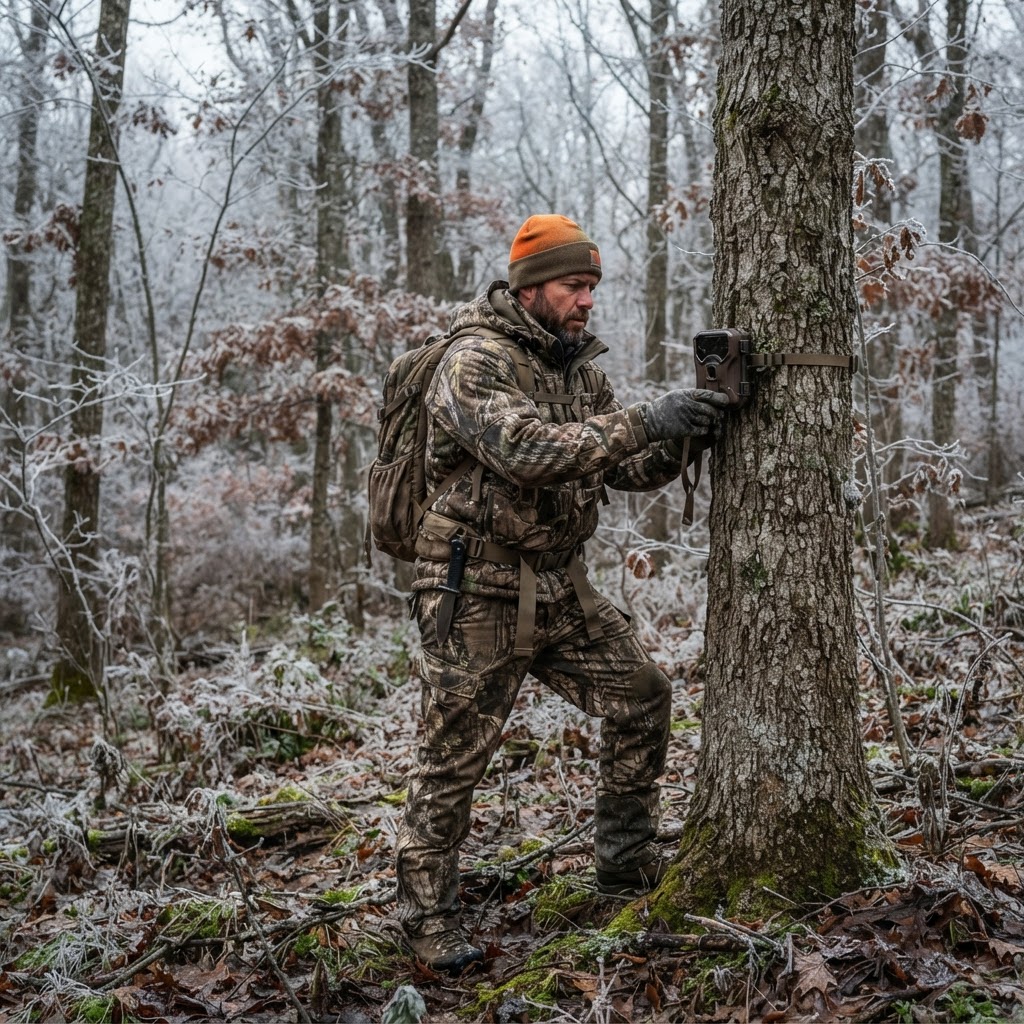
Beyond the Stand: Understanding the Buckeye Hunter Hub Ambassador Program
Are you a dedicated outdoorsman looking to turn your passion into a partnership? Learn what it takes to join the Buckeye Hunter Hub Ambassador Program and help shape the future of hunting and fishing in your home state.

Introducing the BHH Dark Timber Camo Youth Hoodie: Gear Up for the Next Generation
Get your young hunter ready for the field with our new, premium Dark Timber Camo Youth Hoodie, designed for durability and comfort.

Introducing the BHH Open Field Camo Youth Hoodie: Built for the Next Generation of Outdoorsmen
Outfit your young hunter or angler in our latest release, the BHH Open Field Camo Youth Hoodie, designed for comfort at the camp, the boat ramp, and everywhere in between.