Mastering the Woods: How to Read Deer Sign Like a Pro
Deciphering the Forest Floor: Understanding Deer Sign
For many hunters, a day in the woods is a game of chance. For the truly successful, it is a game of observation and deduction. Deer are constantly communicating with their environment, leaving behind a trail of physical indicators that, when read correctly, act as a roadmap to their daily habits. At Buckeye Hunter Hub, we believe that the best hunters aren't just lucky; they are students of deer behavior. By mastering the ability to identify and interpret rubs, scrapes, and beds, you turn the dense timber into an open book.
Free hunting map, zones & 50-state resources
Save your spots, share zones with your group, and get deer & waterfowl movement forecasts — free.
The Anatomy of a Rub
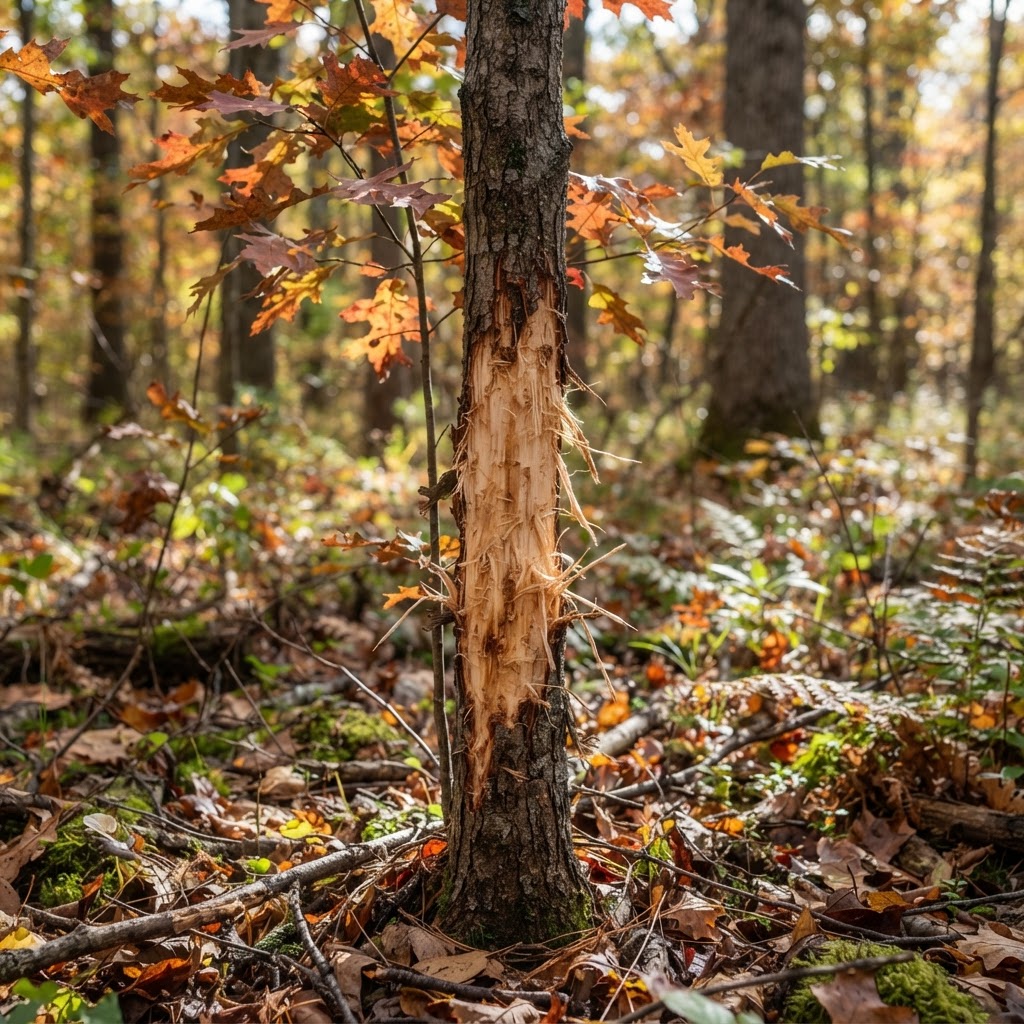
A rub occurs when a buck uses his antlers to strip the bark from a tree, typically during the pre-rut and rut phases. While casual observers might see a rub and simply think, 'a buck was here,' the expert hunter looks deeper. First, look at the size of the tree. A buck rubbing a sapling the thickness of a pencil is often just an energetic yearling. A buck thrashing a tree the size of your thigh, however, indicates a mature animal with the strength and confidence to claim territory.
Furthermore, the height of the rub can tell you the size of the deer. If the damage starts at waist height and goes up, you are likely dealing with a shooter buck. When searching for these, it is helpful to cross-reference your findings with to understand why a buck chose that specific travel corridor. Always look for rubs in clusters; a single rub is an anomaly, but a 'rub line' is a highway. Following a line of rubs can lead you directly to a primary staging area.
Decoding Scrapes: The Social Network of the Woods
Scrapes are arguably the most misunderstood sign in the hunting community. A scrape is an area where a deer has pawed away the leaves to expose the dirt, often accompanied by an overhanging 'licking branch.' This is the buck's way of marking his presence and checking on the hormonal status of does in the area.
To hunt a scrape effectively, you must distinguish between a community scrape and a lonely one. A community scrape, often found at the junction of two major trails or on a field edge, will be visited by multiple bucks and does throughout the season. These are the gold mines of the pre-rut. If you find a fresh scrape, don't just sit over it blindly. Use the to determine the best time of day to hunt that specific wind direction. If the licking branch is broken or heavily chewed, the deer is likely visiting during daylight hours.
Finding the Sanctuary: Identifying Bedding Areas
Washington · E-Tag State

Washington Harvest Tags
E-check means you supply the tag. Printed with the exact fields Washington requires.
3-pack $22.95
If rubs are the public message board and scrapes are the social club, bedding areas are the sanctuary. This is where deer spend the vast majority of their lives, and pushing into these areas too aggressively can ruin your hunt for the entire season.
Bedding areas are typically located in terrain features that offer security: high ground with a view, dense thickets, or leeward slopes where the wind is consistent. You can identify a bed by looking for a shallow, oval-shaped depression in tall grass or leaves. If the bed is clean and the dirt is packed, it is currently in use. Look for 'entry' and 'exit' trails leading into the bedding zone; these are your primary ambush points. When setting up, remember to stay on the perimeter. Hunting the transition zone—the area between the bedding ground and the feeding source—is much more effective than sitting directly over the bed itself. For more tactical tips on scouting these transitions, check out our latest entries on .
Putting It All Together: The Tactical Workflow
Raise a safe, confident young hunter.
Guide your kids ages 5–17 through interactive hunting safety missions, real decision drills, and earned trophies — all from one free parent account.
Bonus: every $10 you spend in the BHH shop earns a free seat (up to 5). Use them or share them.



Reading sign is useless if you don't have a plan. Once you have identified a cluster of rubs, a series of active scrapes, and a suspected bedding thicket, it is time to map them out. Using allows you to visualize the topography between these points. You will often see that deer move from bedding areas to feeding zones using the path of least resistance—saddles, ridges, and creek crossings.
Remember, deer sign is a snapshot in time. A rub from last year doesn't help you tonight. Always look for fresh sign: frayed bark that is still light-colored, dirt in a scrape that isn't crusted over, and fresh droppings in a bed.
Finally, respect the variables. Weather, hunting pressure, and the phase of the moon all influence how frequently a deer will visit these signposts. Always check your to ensure you are targeting the right behavior for the time of year. By learning to read the woods, you transition from a spectator to a participant, and in the world of deer hunting, that shift in mindset is the difference between an empty tag and a lifetime of stories.
Join 592 hunters and anglers on Buckeye Hunter Hub — free.
Latest from the Community

Trophy
My First EVER Buck
Keith Bennett · 9h ago

Trophy
Elk
Keith Bennett · 10h ago

Posted
Boss lady blessings!!🥰
Keith Bennett · 14h ago

Trophy
Old 07 PSE Xforce HF can still put em down
Keith Bennett · 14h ago

Posted
Good hunting days In Oklahoma
Keith Bennett · 15h ago

Posted
Scouting The Map For New Spots!
Richard Taggart · 1d ago
New drop
Fresh Buckeye Hunter Hub tees & hoodies


Everything you need to hunt smarter — free
Buckeye Hunter Hub is a free, nationwide platform. Create an account and unlock the full toolkit:
Free Interactive Hunting Map
Mark stands, cameras, and sign. Draw hunting zones with public land & county overlays across all 50 states.
Zones with Group Sharing
Share zones with your hunting group, split property into sections, assign stands, and check in — all in one place.
50 States of Hunting Resources
Season dates, license links, and DNR regulations for every state, kept current so you never miss an opener.
Deer Movement Forecast
Data-driven daily movement predictions using wind, moon, and pressure — know when to sit before you go.
Waterfowl Movement & Tools
Flight-potential forecasts, migration numbers, decoy spread planner, and a full species field guide.
From the Maker Bench

SE Ohio Outdoors
Euro Mount Hook
Hand-built in the USA · $8.00
Shop the MakerNew drop
Fresh Buckeye Hunter Hub tees & hoodies
Shop This

StopBox Pro Ward | Wall-Mounted
$179.00$199.99

StopBox Pro Compact
$159.00$179.99

Buckeye Hunter Hub Hoodie — Late Season Grind
$32.87

Buckeye Hunter Hub Hoodie — Bull
$32.87
Washington · E-Tag State
Washington Harvest Tags
E-check means you supply the tag. Printed with the exact fields Washington requires.
3-pack $22.95
More Articles

Celebrate Another Year of Tall Tales with Our New Fishing Birthday Card
Take a jab at your favorite angler with our new birthday greeting card, the perfect addition to any outdoor enthusiast's collection.

Celebrate the Season with the 'Mastered the Hunt' Birthday Card from Buckeye Hunter Hub
Know a hunter who has perfected the art of the 7 a.m. nap? Our new 'Birthday Card — Mastered the Hunt' is the ultimate birthday gift for the outdoor enthusiast in your life.

Introducing the Buckeye Hunter Hub Hoodie — Can Do: Built for the Bold
Gear up for your next adventure with our new 'Can Do' hoodie, a perfect blend of comfort and outdoor grit designed for the true sportsman.

Introducing the 'Can Do' Tee: New Apparel from Buckeye Hunter Hub
Represent your passion for the outdoors with our new Can Do t-shirt, built for comfort at the boat ramp or the local watering hole.