
Field Hunting Canada Geese: Spreads, Motion, and Concealment
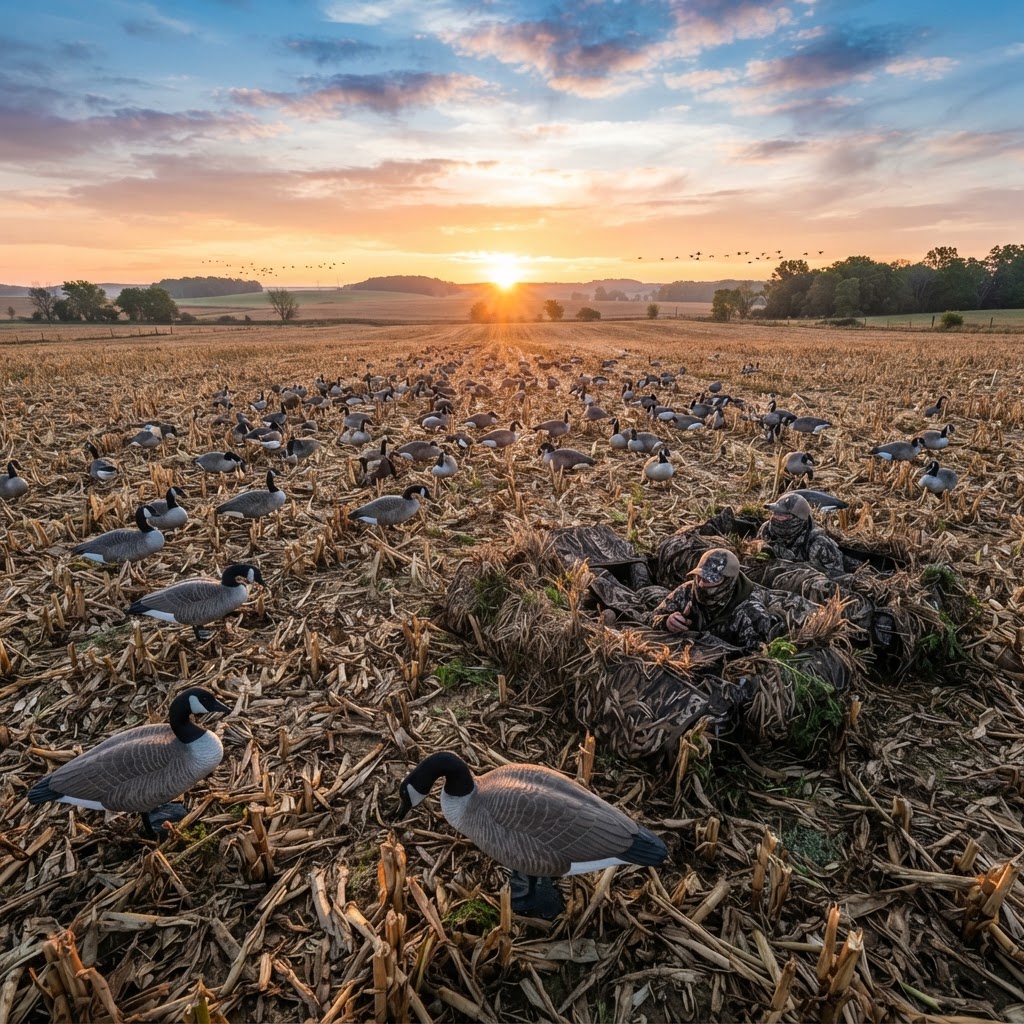
The Science of Field Success
Canada geese are arguably the most challenging waterfowl to decoy consistently. Unlike ducks that may commit on a whim, mature Canadas are highly social, extremely wary, and possess eyesight that can pick out a misplaced shadow from half a mile away. Success in the field is rarely an accident; it is the culmination of scouting, understanding weather patterns, and surgical setup precision. Whether you are hunting the early resident season or chasing late-season migrators, the Buckeye Hunter Hub philosophy is simple: go where the birds want to be, and be invisible when they arrive.
Free hunting map, zones & 50-state resources
Save your spots, share zones with your group, and get deer & waterfowl movement forecasts — free.
Reading the Weather and Migration
Waterfowl behavior is dictated by the sky. As hunters, we look for the "Goldilocks" zone of weather: wind speeds between 10 and 20 mph, overcast skies, and a drop in barometric pressure. Geese hate calm, bluebird days; they feel exposed and see movement too easily. When a cold front pushes through, the sudden change in pressure triggers a massive urge to feed, creating the perfect window for field hunters. Before you head out, check our to see how local pressure systems are impacting flight activity. If you aren't sure which subspecies you are tracking, refer to our to better understand the flock dynamics you're facing.
Scouting: The Foundation
No decoy spread in the world can compensate for a bad location. You must be on the 'X'—the specific field where the geese fed the night before or are currently loafing. Spend the late afternoon glassing fields. Look for birds feeding actively, not just resting on water. Once you find the birds, do not push them. Mark the location, check the wind forecast for the next morning, and secure permission if you haven't already. If you struggle to find access, our guide to can help you navigate local land-use regulations and public field opportunities.
The Art of the Spread
Many hunters fall into the trap of overcomplicating their spread. While having the right equipment is important, the layout is what matters. Use our to visualize how different wind directions dictate your hole. For most field hunts, a 'U' or 'V' shape is standard, pointing into the wind, with the landing zone—the 'hole'—centered at the base.
Washington · E-Tag State

Washington Harvest Tags
E-check means you supply the tag. Printed with the exact fields Washington requires.
3-pack $22.95
Motion is the missing piece for many hunters. Even on a windy day, a static spread looks like a photograph. You need movement. Use flaggers to simulate wing beats when birds are at a distance, and consider spinning-wing decoys or motion-stakes to add life to the landing zone. Remember, Canada geese approach the landing zone directly; if your decoys are too dense, the birds will see the lack of landing space and flair.
Concealment: The Final Frontier
If the geese see you before they see the decoys, you’ve already lost. Low-profile layout blinds are the industry standard, but they are only as effective as their camouflage. You must mud or paint your blind to match the field, and then brush it in heavily. Use the actual stubble from the field you are hunting. If you are in a harvested corn field, use corn stalks; in wheat, use wheat straw.
Raise a safe, confident young hunter.
Guide your kids ages 5–17 through interactive hunting safety missions, real decision drills, and earned trophies — all from one free parent account.




Avoid 'bunker' syndrome. If your blind looks like a square lump on a flat field, the geese will spot it. Break up the hard edges of your blind with local vegetation and keep your face covered. Never look up until the captain calls the shot. Movement is the primary cause of spooked geese—when the birds are working, keep your head down and trust your calling.
Calling to the Flock
Calling should be used to get their attention and guide them into the pocket, not to 'talk' them down until they land. A series of deep, guttural clucks and double-clucks can simulate a feeding flock. As they get closer, transition to softer 'murmurs' and feeding chatter. If the birds are working well, stop calling entirely. Let them finish their approach on their own terms. If you want to refine your technique, check the resources available through where local experts often host calling clinics and field days.
Putting It All Together
Field hunting is a game of adjustments. If the birds aren't working, check your concealment, change your calling volume, or move your landing zone. Always stay current on the to ensure you are targeting the specific species permitted in your zone. Every hunt is a learning experience, and by treating each day in the field as an opportunity to study waterfowl behavior, you will become a more effective hunter. Persistence, scouting, and a commitment to stealth are the hallmarks of every successful waterfowler.
Join 349 hunters and anglers on Buckeye Hunter Hub — free.
Latest from the Community


New drop
Fresh Buckeye Hunter Hub tees & hoodies


Everything you need to hunt smarter — free
Buckeye Hunter Hub is a free, nationwide platform. Create an account and unlock the full toolkit:
Free Interactive Hunting Map
Mark stands, cameras, and sign. Draw hunting zones with public land & county overlays across all 50 states.
Zones with Group Sharing
Share zones with your hunting group, split property into sections, assign stands, and check in — all in one place.
50 States of Hunting Resources
Season dates, license links, and DNR regulations for every state, kept current so you never miss an opener.
Deer Movement Forecast
Data-driven daily movement predictions using wind, moon, and pressure — know when to sit before you go.
Waterfowl Movement & Tools
Flight-potential forecasts, migration numbers, decoy spread planner, and a full species field guide.
From the Maker Bench

Taggart Outdoors
Padded Rifle Sling
Hand-built in the USA · $134.99
Shop the MakerNew drop
Fresh Buckeye Hunter Hub tees & hoodies
Shop This

StopBox Pro Ward | Wall-Mounted
$179.00$199.99

StopBox Pro Compact
$159.00$179.99

Buckeye Hunter Hub Tee — Riding Shotgun
$20.55

Buckeye Hunter Hub Hoodie — Riding Shotgun
$32.87
E-Tag States

Harvest Tags
E-check means you supply the tag. Printed with the exact fields your state requires.
3-pack $22.95
More Articles
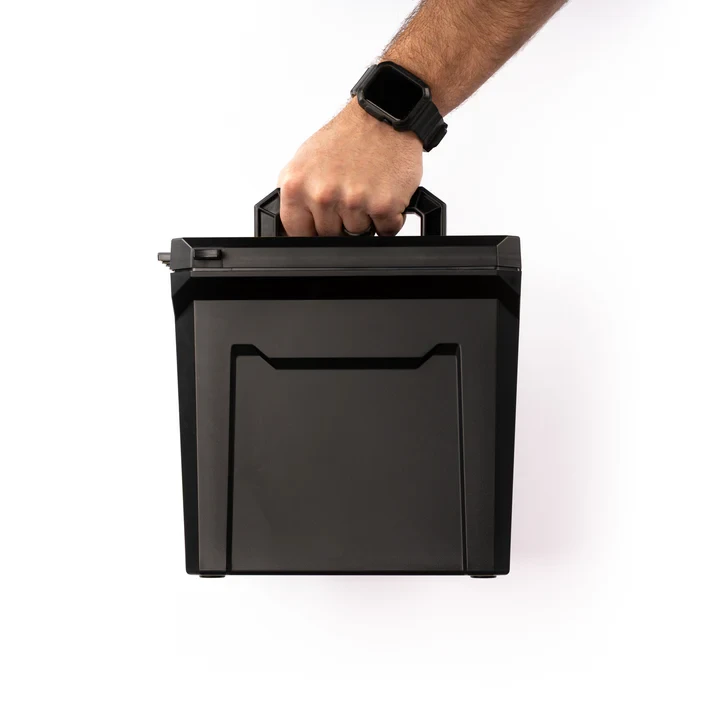
StopBox U-Can Review: The Ultimate Gear Organizer for Hunters
We take a deep dive into the rugged StopBox U-Can to see if this American-made utility case is the right solution for organizing your range and hunting gear.
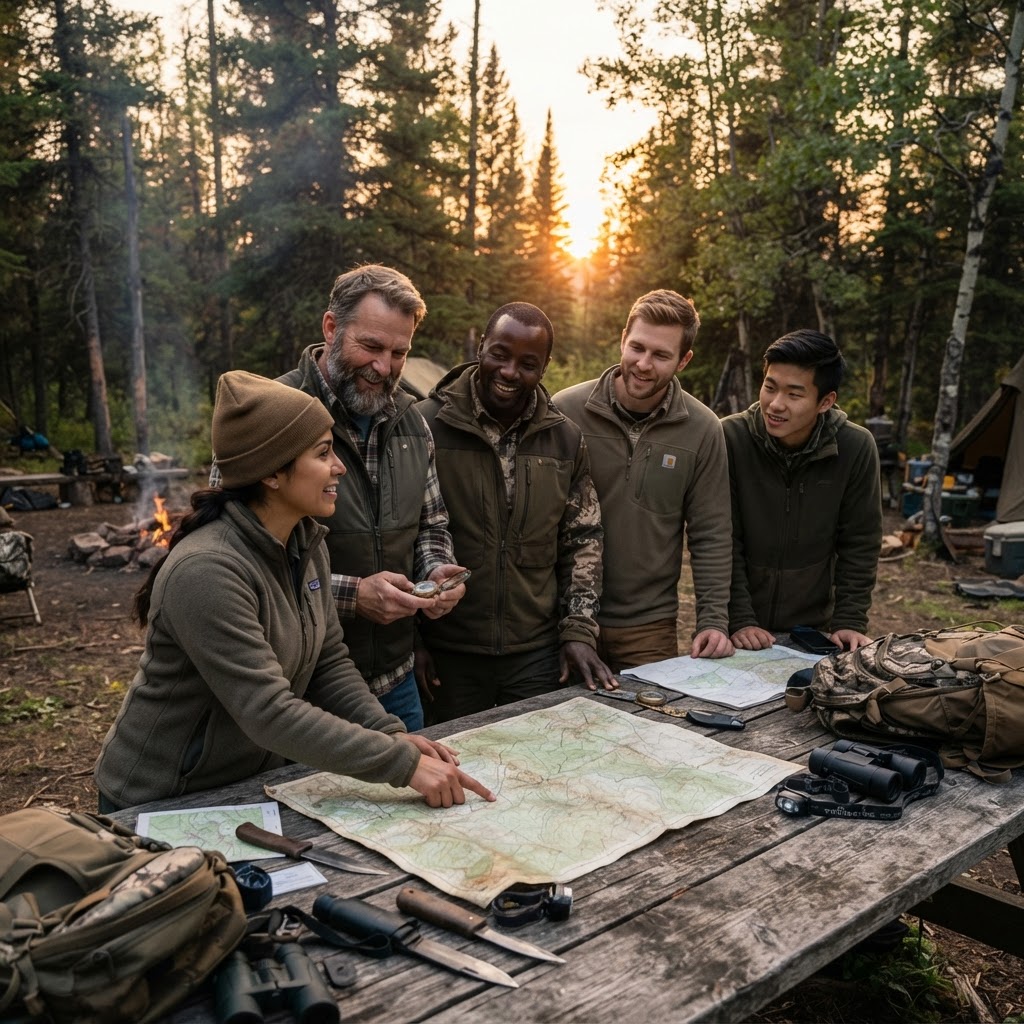
Finding Your Tribe: Maximizing the Value of Online Hunting Networks
The modern hunter isn't a solitary figure in the woods; they are part of a vast, connected community. Learn how to leverage the Buckeye Hunter Hub groups to sharpen your skills, share success, and build lasting bonds.

Elk Hunting in the Book Cliffs: Lessons Learned
Hunting the rugged Book Cliffs is a true test of endurance. Learn how navigating terrain and recovery challenges can improve your future elk hunts.
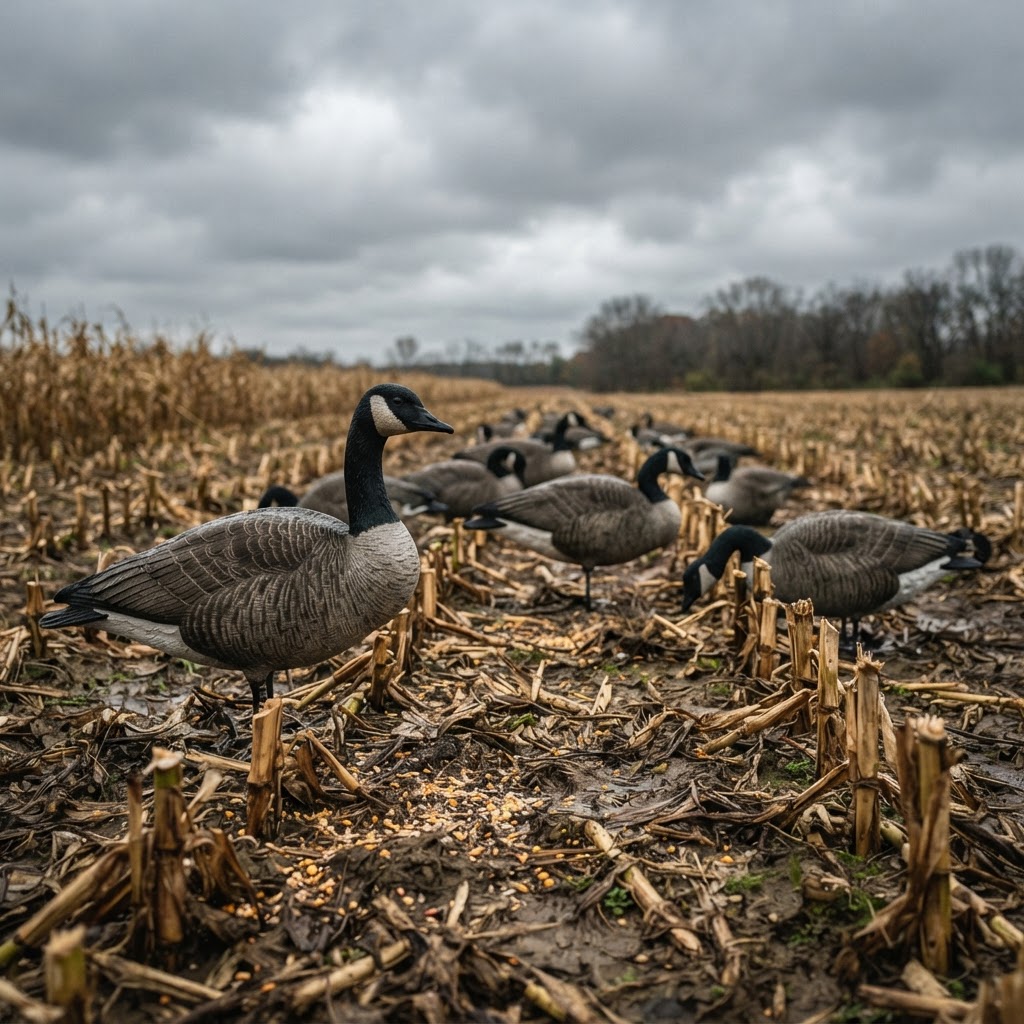
Honker Tactics: Engineering the Perfect Dry Field Setup
Turn more scouting hours into successful retrieves by mastering the specific dynamics of wind, movement, and concealment in the late-season goose field.