
Decoding the Woods: A Hunter’s Guide to Interpreting Deer Sign
Introduction to Forest Literacy
Every successful hunt begins long before the season opener, during those quiet hours spent walking the timber. To the untrained eye, a forest is simply a collection of trees and brush. To the seasoned hunter, it is a dynamic, living document written in the language of rubs, scrapes, and beds. Learning to read this sign is the difference between hoping for a chance encounter and executing a calculated strategy. At Buckeye Hunter Hub, we believe that understanding the nuances of deer behavior is the most powerful tool in your arsenal.
Get the deer movement forecast for your spot, free
See the best days and hours to sit this week, built from your spot's weather, moon, and wind.
The Anatomy of the Rub
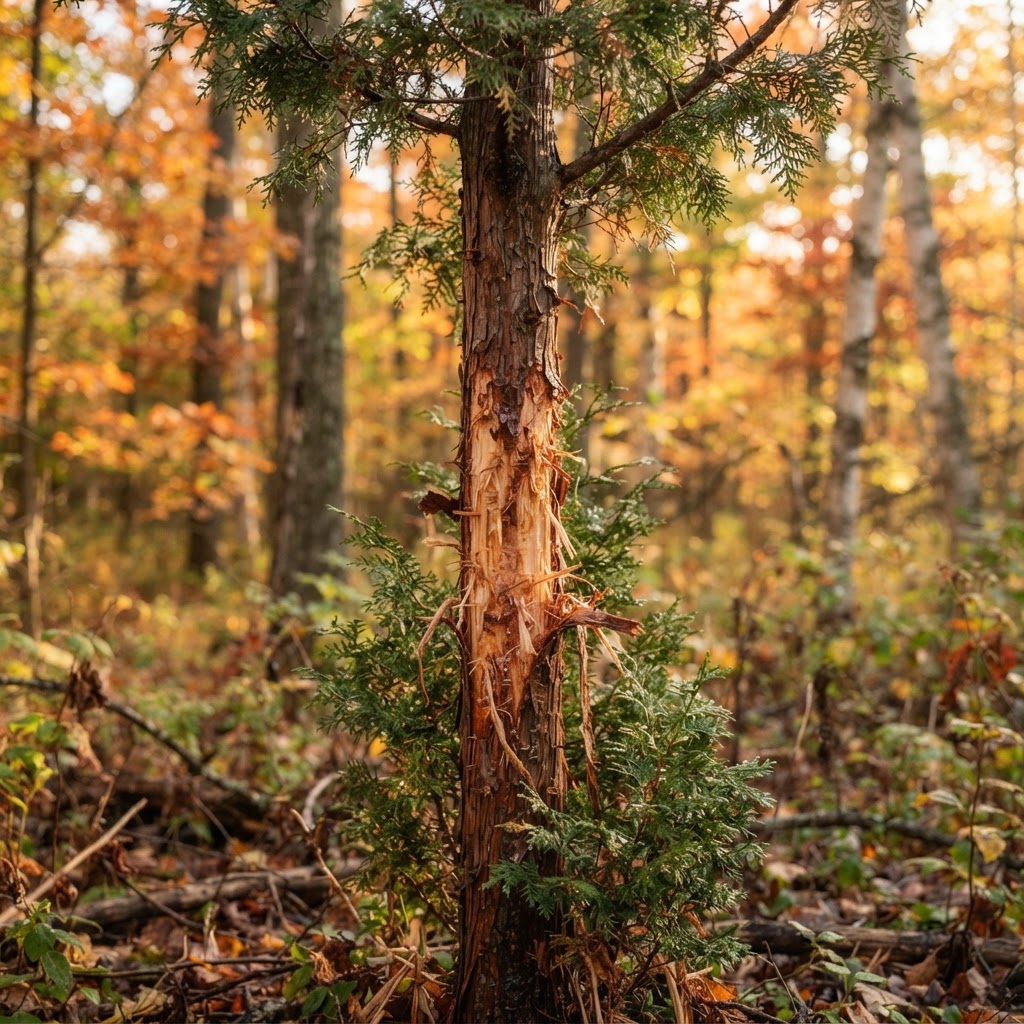
Many hunters overlook small rubs, dismissing them as the work of immature bucks. However, a rub is more than just a tree marked by velvet-shedding frustration; it is a vital communication post. When a buck works a tree, he is leaving his scent and visual confirmation of his presence in the area.
Focus on the frequency and the diameter of the trees. A series of rubs in a straight line often indicates a buck’s travel corridor between bedding and feeding areas. If you find multiple, high-traffic rubs in a dense thicket, you have likely identified a primary transit zone. Before you set your stand, consider utilizing to confirm which hours of the day the buck is actually frequenting that rub. Often, these are nocturnal indicators, and moving your position slightly closer to the core bedding area can make all the difference.
Deciphering the Scrape Line
Scrapes are the most misunderstood sign in the woods. Many hunters rush to sit over the first large, dirt-cleared circle they find, only to watch it go cold for days. A scrape is a social hub, a place where deer leave scent through their forehead glands and hoof secretions.

To hunt them effectively, you must distinguish between a ‘fringe’ scrape and a ‘primary’ scrape. Fringe scrapes are often one-offs made randomly. Primary, or community, scrapes are maintained throughout the season and are usually found under a 'licking branch.' This branch is the key; it holds the scent of every deer that visits. If the licking branch is broken or missing, the scrape is likely losing its appeal. When you identify an active primary scrape, check it against to see if the timing aligns with peak rutting activity in your specific region.
Finding the Bedroom
Bedding areas are the true sanctuary. The biggest mistake hunters make is bumping deer from these zones, which ruins the local pattern for weeks. A bed is easily identified by the oval-shaped depression in the leaves or grass. The best beds are typically found on terrain features that provide a tactical advantage: high points, benches on steep hillsides, or dense, impenetrable cover that allows the deer to smell danger coming from downwind.
BHH Partner
Thinking about selling a rifle or an old family shotgun? Check up-to-date market pricing by make and model before you sell.
webuyguns.comWhen scouting, avoid walking through the middle of high-probability bedding cover. Instead, use optics from a distance or look for peripheral sign—trails leading into the cover, droppings, and the occasional displaced branch. If you are struggling to identify the high-traffic corridors leading to these beds, can help you visualize the ridges and creek bottoms that naturally funnel deer movement toward their preferred daytime retreats.
Connecting the Dots: Building a Seasonal Strategy
Sign is rarely static. What works in early October will be useless by the time the rut hits in November. Early in the season, focus on food sources like mast or agriculture. As the rut approaches, shift your attention to the travel corridors between bedding areas. In the post-rut, focus on the heaviest thermal cover available, where deer are conserve energy to survive the winter chill.
E-Tag States

Harvest Tags
E-check means you supply the tag. Printed with the exact fields your state requires.
3-pack $22.95

Youth Hunter Academy
Raise a safe, confident young hunter.
Safety missions for ages 5–17. Free parent account.
Always document what you find. Whether you use a digital app or a physical notebook, keeping track of where you found specific signs helps you build a yearly pattern. You can even compare your findings with other hunters by checking to see what others are reporting in similar habitat types. Remember, no two seasons are exactly alike, and staying adaptable is a core principle of the modern sportsman.
Ethics and Conservation
Reading sign is also an exercise in land stewardship. By learning the subtle patterns of the local herd, you become a more efficient hunter, taking higher-percentage shots and reducing the stress you put on the local population. Always respect the land you hunt, and if you are ever unsure about regulations regarding scouting or stand placement on public property, consult your to ensure you remain fully compliant.
Ultimately, the woods are constantly talking to you. Whether it is a frayed cedar limb or a well-worn path through the tall grass, these signs are the breadcrumbs that lead to a successful harvest. Slow down, observe, and learn the story your local deer herd is telling. The more you understand their routine, the more you become a part of the landscape rather than an intruder in it.
Join 1,060 hunters and anglers on Buckeye Hunter Hub — free.
Latest from the Community


Preorder · 5 days left
Buckeye Hunter Hub Camo Trucker Hat — Treeline Logo
Includes 50% off Lifetime Pro
Everything you need to hunt smarter — free
Buckeye Hunter Hub is a free, nationwide platform. Create an account and unlock the full toolkit:
Free Interactive Hunting Map
Mark stands, cameras, and sign. Draw hunting zones with public land & county overlays across all 50 states.
Zones with Group Sharing
Share zones with your hunting group, split property into sections, assign stands, and check in — all in one place.
50 States of Hunting Resources
Season dates, license links, and DNR regulations for every state, kept current so you never miss an opener.
Deer Movement Forecast
Data-driven daily movement predictions using wind, moon, and pressure — know when to sit before you go.
Waterfowl Movement & Tools
Flight-potential forecasts, migration numbers, decoy spread planner, and a full species field guide.
From the Maker Bench

SE Ohio Outdoors
Euro Mount Hook
Hand-built in the USA · $8.00
Shop the MakerBHH Partner
Thinking about selling a rifle or an old family shotgun? Check up-to-date market pricing by make and model before you sell.
webuyguns.comE-Tag States
Harvest Tags
E-check means you supply the tag. Printed with the exact fields your state requires.
3-pack $22.95
More Articles

Travel Secure: Why You Need a StopBox for Your Vehicle
Hunting and traveling require gear security you can count on. Learn how the StopBox lineup keeps your firearm ready and protected on the road.

Profitability and Protection: Expanding Your Retail Inventory with the Buckeye Hunter Hub Wholesale Program
Buckeye Hunter Hub is now offering an exclusive wholesale partnership for firearm retailers to stock industry-leading StopBox secure storage solutions, helping you protect your customers while growing your bottom line.
Unlocking Patterns: How to Use AI Photo Recognition for Whitetail Scouting
Tired of sorting through thousands of empty trail camera photos? Learn how to let AI filter your images so you can focus on the deer that actually matter.

Field to Table: Mastering the Slow-Roasted Black Bear
Transforming a black bear roast into a tender, succulent masterpiece is all about temperature control and patience. Learn the secrets to preparing this rich, flavorful harvest.