Best Barometric Pressure for Deer Hunting: What the Data Really Says
The Science of Barometric Pressure and Whitetails
For decades, hunters have obsessed over the barometer. The prevailing wisdom suggests that a falling barometer signals an incoming front and, consequently, a frenzy of deer movement. But does the data actually support this, or is it a classic case of correlation versus causation? At Buckeye Hunter Hub, we believe in stripping away the folklore to understand . When we analyze peer-reviewed telemetry studies involving GPS-collared whitetails, the truth reveals that barometric pressure is not a standalone predictor, but rather a vital component of a much larger metabolic equation.
Free hunting map, zones & 50-state resources
Save your spots, share zones with your group, and get deer & waterfowl movement forecasts — free.
Understanding the Barometric Driver
Barometric pressure measures the weight of the atmosphere pressing down on the earth. Deer are acutely sensitive to these changes because they lack the ability to thermoregulate as efficiently as humans. High-pressure systems—typically characterized by clear skies and stable air—often result in lethargic behavior during daylight hours, as deer retreat to thermal cover to conserve energy. Conversely, as a low-pressure system approaches, the atmospheric weight drops. In meteorology, this is the precursor to a weather shift—wind, precipitation, or temperature changes. Deer move because they anticipate these shifts, prioritizing feeding before the storm arrives.
The 'Falling Pressure' Phenomenon
Data indicates that the most significant increase in buck movement occurs during the 12 to 24-hour window preceding a significant barometric drop. This is an evolutionary survival mechanism. If a cold front is pushing in, the deer know they need to maximize caloric intake before the storm stalls their movement for the next 48 hours. If you are tracking patterns on your own acreage, comparing your sightings to our can help you visualize how these localized pressure trends align with your stand locations.
The Hierarchy of Movement Drivers
If barometric pressure is a factor, where does it rank in the grand scheme? When we look at long-term tracking data, the hierarchy of movement drivers is clear:
E-Tag States

Harvest Tags
E-check means you supply the tag. Printed with the exact fields your state requires.
3-pack $22.95
- Photoperiod (Day Length): This is the ultimate master, driving the biological clock of the rut.
- Temperature Swings: Whitetails are comfort seekers. A sharp 15-20 degree drop in temperature within a 24-hour window will almost always trigger more movement than a change in air pressure alone.
- Barometric Pressure: A secondary trigger that signals incoming weather shifts.
- Moon Phase: Contrary to popular hunting camp legend, telemetry data repeatedly shows that moon phase has a negligible impact on daytime deer movement. While it may influence nocturnal activity, it is a weak driver compared to the immediate physical threat of a changing weather front.
Actionable Thresholds for the Modern Hunter
To move from casual observation to data-driven strategy, you need concrete thresholds. Aim to be in the stand when the barometric pressure is between 29.90 and 30.10 inches of mercury while on a steady downward trend. If the barometer reads 30.30 or higher and is rising, expect deer to remain in heavy cover until the evening cooling period.
Raise a safe, confident young hunter.
Guide your kids ages 5–17 through interactive hunting safety missions, real decision drills, and earned trophies — all from one free parent account.
Bonus: every $10 you spend in the BHH shop earns a free seat (up to 5). Use them or share them.



It is also critical to understand that the movement spike associated with a drop in pressure is often cut short by the storm itself. Once the front has passed and the barometer stabilizes at a lower level—often accompanied by high winds—movement will cease. The 'sweet spot' is the approach, not the aftermath. If you are planning your hunts based on the calendar, verify your strategy against to ensure you aren't ignoring seasonal biological needs in favor of short-term weather chasing.
Integrating Weather Data into Your Scouting
Successful hunting is about managing variables you can control. While you cannot change the weather, you can choose your entry and exit routes to minimize your pressure on the herd during those high-activity windows. If the barometer suggests a major push is coming, prioritize your best interior stands rather than perimeter setups. Use the data to validate your hunch, but keep your fundamentals sound.
For those interested in how these regional trends impact broader wildlife patterns, many state wildlife agencies, such as the Ohio Department of Natural Resources, provide excellent resources on local habitat trends that complement your atmospheric data. Remember, a barometer is just one tool in your kit. By combining environmental pressure data with an understanding of deer biology, you turn from a reactive hunter into a proactive strategist. Keep observing, keep logging your data, and rely on the biological facts over the myths of the moon.
Join 405 hunters and anglers on Buckeye Hunter Hub — free.
Latest from the Community


New drop
Fresh Buckeye Hunter Hub tees & hoodies


Everything you need to hunt smarter — free
Buckeye Hunter Hub is a free, nationwide platform. Create an account and unlock the full toolkit:
Free Interactive Hunting Map
Mark stands, cameras, and sign. Draw hunting zones with public land & county overlays across all 50 states.
Zones with Group Sharing
Share zones with your hunting group, split property into sections, assign stands, and check in — all in one place.
50 States of Hunting Resources
Season dates, license links, and DNR regulations for every state, kept current so you never miss an opener.
Deer Movement Forecast
Data-driven daily movement predictions using wind, moon, and pressure — know when to sit before you go.
Waterfowl Movement & Tools
Flight-potential forecasts, migration numbers, decoy spread planner, and a full species field guide.
From the Maker Bench

Taggart Outdoors
Padded Rifle Sling
Hand-built in the USA · $134.99
Shop the MakerNew drop
Fresh Buckeye Hunter Hub tees & hoodies
Shop This

StopBox Pro Ward | Wall-Mounted
$179.00$199.99

StopBox Pro Compact
$159.00$179.99

Buckeye Hunter Hub Tee — Two Kinds of Camo Shield
$20.55

BHH Grit Whitetail Tee
$20.55
E-Tag States
Harvest Tags
E-check means you supply the tag. Printed with the exact fields your state requires.
3-pack $22.95
More Articles
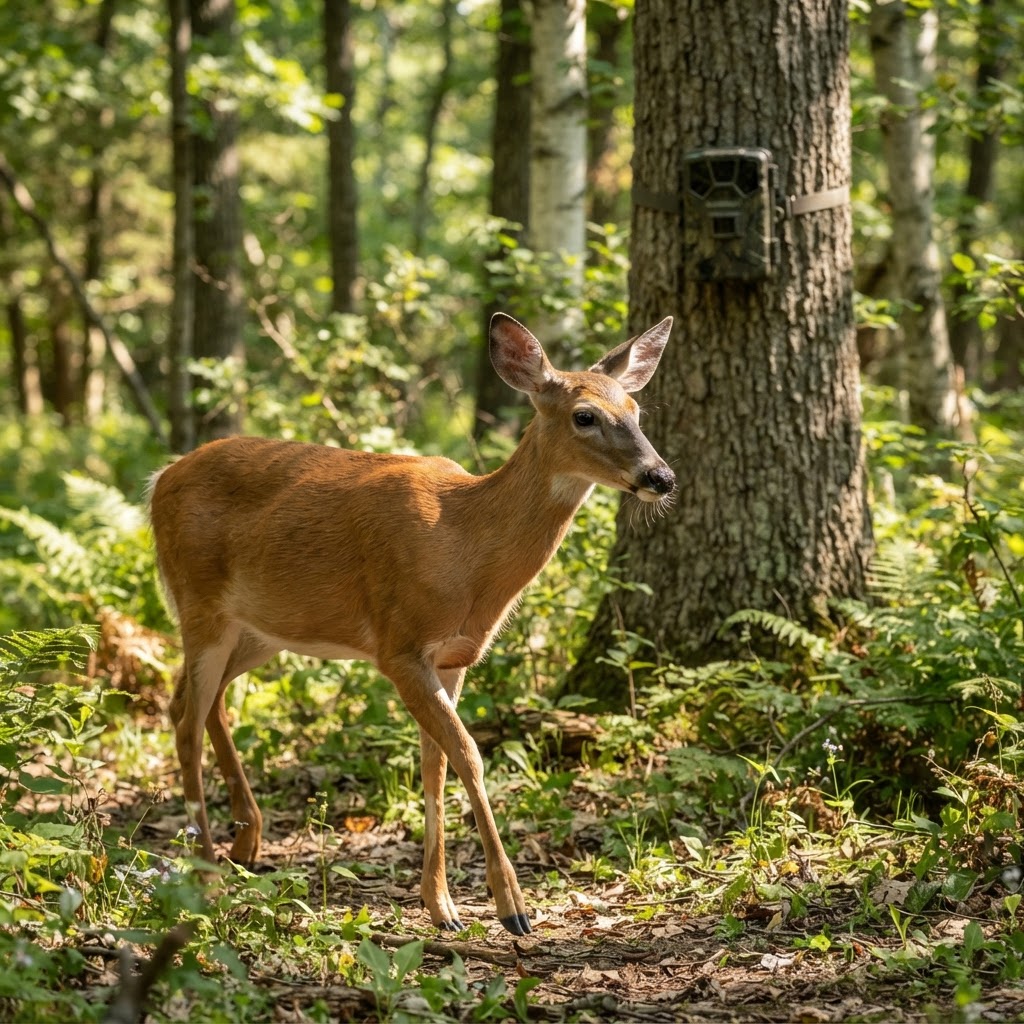
Unlocking Your Trail Cam Data: Identifying Patterns with Artificial Intelligence
Tired of sorting through thousands of blank trail camera photos? Discover how AI-powered analysis turns those snapshots into a clear picture of buck and doe movement.

Introducing the Feet Down Hoodie: Built for the Blind and Beyond
Gear up for your next waterfowl hunt with our new heavy blend hoodie, designed for durability in the timber and style at the boat ramp.

Unveiling the Woodie: Represent the Outdoors with the New BHH Hoodie
Meet the new Buckeye Hunter Hub Hoodie — Woodie, the perfect blend of comfort and passion for hunters and anglers who live for time in the blind or on the water.

Introducing the Buckeye Hunter Hub Hoodie — Blowup: Gear Up for the Season
Capture the adrenaline of the perfect topwater strike with our new Buckeye Hunter Hub Hoodie — Blowup, the ultimate addition to your outdoor wardrobe.