
GEAR
The Best Archery Gear for Early Season Bow Hunting
Prepare for the heat and potential gear failure with our curated list of essential equipment for the September archery opener.
Buckeye Hunter Hub Magazine · Issue No. 2 · September 2026 · 2026-09-01
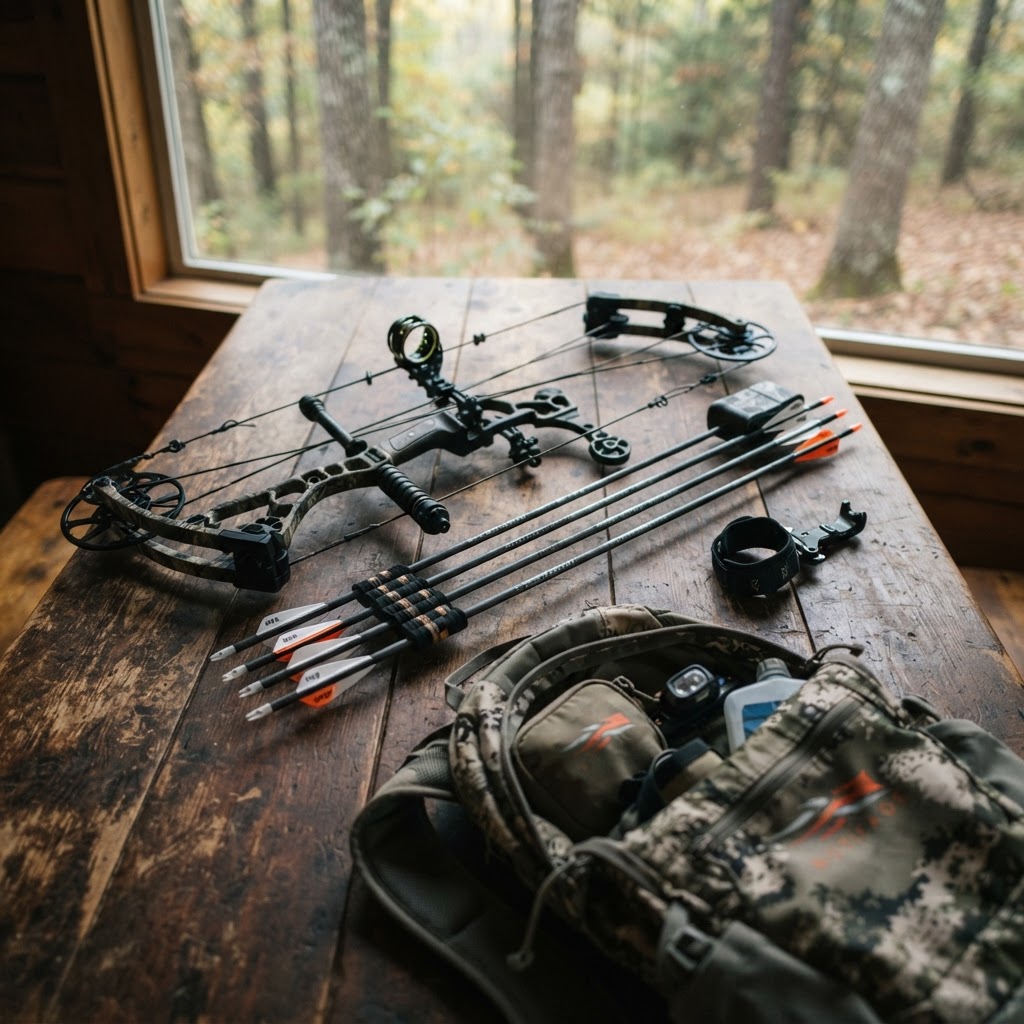
The mercury is flirting with ninety degrees, the mosquitoes are relentless, and the velvet is still peeling from the buck’s antlers in the shadows of the timber. For the experienced bowhunter, this isn't just late summer; it is the critical window for gear refinement before the September opener. If you approach the woods with the same setup you carried in the freezing temperatures of late November, you are setting yourself up for failure. Success in the early season demands a complete pivot in strategy, hardware, and physiology. Before you head into the field, consult the hunting season calendar to confirm that your specific tag dates align with your local wildlife agency's mandates. ## Why is moisture-wicking hunting clothing essential for early-season archery? The primary enemy of the September hunter is sweat. When the humidity hangs heavy in the canopy, thermal regulation becomes a tactical priority. If your gear doesn't breathe, you will be soaked before you even reach your stand, and that moisture is a neon sign for every whitetail in the bedding area. Modern high-performance hunting clothing for hot weather relies on synthetic, hydrophobic fibers that pull perspiration away from the skin and accelerate evaporation. Look for gear that utilizes high-ventilation mesh panels in high-heat zones like the underarms and upper back. More importantly, prioritize clothing treated with silver-ion or similar antimicrobial agents to inhibit bacterial growth. It isn't just about smell; it is about keeping your core temperature manageable so you can remain still for the four-hour vigils required for early-season setups. Use hunt mapping and wind tools to determine which stand locations will keep you in the shade during the afternoon transition, further reducing your physical exertion. ## How do I choose between fixed-blade and mechanical broadheads for early-season whitetails? Lethality in the early season is defined by rapid blood loss and internal trauma. When comparing the best broadheads for deer, the debate between fixed-blade and mechanical designs often ignores the most critical factor: your specific compound bow setup. Fixed-blade heads are the gold standard for structural integrity; they require no deployment mechanism and offer deep, bone-crushing penetration. If you are shooting a lower-poundage bow or seeking a confidence-inspiring exit wound on a quartering-away shot, a high-quality fixed blade is difficult to beat. Conversely, modern mechanical broadheads have evolved significantly, offering field-point accuracy that minimizes the need for drastic sight adjustments. Their primary advantage is the massive cutting diameter, which compensates for minor errors in shot placement during high-pressure moments. If you choose mechanicals, ensure your bow produces enough kinetic energy to guarantee full blade deployment upon impact. Regardless of your choice, spin-test every single arrow on a flat surface to check for broadhead wobble, which is a leading cause of flight instability at distances beyond 30 yards. ## What is the most reliable method for field-tuning a compound bow? A bow that was tuned in July may be fighting the effects of high humidity and heat-related string stretch by September. To ensure pinpoint accuracy, you must move beyond the paper tuner. First, verify your center shot; even a sixteenth-of-an-inch deviation will result in erratic flight as your broadheads act as steering vanes. After achieving bullet holes on paper, move to a walk-back tuning process. Shoot at 20, 30, and 40 yards at the same vertical line on your target. If your groups drift horizontally as distance increases, your rest is not perfectly aligned with your grip torque. Finally, practice from elevated positions. The angle of a treestand fundamentally changes your anchor point and the way your bow arm interacts with the riser. If you are preparing the next generation for the woods, introduce them to these fundamental tuning concepts through the BHH Youth Hunters Academy (/Partners/YouthHuntersAcademy) to ensure they are shooting equipment that fits their stature. ## How do I effectively manage scent in high-temperature conditions? Scents vaporize faster in the heat. A standard ozone generator or carbon-lined suit is often overwhelmed by the sheer volume of scent molecules produced by a sweating human in 80-degree weather. Your strategy must focus on a tiered approach. 1. Decontaminate your gear with unscented, UV-free detergents that do not leave behind synthetic brighteners. 2. Utilize field-safe, unscented personal care products—including soaps and anti-perspirants—starting at least 48 hours before you enter the woods. 3. Pay attention to the thermal updrafts caused by the afternoon sun hitting the forest floor; verify your plan against the deer movement forecast to understand how thermal shifts might push your scent into unexpected corridors. 4. Always pack your outer layers in an airtight, scent-proof bag and dress only once you have reached the immediate vicinity of your hunting area. ## Summary of Early-Season Success Strategies To ensure your gear is ready for the upcoming week, focus on these actionable steps: * Perform a final walk-back tune at 40 yards to eliminate horizontal drift. * Inspect every fletching on your arrows for adhesion failure caused by high summer temperatures. * Replace all worn string silencers and kisser buttons that may have dried out in the summer heat. * Cross-reference your selected stand sites with local state hunting regulations and seasons to ensure compliance regarding baiting or supplemental feeding in your zone. * Update your emergency contact list and confirm that your mobile device is synced with the latest reports on BHH Youth Hunters Academy. By the time the wind shifts and the leaves begin their inevitable drift toward the forest floor, the hunters who spent these first days of September meticulously adjusting their kit will be the ones who find success. The deer are predictable now, pinned to water sources and food edges, but that window closes as fast as the season opens. Your mission this week is simple: verify your accuracy, minimize your scent profile, and trust that your equipment is optimized for the specific challenges of the early season.