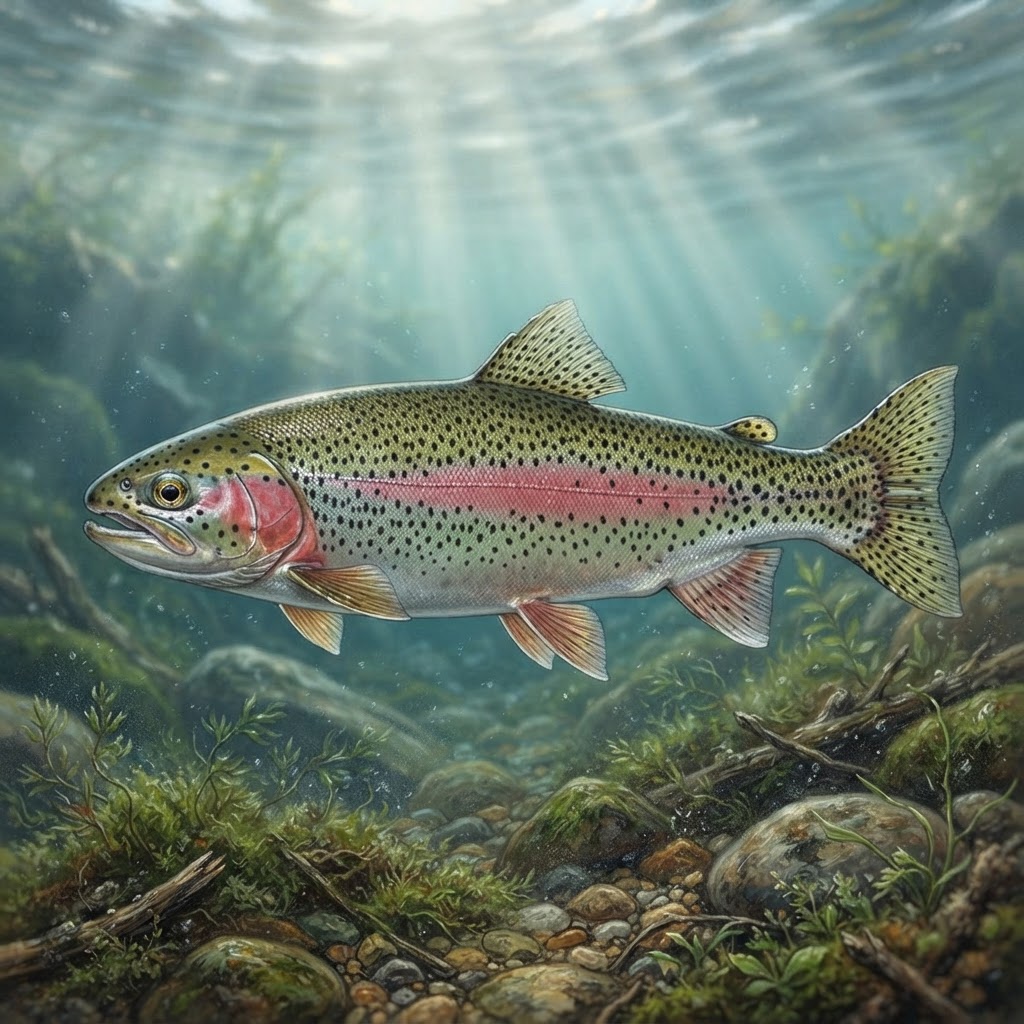
Rainbow Trout
Oncorhynchus mykiss
The acrobatic jewel of the mountain stream, famous for its blistering runs and spectacular aerial leaps.
Typical Size
1 to 5 pounds, though trophy specimens in large lakes can exceed 10+ pounds.
Prime Seasons
Spring and Fall are peak times, when water temperatures are optimal and insect hatches are most prolific.
Overview
Rainbow trout are the quintessential North American gamefish, prized by both fly anglers and spin fishermen for their willingness to strike and their tenacity on the line. Characterized by their stunning iridescent lateral stripes and black-spotted bodies, they thrive in clear, oxygen-rich waters across the continent.
Anglers target rainbows because they are aggressive, sight-oriented predators that fight harder pound-for-pound than almost any other freshwater fish. Whether you are stripping streamers in a high-mountain river or trolling lead-core line on a massive reservoir, the rainbow trout offers a challenging and rewarding experience for all skill levels.
Identification
- Prominent reddish-pink lateral stripe running from gill to tail
- Small black spots distributed across the back, dorsal fin, and caudal fin
- Silver-to-greenish base coloration, often with an olive back
- Streamlined, torpedo-shaped body designed for high-velocity currents
- White or silvery belly
Habitat
Diet & Forage
Behavior & Feeding
Rainbow trout are opportunistic feeders that primarily target aquatic insects, crustaceans, and small forage fish depending on the environment. They are most active during the low-light hours of dawn and dusk, though they remain aggressive throughout the day in oxygen-rich riffles. Seasonal movements are dictated by temperature, with fish seeking deeper, cooler pools during the heat of summer and moving toward faster current during the spring and fall. They are highly territorial when holding in feeding lanes and will aggressively defend their station against competition.
Spawning
Rainbow trout typically spawn in the spring, often triggered by warming water temperatures and increasing day length. They seek out clean, well-oxygenated gravel beds in stream riffles where females excavate a redd to deposit eggs. During this period, trout become highly focused on reproduction and are less interested in feeding, often ignoring traditional offerings. Anglers should exercise caution and avoid targeting spawning fish to protect the next generation and ensure the longevity of the population.
Water Temperature
Weather Triggers
Overcast Skies
Reduces shadows and provides cover, encouraging trout to move out of deep structure to feed more aggressively throughout the day.
Pre-Frontal Pressure Drop
Often triggers a 'feeding frenzy' where trout gorge themselves in anticipation of changing weather, making them highly receptive to streamers.
Bright Sun
Drives trout into deep pools or tight against cut banks, requiring anglers to use light tippets and longer, delicate casts to avoid spooking fish.
Depth by Season
Best Lure Rigs & Setups
Inline Spinner Rig
When: Versatile search bait for rivers and lakes.
Setup: 4-6lb monofilament, Panther Martin or Mepps size 0-2 spinner, snap swivel.
Float and Jig
When: Effective in slow-moving water or current eddies.
Setup: 6lb fluorocarbon leader, 1/32 to 1/8 oz marabou jig, fixed or slip bobber.
Trolling Spoon Spread
When: Targeting suspended fish in large reservoirs.
Setup: Lead-core line, 8lb fluorocarbon leader, small flutter spoon or needlefish, swivel.
Best Knots
Lures That Catch Rainbow Trout
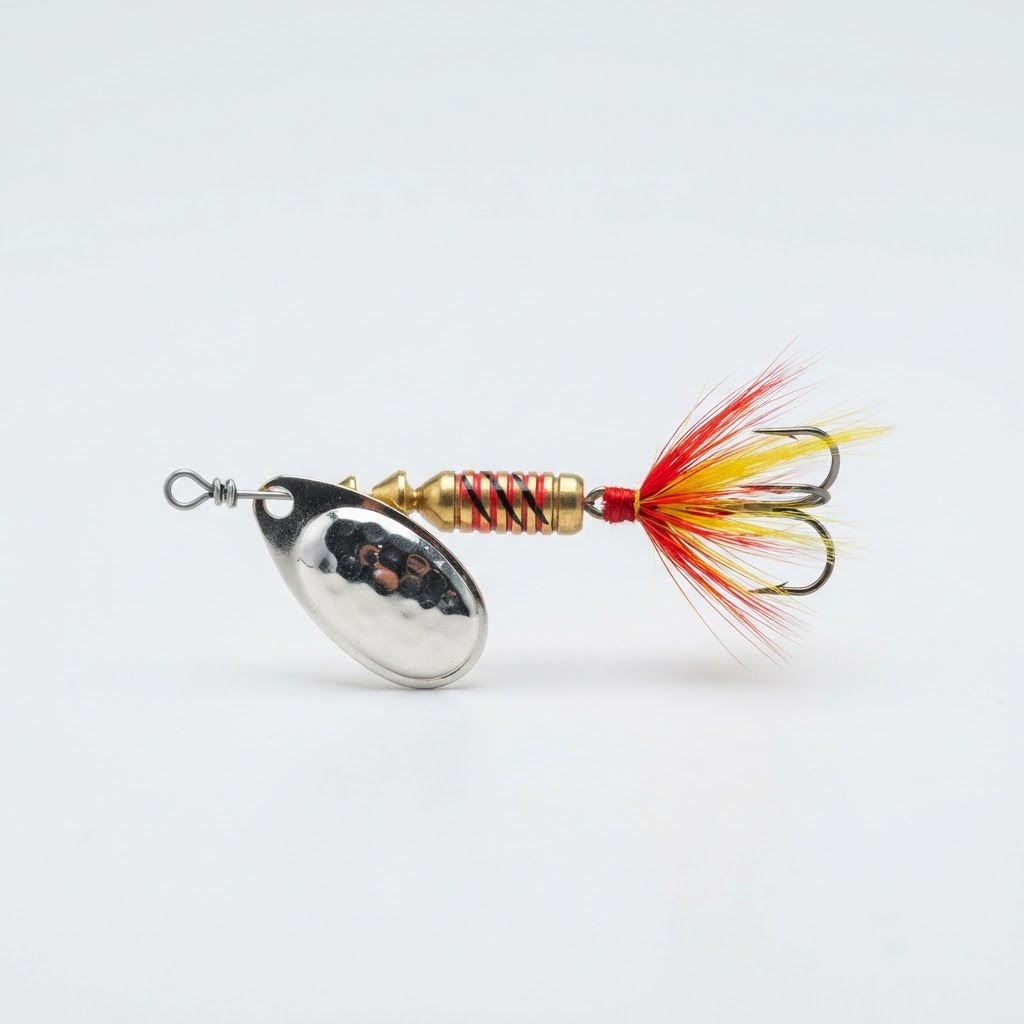 Spinner & Bladed
Inline Spinner
Simple, deadly flash for trout and panfish.
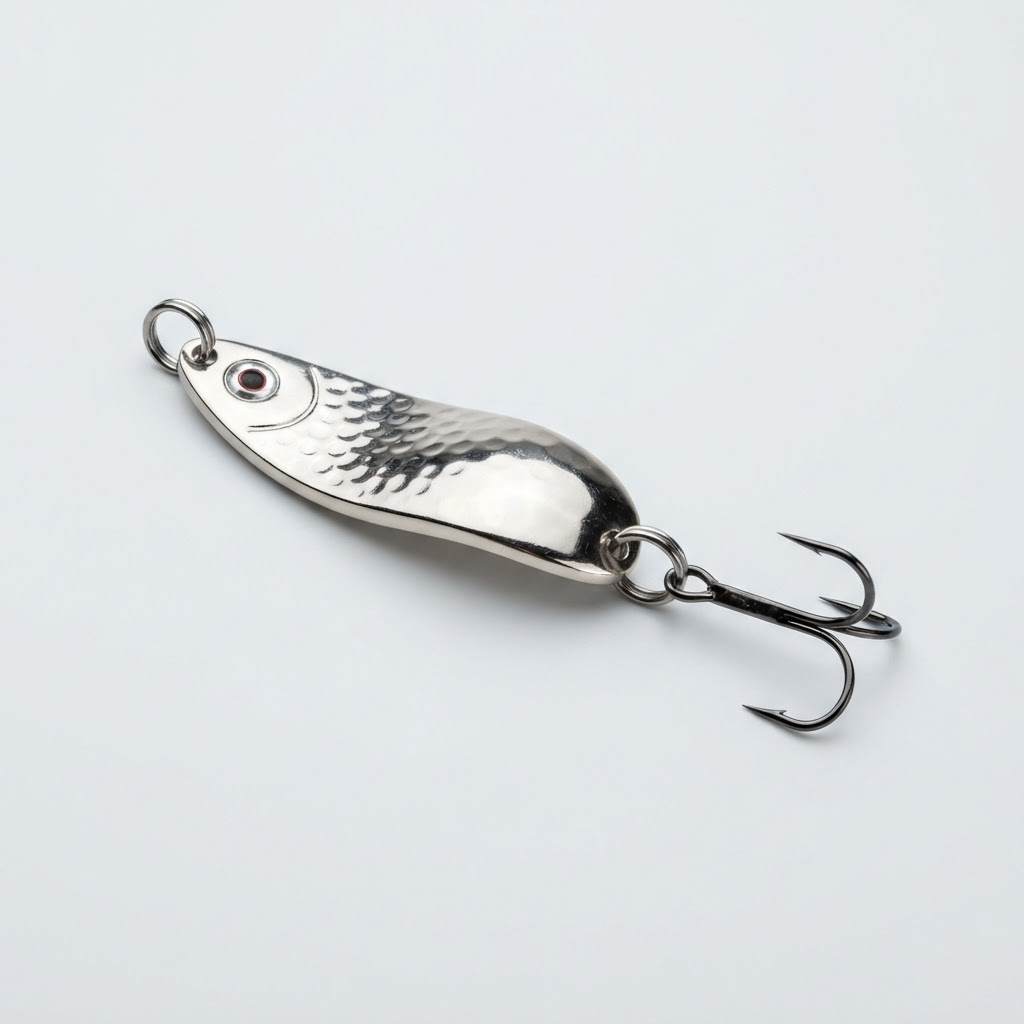 Spoons
Casting Spoon
Wobbling flash that fires up big fish.
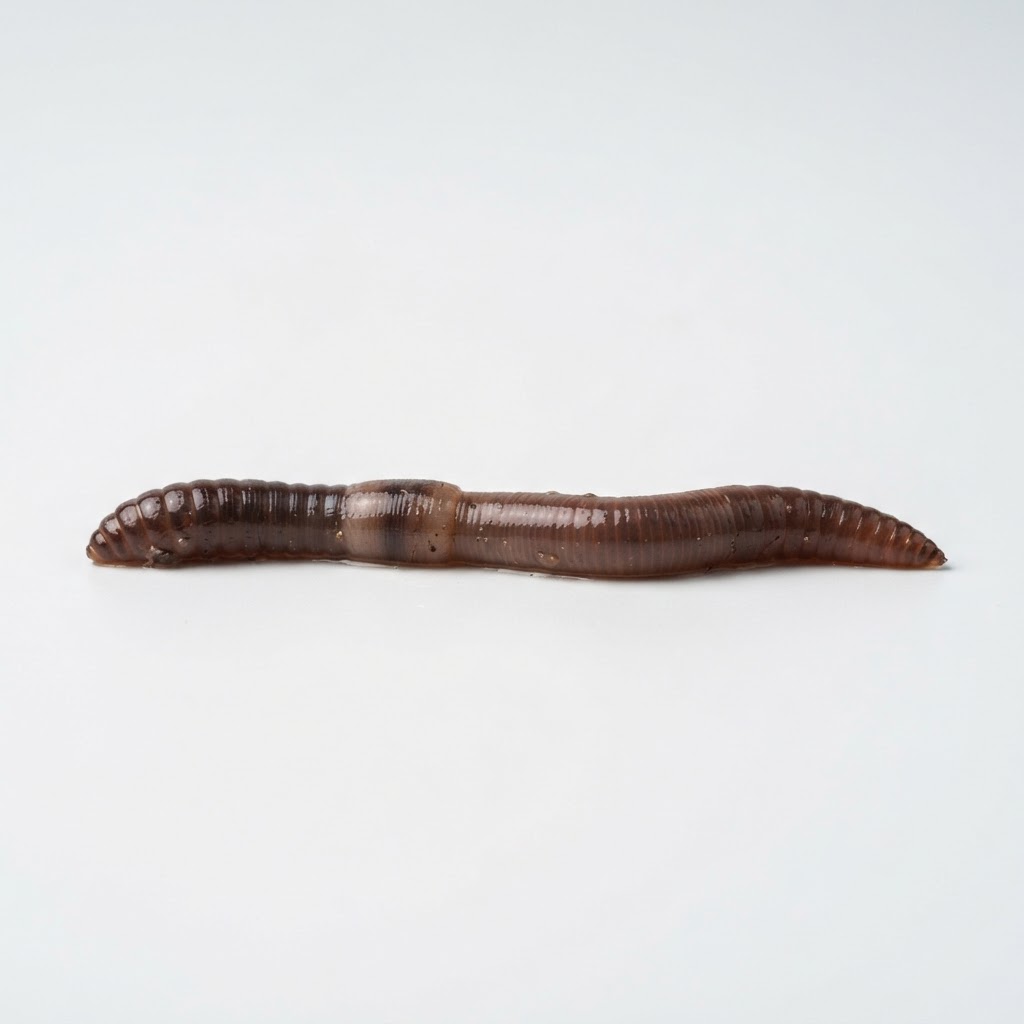 Live Bait
Nightcrawler
Nothing beats live worm for numbers.
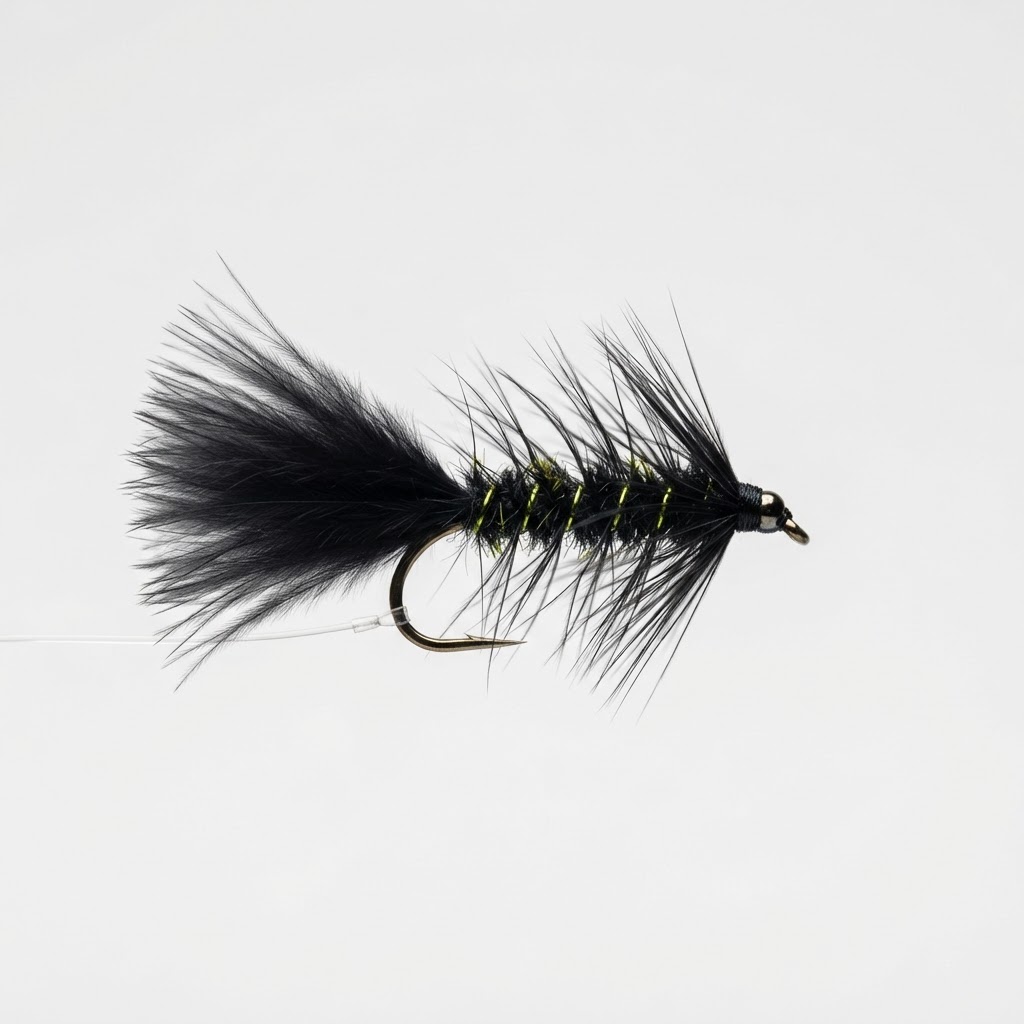 Flies
FliesWoolly Bugger
The most versatile fly ever tied.
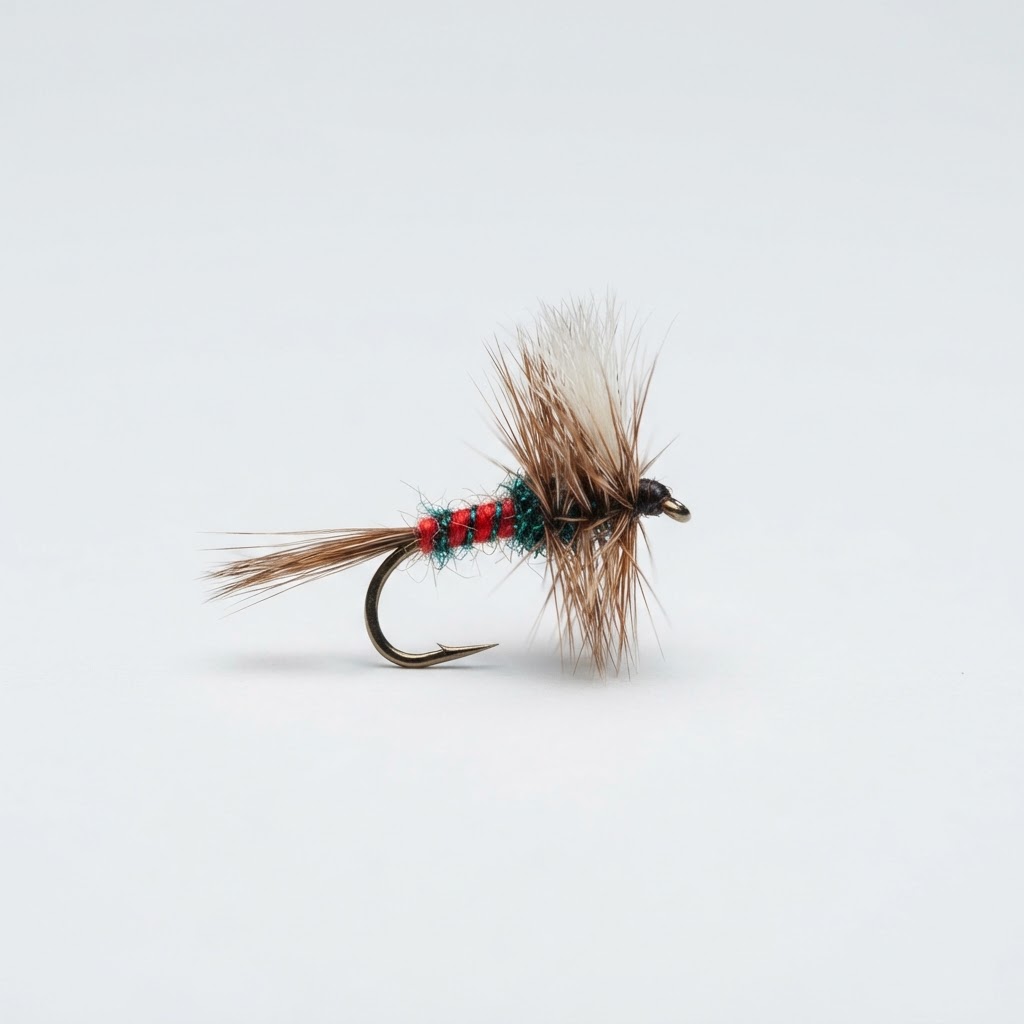 Flies
FliesDry Fly
Match the hatch for surface-feeding trout.
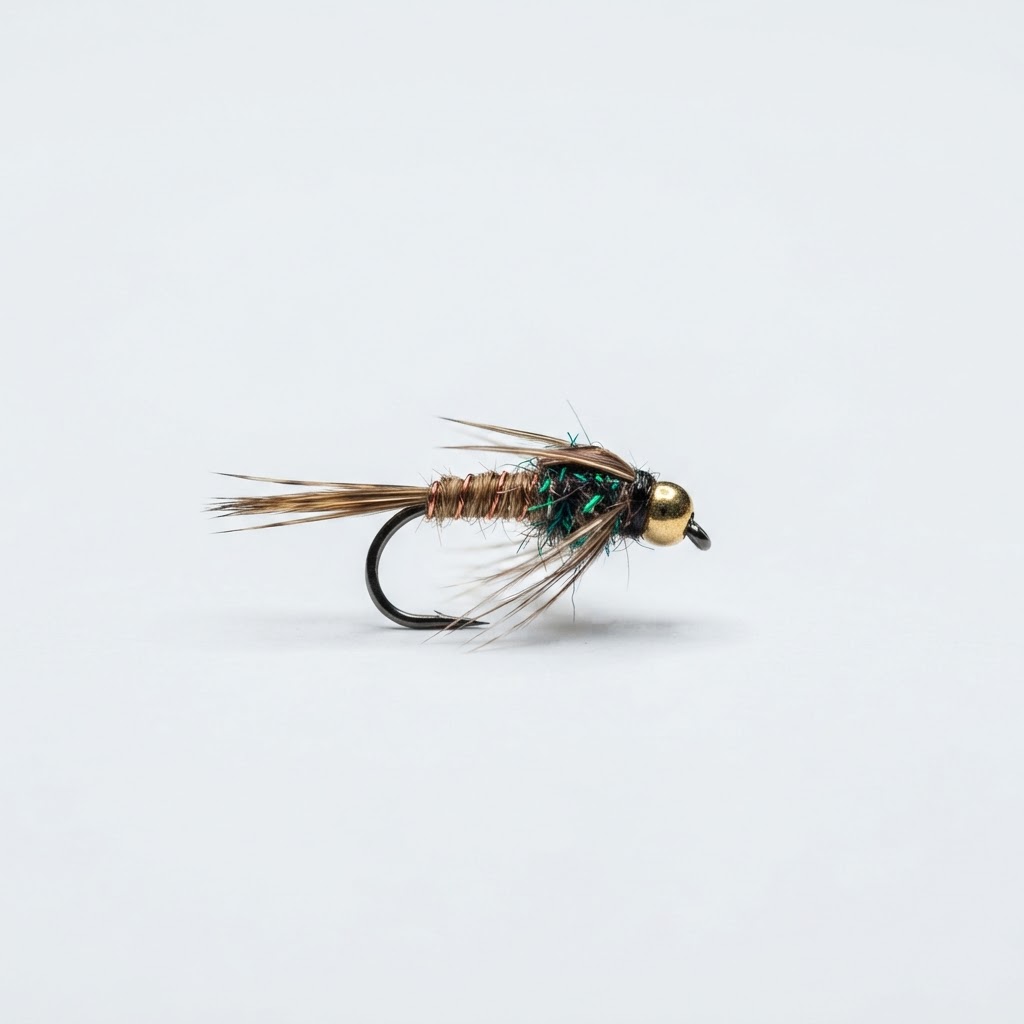 Flies
FliesNymph Fly
Subsurface trout food, drifted deep.
Rigs From The Library For Rainbow Trout
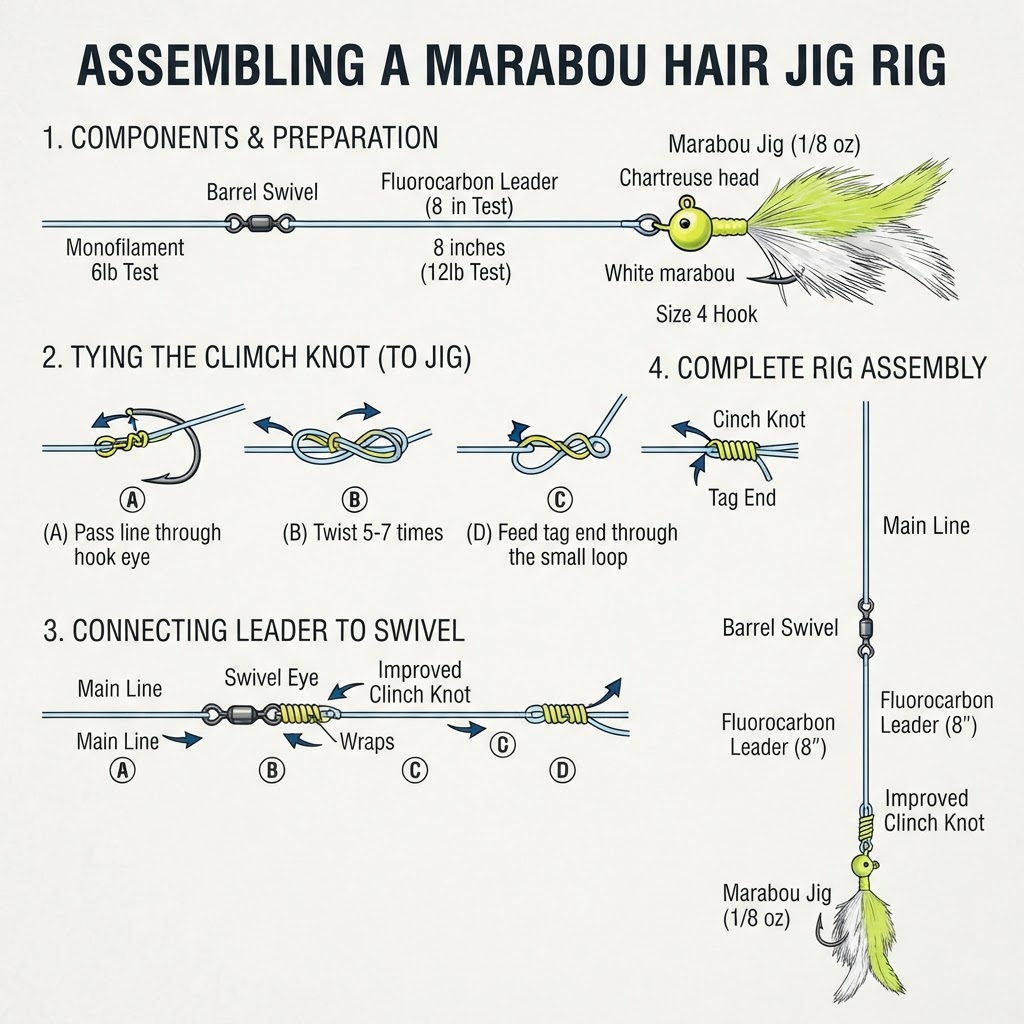 0-20 ft
Marabou Hair Jig
The ultimate finesse presentation that breathes and undulates to trigger strikes from even the most lethargic, cold-water predators.
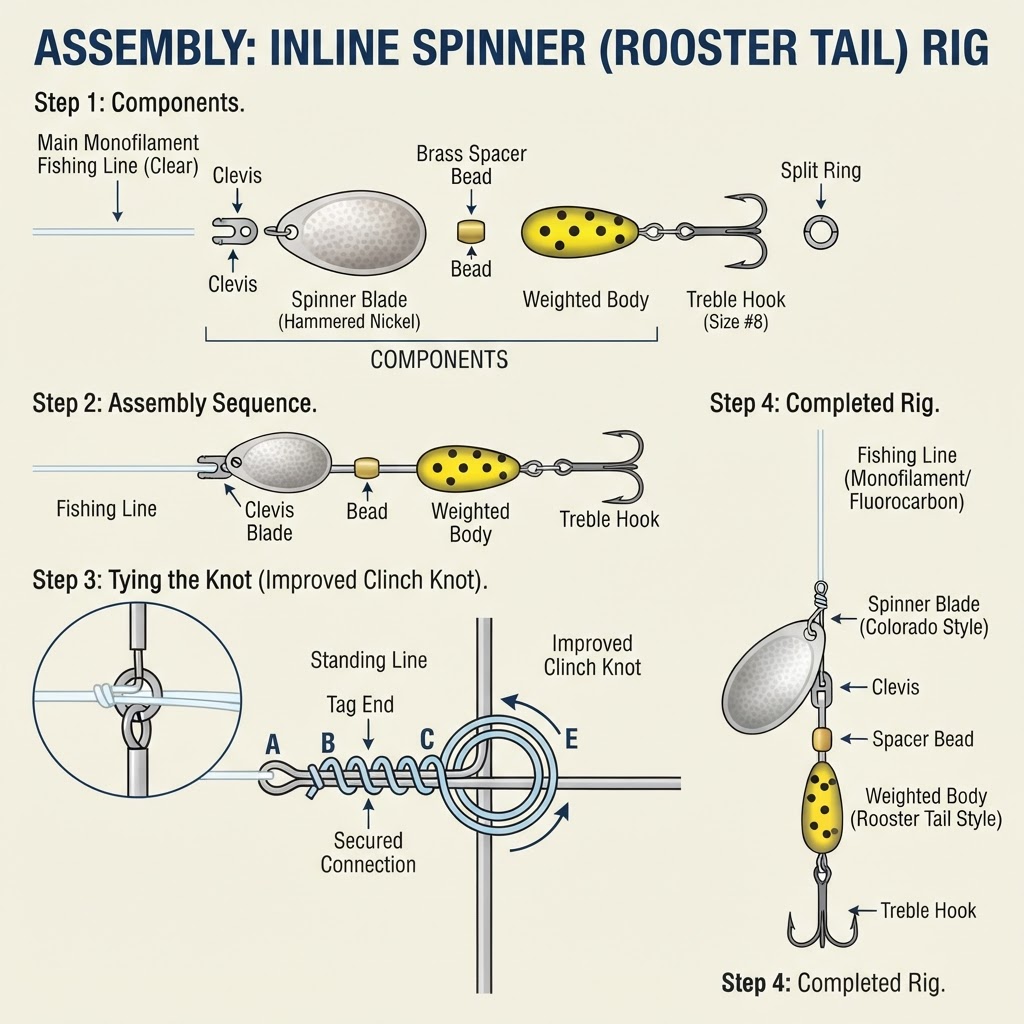 1-8 ft
Inline Spinner (Rooster Tail)
The ultimate multi-species flash-and-vibration machine that triggers predatory strikes with its constant blade rotation.
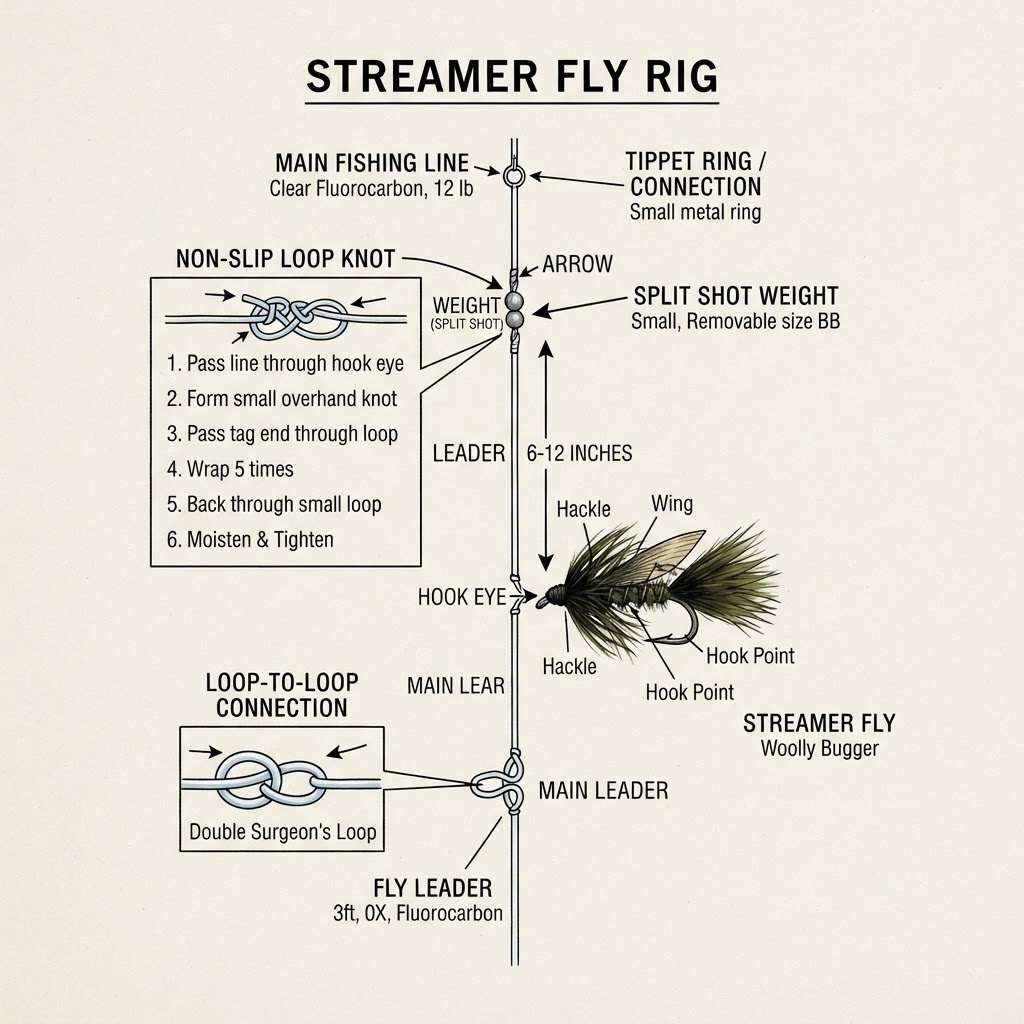 0-10 ft
Streamer Fly Rig
The ultimate predatory imitation designed to mimic fleeing baitfish with pulsing, lifelike action.
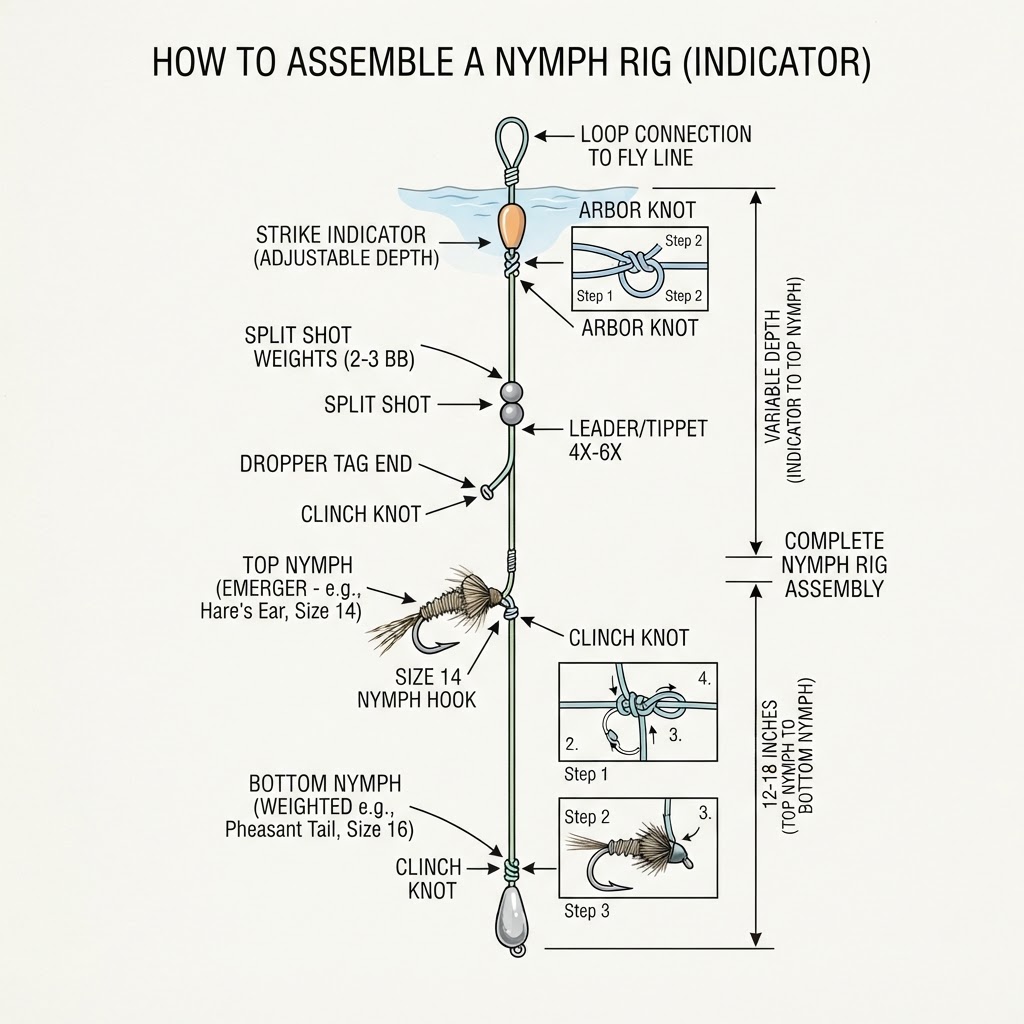 1-8 ft
Nymph Rig (Indicator)
The ultimate precision delivery system for suspending tiny natural imitations directly in the trout's primary feeding zone.
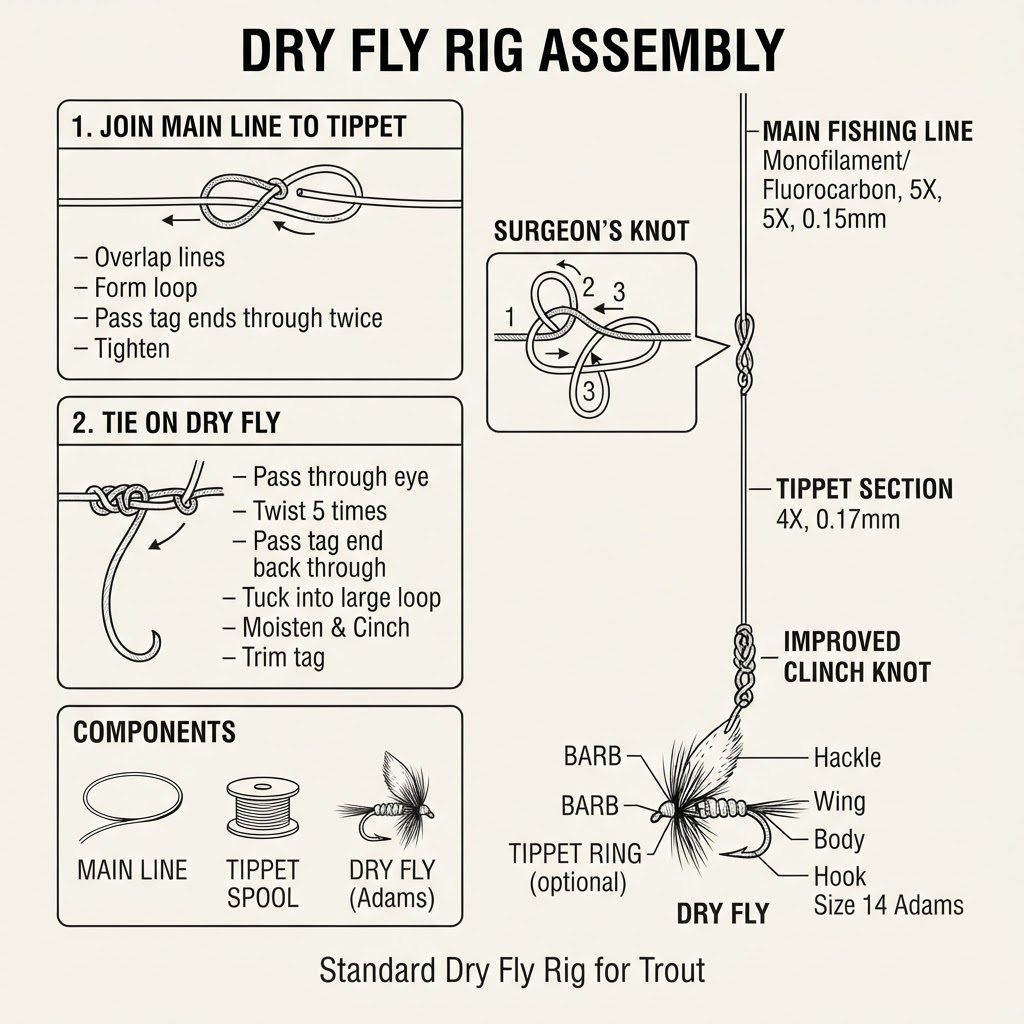 Surface
Dry Fly Rig
The ultimate stealth presentation for selective trout rising to surface insects in flowing water.
Catch more rainbow trout — free
Create a free account and unlock the full angling toolkit:
Latest from the Community