Mahi-Mahi
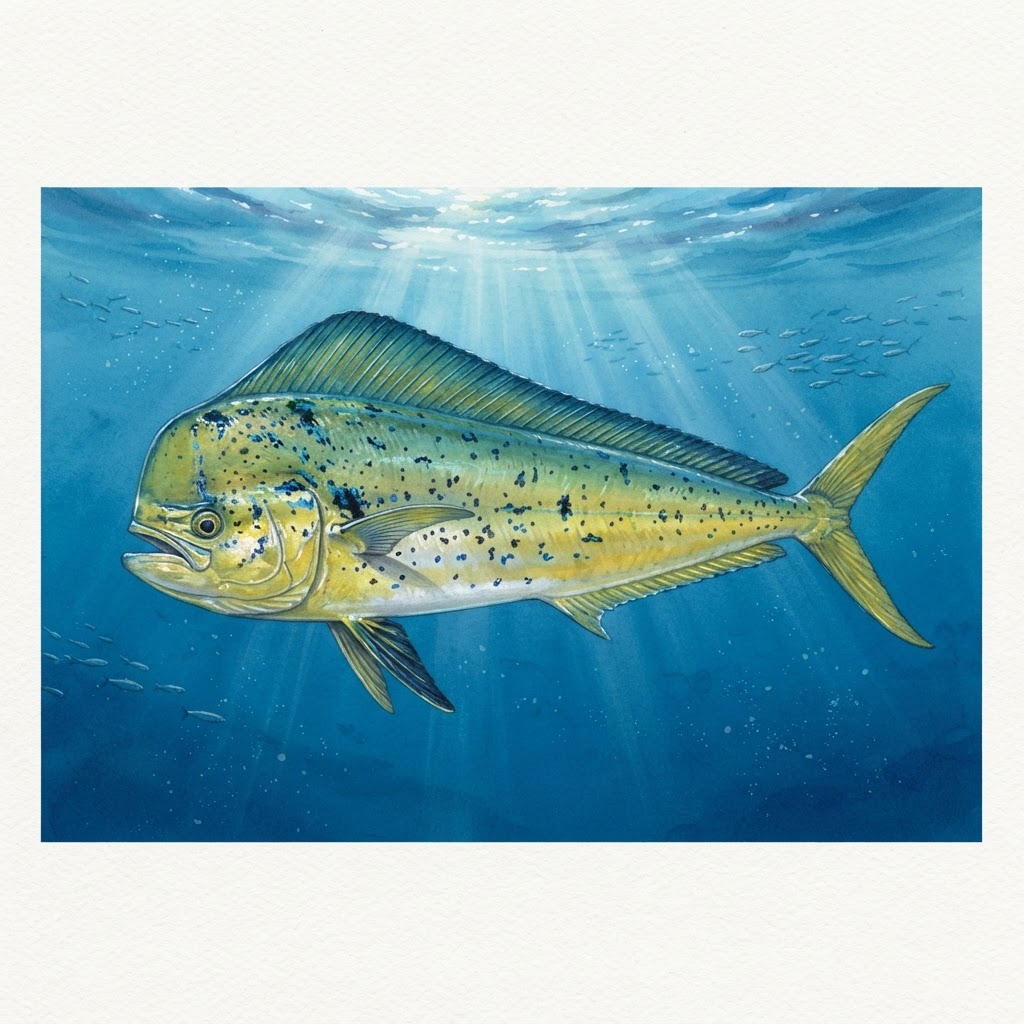
Coryphaena hippurus
The neon-colored rocket of the open ocean that turns every offshore trip into a high-octane frenzy.
Typical Size
5 to 30 pounds, with trophy 'bull' specimens exceeding 50 pounds.
Prime Seasons
Spring through early Fall for US Atlantic and Gulf coasts.
Overview
Mahi-Mahi, also known as dolphinfish, are among the fastest-growing and most sought-after game fish in tropical and subtropical waters. Renowned for their brilliant gold, green, and blue coloration and their erratic, acrobatic fighting style, they are the primary target for many offshore anglers. When hooked, they often launch into multiple aerial displays, making them a favorite for both light-tackle enthusiasts and heavy-offshore crews.
Anglers target Mahi for their aggressive nature and tendency to school in massive numbers around floating debris. Whether you are trolling for 'bulls' or casting to a 'weedline' with light spinning gear, their willingness to strike makes them a staple of the pelagic angling experience. Beyond the fight, they are prized as one of the finest-tasting fish in the ocean.
Identification
- Compressed, long body with a single dorsal fin running the length of the back
- Males develop a pronounced, high, and blunt forehead as they reach maturity
- Iridescent coloration of bright yellow, neon green, and vibrant blues
- Small, irregularly spaced dark spots along the flanks
- Forked tail that aids in high-speed pursuit
Habitat
Diet & Forage
Behavior & Feeding
Mahi-mahi are highly aggressive, opportunistic apex predators that typically hunt in schools during daylight hours, often clustering around floating debris, sargassum lines, or FADs. They exhibit rapid growth rates and high metabolism, meaning they are almost constantly on the prowl for baitfish, squid, or smaller tuna. Seasonal movements are dictated by warm current shifts, as these fish migrate poleward in the summer and retreat to tropical waters as temperatures drop. Because of their competitive nature, catching one fish often keeps the rest of the school near the boat, allowing for multiple hookups if you keep a hooked fish in the water.
Spawning
Mahi-mahi are serial spawners, meaning they release eggs multiple times throughout the breeding season, which typically occurs in warm, offshore waters. Spawning generally peaks when water temperatures remain consistently above 75°F, and they exhibit rapid maturation, often reaching reproductive age in less than a year. During active spawning cycles, schools may disperse into smaller groups, making them slightly harder to locate compared to the schooling behavior seen near massive weed lines. Anglers often find that fish caught during the peak spawning season are highly aggressive, as they prioritize intense feeding to fuel their high energy requirements.
Water Temperature
Weather Triggers
Steady High Pressure
Bright sunny days push mahi toward the surface and under shade-providing structures.
Passing Storm Front
The drop in pressure often triggers a feeding frenzy immediately before the storm hits.
Cloudy/Overcast
Fish spread out from floating structures, making trolling more effective than sight casting.
Depth by Season
Best Lure Rigs & Setups
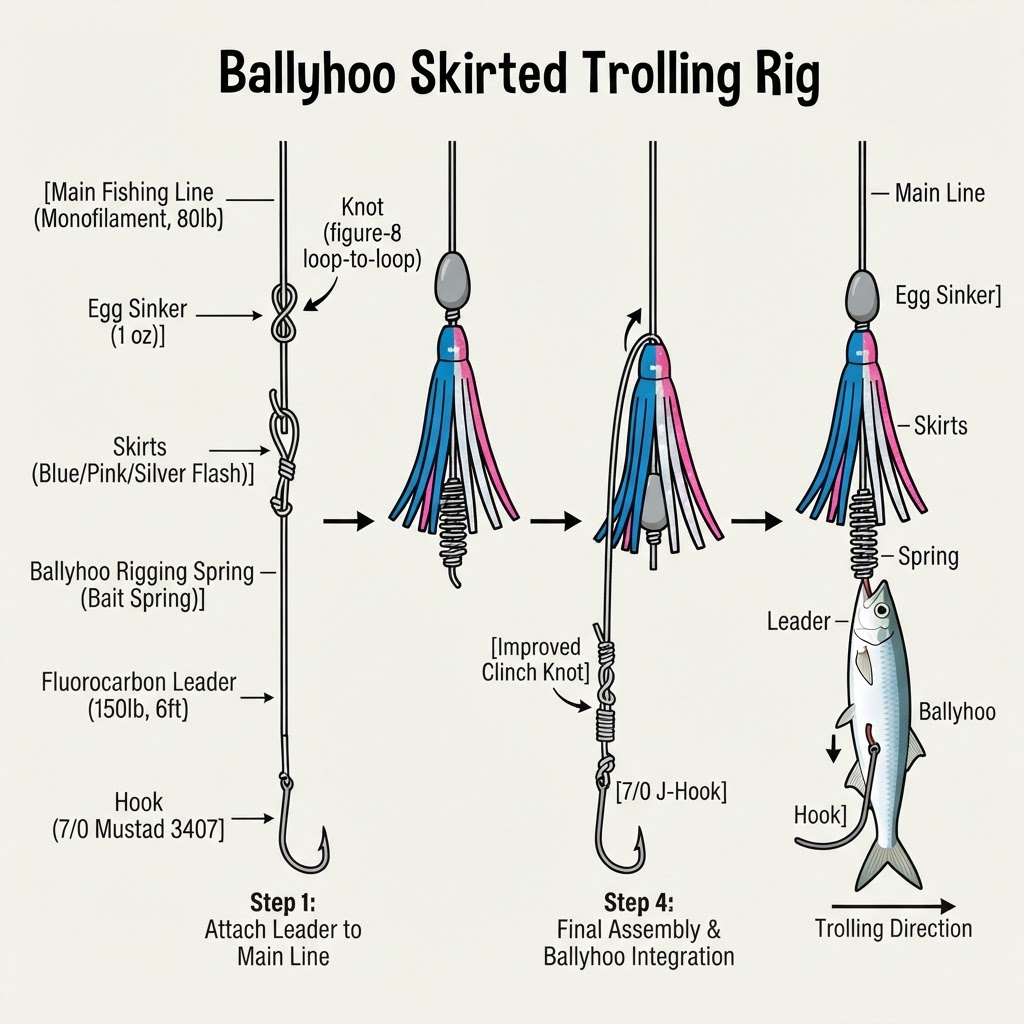
Trolled Ballyhoo
When: Searching for schools in open water or along current edges.
Setup: Circle hook 7/0-9/0, rigged with a trolling skirt, 80lb fluorocarbon leader, 30lb main line.
Live Pilchard/Sardine Cast
When: When targeting fish spotted near debris or floating structure.
Setup: 1/0 to 3/0 light wire circle hook, no weight, 40lb fluorocarbon leader, spinning setup.
Bucktail Jig
When: Sight casting to individual fish or when schools are agitated.
Setup: 1/2 oz to 1 oz white or yellow bucktail, 30lb fluorocarbon leader, high-speed retrieve.
Best Knots
Rigs From The Library For Mahi-Mahi
Catch more mahi-mahi — free
Create a free account and unlock the full angling toolkit:

