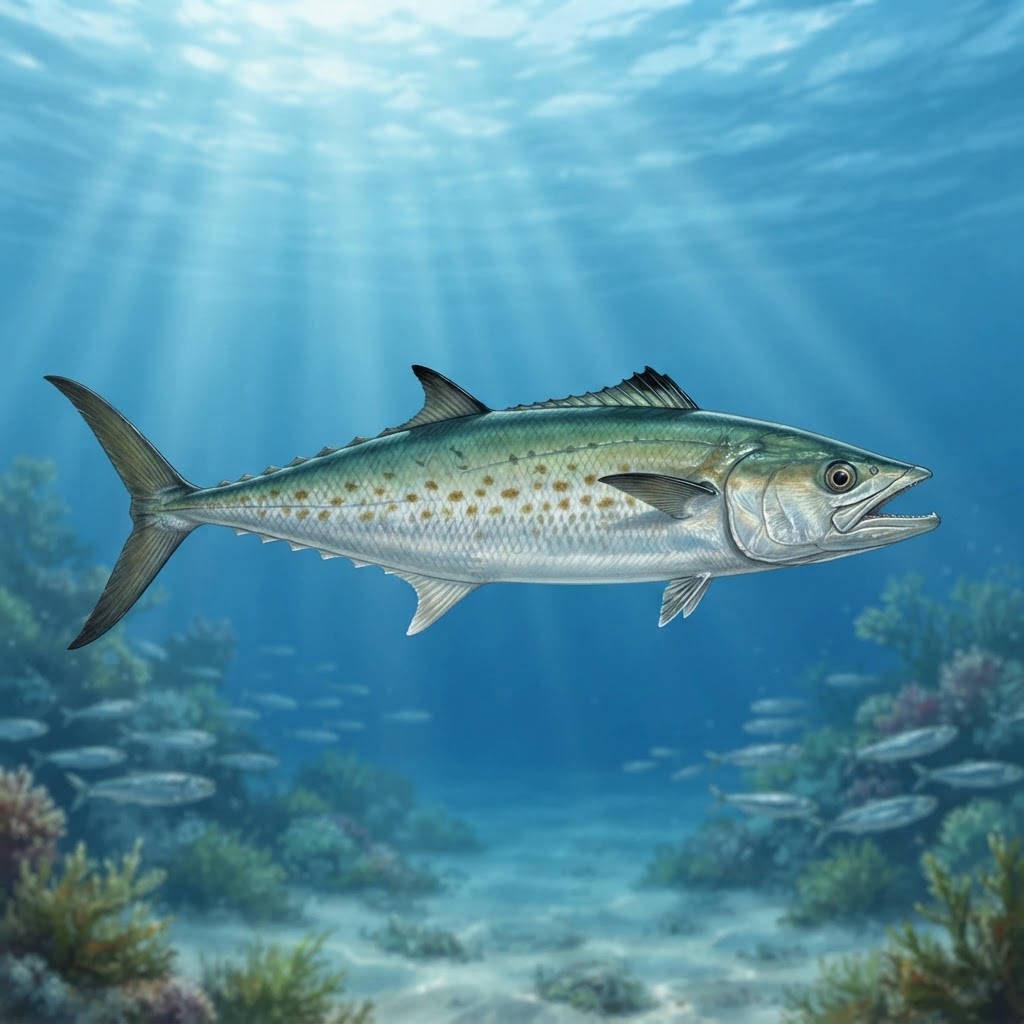
King Mackerel
Scomberomorus cavalla
The undisputed king of the coastal pelagics, known for blistering initial runs and acrobatic, high-flying strikes.
Typical Size
10 to 40 pounds is average, with trophies reaching upwards of 60-80 pounds.
Prime Seasons
Spring and Fall migrations are peak times, with consistent action throughout the summer months in northern ranges.
Overview
King Mackerel, often called 'Kingfish,' are apex predators of the nearshore and offshore Atlantic and Gulf waters. Renowned for their incredible speed and sharp, razor-like teeth, they are a primary target for tournament anglers and recreational fishermen alike. Their predatory nature makes them aggressive strikers, often hitting lures or live baits at full velocity, leading to dramatic reel-smoking runs that test the limits of drag systems and light tackle.
Identification
- Lateral line takes a sharp, distinctive dip below the second dorsal fin.
- First dorsal fin is entirely black.
- Very sharp, triangular teeth designed for shearing prey.
- Body is long, slender, and covered in small, barely visible scales.
- Lacks the bold vertical bars seen on the smaller Spanish Mackerel.
Habitat
Diet & Forage
Behavior & Feeding
King mackerel are highly migratory, voracious predators that follow bait schools along coastal migrations, often hunting in high-speed, vertical strikes. They are primarily visual feeders, showing peak activity during low-light hours like dawn and dusk, though they will aggressively attack moving lures throughout the day. Their behavior is characterized by rapid movement through the water column, often circling schools of bait to corral them before launching violent, high-speed assaults.
Spawning
Spawning typically occurs from spring through late summer in offshore waters, often peaking when sea temperatures remain consistently warm. During this period, large females move further offshore to release eggs, temporarily reducing the availability of trophy-sized fish in nearshore zones. Anglers often find that fishing success fluctuates during the spawn as the schools disperse and focus more on reproductive cycles than intensive feeding frenzies.
Water Temperature
Weather Triggers
Falling Barometer
Often triggers a 'feeding frenzy' right before a cold front, making fish highly aggressive.
Overcast Skies
Low light levels allow kings to feed higher in the water column and closer to the surface.
Post-Frontal Bluebird Skies
High pressure often pushes fish deeper; use heavy jigs or downriggers to reach the strike zone.
Depth by Season
Best Lure Rigs & Setups
Live Bait Stinger Rig
When: The gold standard for tournament fishing; essential for short-striking fish.
Setup: 40-60lb single-strand wire, one #4 or #2 live bait nose hook, and a #4 treble hook as a stinger near the tail.
High-Speed Trolling Spoon
When: Best for covering large areas of water to locate roaming schools.
Setup: Drones or Clark spoons (3.5-4.5 inch) attached to a heavy-duty trolling planer or downrigger with 60lb fluorocarbon leader.
Diving Plug Rig
When: Effective when fish are suspended mid-column and ignoring surface baits.
Setup: Large lipped diving plugs (like Mann's Stretch 25+) on 80lb mono shock leader to prevent line snap during violent strikes.
Best Knots
Rigs From The Library For King Mackerel
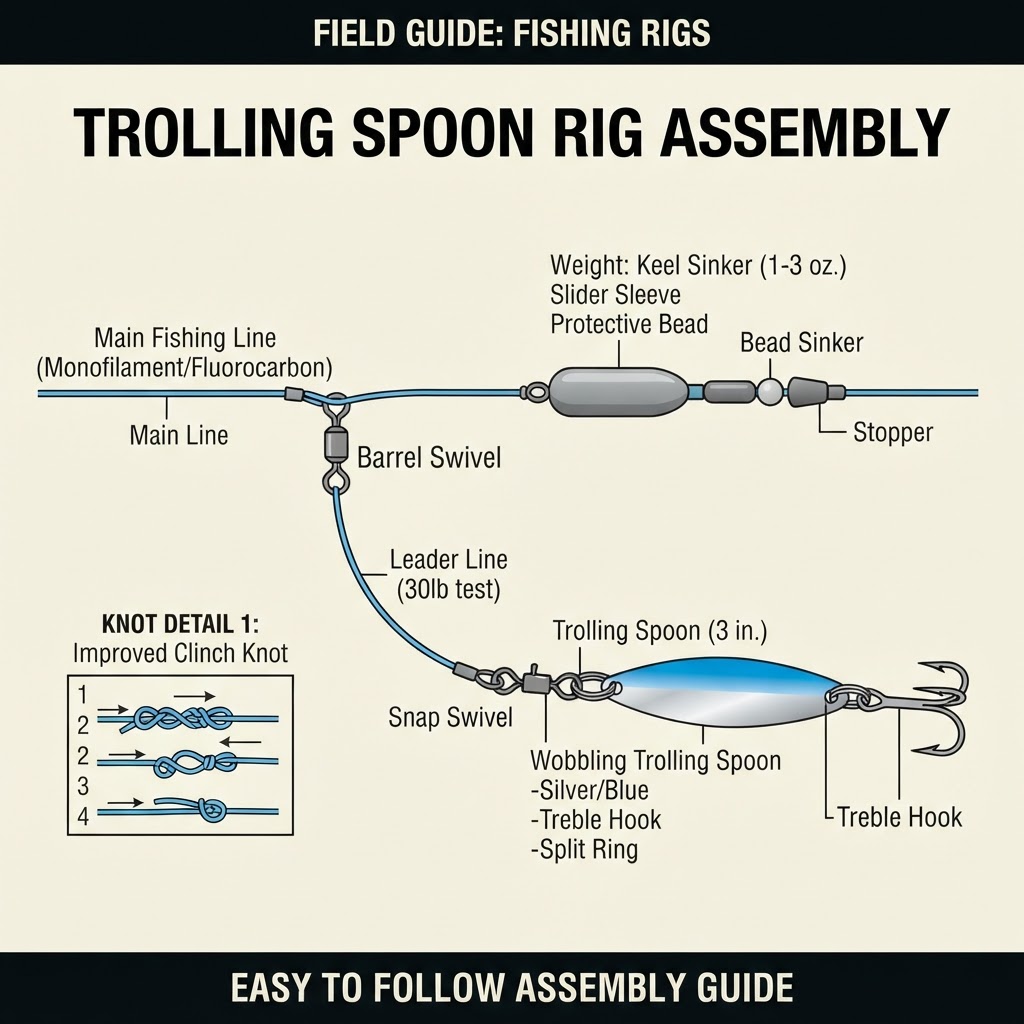 5-50 ft
Trolling Spoon Rig
The classic, erratic flutter of a trolling spoon is the ultimate way to trigger aggressive strikes from pelagic and deep-water predators.
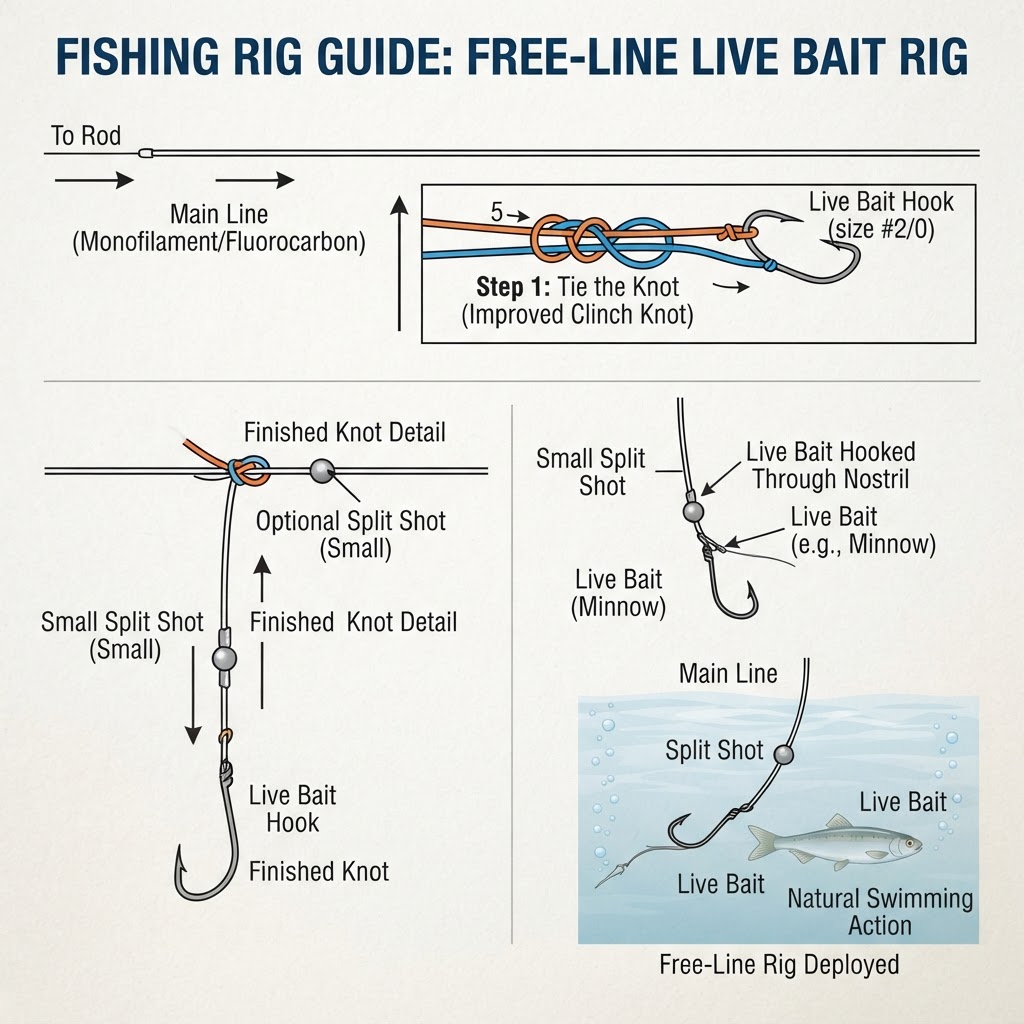 0-10 ft
Free-Line Live Bait Rig
The ultimate stealth presentation for wary predators using the natural, unhindered movement of live bait.
Catch more king mackerel — free
Create a free account and unlock the full angling toolkit:

