Chinook Salmon
Oncorhynchus tshawytscha
The King of Salmon, revered for its legendary size and explosive fighting strength that tests the limits of any angler's tackle.
Typical Size
15 to 40 pounds, with trophy specimens exceeding 60 pounds.
Prime Seasons
Late spring through early autumn, peaking during summer months and fall spawning runs.
Overview
The Chinook, or King Salmon, is the largest and most prized of the Pacific salmon species. Known for their powerful runs and dogged endurance, these fish represent the pinnacle of sport fishing in both the Pacific Northwest and the Great Lakes. They are anadromous, meaning they spend most of their lives in the ocean before returning to their natal freshwater streams to spawn. Anglers target them for their high-stakes battle and their status as a trophy game fish, often requiring heavy-duty gear and specialized trolling or casting techniques to entice a strike. Because they stop feeding once they enter rivers to spawn, targeting them requires a mix of triggering aggressive strikes with flash and color or presenting bait in their direct path.
Identification
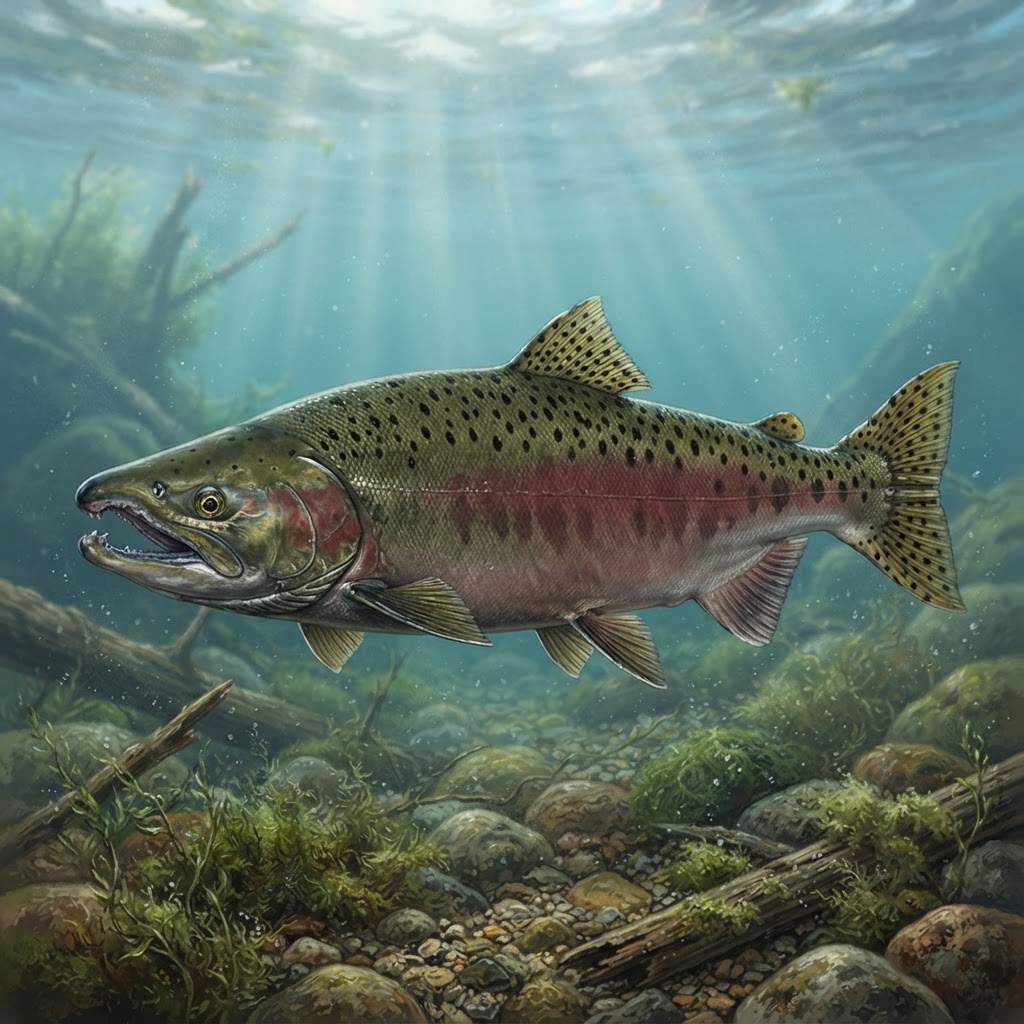
- Black spots on back and both lobes of the tail fin.
- Dark or black gums at the base of the teeth.
- Large, robust body profile.
- Small, fine scales compared to other salmon species.
- Adipose fin present on the back near the tail.
Habitat
Diet & Forage
Behavior & Feeding
Chinook salmon are opportunistic predators that transition from aggressive schooling fish in the open ocean to territory-defending migrants in river systems. They are most active during low-light periods at dawn and dusk, frequently holding in deep pools or structure-heavy current breaks during the day. As they mature, their focus shifts from aggressive feeding to migration, though they remain highly reactive to large, flashy, or vibrating lures that trigger defensive strikes. Seasonal movements are dictated by thermal preference and the physiological pull of their natal spawning grounds.
Spawning
Spawning typically occurs from late summer through late autumn as water temperatures drop into the critical range of 40-55°F. Females use their tails to excavate redds in gravel beds, while males aggressively guard them from rivals, often ignoring food in the process. During this period, their metabolism slows and their digestive tracts begin to atrophy, making them increasingly difficult to entice with bait. Anglers should target the transition period before the fish reach their final spawning grounds to maximize their chances of triggering a territorial bite.
Water Temperature
Weather Triggers
Falling barometer
Signals an incoming storm front, which often triggers an intense pre-frontal feeding frenzy.
Overcast conditions
Reduces light penetration, allowing Chinook to roam more freely and feed aggressively throughout the day.
Heavy rain/Freshet
Increases water flow and turbidity, encouraging fish to move upstream and hide behind current breaks.
Depth by Season
Best Lure Rigs & Setups
Flashers and Herring Rig
When: The standard setup for open-water trolling where the flasher creates vibration and attraction.
Setup: Large plastic flasher, 4-6 feet of 30lb fluorocarbon leader, double-hook setup (5/0-6/0) inside a fresh herring strip.
Divers and Spoons
When: When targeting fish suspended at specific depths without the need for downriggers.
Setup: Dipsy Diver or Jet Diver, 10 feet of 25lb fluorocarbon leader, 4-5 inch high-flash metal spoon.
Drift Fishing Rig
When: For river fishing during spawning runs to bounce bait along the bottom.
Setup: Sliding barrel weight (1/2 to 1 oz), swivel, 3 feet of 15lb fluorocarbon leader, size 1/0 or 2/0 octopus hook baited with salmon roe.
Best Knots
Rigs From The Library For Chinook Salmon
 20-150+ ft
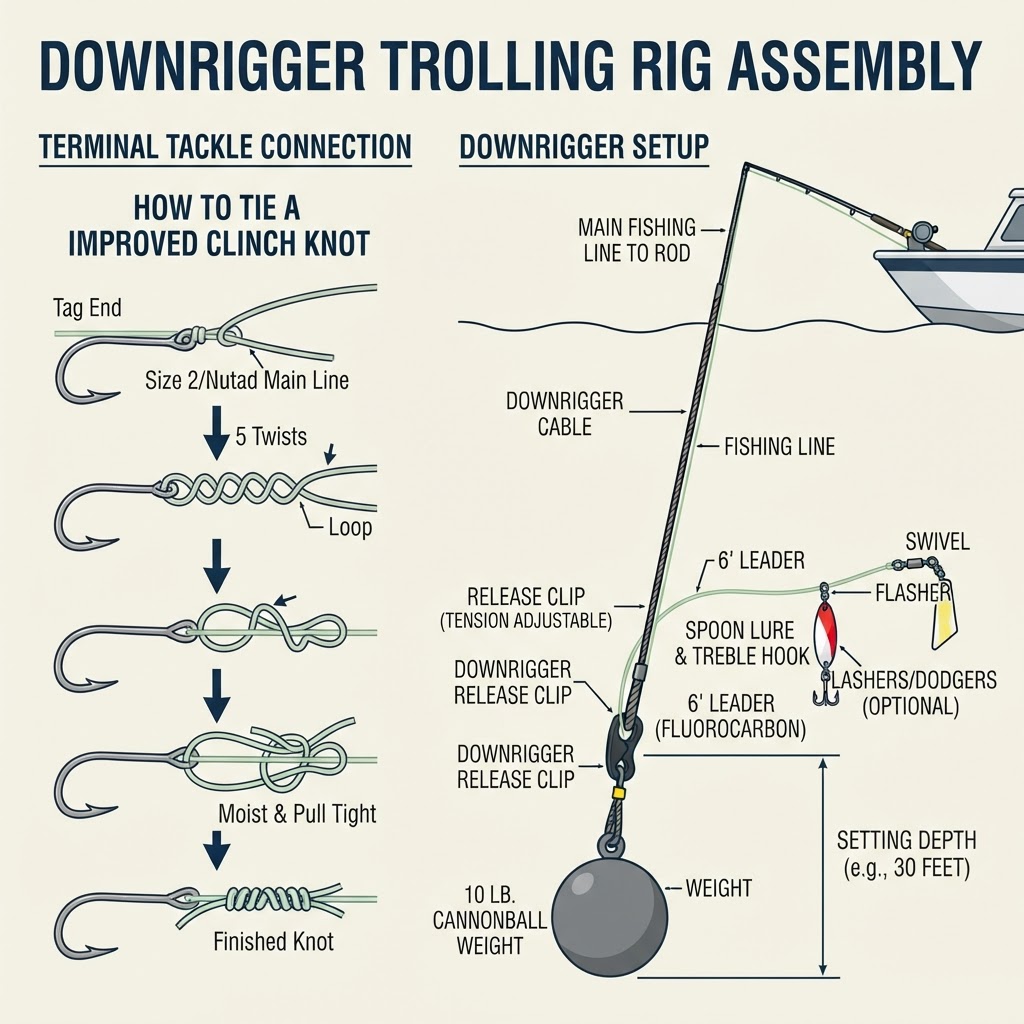
Downrigger Trolling Rig
The ultimate precision tool for placing lures at exact depths to target suspended predators in deep water.
 5-50 ft
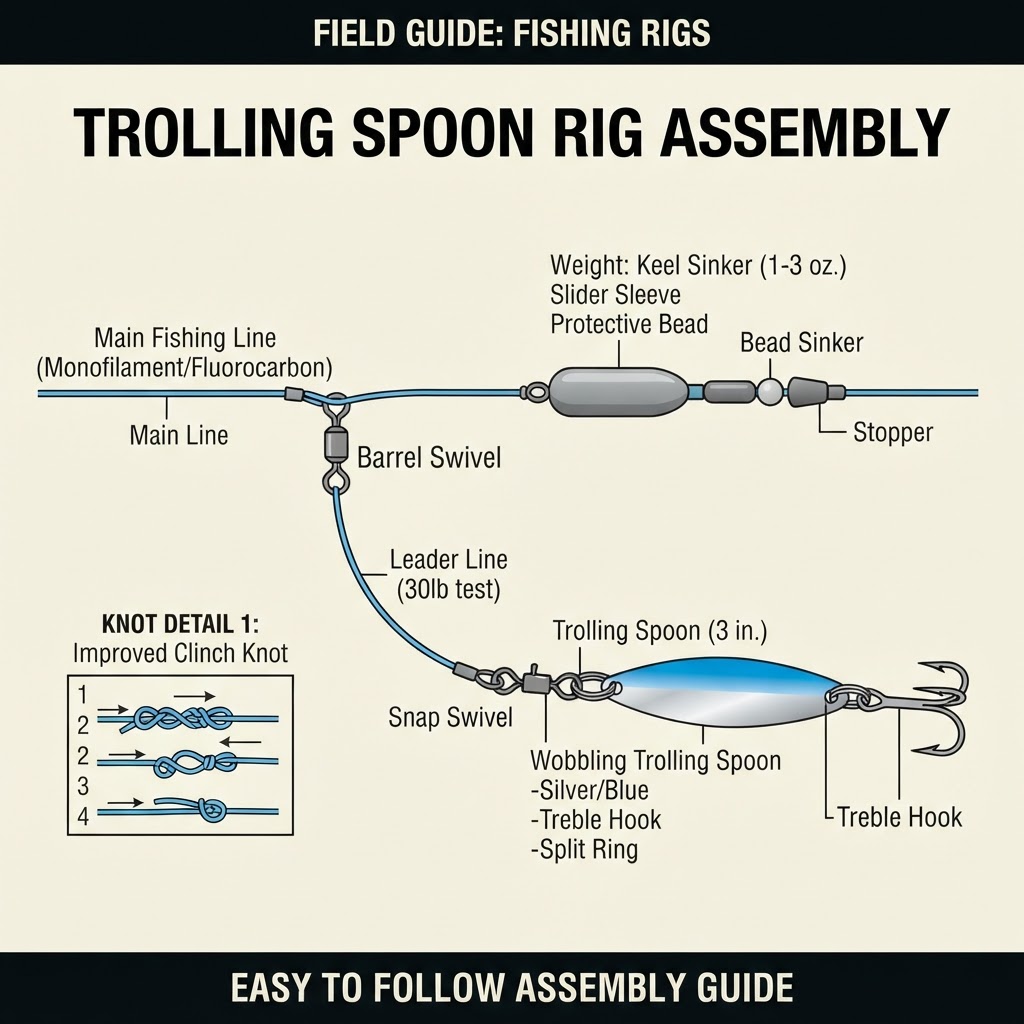
Trolling Spoon Rig
The classic, erratic flutter of a trolling spoon is the ultimate way to trigger aggressive strikes from pelagic and deep-water predators.
Catch more chinook salmon — free
Create a free account and unlock the full angling toolkit:


