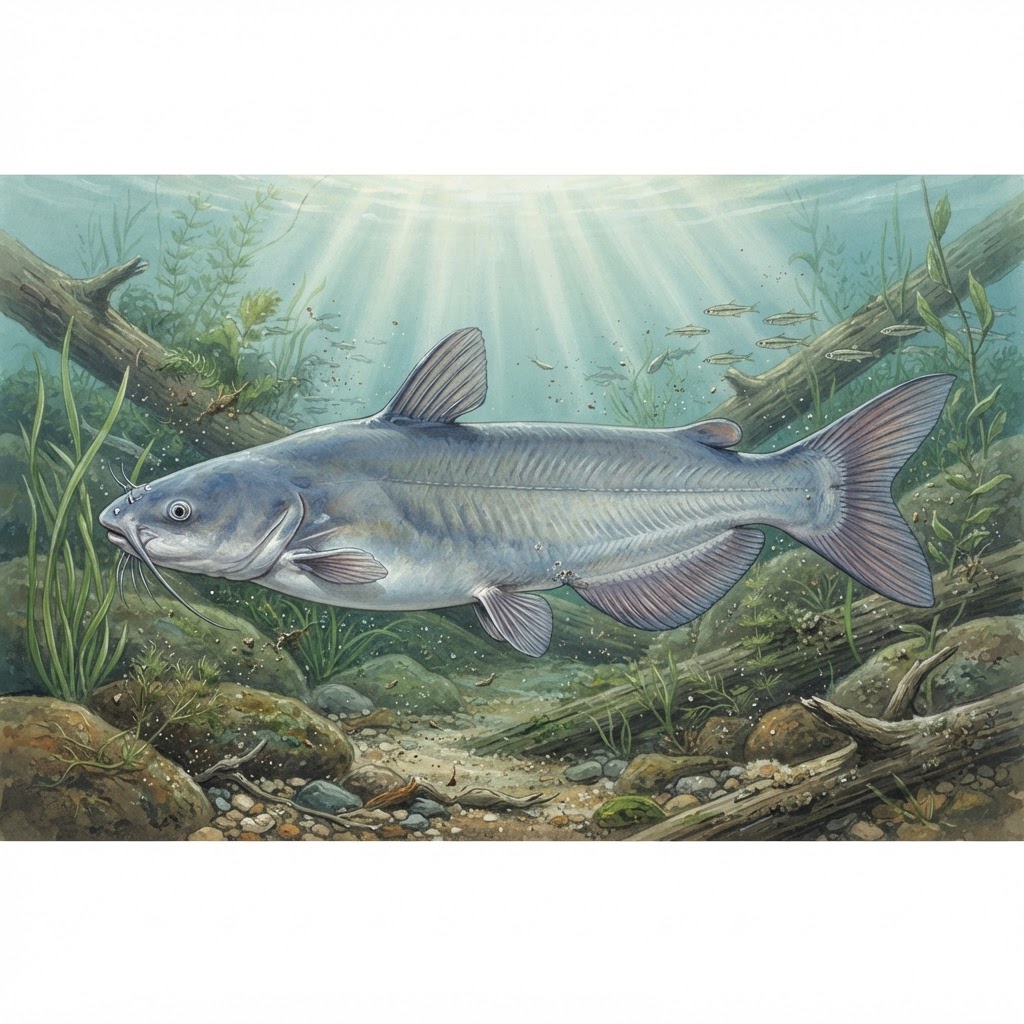
Blue Catfish
Ictalurus furcatus
The apex predator of the river system, known for its massive girth and unrelenting, bulldog fighting style.
Typical Size
10 to 40 pounds is common, with trophy-class fish exceeding 60 to 100+ pounds.
Prime Seasons
Late spring for shallow feeding frenzies and late fall/early winter for deep-water trophy hunting.
Overview
The Blue Catfish is the largest member of the North American catfish family, renowned for its incredible growth potential and ability to thrive in large, flowing river systems and massive reservoirs. Unlike smaller catfish species, Blues are primarily piscivorous, acting as the apex predators of their environment. Anglers prize them not only for their massive size—often exceeding 50 pounds—but for the sheer challenge of landing a fish that utilizes its body weight and the current to create a powerful, dogged fight. They are highly social, schooling fish, meaning that if you find one, you have likely found a pocket holding several trophies.
Identification
- Slate-blue to silvery-gray coloration with white underbelly.
- Deeply forked tail fin distinguishes them from the rounded tail of Flatheads.
- Anal fin is long with a straight outer edge, containing 30-36 rays.
- Lack of spots on the body, unlike the Channel Catfish.
- Strongly curved head profile with a protruding upper jaw.
Habitat
Diet & Forage
Behavior & Feeding
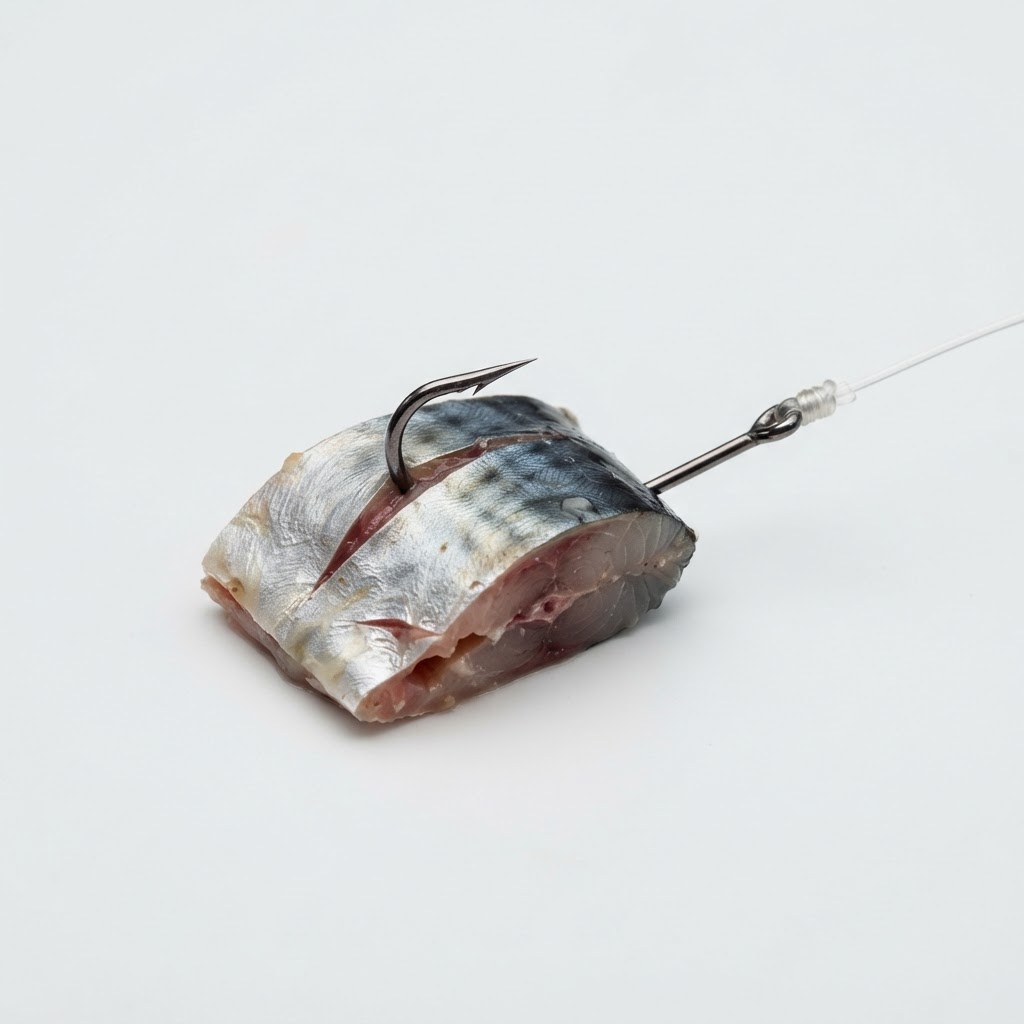
Blue catfish are highly opportunistic apex predators that rely heavily on their acute sense of smell and lateral lines to hunt in both murky and clear water. They are most active during low-light periods such as dawn, dusk, and throughout the night, often patrolling main-channel breaks and deep holes. Seasonal movements involve massive migrations from deep wintering basins to shallower structure as water temperatures rise in spring, followed by a move toward open-water schools of shad during the heat of summer. They are aggressive feeders that show little hesitation when presenting fresh-cut bait, especially in high-current areas.
Spawning
Spawning typically occurs when water temperatures reach the mid-70s to low-80s, usually from late spring through mid-summer depending on latitude. The males select secluded, dark cavities such as hollow logs, rock crevices, or undercut banks to prepare a nest. During this time, the fish become territorial and protective, often ignoring baits that do not directly threaten their nest site. Anglers should note that fishing success typically drops during the peak spawn as fish become less focused on foraging and more dedicated to nest defense.
Water Temperature
Weather Triggers
Falling barometer
Often triggers a 'feeding frenzy' right before the front arrives; use large, fresh cut-bait to capitalize on the increased activity.
Cold front
Post-front blues move into a lethargic state; downsize your bait and slow your presentation to a crawl in the deepest available water.
Overcast and windy
Low light and surface disturbance make fish feel secure; target shallow water structure that would otherwise be too exposed.
Depth by Season
Best Lure Rigs & Setups
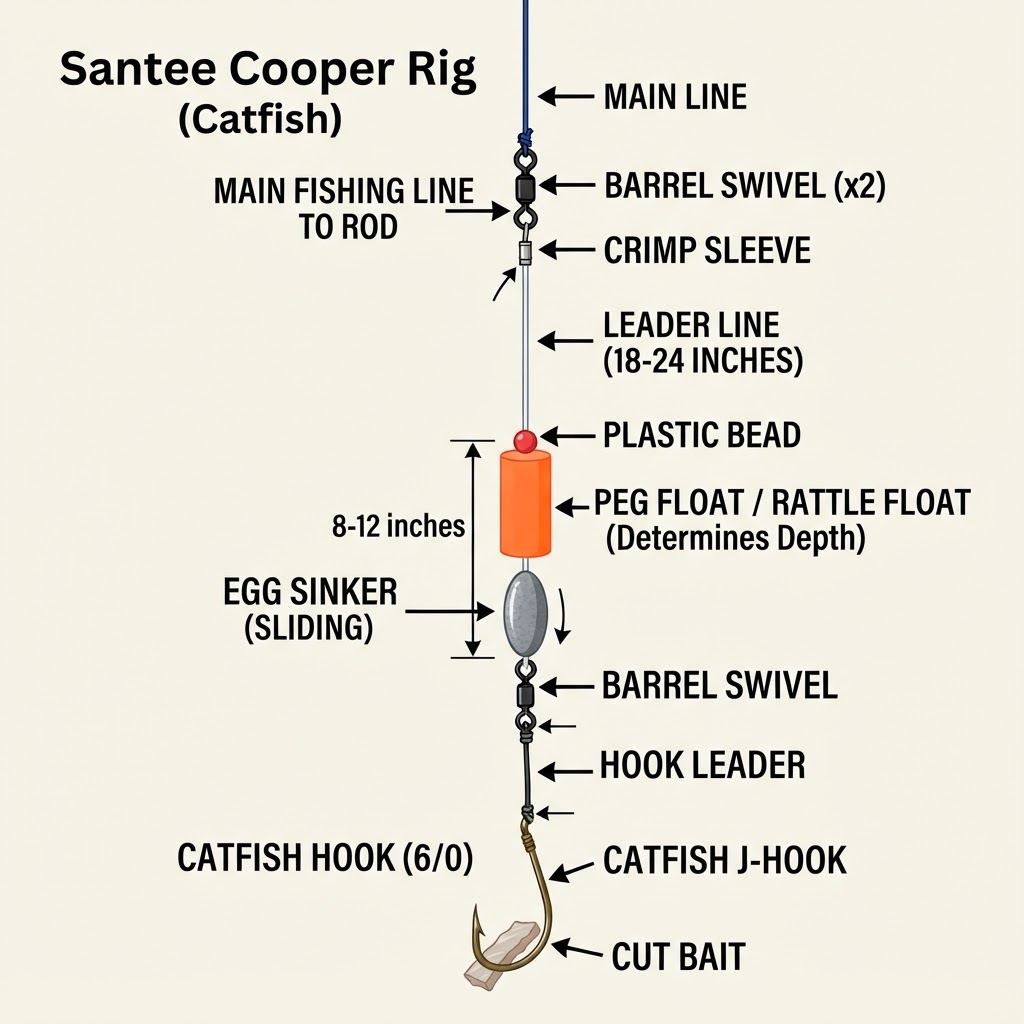
Santee Cooper Rig
When: Ideal for drifting in current to keep bait off the bottom snag zone.
Setup: Sliding egg sinker (1-3 oz) on main line, swivel, 2-3 ft leader, 8/0-10/0 circle hook, and a small peg float on the leader to suspend bait.
Slip Sinker Rig
When: Best for anchoring or still fishing in heavy current with large cut bait.
Setup: Heavy duty snap swivel, 2-5 oz bank sinker, 18-inch fluorocarbon leader (50lb test), and an 8/0 circle hook.
Three-Way Rig
When: Used for vertical jigging or slow-trolling in deep water to control depth precisely.
Setup: Three-way swivel, 12-inch dropper line to a bank sinker, 3-foot leader to a heavy-duty octopus or circle hook.
Best Knots
Lures That Catch Blue Catfish
Rigs From The Library For Blue Catfish
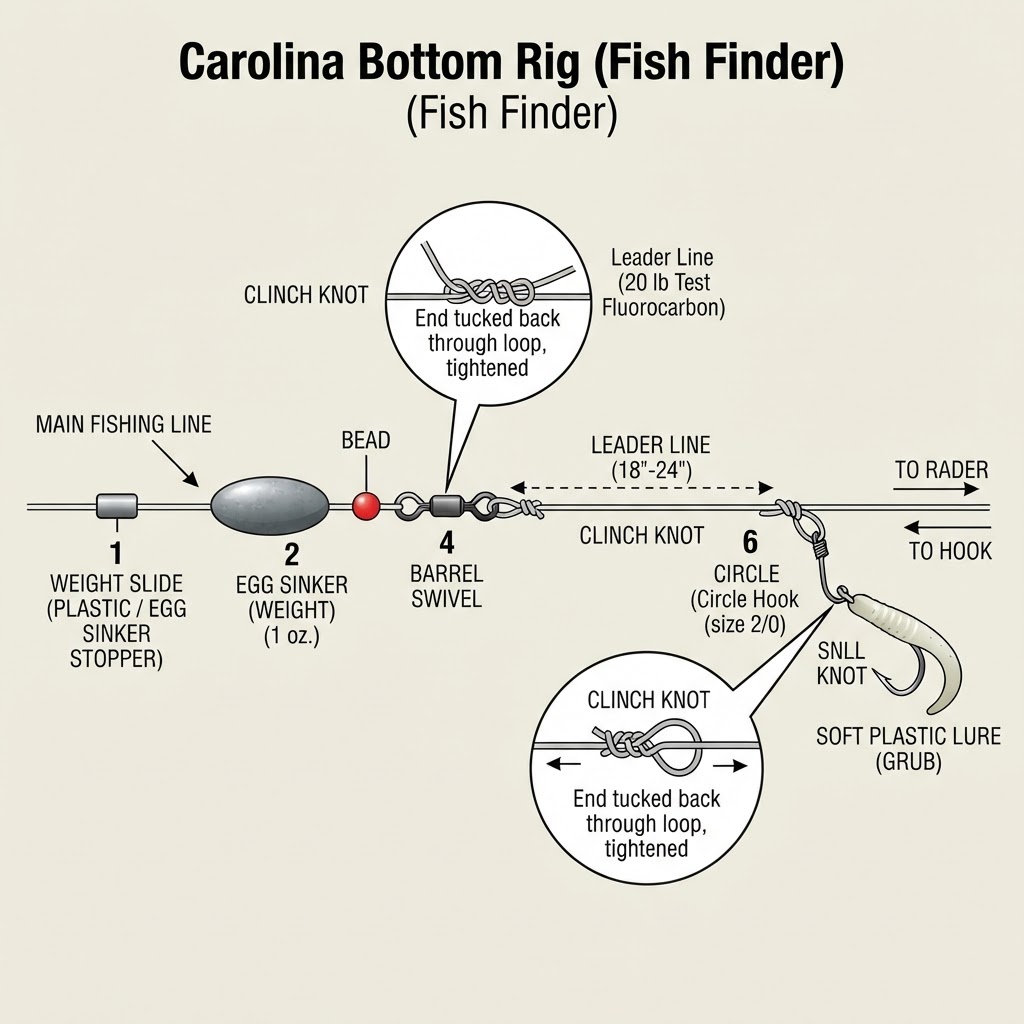 5-60 ft
Carolina Bottom Rig (Fish Finder)
The ultimate bottom-hugging presentation that allows fish to pick up your bait without feeling the resistance of your heavy sinker.
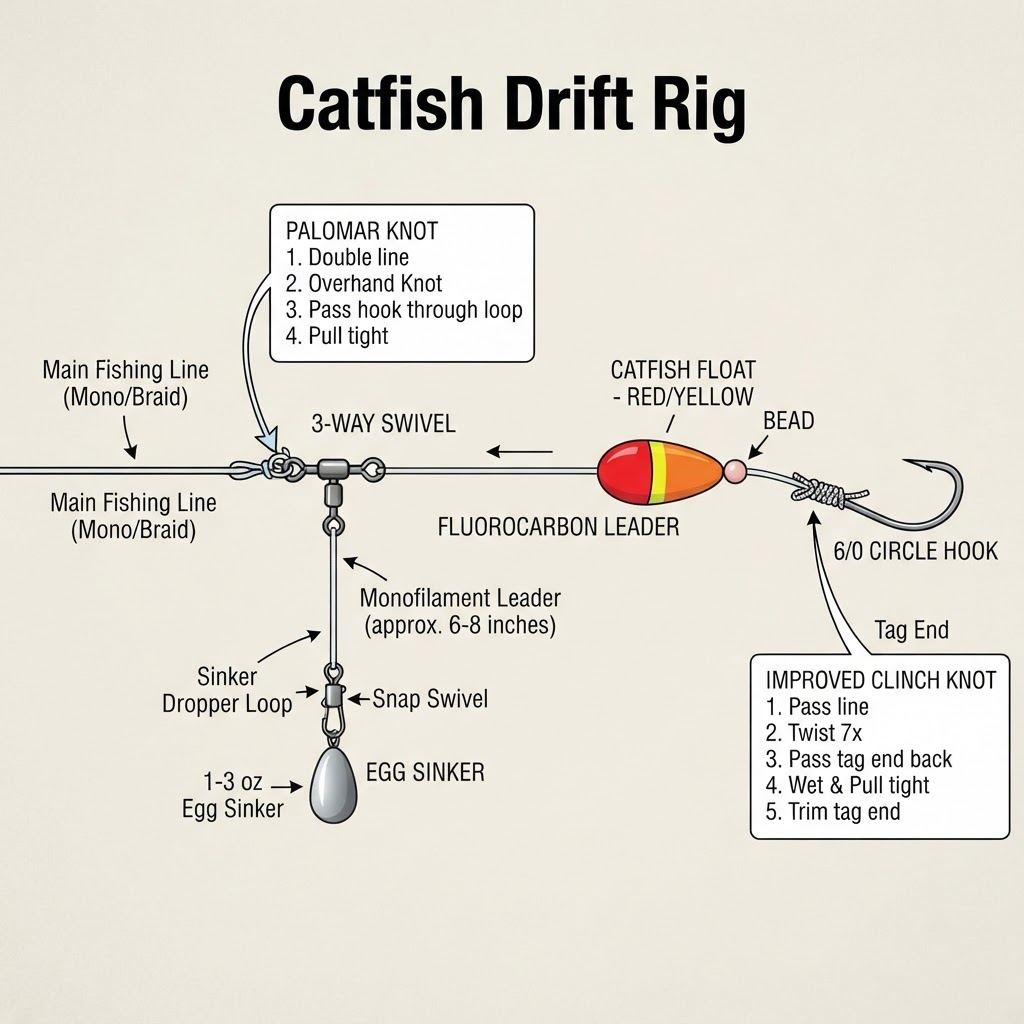 5-40 ft
Catfish Drift Rig
The ultimate bottom-hugging presentation designed to keep your bait hovering just above the riverbed where monster catfish feed.
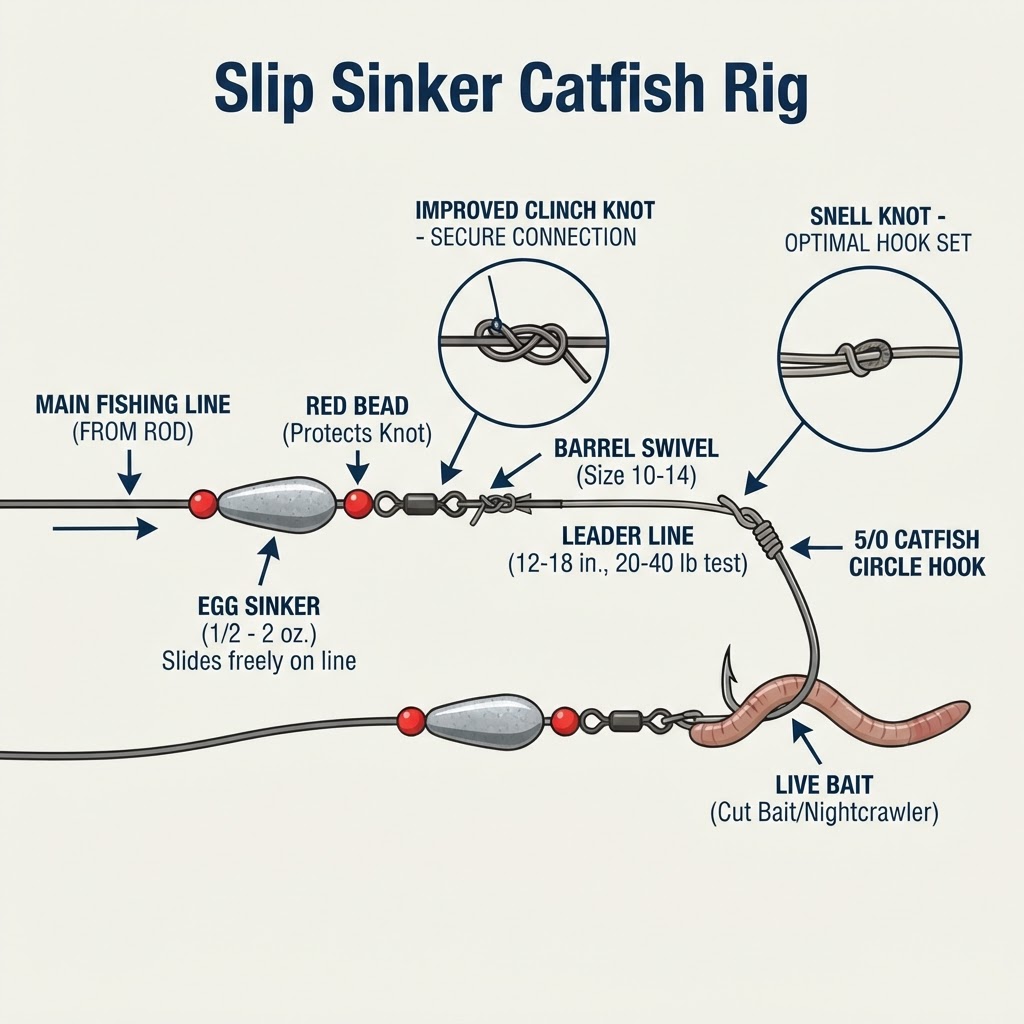 5-50 ft
Slip Sinker Catfish Rig
The ultimate bottom-fishing setup that lets bait move naturally while keeping fish from feeling any resistance upon the pick-up.
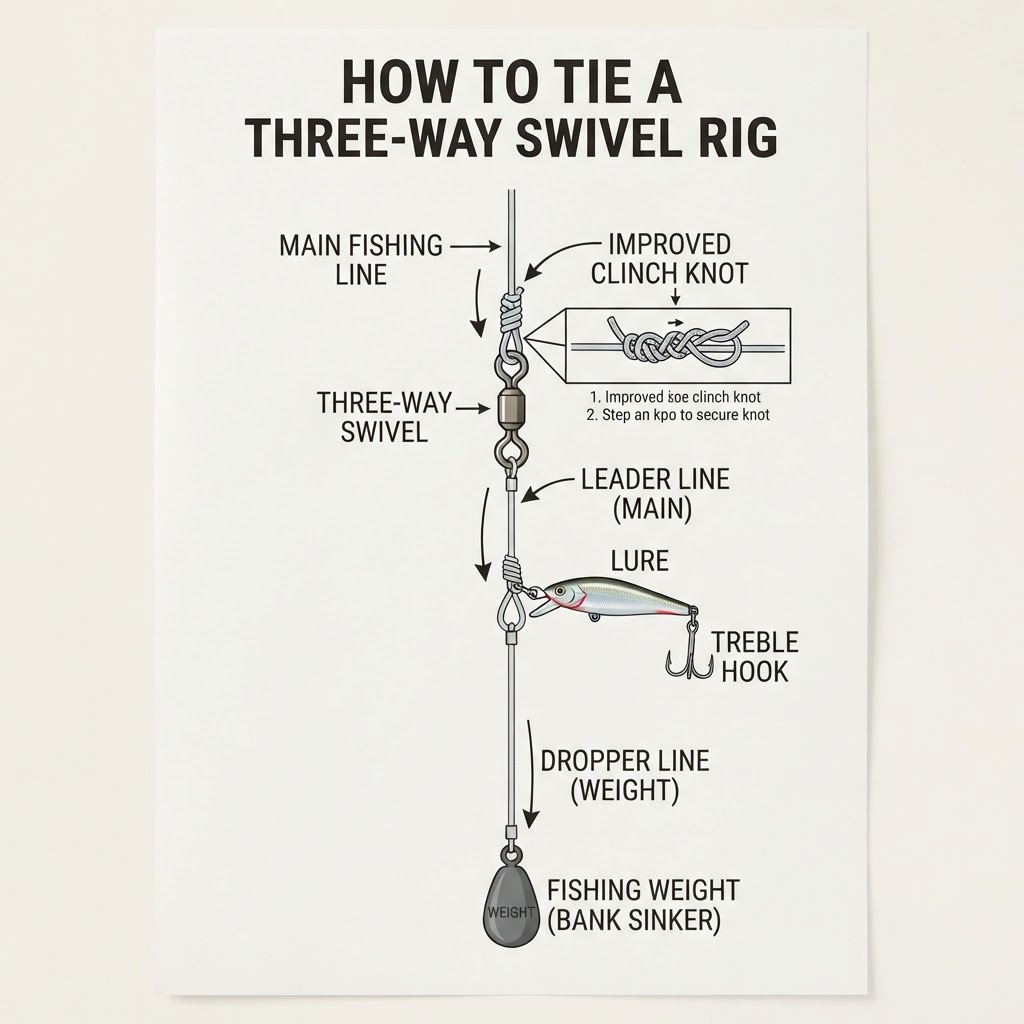 10-60 ft
Three-Way Swivel Rig
The ultimate bottom-tracking rig that keeps your bait suspended perfectly in the strike zone regardless of current or depth.
 10-40 ft
Santee Cooper Rig (Catfish)
The ultimate bottom-bouncing setup for trophy catfish, combining a controlled drift with a buoyant lure presentation that keeps your bait suspended right in the strike zone.
 1-10 ft
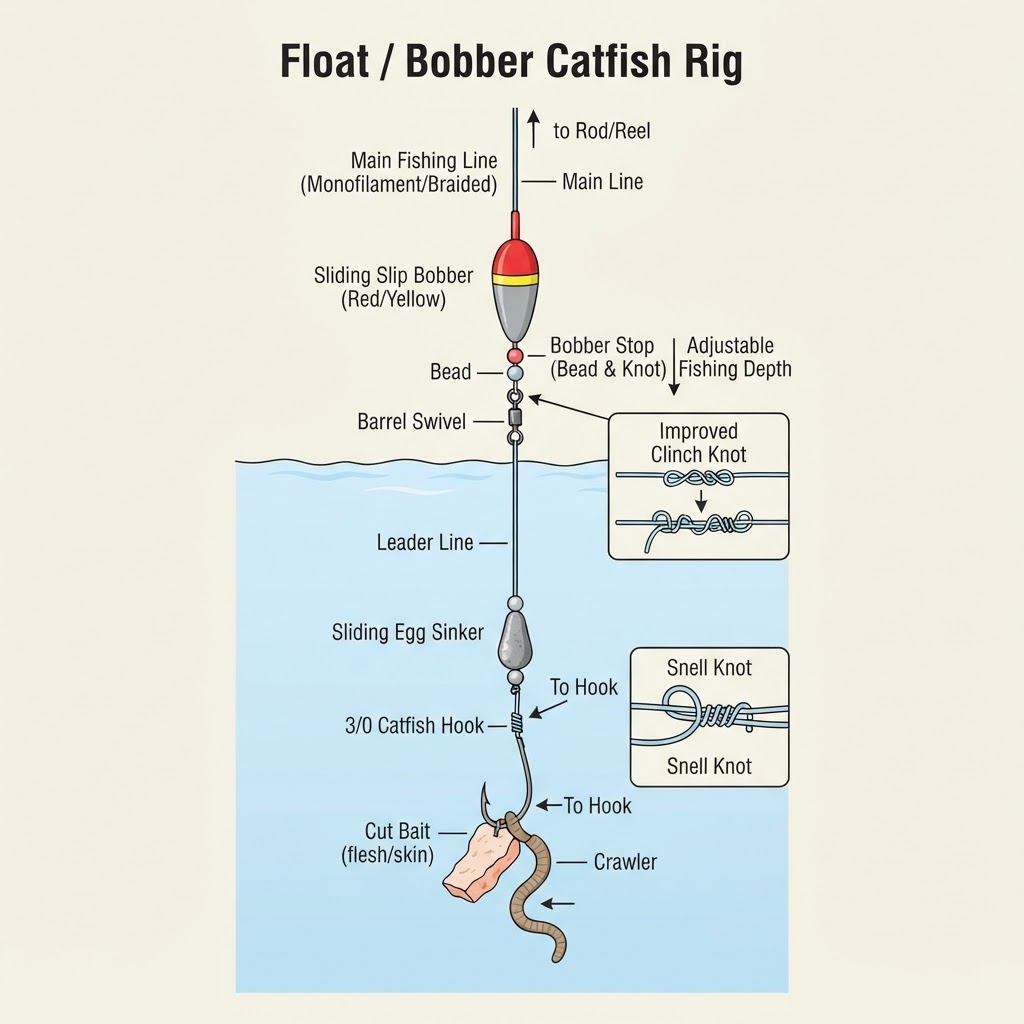
Float / Bobber Catfish Rig
Suspends your bait in the strike zone, keeping it perfectly positioned above debris and bottom structure where catfish hunt.
Catch more blue catfish — free
Create a free account and unlock the full angling toolkit:

