Turbid Tactics: Decoding High-Flow River Dynamics During Spring Runoff
Understanding the Runoff Phenomenon
For many river anglers, the arrival of spring runoff signals a time to retreat to still-water lakes or head to the coast. However, for those willing to trade crystal-clear water for high, turbid flows, runoff offers some of the most overlooked fishing opportunities of the year. When the snowpack begins its annual retreat, rivers transform from placid ribbons into raging veins of sediment-heavy water. This isn't just an inconvenience; it is a fundamental shift in the river's metabolism.
Get in the Community feed
Hunters and anglers nationwide posting bucks, catches, trail cam pics and what's working right now.


Fish do not simply vanish during high water. Their survival instincts shift entirely toward energy conservation and opportunistic feeding. Understanding that runoff is a pulse, not a shutdown, is the first step toward unlocking success when the flows are up. By utilizing our , you can identify potential pockets of slack water before you even leave your truck, saving you hours of fruitless casting.
The Physiology of High-Flow Feeding
Turbidity is often perceived as an obstacle, but for predatory fish, it is a veil that provides comfort. When water clarity drops to near zero, fish become less concerned with the silhouette of an angler overhead and more focused on vibration and scent. Their lateral lines become their primary sensory tool. During this period, fish move out of the high-velocity main channel and stack up in the soft margins where the flow creates a buffer against the force of the current.
As water temperatures hover in the low 40s to low 50s, fish remain in a state of 'metabolic recovery' from the winter. They are not looking to chase fast-moving prey. Instead, they want high-protein meals that require minimal energy expenditure. If you are struggling to find a rhythm, it is worth checking the latest for seasonal closures or water flow reports, as these regulations can change rapidly during the spring thaw.
Raise a safe, confident young hunter.
Guide your kids ages 5–17 through interactive hunting safety missions, real decision drills, and earned trophies — all from one free parent account.
Bonus: every $10 you spend in the BHH shop earns a free seat (up to 5). Use them or share them.




Locating the 'Soft Spots'
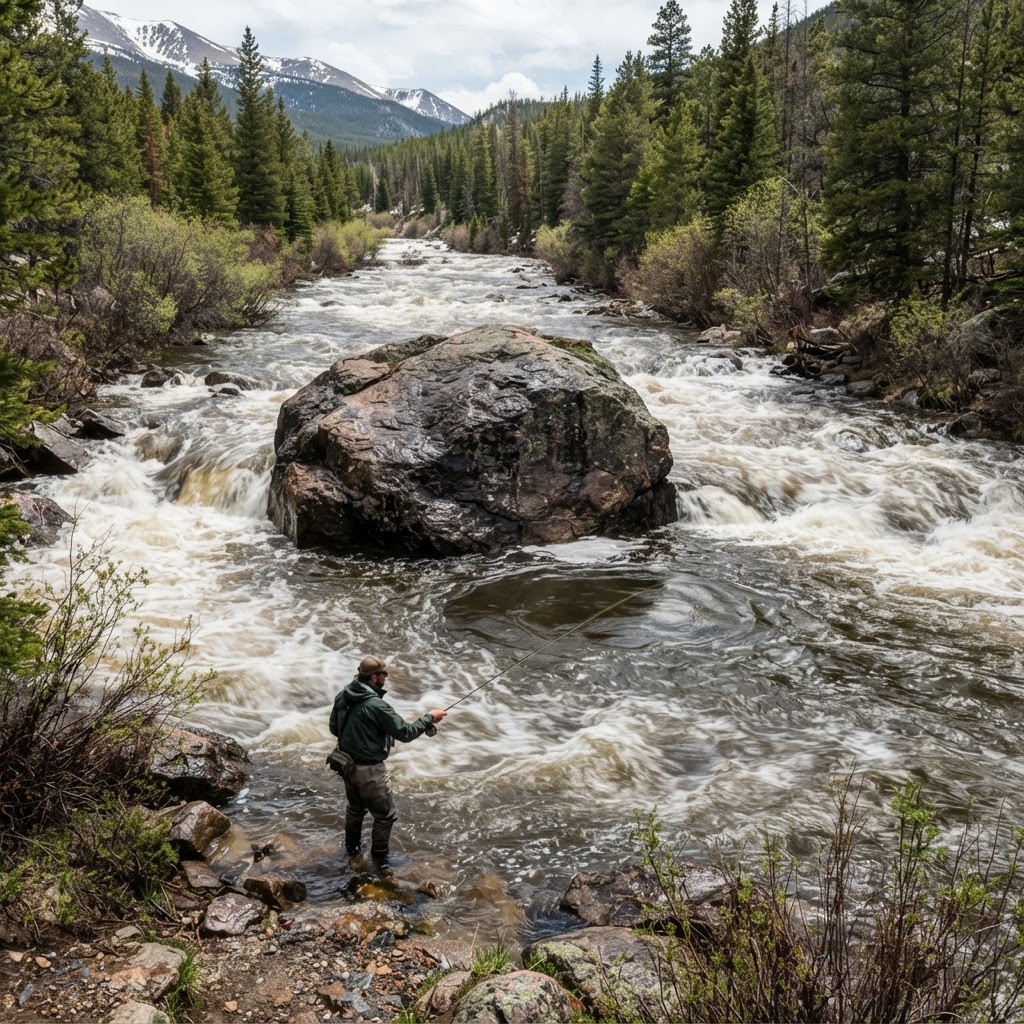
When a river is at bank-full stage, the middle of the river is a death trap for fish. The energy requirement to hold position in that current is simply too high. You must focus your efforts on the 'micro-pockets.' Look for:
- Hard Bank Inserts: Areas where the current cuts into a bank, creating a jagged edge that pushes water away from the shoreline.
- Eddy Lines: The distinct boundary between the moving water and the back-flowing water behind a boulder or log jam.
- The 'Berm' Zones: Areas behind large islands where the force of the main channel is broken down significantly.
It is in these precise seams that fish will tuck into a pocket no larger than a kitchen table. If you can float a fly or a lure into that bubble of calm water, you are almost guaranteed a strike from a fish holding there to conserve energy while waiting for dislodged nymphs or disoriented baitfish to drift by.
Tactical Adjustments: Fishing the Mud
In heavy turbidity, finesse is not the game. You need to leverage movement, vibration, and scent. If you are throwing hardware, switch to dark, high-vibration spinners or spoons that create a distinct pressure wave. If you are a fly angler, reach for large, articulated streamers with heavy lead eyes or dense, weighted stonefly patterns that sink rapidly.
Another pro tip: use your electronics effectively. If you are fishing from a boat, use your sonar to identify the bottom contour changes that exist even when the water is opaque. For more tips on reading terrain, check out the archives on . You can also compare your findings with other anglers by checking the to see what others are pulling out of high water near you.
Weather-Driven Shifts
Spring runoff is heavily dictated by the diurnal melt cycle. Mornings are often the best time to fish, as the overnight freeze slows the snowmelt, resulting in a slight drop in water volume and a modest improvement in clarity. As the sun hits the mountains at midday, the volume increases, and the water becomes more turbid. Always keep an eye on the USGS Real-Time Water Data to monitor these flow fluctuations in real-time. If you time your session to coincide with the cool-down period of the early morning, you will often find the fish more active and the water more manageable.
Final Takeaway
Don't let the high water intimidate you. By shifting your focus from the entire river to the small, calm seams and by embracing the need for vibration-heavy lures or high-contrast flies, you can turn a 'washed-out' season into your most productive time on the water. It is about working smarter, not harder, and respecting the raw power of the spring cycle. Keep your gear ready, monitor your local gauge heights, and you will find that the river's highest flows often yield its biggest trophies.
Catch more these fish — free
Create a free account and unlock the full angling toolkit: