
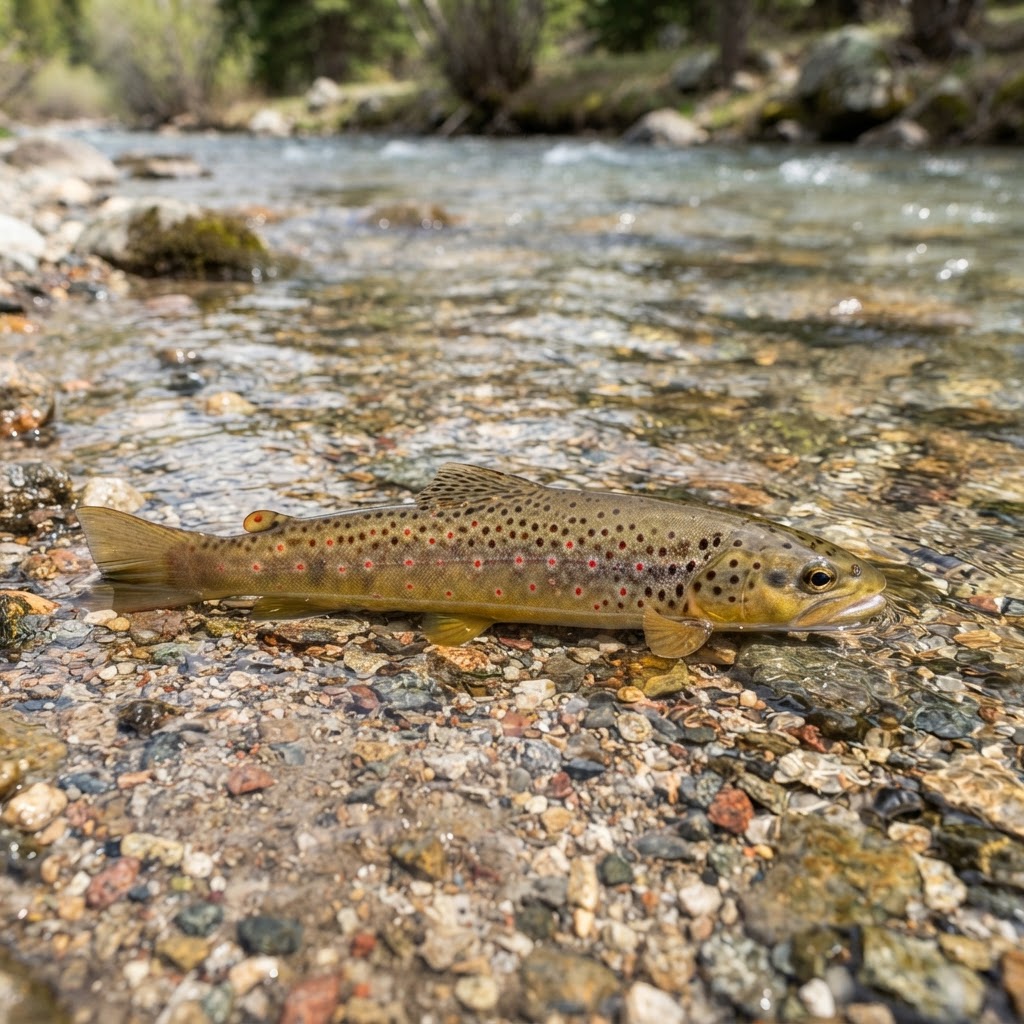
The Shadow Stalkers: Mastering the Art of Brown Trout Pursuit
The Allure of the Brown Trout
Unlike their more predictable cousins, brown trout (Salmo trutta) possess an aura of intelligence that has humbled many an angler. Introduced to American waters in the late 19th century from Europe, they have adapted to become one of the most resilient and sought-after game fish across the country. Whether you are fishing the limestone springs of Pennsylvania or the high-altitude freestone rivers of the Rockies, hooking a mature "brown" is a milestone that requires more than just luck; it requires a deep understanding of their biology and behavior.
Get in the Community feed
Hunters and anglers nationwide posting bucks, catches, trail cam pics and what's working right now.


Biology and Behavioral Patterns
Brown trout are predatory by nature. As they mature, their diet shifts significantly from aquatic insects to smaller fish, crayfish, and even amphibians. They are nocturnal, or at least crepuscular, meaning they are most active during low-light hours. This is an evolutionary defense mechanism that allows them to hunt safely while avoiding avian predators and bright, direct sunlight. When the sun is high, they retreat into the shadows—under cut banks, submerged logs, or deep, shaded boulder pockets.
Understanding these patterns is essential for your success. If you are struggling to find consistent results, try consulting our to identify structure-rich areas where these fish are likely to hold during the heat of the day. To learn about specific seasonal regulations and stocking programs in your region, always reference the official provided by your local wildlife agency.
Preferred Habitat and Water Dynamics
Raise a safe, confident young hunter.
Guide your kids ages 5–17 through interactive hunting safety missions, real decision drills, and earned trophies — all from one free parent account.
Bonus: every $10 you spend in the BHH shop earns a free seat (up to 5). Use them or share them.




Brown trout thrive in cooler water temperatures—typically between 50 and 65 degrees Fahrenheit. While they can survive in slightly warmer conditions, their metabolic rate slows, and they become lethargic. You will find them in water with high dissolved oxygen levels, which often means riffles, runs, and areas with significant turbulence.
One of the most exciting aspects of targeting brown trout is reading the water. Focus on the "seam"—the area where fast-moving water meets slow water. This is the primary feeding lane for a brown trout, as it allows them to conserve energy while picking off insects or small baitfish swept down by the current. If you want to refine your scouting techniques, check out the various angler reports shared on .
Effective Techniques and Lure Selection
Because brown trout are wary, stealth is your greatest weapon. Whether you are fly fishing or using spinning gear, avoid casting long shadows over the water.
Fly Fishing Strategies
For fly anglers, streamers are the secret weapon for targeting larger, predatory browns. Patterns that imitate sculpins, dace, or crayfish can trigger an aggressive strike. During hatches, however, be prepared to downsize your leader and fly size significantly. A long, delicate presentation is key when targeting trout in slow, clear pools.
Spinning Tactics
If you prefer spinning gear, small spinners and spoons are highly effective. The flash of a gold or copper blade mimics the scales of distressed minnows, which triggers the trout's instinct to attack. For deep pools, consider a light-weight jig tipped with a soft plastic trailer. For more comprehensive tips on equipment, you can visit the U.S. Fish & Wildlife Service for guidance on conservation-minded angling gear.
Seasonal Success: When to Go
- Spring: As water temperatures rise, trout become increasingly active. Focus on post-thaw runoff periods when the water begins to clear.
- Summer: Early mornings and late evenings are non-negotiable. Night fishing with large, surface-disturbing flies or lures can produce trophy-sized results.
- Autumn: This is arguably the best time to target large brown trout as they prepare for their pre-spawn phase. They become more aggressive and move into shallower water.
- Winter: Focus on deep, slow-moving holes. The fish will be less active, but they are still feeding. You must get your lure or fly directly in front of their nose.
Tips for Every Angler
If you are a newcomer to the sport, start by practicing your presentation rather than worrying about the latest gadget. Brown trout are easily spooked; your ability to remain quiet and make precise casts will result in more hookups than any expensive lure.
For the experienced angler, the game is about nuance. Study the river for longer periods before making your first cast. Look for the "rise" or the slight movement of a fin under a log. Don’t hesitate to change flies or lures if you haven't had a hit after 20 minutes. Sometimes, it is not the fish that are inactive, but the bait choice that is off-key. Finally, always practice responsible catch-and-release techniques. Keep the fish in the water as much as possible, use barbless hooks to reduce handling time, and support the ecosystems that provide such high-quality sport. Whether you land a personal best or simply enjoy a quiet day on the stream, every catch is a story worth sharing.
Catch more these fish — free
Create a free account and unlock the full angling toolkit: