
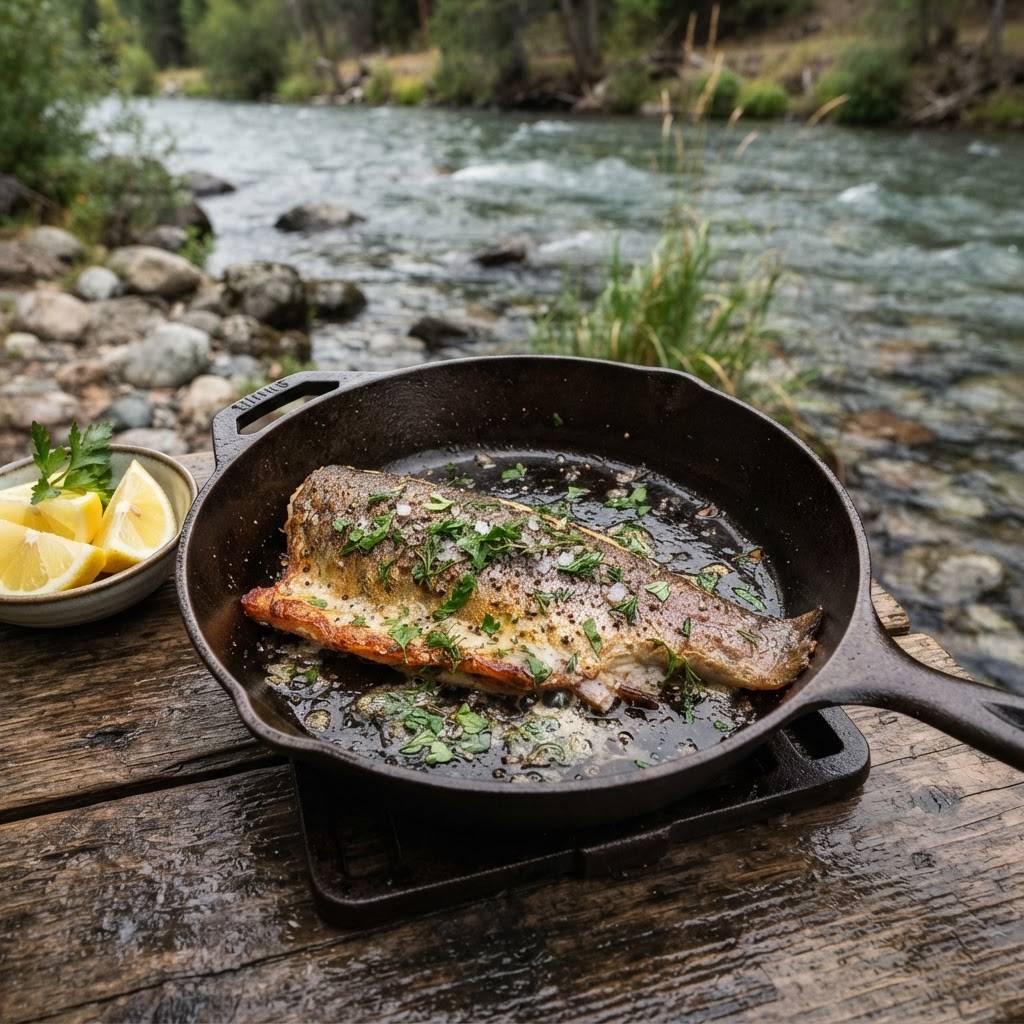
Golden Crispy Trout: The Angler’s Guide to Perfect Brown Butter Fillets
From Creek to Kitchen: The Art of the Perfect Trout Fillet
There is a singular satisfaction in watching a trout move from the clear, cold water of a mountain stream directly to your dinner plate. Trout are arguably the most rewarding fish to harvest—not just for the thrill of the catch, but for their delicate, flaky meat that serves as the perfect canvas for simple, elegant cooking. At Buckeye Hunter Hub, we believe that the journey to a great meal starts long before you turn on the stove. Whether you are using a to scout for stocked populations or checking local regulations via , your success in the kitchen is tied directly to your respect for the harvest.
Get in the Community feed
Hunters and anglers nationwide posting bucks, catches, trail cam pics and what's working right now.


Cleaning and Filleting Your Catch
To achieve a restaurant-quality sear, preparation is paramount. Start by cleaning your fish immediately after catching. If you are new to the process, head over to for our guides on field dressing. When it comes to filleting trout, use a thin, flexible boning knife. Make a shallow cut behind the gills, turn the blade toward the tail, and glide it along the spine. Once the fillet is off, run your finger down the center of the meat; you will feel a row of small pin bones. Use a pair of fish tweezers to pull these out; your guests will appreciate the effort.
The Ingredients for Success
Simplicity is the secret to a great trout dish. Because trout has a mild, clean flavor, it does not need heavy sauces. Instead, focus on high-quality pantry staples:
Raise a safe, confident young hunter.
Guide your kids ages 5–17 through interactive hunting safety missions, real decision drills, and earned trophies — all from one free parent account.




- Two fresh trout fillets (skin-on, scaled)
- 3 tablespoons of unsalted European-style butter
- 1 tablespoon of high-smoke-point oil (such as grapeseed or avocado oil)
- Fresh lemon wedges
- 2 sprigs of fresh thyme or rosemary
- Kosher salt and freshly cracked black pepper
The Pan-Sear Method: Step-by-Step
1. The Dry Prep
Pat your fillets bone-dry with paper towels. Moisture is the enemy of a crispy sear. If the skin is wet, the fish will steam rather than brown. Season the flesh side lightly with salt and pepper just seconds before the fish hits the pan.
2. Getting the Pan Hot
Use a heavy-bottomed stainless steel or cast-iron skillet. Heat the oil over medium-high heat until it begins to shimmer. Place the trout in the pan, skin-side down. Press down gently with a spatula for 10 seconds to ensure the skin makes full contact with the metal. Do not touch it for at least 3 to 4 minutes.
3. Achieving the Brown Butter Finish
Once the skin is golden and crispy, turn the heat to medium. Flip the fish carefully. Add your butter and herbs to the pan. As the butter melts, it will foam. Tilt the pan slightly and use a spoon to continuously baste the fish with the hot, foaming butter. You are looking for the butter to turn a light, nutty golden brown—this is known as beurre noisette. The nutty aroma will fill your kitchen, signaling that the sauce is ready.
Avoiding the Overcook
Trout is thin and lean, meaning it can go from translucent to chalky in a matter of seconds. The best way to judge doneness is by color and texture. The flesh should transition from raw/translucent to opaque pink. If you are using an instant-read thermometer, aim for an internal temperature of 140°F. If you want to dive deeper into the science of fish management and ethics, visit the U.S. Fish and Wildlife Service for more on sustainable harvesting practices.
Pro Tips for the Home Chef
- Don’t Crowding the Pan: If you have several fish to cook, do it in batches. Crowding the pan drops the temperature and ruins the sear.
- Use the Right Butter: European-style butter has a higher fat content and less water, which helps it brown more cleanly without burning as quickly as standard supermarket butter.
- Serve Immediately: Pan-seared trout does not sit well. Once you remove it from the pan, squeeze a generous amount of fresh lemon over the top to cut the richness of the brown butter and serve it on a warmed plate.
Whether you landed your trout in a local river or a high-alpine lake, this recipe is designed to honor the catch. Cooking shouldn't be intimidating, and when you start with a fresh, wild ingredient, you are already halfway to greatness. Keep your kitchen simple, keep your fillets dry, and always remember to share your success on our to show the fellow anglers what you've been cooking.
Catch more these fish — free
Create a free account and unlock the full angling toolkit: