
Decoy Spread Strategy: Duck and Goose Setups That Actually Work
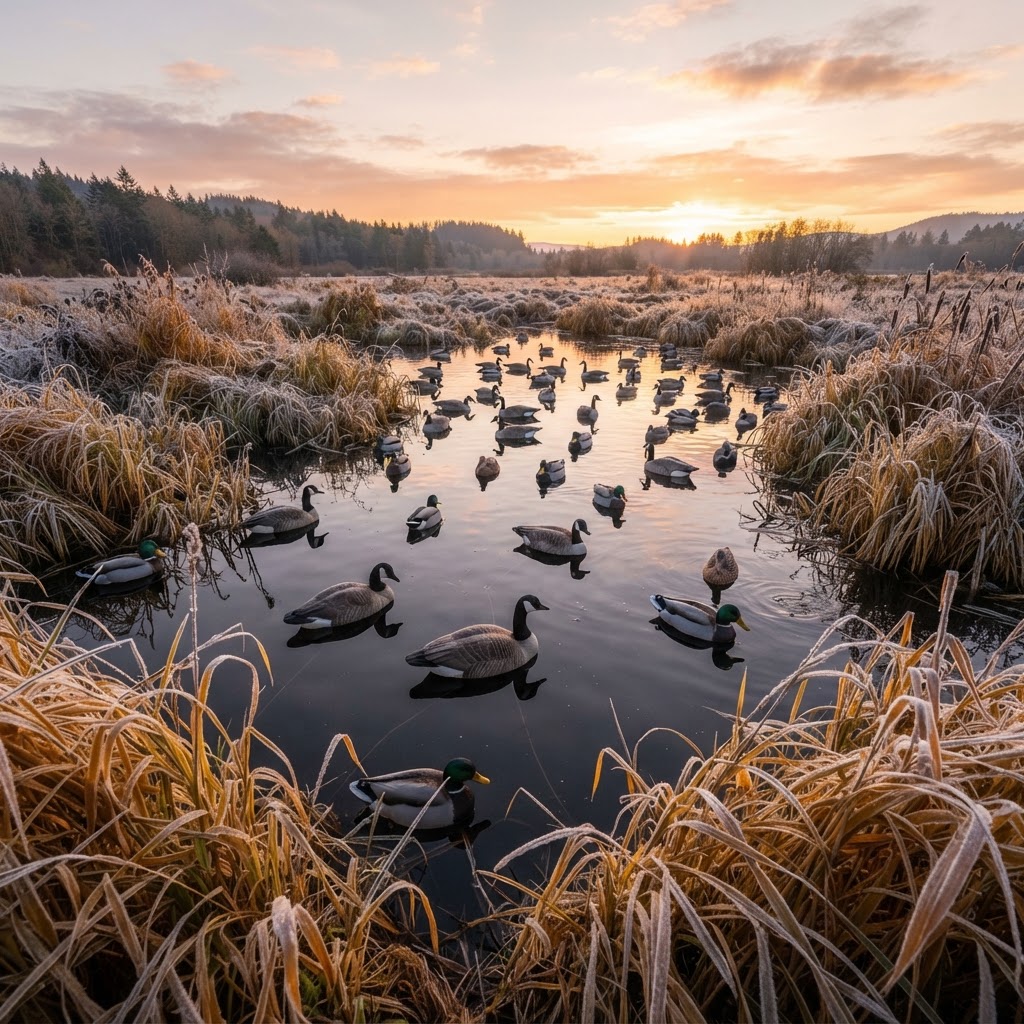
Decoding the Sky: Why Your Spread Isn't Working
Every waterfowler knows that sinking feeling: watching a flock of mallards circle the field or pond three times, only to flare at the last second. It is rarely bad luck. More often, it is a failure of geometry and timing. If you are hunting over the same standard 'J-hook' spread you used in November, you are likely teaching local birds to avoid your rig. To be successful across the US flyways, your strategy must pivot based on barometric pressure, wind speed, and the migration phase. At Buckeye Hunter Hub, we believe that the best hunters aren't just great callers; they are master observers of the landscape.
Free hunting map, zones & 50-state resources
Save your spots, share zones with your group, and get deer & waterfowl movement forecasts — free.
Reading the Weather: The Catalyst for Movement
Waterfowl are masters of meteorology. Before a major cold front arrives, the barometric pressure drops, signaling to birds that they need to feed heavily to fuel the journey ahead. This is when you should be in the blind. If you see a sustained 10–20 mph wind, do not just hope for flight; expect it. Wind provides the birds with the 'lift' they need for efficient flight and gives them confidence to commit to a spread.
When the temperature plummets and the standing water begins to skim over, the game changes. Your decoy spread needs to transition from high-visibility ‘searching’ patterns to 'feeding' tight clusters. If you are struggling to predict when the big push of birds is hitting your region, checking data and current DNR numbers is your best bet for timing your vacation days.
The Anatomy of an Effective Spread
Forget the idea that 'more is better.' A massive, disorganized spread of 200 faded plastics often looks like a chaotic traffic jam to a wary greenhead. Instead, focus on creating 'landing zones.'
The 'Landing Pocket' Approach
For ducks, a 'U' or 'V' shaped spread is classic for a reason—it creates an open pocket right in front of the hunter. However, in high-pressure public areas, consider a 'grouped' strategy. Place three distinct pods of decoys: one small group of feed-callers (upwind), a tight family group in the middle, and a single ‘loner’ decoy slightly further out to draw the eye. This mimics a relaxed group of birds that has already found food, signaling to incoming flocks that the area is safe.
The Wind-Direction Rule
Always orient your landing zone so the birds are forced to land with their feet in their face, against the wind. Ducks and geese need that resistance to stall out and descend vertically. If the wind is inconsistent, place your motion decoys—like jerk rigs or swimming decoys—directly in the path of the flight line. Movement is the most overlooked element in a spread; a static decoy set on a bluebird day is a glaring red flag for seasoned birds.
Concealment and Blind Placement
E-Tag States

Harvest Tags
E-check means you supply the tag. Printed with the exact fields your state requires.
3-pack $22.95
Even the most perfect spread will fail if your blind sticks out like a sore thumb. The biggest mistake hunters make is over-brushing their hide. Instead of adding a mountain of brush, mimic the native vegetation exactly. If you are in a corn field, use the harvested stalks. If you are in a marsh, use the phragmites or cattails growing within 10 feet of your location.
Make sure your profile is broken up. Modern layout blinds are effective, but they cast a square shadow. Use local grass or straw to ‘soften’ the edges. For the best tips on how to prepare your gear for the season, check out our to ensure your hide is impenetrable before the sun hits the horizon.
Calling and Scouting: The Final 10 Percent
Raise a safe, confident young hunter.
Guide your kids ages 5–17 through interactive hunting safety missions, real decision drills, and earned trophies — all from one free parent account.
Bonus: every $10 you spend in the BHH shop earns a free seat (up to 5). Use them or share them.




Scouting is the single greatest factor in hunting success. Using to find isolated potholes or hidden backwaters that don't see heavy pressure can save you a frustrating morning in a crowded refuge. Once you have identified the 'X', let the birds tell you what they want to hear.
On days with high winds, don't be afraid to blow loud and aggressive to cut through the gusts. On calm, bluebird days, 'less is more.' A soft feeding chuckle can be more deadly than a high-ball hail call. If you need help identifying which species are hitting your area during the late season, our can help you adjust your calling techniques to match the specific ducks in the air.
Actionable Takeaways for Your Next Hunt
- Respect the Wind: If it’s blowing under 5 mph, prepare for tough shooting. If it’s 15–20 mph, don't leave the field until legal shooting time ends.
- Create Pockets: Always leave a landing zone that is downwind of your primary decoy cluster.
- Add Motion: Use jerk rigs or spinning-wing decoys to provide the 'life' that plastic lacks.
- Scout, Don't Guess: Use your to pinpoint the exact days the birds are on the move.
Success in the blind comes down to discipline. By focusing on how birds actually interact with the landscape, wind, and each other, you move from being a 'hopeful' hunter to a consistent one. Stay safe, stay hidden, and keep your head on a swivel.
Join 636 hunters and anglers on Buckeye Hunter Hub — free.
Latest from the Community

Posted
Duck and geese ft Loramie Ohio
Joshua Shoffner · 3h ago

Trophy
whitetail
Keith Bennett · 8h ago

Trophy
My buck when I was 15 still remember this day!
BigBuckHunter420 · 13h ago

Posted
Nice looking buck
Fred · 17h ago

Posted
Updates to hunt zones/waypoints
Joshua Shoffner · 1d ago

Posted
Opening Day Bow in Northeast AL
Josh · 1d ago
Everything you need to hunt smarter — free
Buckeye Hunter Hub is a free, nationwide platform. Create an account and unlock the full toolkit:
Free Interactive Hunting Map
Mark stands, cameras, and sign. Draw hunting zones with public land & county overlays across all 50 states.
Zones with Group Sharing
Share zones with your hunting group, split property into sections, assign stands, and check in — all in one place.
50 States of Hunting Resources
Season dates, license links, and DNR regulations for every state, kept current so you never miss an opener.
Deer Movement Forecast
Data-driven daily movement predictions using wind, moon, and pressure — know when to sit before you go.
Waterfowl Movement & Tools
Flight-potential forecasts, migration numbers, decoy spread planner, and a full species field guide.
From the Maker Bench

SE Ohio Outdoors
Euro Mount Hook
Hand-built in the USA · $8.00
Shop the MakerBHH Partner

Firearms, ammo and gear from a local Ohio shop in Grafton. Stop in before the season.
dnaarmory.comShop This

StopBox Pro Ward | Wall-Mounted
$179.00$199.99

StopBox Pro Compact
$159.00$179.99

BHH Lunker Pursuit Bass Tee
$13.71

Congratulations Card — Double Lung Drop
$6.99
E-Tag States
Harvest Tags
E-check means you supply the tag. Printed with the exact fields your state requires.
3-pack $22.95
More Articles

Celebrate the Legend: Meet the 'Dad's Mud Walk' Father's Day Card
Looking for the perfect way to honor the hunter in your life? Our new Father's Day card captures the grit and humor that only a true outdoorsman understands.

Celebrate the Rookie Mistakes: Introducing the First Harvest Card — Knees Before Netting
Every angler has a story of excitement getting the better of them, and our new First Harvest card captures that hilarious reality perfectly.

Celebrate Your Win: Introducing the 'Shed Before Breakfast' First Harvest Card
There is no feeling like finding a fresh shed before the sun fully hits the timber. Celebrate your next big outdoor moment with our new First Harvest Card.

Celebrate the Season with the New 'Christmas Card — Hole In The Ice' from Buckeye Hunter Hub
Looking for the perfect way to show your love for ice fishing this holiday season? Meet our new Christmas card designed specifically for the angler who never skips a bite.